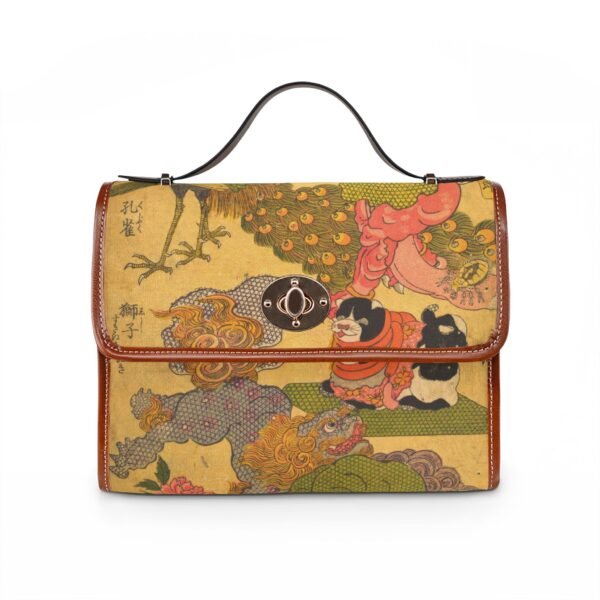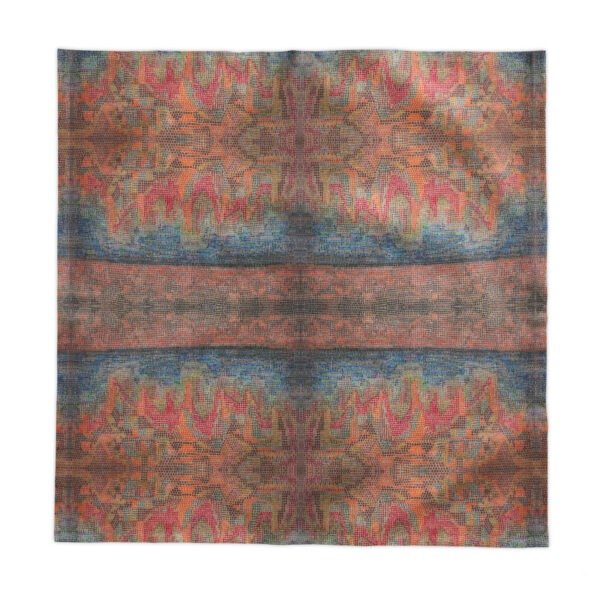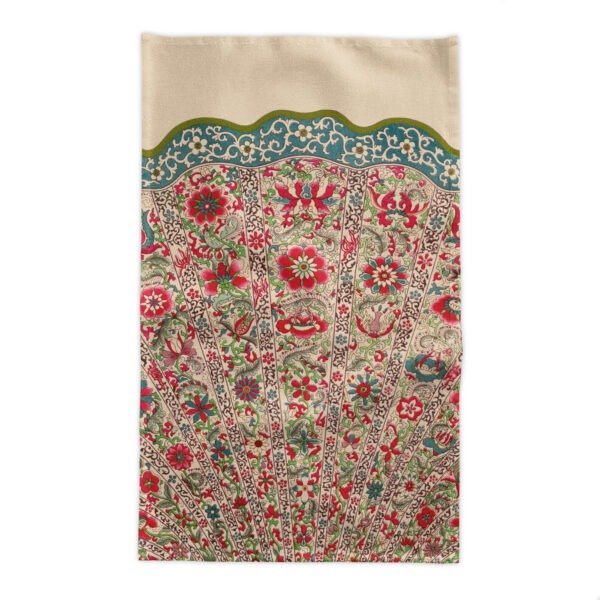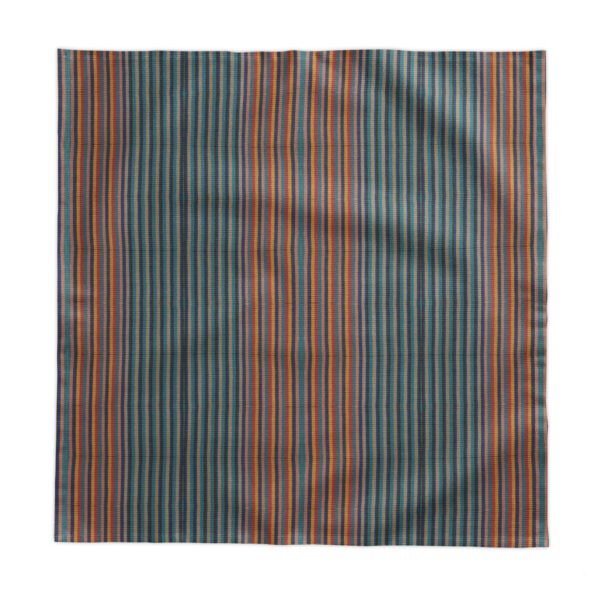
MOLAS: textile design & political identity

MOLAS: textile design & political identity

"Clothes aren't going to change the world. The women who wear them are." Anne Klein

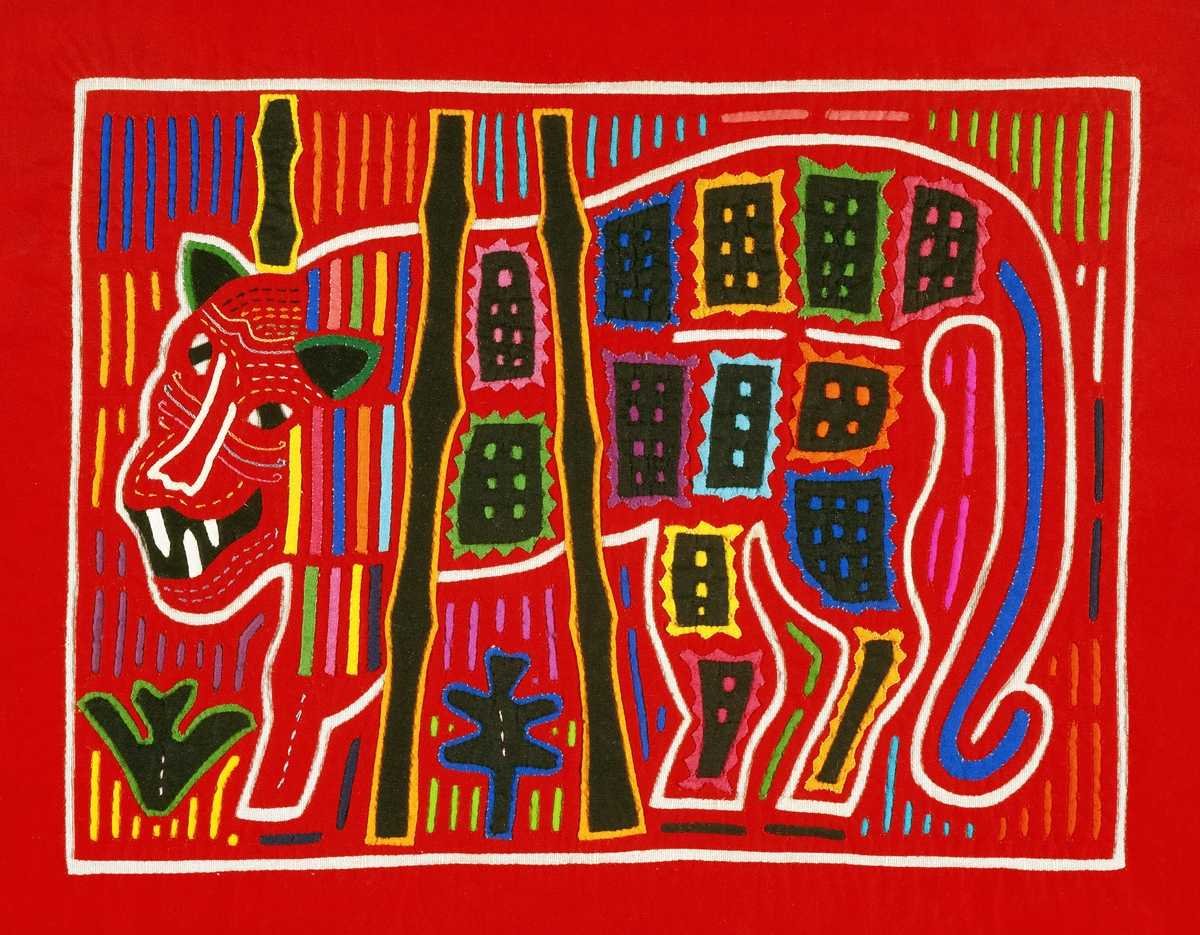
What you wear can say who you are, what you believe, and what you refuse to give up. Few garments prove that better than the mola, the layered, hand-stitched blouse panel of the Guna women of Panamá.

Molas are bright, intricate, and instantly recognizable. They are also the product of a long struggle over who gets to decide how a people dress, and, ultimately, how a people govern themselves.

What is a mola?

In Dulegaya, the Guna language, mola simply means "clothing" or "blouse." Today the word usually names the decorated front and back panels sewn into a woman's blouse (the dulemor). Traditional Guna dress is a full ensemble: a wrapped patterned skirt, a red and yellow headscarf, strands of beads wound around the arms and legs, a gold nose ring, and earrings. The mola is its showpiece.

The Guna live along Panamá's Caribbean coast and on the San Blas islands, in the autonomous territory of Guna Yala. Their textile tradition is widely believed to descend from the geometric designs women once painted on their bodies with natural pigments. After contact with Europeans, those patterns moved onto cloth.

How a mola is made

Molas are built with reverse appliqué. Instead of stitching shapes onto a background, the maker stacks several layers of colored cotton, typically two to seven, and cuts down through them. Each cut opens a window onto the color beneath. The raw edges are folded under and sewn down with tiny, nearly invisible stitches.

How to judge quality: more layers, finer cutting, and smaller, more even stitching generally signal a better mola. A complex piece can take anywhere from a couple of weeks to several months.

Designs have always evolved. Early panels favored abstract geometry; later makers added birds, sea creatures, flowers, and scenes from everyday life, and sometimes even cartoons and other pop-culture imagery. The craft absorbs the world around it without losing its method.

Dress as resistance

Because mola dress was so central to Guna identity, it became a target. In 1919, the Panamanian government began pressing the Guna to assimilate, and traditional dress and nose piercing for women were discouraged and banned as part of a drive to "modernize" Guna society and extend state control.

  • 1919: Panama pushes assimilation, restricting mola dress and nose rings.
  • 1925: The Guna rise up in what is known as the Guna (or Dule) Revolution, defending their culture and territory.
  • After 1925: Traditional dress becomes a visible statement of defiance. On some more Westernized islands, women were pressed to adopt it, even those who had never worn it.
  • Later decades: The Guna secure recognized autonomy in Guna Yala, among the strongest examples of Indigenous self-rule in the Americas.

That arc is why many describe the mola as more than decoration. It was one of the visible markers a community held onto, and defended, on its way to self-government.

Why it still matters for design

The mola's lessons carry well beyond Panamá: bold color contrast, depth built from flat layers, and a pattern language that tells stories. Those qualities are why mola aesthetics keep resurfacing in contemporary fashion and home design, and why it matters to credit where the form comes from.

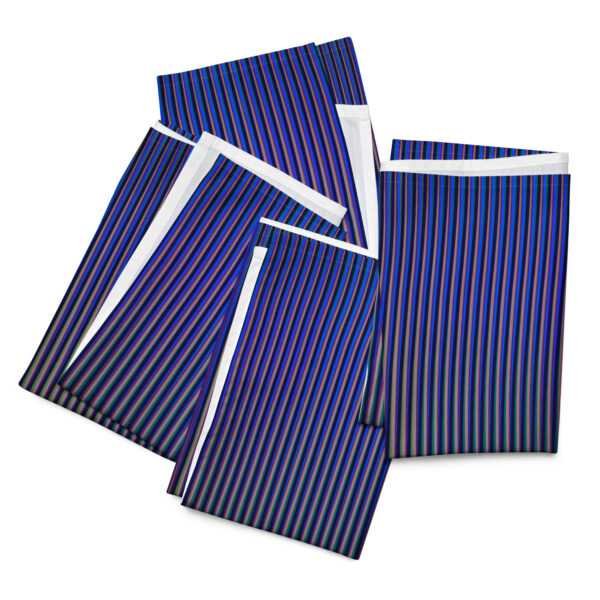
Mola-inspired pieces from CGK.ink

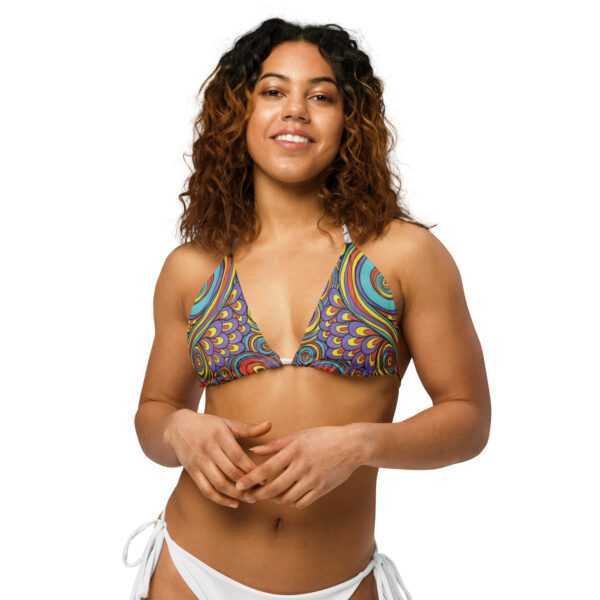
Our mola-style designs are an homage to the layered color and playful motifs of the tradition. They are inspired by the art form, not made by Guna artisans. To buy authentic molas, look for cooperatives and sellers who work directly with Guna makers.

Explore the full shop

Further reading: Guna people and Mola (art form) on Wikipedia.

Showing 1357–1358 of 1358 resultsSorted by latest
Three Patterns’ Voyages

Three Patterns’ Voyages

Three Patterns · Three Journeys

Global Patterns: How Indian Chintz, Persian Paisley, and Japanese Woodblocks Traveled the World to Shape Modern Style

Three textiles, three journeys: how Persian paisley, Indian chintz, and Japanese woodblock prints carried Eastern design into the West.

The Language of Pattern · 01 / 03

The Trans-Oceanic Voyage of Paisley


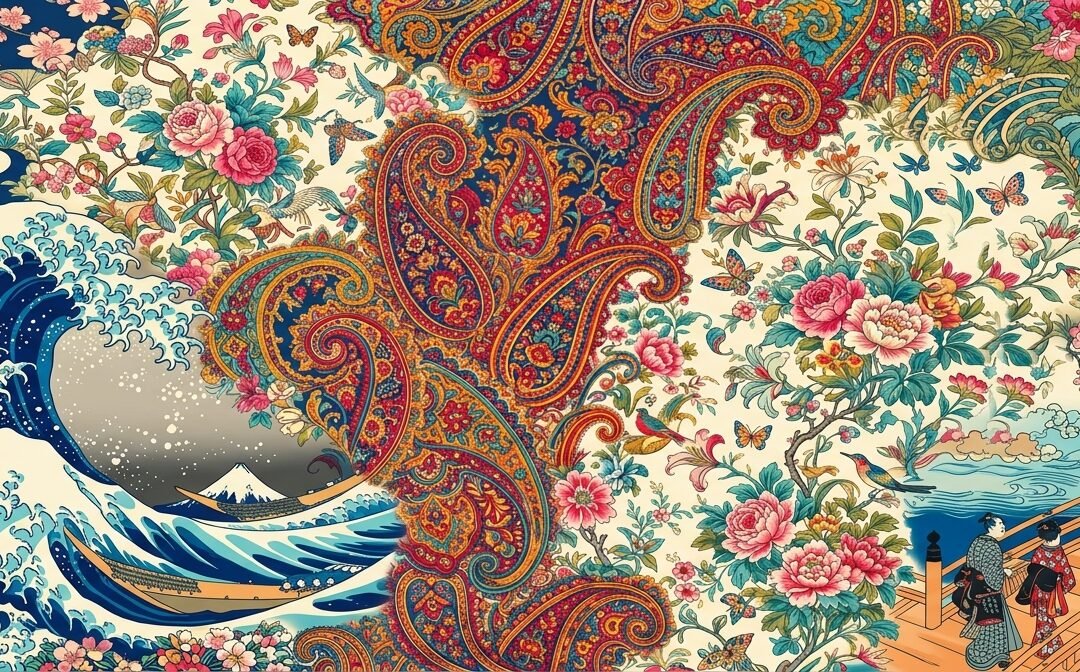
The Trans-Oceanic Voyage of Paisley traces how the boteh, a stylized floral spray rooted in ancient Persian design, journeyed from the courts of the Mughal Empire to the looms of Paisley, Scotland. In Persia and Mughal India, the teardrop-shaped motif, often read as a cypress, a leafy bud, or a sprig of blossoms, adorned the finest Kashmiri shawls, woven by hand over months and worn as emblems of rank and refinement. In the late 18th century, the East India Company carried these prized shawls back to Britain, where they became fashionable among the upper classes and sparked a hunger for the exotic that imported supply could never satisfy. Weavers in Edinburgh, Norwich, and eventually the Scottish town of Paisley set about imitating them, and the introduction of the Jacquard loom let them reproduce the intricate patterns faster and far more cheaply than any Kashmiri artisan could. As prices fell, the boteh slipped from the shoulders of aristocrats into the wardrobes of the rising middle class, and the town of Paisley became so closely identified with the design that its name replaced the original. What began as a symbol of Eastern royalty was transformed, through trade, technology, and fashion, into a classic Western staple that still appears on ties, scarves, bandanas, and linings today.

Wear the Pattern

Shop All Paisley

02 / 03 · Chintz

The Language of Pattern · 02 / 03

How Chintz Conquered Europe

How Chintz Conquered Europe begins with the 17th-century craze for Indian painted and printed cotton, a fabric unlike anything European weavers could produce. Carried by the Dutch and English East India Companies from the Coromandel Coast and Gujarat, chintz dazzled buyers with its vivid botanical designs of flowering vines, exotic blooms, and trees of life, rendered through a sophisticated mordant and resist-dyeing process that kept the colors bright wash after wash, something European wool, linen, and silk dyes could not match.

Light, washable, and affordable, it quickly moved from curiosity to necessity, appearing in bed hangings, window curtains, upholstery, and everyday clothing across England, France, and the Netherlands. The flood of imports alarmed domestic wool and silk manufacturers, who lobbied hard for protection, and governments responded with sweeping prohibitions, including the French ban of 1686 and the British Calico Acts of 1700 and 1721, which only made the fabric more desirable and fueled a thriving black market.

Those bans ultimately pushed European printers in places like Marseille, Amsterdam, and London to learn the techniques themselves, laying the groundwork for the cotton printing industry that would help drive the Industrial Revolution. Meanwhile, chintz rewrote the rules of interior decoration, replacing the heavy, somber textiles of earlier centuries with bright, washable, pattern-rich fabrics, and establishing the floral-covered, layered room as a lasting ideal of European domestic comfort and taste.

1686 French ban
1700 British Calico Act
1721 Second Calico Act

03 / 03 · Woodblock

The Language of Pattern · 03 / 03

The Woodblock Revolution

Rules the prints broke

  • 01 Flat planes of unmodulated color
  • 02 Bold contour lines
  • 03 Asymmetrical layouts
  • 04 Dramatic cropping
  • 05 High vantage points
  • 06 No Renaissance perspective or shading

The Woodblock Revolution examines how Japanese ukiyo-e prints and Eastern textile traditions reshaped Western ideas of composition after Japan reopened to trade in the 1850s. As prints, kimono, and stencil-dyed fabrics poured into Paris and London, often arriving as packing material for ceramics, European artists and designers encountered a visual language that broke nearly every academic rule: flat planes of unmodulated color, bold contour lines, asymmetrical layouts, dramatic cropping, high vantage points, and a graceful disregard for Renaissance perspective and shading.

This wave of Japonisme electrified painters like Monet, Degas, and Van Gogh, who borrowed its compositions and color blocking, and it transformed the decorative arts just as profoundly. Designers saw in Japanese textile frameworks, with their repeating motifs, stylized nature, and balanced use of negative space, a model for treating pattern as structure rather than ornament. Art Nouveau grew directly from this inheritance, with its sinuous whiplash lines, flattened botanical forms, and integrated designs that unified poster, textile, furniture, and architecture.

The same principles of simplification, flatness, and abstraction carried forward into the early twentieth century, helping loosen the grip of realism and clearing the path toward Modernism's embrace of pure form, graphic economy, and design as a total, everyday art.

From the Woodblock Masters

Shop the Japan Collection

Back to top

The Thanksgiving Table

The Thanksgiving Table

Holiday 2026 · Tableware

Set the table
like a gallery

Art you can live with, serve on, and give.

Every holiday meal has a moment when the food hasn't arrived yet and everyone is just looking at the table. That's your opening.

A table dressed with a Paul Klee landscape, a page from Owen Jones's color theory, or a Bauhaus textile gives your guests something to talk about before the first plate is passed.

At cgk.ink, we pair each piece with the art or artist behind it, so a tablecloth or a glass comes with a story your guests can repeat. Here's how to build a holiday table from the cloth up, plus what to give the person who is hosting this year.

Step one

Start with the cloth

A tablecloth is the largest canvas on the table, and it sets the mood for everything else. Our four tablecloths draw on very different traditions, and each pairs with a runner down the middle.

Tablecloths

Paul Klee: Cliffs by the Sea Tablecloth

Paul Klee: Cliffs by the Sea Tablecloth

Painterly and calm, with the quiet color of early modernism. 100% cotton twill · 58″×58″ or 58″×102″

$62–$99.50 Choose size →
Owen Jones: Tablecloth

Owen Jones: Tablecloth

Ornament and geometry from one of the great pattern theorists. 100% cotton twill · 58″×58″ or 58″×102″

$62–$99.50 Choose size →
Bauhaus Textiles: Tablecloth

Bauhaus Textiles: Tablecloth

Graphic, rhythmic and modern, for a table that feels more studio than showroom. 100% cotton twill · 58″×58″ or 58″×102″

$62–$99.50 Choose size →
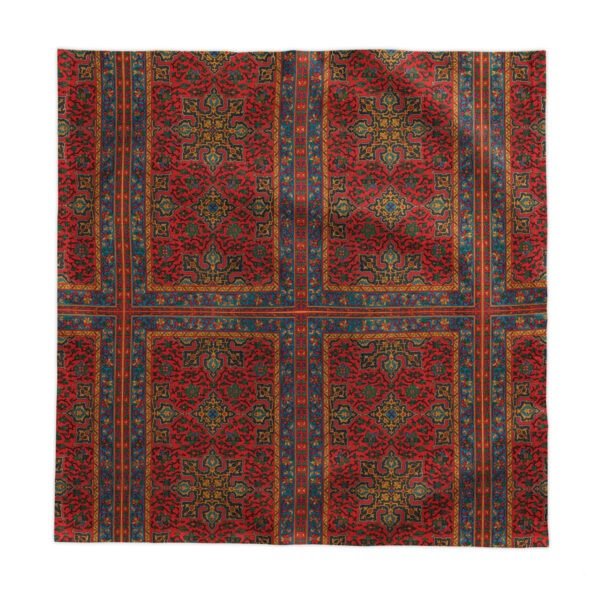
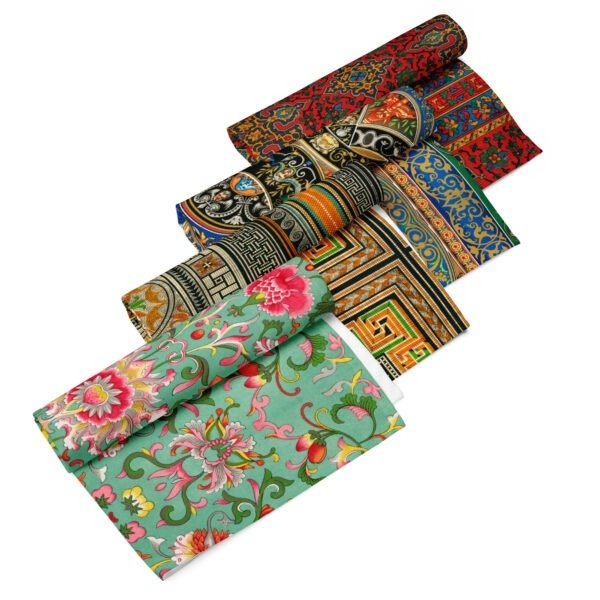
Emile Prisse d'Avennes' La Décoration Arabe (1885): Deep Crimson Tablecloth

La Décoration Arabe (1885): Deep Crimson Tablecloth

Drawn from Emile Prisse d'Avennes. Rich and festive without a single reindeer. 100% cotton twill · 58″×58″ or 58″×102″

$62–$99.50 Choose size →

Table runners

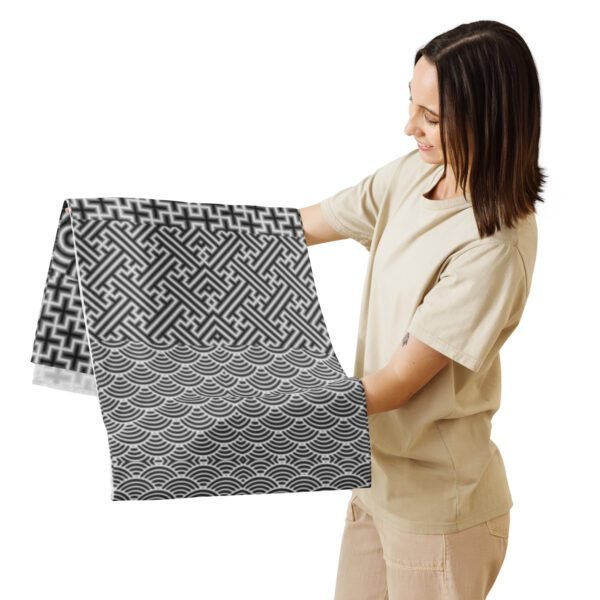
Black and White Sashiko Table Runner

Black and White Sashiko (刺し子) Table Runner

Japanese sashiko pattern · 100% polyester · 90″×16″

$39.50 Buy now →
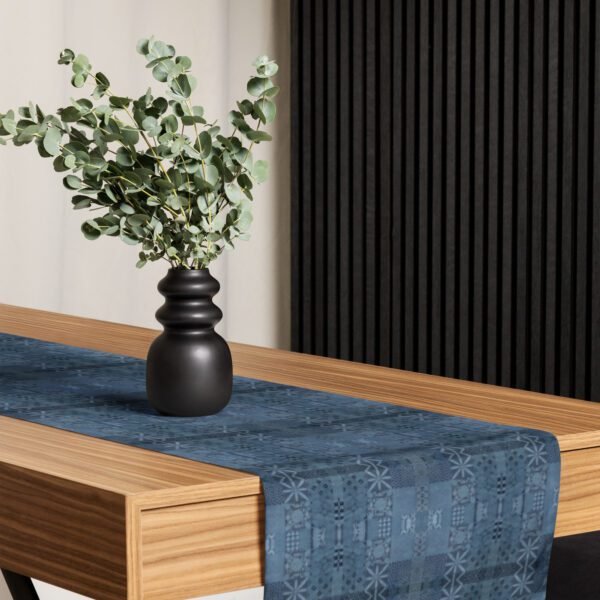
Blue Tiled Stream Sashiko Table Runner

Blue Tiled Stream Sashiko (刺し子) Table Runner

Japanese sashiko pattern · 100% polyester · 90″×16″

$39.50 Buy now →
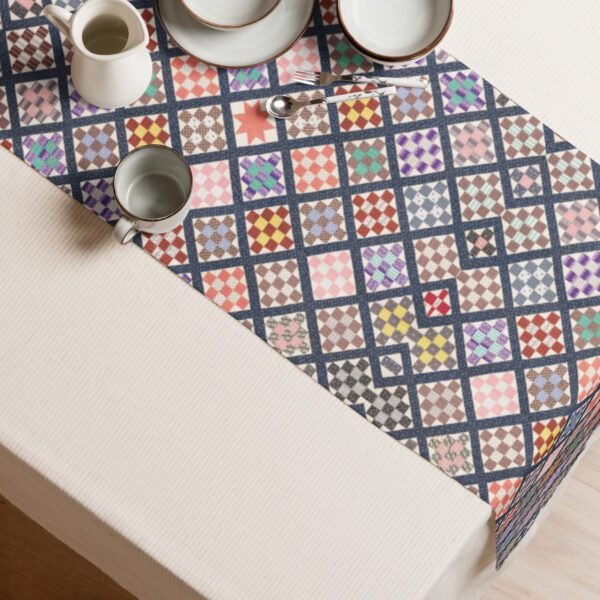
Trinity Quilt Table Runner

Trinity Quilt Table Runner

Amish quilt-inspired · 100% polyester · 90″×16″

$39.50 Buy now →
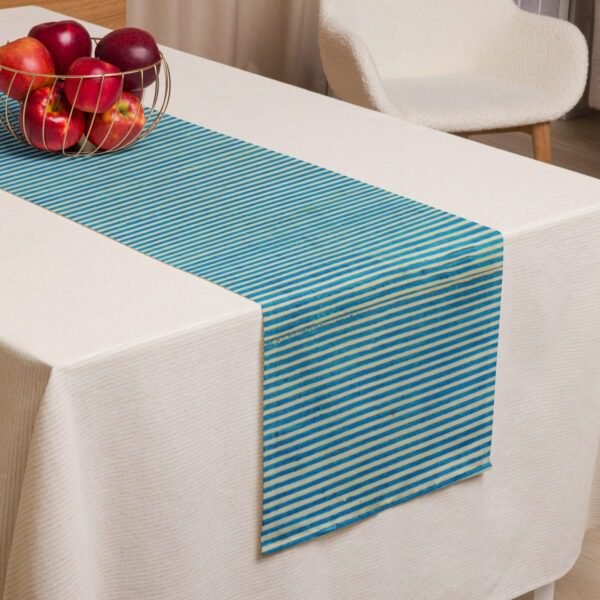
Blue River Stripe Table Runner

Blue River Stripe Table Runner

100% polyester · 90″×16″

$39.50 Buy now →

Styling tip: Let one pattern lead. If the tablecloth is busy, keep the napkins and glassware quieter. If you choose a calm cloth, let the placemats and glasses carry the color.

Explore every cloth, runner & more

Tablecloths, runners, placemats, napkins and glassware, all in one collection.

Step two

Layer in placemats & napkins

Not ready to commit a whole table to a pattern? Placemats let you introduce art one seat at a time, and they're easy to mix across a set.

Placemats

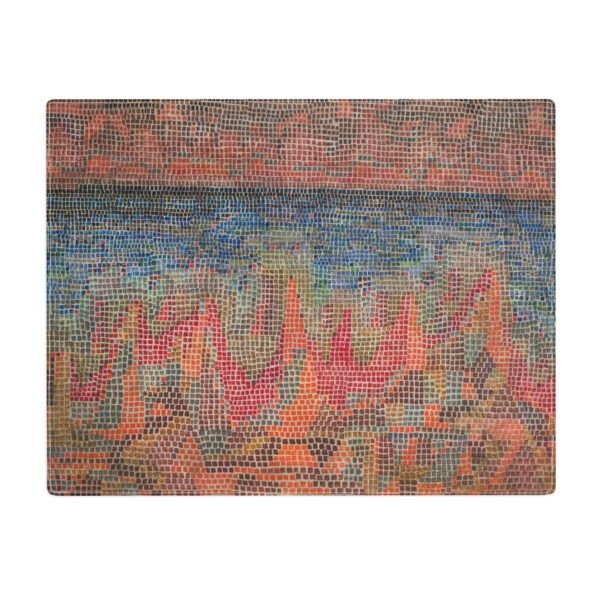
Paul Klee: Cliffs by the Sea Cotton Placemat

Paul Klee: Cliffs by the Sea Cotton Placemat

100% cotton twill · double-layer

$18.50 Buy now →
Jasper Forest Cotton Placemat

Jasper Forest Cotton Placemat

100% cotton twill · double-layer

$18.50 Buy now →
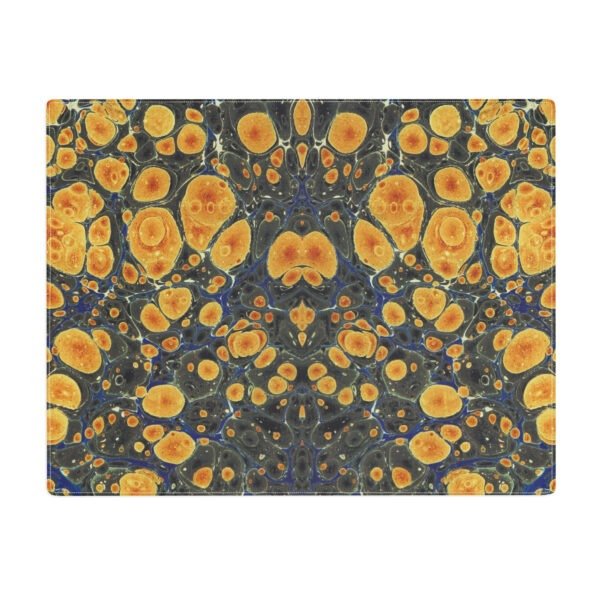
Middle Sea Cotton Placemat

Middle Sea Cotton Placemat

100% cotton twill · double-layer

$18.50 Buy now →
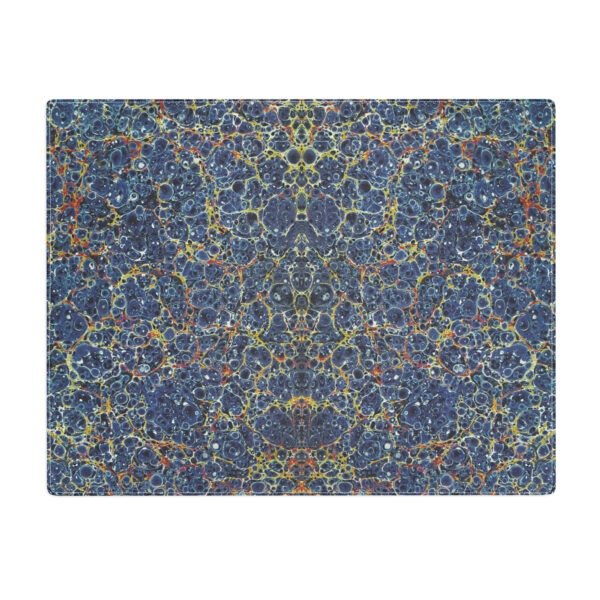
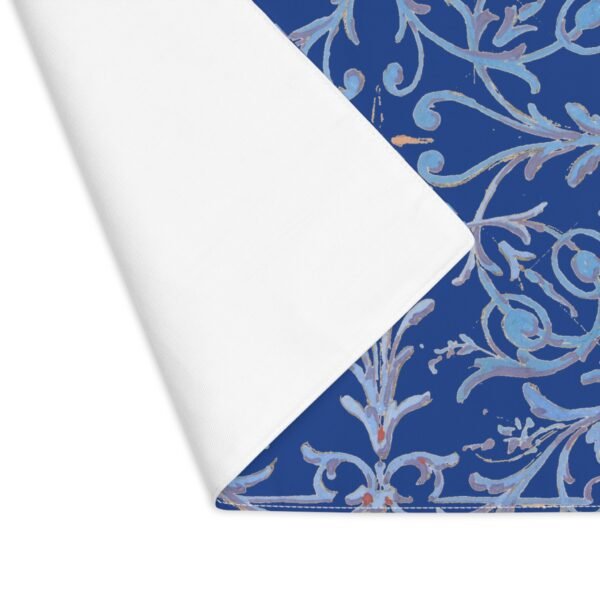
Blue Moroccan Tile Placemat

Blue Moroccan Tile Placemat

100% cotton twill · 18″×14″ · machine wash cold

$23.00 Buy now →

Cloth napkins

Cloth napkins are one of the easiest swaps toward a less disposable holiday, and a set of four is a practical gift on its own.

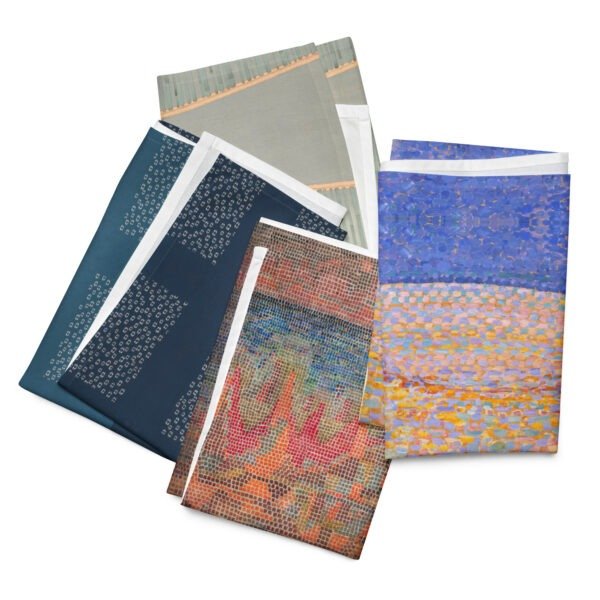
Abstract Patterns Cloth Napkin Set of 4

Abstract Patterns Cloth Napkin Set of 4

Set of 4 · 20″×20″ · 100% polyester broadcloth

$34.50 Buy now →
Decorative Art Cloth Napkin Set

Decorative Art Cloth Napkin Set

Set of 4 · 20″×20″ · 100% polyester broadcloth

$34.50 Buy now →
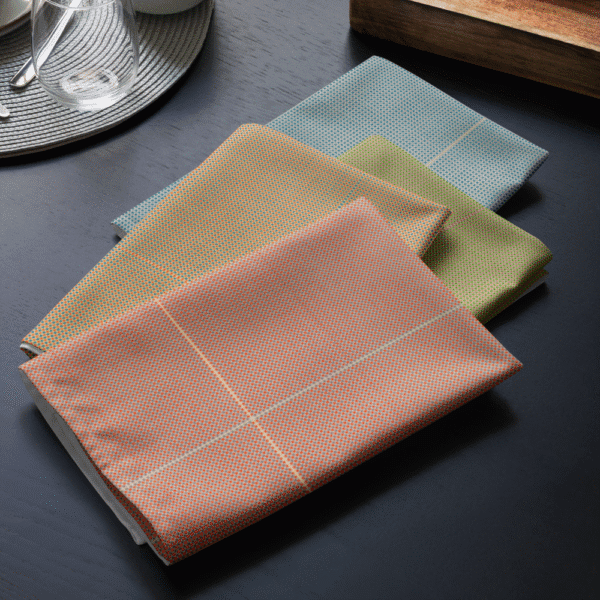
Imminent Spring Cloth Napkin Set of 4

Imminent Spring Cloth Napkin (Set of 4)

Set of 4 · 20″×20″ · 100% polyester broadcloth

$28.00 Buy now →
Indigo Current Cloth Napkin Set of 4

Indigo Current Cloth Napkin (Set of 4)

Set of 4 · 20″×20″

$28.00 Buy now →

See every placemat & napkin set

There are more patterns, place settings and runners waiting in the full Tableware collection.

Step three

Pour into something with a story

Our stemless wine glasses are the workhorse of the holiday table: no stems to knock over, easy to stack, and each one carries a different image.

Glassware offer: buy any 4 or more glassware items and get 15% off your pre-tax total, applied automatically at checkout.

Stemless wine glasses

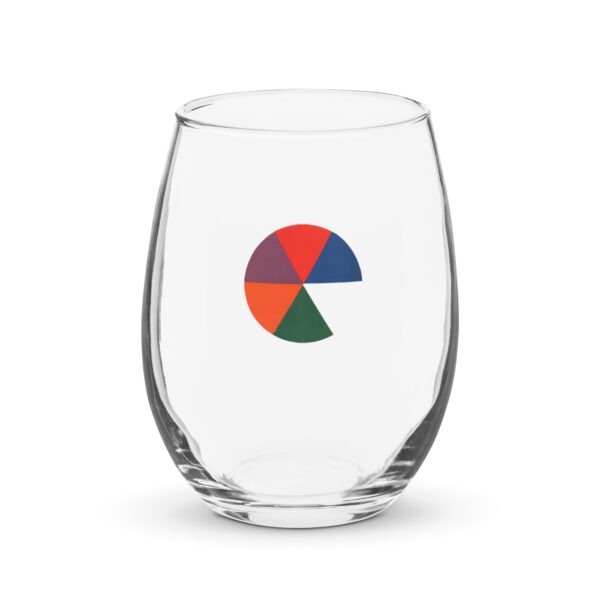
Inclusion Stemless Wine Glass

Inclusion Stemless Wine Glass

15 oz · not dishwasher safe

$15.00 Buy now →
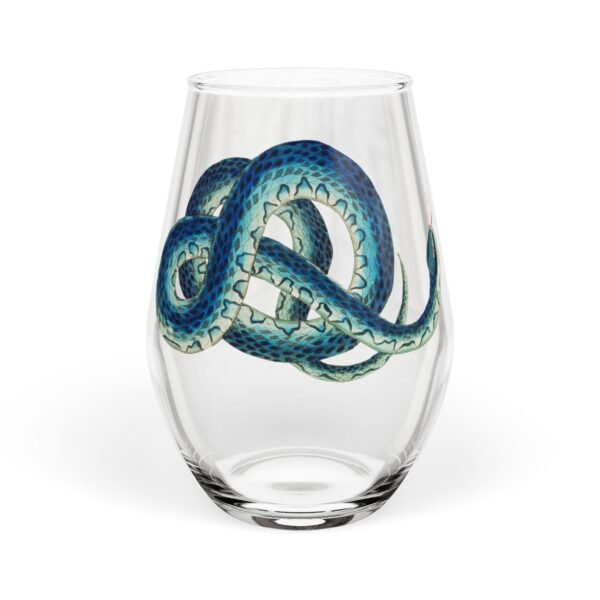
Blue Serpent Stemless Wine Glass

Blue Serpent Stemless Wine Glass

11.75 oz · hand wash

$16.58 Buy now →
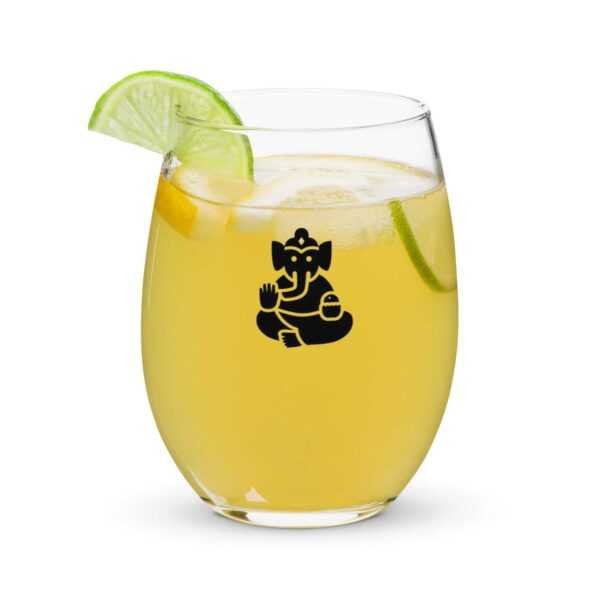
Ganesh Blessing Stemless Wine Glass

Ganesh Blessing Stemless Wine Glass

15 oz · not dishwasher safe

$19.84 Buy now →

For the cocktail hour

The mixing glasses are a good pick for the traveler who has everything.

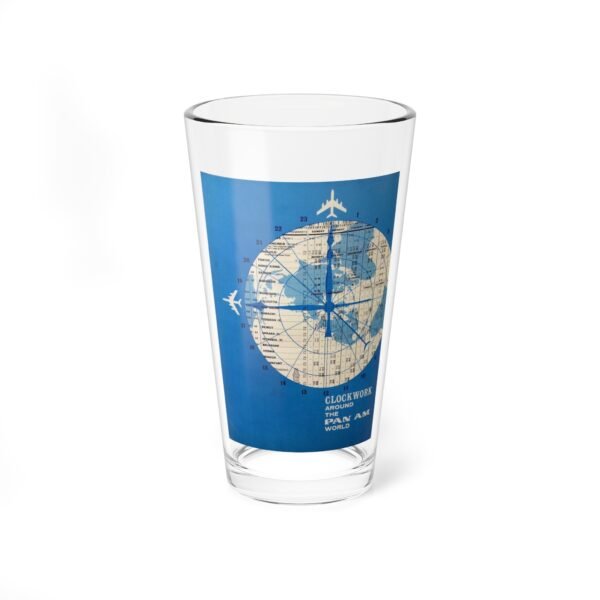
16oz Vintage World Map Mixing Glass

16oz Vintage World Map Mixing Glass

16 oz · dishwasher safe (top rack)

$15.00 Buy now →
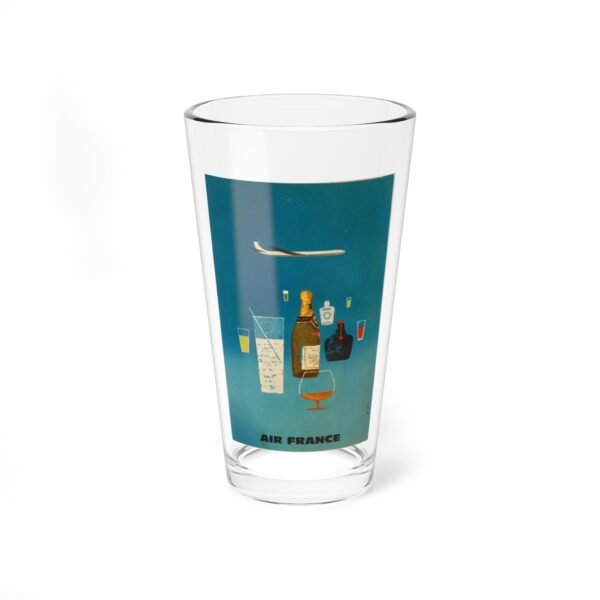
Air France Cocktail Mixing Glass

Air France Cocktail Mixing Glass

16 oz · dishwasher safe (top rack)

$15.00 Buy now →
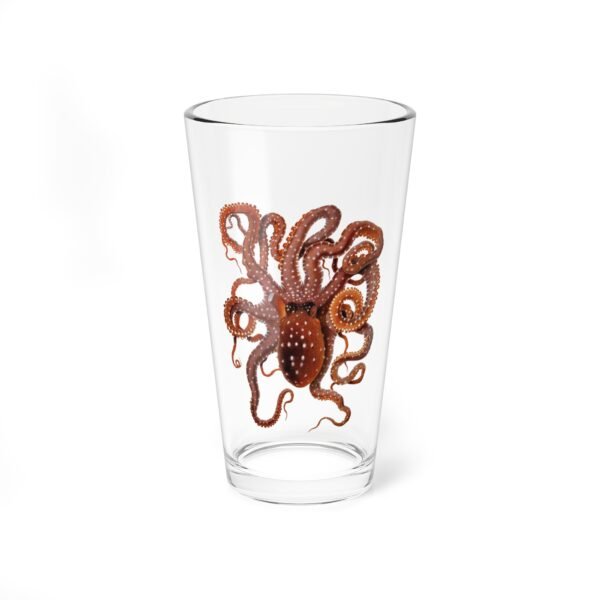
Octopus Pint Glass

Octopus Pint Glass

16 oz · dishwasher safe (top rack)

$15.00 Buy now →
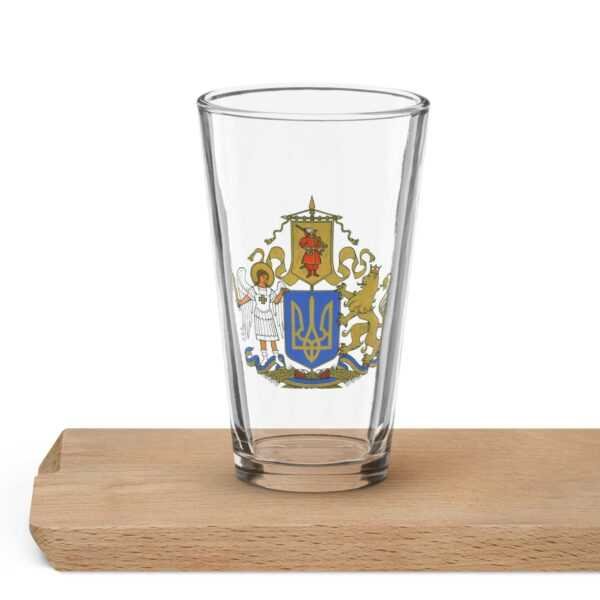
Ukrainian Crest Shaker Pint Glass

Ukrainian Crest Shaker Pint Glass

16 oz · not dishwasher safe

$16.00 Buy now →

Explore the whole bar cart

Stemless wine glasses, pint and shaker glasses, rocks glasses and specialty barware. Buy any 4 and 15% comes off automatically.

Giving

Gift ideas for the host

Arriving with a bottle is fine. Arriving with something that lasts past January is better. Eight combinations that work:

Inclusion Stemless Wine Glass

The easy host gift

One stemless wine glass plus a set of cloth napkins, about $50.

+ Abstract Patterns napkins, $34.50

Paul Klee: Cliffs by the Sea Cotton Placemat

The art lover

A Paul Klee placemat set, with a note about the painting behind it.

Or go bigger: the Klee tablecloth

Deep Crimson Tablecloth

The entertainer

A tablecloth and a pair of mixing glasses, ready for next season's party.

+ Octopus Pint Glass, $15

Air France Cocktail Mixing Glass

The traveler

The Air France or World Map mixing glass, which pairs well with our travel gear.

Or the World Map glass · Travel gear

Bauhaus Textiles: Tablecloth

The modernist

A Bauhaus Textiles tablecloth for the host who likes clean geometry.

+ Blue River Stripe runner, $39.50

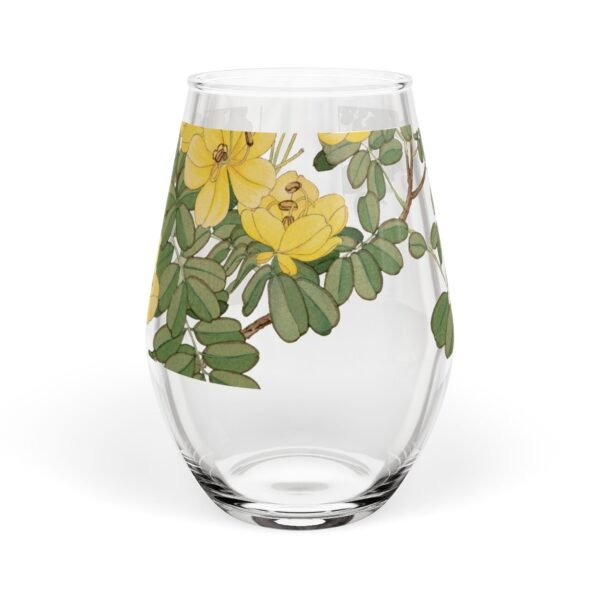
Flora Glassware: Yellow Trumpet Vine Stemless Wine Glass

The garden lover

A glass that wraps a band of yellow blooms around the bowl, with a matching yellow placemat.

+ Jasper Forest placemat, $18.50

Octopus Pint Glass

The ocean lover

Two sea creatures for the cocktail cabinet. Buy 4 or more glasses and 15% comes off automatically.

+ Blue Serpent wine glass, $16.58

Owen Jones: Tablecloth

The pattern lover

An Owen Jones tablecloth, with napkins to match its ornament.

+ Decorative Art napkins, $34.50

Find the right gift for everyone on your list

Our Holiday Gift Guide sorts the whole shop by the person you're buying for, and the Home collection has the rest of the table.

Before you order

Order by
December 12, 2026

That's the date to have gifts arrive before December 25. Shipping times vary by item, so check the estimate on each product page. Express delivery may be available at an additional cost, so get in touch if you're close to the deadline.

  • Holiday 2026
  • Holiday tableware
  • Art-inspired gifts
  • Host gifts

cgk.ink is a curated shop based in downtown Los Angeles, and a Stripe Climate member.

HOLIDAY GUIDE 2026

HOLIDAY GUIDE 2026

Holiday 2026

The cgk.ink Holiday Gift Guide

Art you can wear, carry, and live with.

Start here

Gifts sorted by the person on your list

Most holiday shopping means buying for someone whose taste you can only partly read. This guide sorts the cgk.ink shop by the person on your list, so you can skip the scrolling and go straight to pieces that fit them.

Each section points to the part of the shop where that gift lives and explains why it works.

Our approach

How we choose what goes in the shop

cgk.ink is a curated shop based in downtown Los Angeles. We pair each piece with the art or the artist that inspired it, so a gift comes with a story the recipient can repeat.

We are a Stripe Climate member, and our eco-logical collection states the recycled-material percentage in the product details where it applies. If sourcing matters to the person you are buying for, start there.

Gift for the traveler

For the person who is always traveling

The best gift for a frequent traveler is something they will use on the next trip, not a keepsake that stays in a drawer. Choose for the trip they take most often, whether that is a weekend away or a long haul, and let the art-inspired design carry the personal touch.

Shop travel gear
No products were found matching your selection.

Gift for the host

For the host and the homebody

Home goods suit the person who already owns everything they need. A blanket is useful from the first cold evening, and it looks good on a sofa or at the foot of a bed.

Shop blankets Winter 2026
No products were found matching your selection.

Gift for the art lover

For the art lover

The Fine Art Collection ties each design to the artist behind it. Pick an artist the recipient already admires, or one they would enjoy learning about. Robert Delaunay's color-driven work is a good place to begin for anyone who likes early abstraction and modernist design.

If the recipient responds to a particular tradition, our themed collections draw on Indian, East Asian, and Islamic art.

Fine Art Collection East Asian Collection

Gift by color

For the person who has a favorite color

Some people dress, decorate, and shop around one color. The Color Collection is organized into seven sections, from red through violet, so you can go straight to the color they love. It is the quickest way to shop for someone whose favorite color you know but whose style you do not.

Gift for the sun-seeker

For the person heading somewhere warm

Winter is when many people book a trip south, and swimwear is a gift that gets used right away. Pair it with a piece of travel gear for a complete gift.

Gift with a conscience

For the person who asks where it came from

Some recipients read the label before they read the card. For them, choose from the eco-logical collection, where the recycled-material percentage appears in the product details.

Include a note with the gift that names the percentage, because that is the detail this kind of recipient will look for.

Before you check out

Ordering notes

Order by DECEMBER 12, 2026* to have your gifts arrive before December 25. Shipping times vary by item, so check the estimate on each product page before you check out.

*Express delivery may be available at an additional cost. Please inquire.

Ready when you are

Start shopping

The full cgk.ink shop is open now. Join our email list to hear about new arrivals before they are announced anywhere else.

Visit the shop
  • Gift Guides
  • Holiday 2026
  • Art-Inspired Gifts
The anti-Trump: The NEW DEAL & HOW A MINDFUL GOVERNMENT RESTORED A BATTERED NATION

The anti-Trump: The NEW DEAL & HOW A MINDFUL GOVERNMENT RESTORED A BATTERED NATION

Works Progress Administration  ·  1935–1943

The New DealPut America to Work

When a battered nation was given a plan, a paycheck, and a paintbrush.

It's difficult to imagine today that, at one point, the US led the world in building societal safety nets, made significant investments in the arts, and encouraged diversity (and equity and inclusion).

The Great Depression, beginning in 1929, left roughly a quarter of American workers jobless and millions without homes or savings. FDR answered with the New Deal, and a major piece of it was the WPA. Its programs reached the entire population and delivered lasting, measurable improvements. Here we explore some of the artwork the period produced.

Book cover about the New Deal and the WPA
3.3 MillionWorkers at peak, Nov. 1938
$4.9 BillionFirst appropriation, 1935
620,000 mi.Of streets built
10,000+Bridges built

It's important to remind ourselves that we are all immigrants to this nation.

The Agency

Jobs, Not Handouts

The Works Progress Administration was established by presidential order on May 6, 1935, as a cornerstone of the Second New Deal. Led by Harry Hopkins, it put millions of jobseekers on public payrolls, mostly in construction: parks, schools, airports, housing, and a vast network of roads and bridges.

Its first appropriation of $4.9 billion was equal to about 6.7 percent of 1935 GDP. From 1939 to 1943 it operated as the Work Projects Administration.

“These ordinary men and women proved to be extraordinary beyond all expectation. They were golden threads woven in the national fabric.” — Nick Taylor, American-Made: The Enduring Legacy of the WPA

Who Qualified

American citizens 18 or older, able-bodied, unemployed, and certified as in need by an approved local relief agency.

What It Paid

$19 to $94 a month depending on region, urbanization, and skill. The average was about $52.50, roughly $1,200 in 2024 dollars.

How Long

Hours were capped at 8 a day or 40 a week, with a stated minimum of 30 hours a week.

Culture as Infrastructure

Federal Project Number One

The logo of the Federal Art Project (FAP), a component of the WPA.

Rather than simply granting money to private institutions, the government chose to employ cultural workers directly. Federal Project Number One had five parts, and within a single year it had put more than 40,000 artists and other talented workers to work.

Federal Art Project
Director: Holger Cahill5,300+ artists in 1936

Artists produced murals, posters, and illustrations for the other WPA arts programs and mounted public exhibitions. Teaching artists worked in settlement houses and community centers, reaching an estimated 50,000 children and adults, and more than 100 community art centers served roughly eight million people.

Federal Music Project
Director: Nikolai Sokoloff16,000+ musicians

Created to employ out-of-work musicians, it formed orchestras, choral groups, opera units, concert bands, and dance bands. It also taught music to well over a hundred thousand students a week, recorded folk music, and expanded access to scores through copyists, arrangers, and librarians.

Federal Theatre Project
Director: Hallie Flanagan12,700 at peak

Broadway employment had collapsed from about 25,000 workers in 1929 to about 4,000 in 1933. The project staged some 1,200 plays in four years and introduced 100 new playwrights. Alumni include Orson Welles, John Houseman, Burt Lancaster, Joseph Cotten, Canada Lee, Will Geer, and Sidney Lumet. It was the first project to end, when Congress zeroed out its funding in June 1939.

Federal Writers' Project
Director: Henry Alsberg6,686 writers in 1936

The FWP produced the American Guide Series, 378 books and pamphlets documenting the history, culture, and landmarks of every state, city, and village. It also recorded oral histories, including the Slave Narratives, and collected American folklore.

Historical Records Survey
Director: Luther H. Evans4,400+ workers

The smallest of the five, it set out to identify, collect, and conserve the nation's historical records, one of the largest bibliographic efforts ever undertaken.

What America Stands For

Give Me Your Wretched Refuse

Send these, the homeless, tempest-tost to me

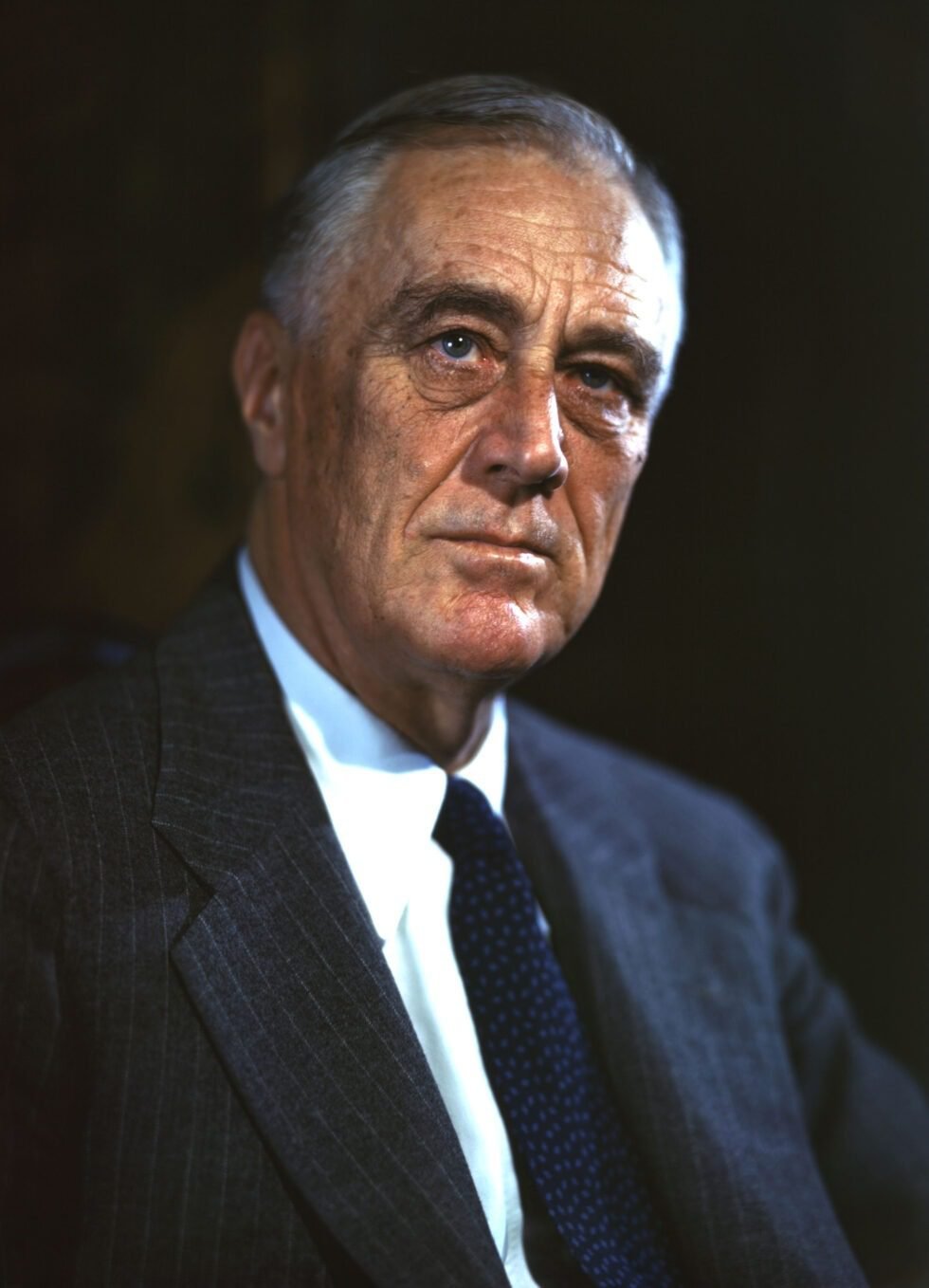
From 1933 into the war years, a sitting president actually did something good. Crippled by economic collapse, the nation found a leader with the clarity to see what it stands for: equality, freedom, and agency.

Franklin D. Roosevelt, 1944 campaign portrait
The New Colossus by Emma Lazarus and the Statue of Liberty

Not like the brazen giant of Greek fame,
With conquering limbs astride from land to land;
Here at our sea-washed, sunset gates shall stand
A mighty woman with a torch, whose flame
Is the imprisoned lightning, and her name
Mother of Exiles. From her beacon-hand
Glows world-wide welcome; her mild eyes command
The air-bridged harbor that twin cities frame.
“Keep, ancient lands, your storied pomp!” cries she
With silent lips. “Give me your tired, your poor,
Your huddled masses yearning to breathe free,
The wretched refuse of your teeming shore.
Send these, the homeless, tempest-tost to me,
I lift my lamp beside the golden door!”

Emma Lazarus  ·  November 2, 1883
From Our Studio

The WPA Collection

Designs inspired by the posters, parks, and spirit of the era, made in DTLA.

No products were found matching your selection.
Kamisaka Sekko & Area Rugs

Kamisaka Sekko & Area Rugs

Journal · Home & Decor

The floor is your fourth wall

How to use area rugs in decor: anchor a room, define a zone, and put art underfoot.

Walk into any room that feels finished and look down. Chances are a rug is doing quiet, heavy lifting. Walls get the art and shelves get the objects, but the floor is the largest uninterrupted surface in most homes, and an area rug is the easiest way to make it part of the design instead of an afterthought.

A rug anchors the room

Furniture floats awkwardly until something ties it together. A rug tells the eye where the room begins and ends, and makes a sofa, chairs, and coffee table read as one intentional group.

Define zones

Open plans and DTLA-style lofts are great for light and flow, but they can feel undefined. Use one rug for the living area, another under the dining table, and a runner to mark the entry. No walls, no construction.

Bring art to the floor

A bold graphic, a painterly pattern, or a color-blocked design can be the art piece of the room, especially when the walls are full or you are renting. Let the rug carry the personality and keep everything else a little calmer.

Add texture and warmth

Hard floors look sleek but can feel cold. Pair a smooth leather chair with a chunky woven rug, or a clean-lined sofa with something low-pile and graphic. Contrast is what makes a space feel collected.

Layer for depth

Place a smaller patterned rug over a larger neutral one, such as a jute or flatweave base. Keep one rug quiet and let the other speak, and swap the top layer seasonally.

Choose materials with care

Match the fiber to the room: durable and easy to clean for traffic, plusher for bedrooms. When a piece uses recycled materials, we state the percentage. The greenest rug is the one you keep for years.

Get the size right

The most common rug mistake is buying too small. Use these rules of thumb before you buy.

Living room

Ideally all furniture legs sit on the rug. At minimum, the front legs of every seat rest on it.

Dining room

Chairs should stay on the rug when pulled out, usually about 24 inches beyond the table on every side.

Bedroom

Place it under the bottom two-thirds of the bed, extending past the sides, or use runners on either side.

Hallway

Leave a few inches of bare floor on each side of a runner so it looks proportioned to the space.

Featured Artist · Rugs

Kamisaka Sekka

神坂 雪佳 · 1866–1942 · Kyoto

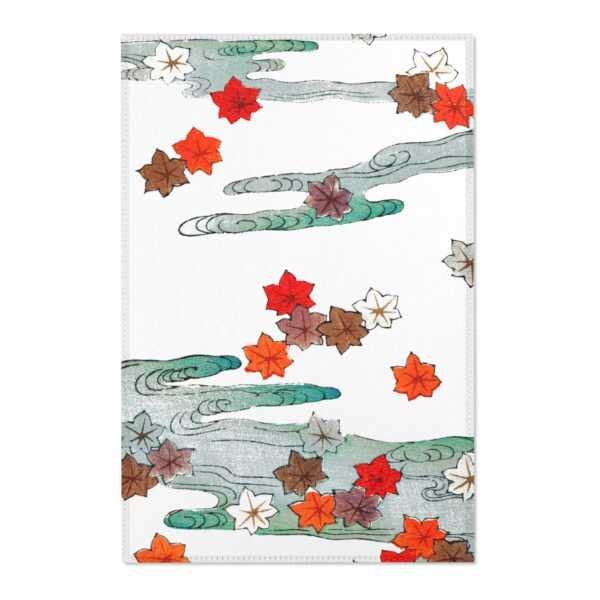
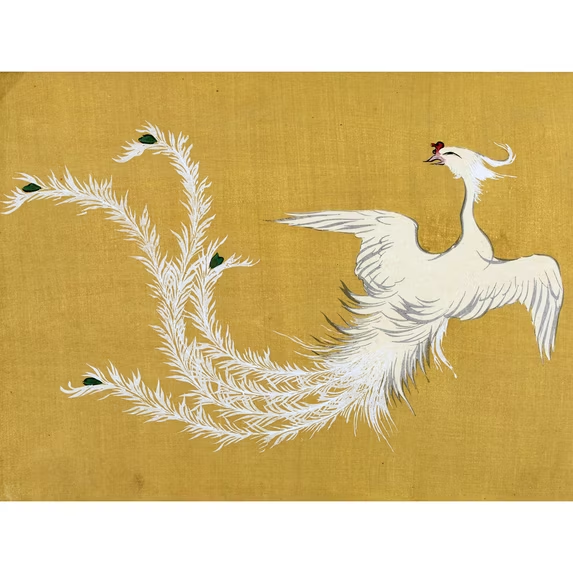
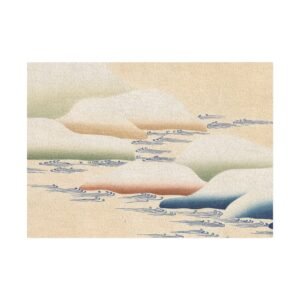
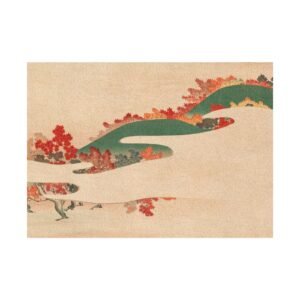
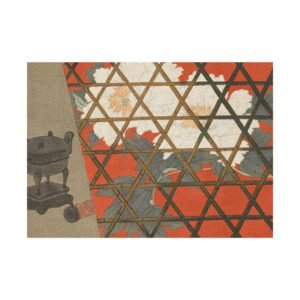
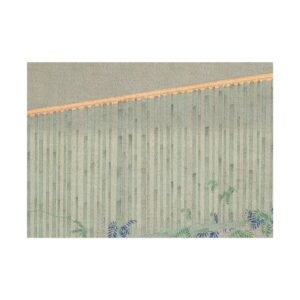
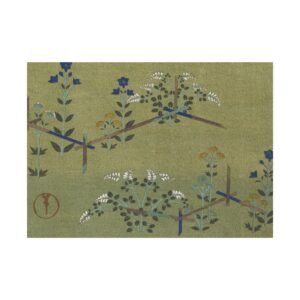
Kamisaka Sekka was a Kyoto designer who carried the bold, flattened elegance of the Rimpa tradition into the modern age. His pattern books, including Momoyogusa (1909–10), turned waves, plants, and everyday forms into graphic compositions that still feel strikingly current. Underfoot, that same clarity of line and color makes a room feel like a gallery. Here are the rugs we have curated in his spirit.

Quick styling cheat sheet

  • Pull one or two colors from the rug into pillows, throws, or ceramics.
  • If your furniture is patterned, choose a simpler rug, and vice versa.
  • Match mood to room: graphic and bold for modern spaces, tonal for calm ones.
  • Add a quality rug pad for grip, floor protection, and a longer-lasting rug.
  • Rotate your rug every six to twelve months to even out wear and sun exposure.
  • Let one piece lead. If the rug is the star, quiet the walls.

Start from the ground up

A great rug does not just cover a floor. It sets the tone for everything above it. Explore the home goods and decor collections at cgk.ink for art-inspired pieces, curated for every corner of your space.

Shop the collection
No products were found matching your selection.