
Shop the Collection
Six forms, one tradition. Choose a block to jump in.
the ART of INDIA
More than 1.4 billion people. Twenty-eight states and eight union territories. Twenty-two officially recognized languages, with hundreds more spoken at home, in markets and in temples. India holds more living traditions under one flag than almost anywhere on Earth.
That diversity has produced an extraordinary range of visual art. Some traditions began on the mud walls of village homes. Others were painted for royal courts, and some were carried from town to town as portable shrines. Many are still practiced today by families who have handed the craft down for generations.
We're not scholars. We're admirers. What follows is our own beginner's guide to the painting traditions that inspired this collection: where they come from, what to look for, and why they still feel so alive in the 21st century.
Madhubani
Mithila region · BiharAlso called Mithila painting, this tradition was long practiced by women, who decorated the walls of their homes for weddings, festivals and rites of passage. Local legend links it to the marriage of Sita and Rama. In the mid-20th century, artists began working on paper and cloth, and the style reached audiences far beyond the village.
Look forEvery inch of space filled, double-line borders, fish, peacocks, suns and deities rendered in bold color or fine line.
Warli
Warli community · MaharashtraAmong India's most recognizable tribal art forms, Warli painting uses the simplest possible vocabulary to tell the story of a whole community: farming, harvest, dancing, weddings and the forest. Traditionally it was painted in white rice paste on earthen walls. The artist Jivya Soma Mashe helped bring it to international attention in the 1970s.
Look forStick figures built from circles and triangles, white on terracotta, and the spiraling tarpa dance.
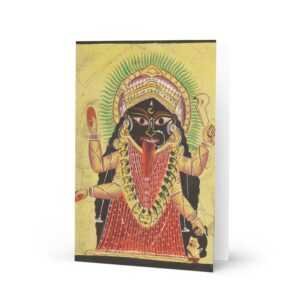
Kalighat
Kalighat Kali Temple · KolkataIn 19th-century Calcutta, scroll painters known as patuas set up near the Kali temple and began selling quick, affordable paintings to pilgrims. Their subjects ranged from gods and goddesses to sharp, witty scenes of city life. These fluid watercolor pictures later influenced modern Indian artists. London's Victoria and Albert Museum now holds one of the largest collections in the world.
Look forSweeping outlines, rounded figures, plain backgrounds and a touch of satire.
Phad
Bhilwara region · RajasthanA phad is a long painted cloth scroll, sometimes many feet long, that tells the epic of a folk hero-deity such as Pabuji or Devnarayan. Traveling priest-singers called bhopas unroll it after dark and perform the story by lamplight, which turns the painting into a moving temple.
Look forCrowded, story-packed compositions; the largest figure is the hero; strong reds, yellows and oranges.
Mughal Miniature
Imperial courts · 16th–18th centuryBorn from a meeting of Persian and Indian painting traditions, Mughal miniatures flourished in the court workshops of emperors such as Akbar and Jahangir. Painters recorded royal life, battles, hunts and the natural world with remarkable realism. Their animal and bird studies are still celebrated today.
Look forTiny brushwork, lifelike portraits in profile, gold highlights and richly patterned borders.
Gond
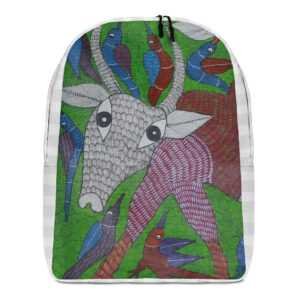
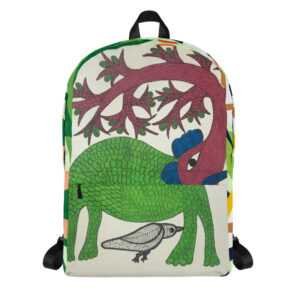
Gond community · Central IndiaFor the Gond people, one of India's largest Adivasi communities, the natural world is alive with spirit. Their paintings turn trees, animals and myths into shimmering patterns. The late artist Jangarh Singh Shyam carried the tradition from village walls to galleries. Natural pigments once used for the work have largely given way to acrylics.
Look forForms filled with dots, dashes and fine lines that make still images seem to vibrate with movement.
Kerala Murals
Temples & palaces · KeralaThe walls of Kerala's temples and palaces carry centuries-old frescoes of Hindu gods and epics: Krishna, Shiva, Shakti and more. Painters followed classical rules for proportion and posture. They worked in a restrained palette that is often described as five colors.
Look forLarge, ornamented figures with expressive eyes, and a palette of ochre-red, yellow, green, black and white.
Pichhwai
Nathdwara · RajasthanThe name means “that which hangs behind.” These large cloth paintings hang behind the image of Shrinathji, a form of Krishna, in the temple at Nathdwara. Temples change them with the seasons and festivals, so each one sets a different scene: monsoon, harvest or spring.
Look forLotus ponds, cows, gopis and Krishna in dark blue, all framed with jewel-like detail.
Pattachitra
OdishaFrom the Sanskrit patta (cloth) and chitra (picture), Pattachitra is painted by hereditary artists called chitrakars. The work is closely tied to the worship of Lord Jagannath at Puri. The canvas is prepared by hand, and colors traditionally come from minerals, stone and shell.
Look forElaborate decorative borders, stylized figures with large eyes, and dense floral and leaf patterns.
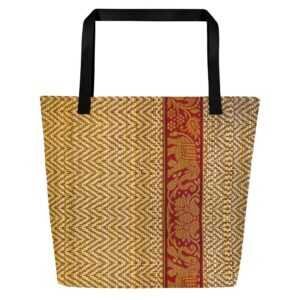
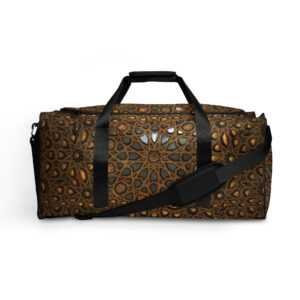
Our designs draw on these traditions, from Ganesh and Krishna to ornate elephants and royal mandalas. They're printed on tote bags, pillows, notebooks, apparel and more, made on demand to cut waste.

Showing 1–6 of 11 resultsSorted by latest
-
Jaipur Restful Pillow
Price range: $22.00 through $30.00 -

Ragmala & Krishna Pillow
Price range: $28.00 through $30.00 -

Two Ladies Embracing At A Jharoka Premium Pillow
$39.00 -
Love: Radha and Krishna Premium Pillow
$28.00 -

Pichwai Style Premium Pillow
$27.00 -
Indian Embroidery on Crimson Silk, Matthew Digby Wyatt (1851-1853) Square Pillow
Price range: $28.00 through $55.00
-
 -32%
-32%Ganesha Stemless Wine Glass
Original price was: $19.84.$13.50Current price is: $13.50. -

Ganesh Blessing Stemless Wine Glass
$19.84 -
 -10%
-10%Honeybee Stemless Wine Glass
Original price was: $15.00.$13.50Current price is: $13.50. -
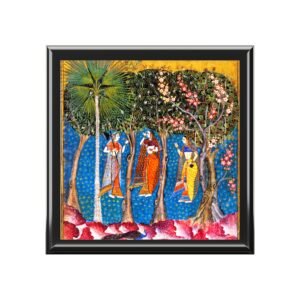
Hand-Painted Indian Miniature Jewelry Box — Traditional Rajasthani Ladies Design
$59.00 -
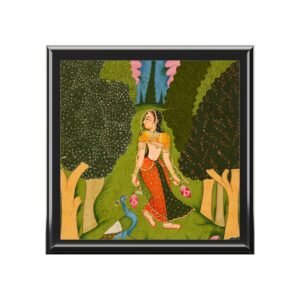
Kakubha Ragini: Jewelry Box
$59.00 -
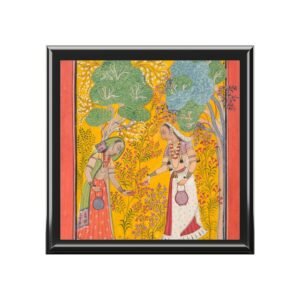
Vasanti Ragini, Page from a Ragamala Series: Jewelry Box
$59.00



further READING
from cgk.ink writes:
- 01 The Importance of Elephants The elephant as a symbol of wisdom, strength and good fortune across Indian art and culture. Read more →
- 02 Intricate Ragamala: “the Garland of Memories” Miniature paintings that turn India’s classical musical modes into images of mood, season and time of day. Read more →
- 03 the Power of the Mandala The sacred circle: from Buddhist meditation practice to Carl Jung’s symbol of wholeness. Read more →
- 04 the Genres of Indian Art A quick look at major painting traditions, including Madhubani, Warli and Kalighat. Read more →