Three Patterns · Three Journeys
Global Patterns: How Indian Chintz, Persian Paisley, and Japanese Woodblocks Traveled the World to Shape Modern Style
Three textiles, three journeys: how Persian paisley, Indian chintz, and Japanese woodblock prints carried Eastern design into the West.
The Language of Pattern · 01 / 03
The Trans-Oceanic Voyage of Paisley
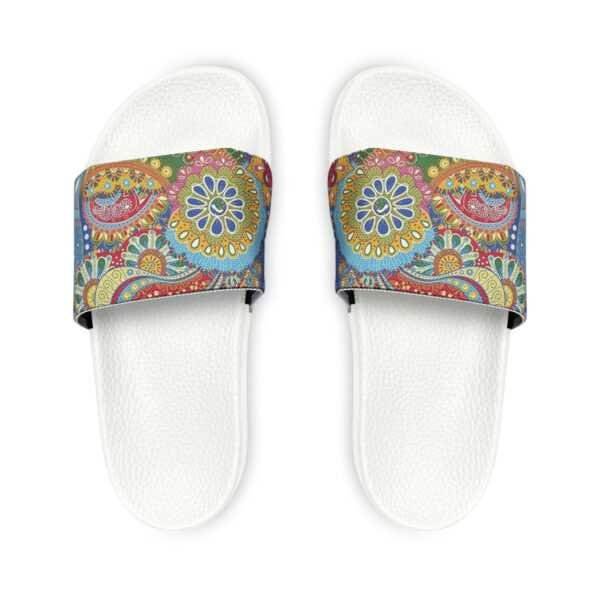
The Trans-Oceanic Voyage of Paisley traces how the boteh, a stylized floral spray rooted in ancient Persian design, journeyed from the courts of the Mughal Empire to the looms of Paisley, Scotland. In Persia and Mughal India, the teardrop-shaped motif, often read as a cypress, a leafy bud, or a sprig of blossoms, adorned the finest Kashmiri shawls, woven by hand over months and worn as emblems of rank and refinement. In the late 18th century, the East India Company carried these prized shawls back to Britain, where they became fashionable among the upper classes and sparked a hunger for the exotic that imported supply could never satisfy. Weavers in Edinburgh, Norwich, and eventually the Scottish town of Paisley set about imitating them, and the introduction of the Jacquard loom let them reproduce the intricate patterns faster and far more cheaply than any Kashmiri artisan could. As prices fell, the boteh slipped from the shoulders of aristocrats into the wardrobes of the rising middle class, and the town of Paisley became so closely identified with the design that its name replaced the original. What began as a symbol of Eastern royalty was transformed, through trade, technology, and fashion, into a classic Western staple that still appears on ties, scarves, bandanas, and linings today.
Wear the Pattern


The Language of Pattern · 02 / 03
How Chintz Conquered Europe
How Chintz Conquered Europe begins with the 17th-century craze for Indian painted and printed cotton, a fabric unlike anything European weavers could produce. Carried by the Dutch and English East India Companies from the Coromandel Coast and Gujarat, chintz dazzled buyers with its vivid botanical designs of flowering vines, exotic blooms, and trees of life, rendered through a sophisticated mordant and resist-dyeing process that kept the colors bright wash after wash, something European wool, linen, and silk dyes could not match.
Light, washable, and affordable, it quickly moved from curiosity to necessity, appearing in bed hangings, window curtains, upholstery, and everyday clothing across England, France, and the Netherlands. The flood of imports alarmed domestic wool and silk manufacturers, who lobbied hard for protection, and governments responded with sweeping prohibitions, including the French ban of 1686 and the British Calico Acts of 1700 and 1721, which only made the fabric more desirable and fueled a thriving black market.
Those bans ultimately pushed European printers in places like Marseille, Amsterdam, and London to learn the techniques themselves, laying the groundwork for the cotton printing industry that would help drive the Industrial Revolution. Meanwhile, chintz rewrote the rules of interior decoration, replacing the heavy, somber textiles of earlier centuries with bright, washable, pattern-rich fabrics, and establishing the floral-covered, layered room as a lasting ideal of European domestic comfort and taste.
The Language of Pattern · 03 / 03
The Woodblock Revolution
Rules the prints broke
- 01 Flat planes of unmodulated color
- 02 Bold contour lines
- 03 Asymmetrical layouts
- 04 Dramatic cropping
- 05 High vantage points
- 06 No Renaissance perspective or shading
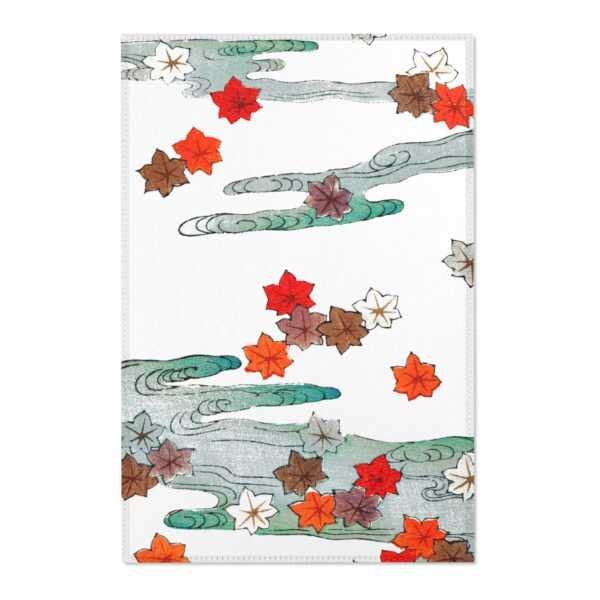
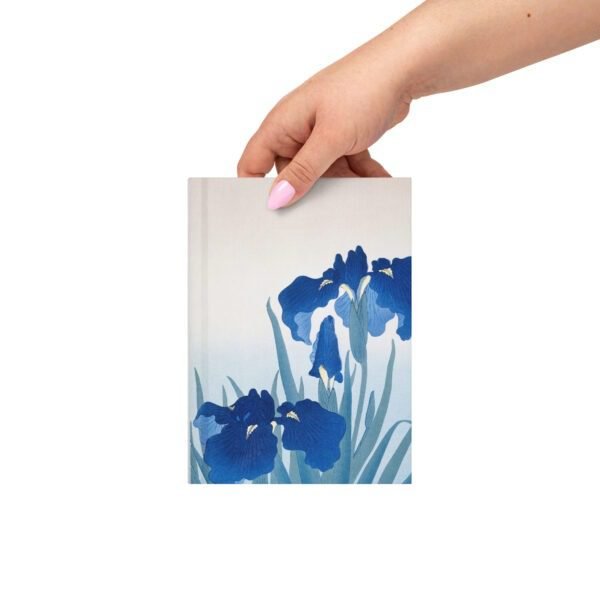
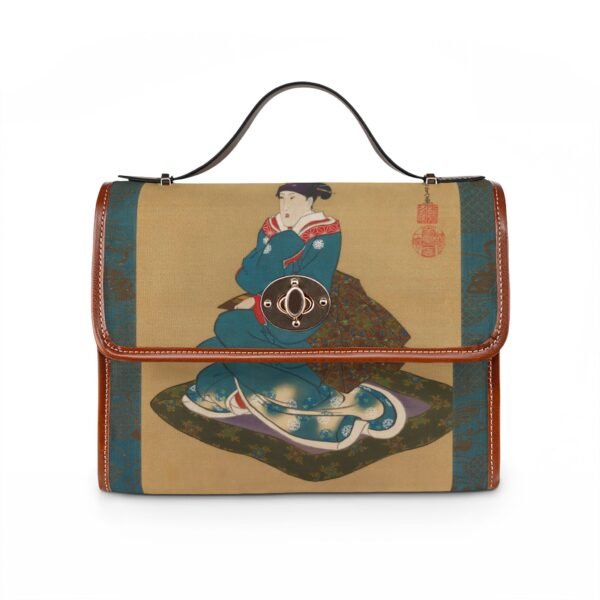
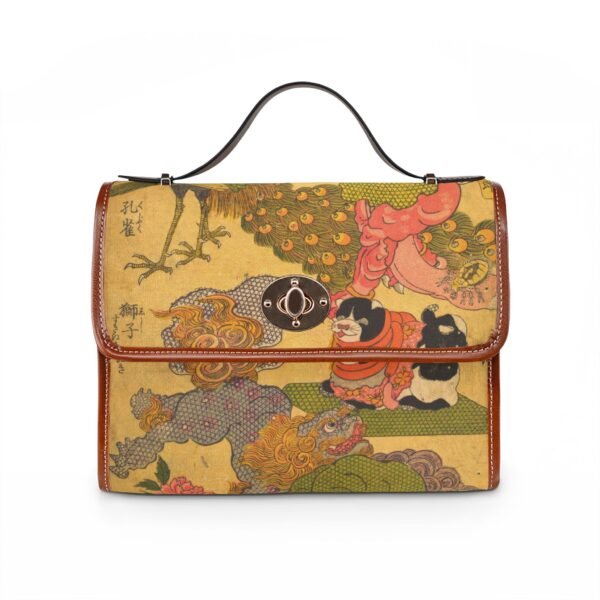
The Woodblock Revolution examines how Japanese ukiyo-e prints and Eastern textile traditions reshaped Western ideas of composition after Japan reopened to trade in the 1850s. As prints, kimono, and stencil-dyed fabrics poured into Paris and London, often arriving as packing material for ceramics, European artists and designers encountered a visual language that broke nearly every academic rule: flat planes of unmodulated color, bold contour lines, asymmetrical layouts, dramatic cropping, high vantage points, and a graceful disregard for Renaissance perspective and shading.
This wave of Japonisme electrified painters like Monet, Degas, and Van Gogh, who borrowed its compositions and color blocking, and it transformed the decorative arts just as profoundly. Designers saw in Japanese textile frameworks, with their repeating motifs, stylized nature, and balanced use of negative space, a model for treating pattern as structure rather than ornament. Art Nouveau grew directly from this inheritance, with its sinuous whiplash lines, flattened botanical forms, and integrated designs that unified poster, textile, furniture, and architecture.
The same principles of simplification, flatness, and abstraction carried forward into the early twentieth century, helping loosen the grip of realism and clearing the path toward Modernism's embrace of pure form, graphic economy, and design as a total, everyday art.