
No Results Found
The page you requested could not be found. Try refining your search, or use the navigation above to locate the post.
The importance of the Bauhaus lies in its revolutionary approach to design, architecture, and art education that emphasized functionality, simplicity, and the integration of art with mass production, creating a lasting influence on modern design across many fields, from furniture and buildings to graphic design and beyond. Despite being a short-lived German school (1919-1933), its principles were spread worldwide, especially after its closure by the Nazis, pioneering the concept of design as a holistic, problem-solving discipline.
The school existed in three German cities—Weimar, from 1919 to 1925; Dessau, from 1925 to 1932; and Berlin, from 1932 to 1933—under three different architect-directors: Walter Gropius from 1919 to 1928; Hannes Meyer from 1928 to 1930; and Ludwig Mies van der Rohe from 1930 until 1933, when the school was closed by its own leadership under pressure from the Nazi regime, having been painted as a centre of communist intellectualism.[4] Internationally, former key figures of Bauhaus were successful in the United States and became known as the avant-garde for the International Style.[5] The White city of Tel Aviv, to which numerous Jewish Bauhaus architects emigrated, has the highest concentration of the Bauhaus’ international architecture in the world.
The changes of venue and leadership resulted in a constant shifting of focus, technique, instructors, and politics. For example, the pottery shop was discontinued when the school moved from Weimar to Dessau, even though it had been an important revenue source; when Mies van der Rohe took over the school in 1930, he transformed it into a private school and would not allow any supporters of Hannes Meyer to attend it.
The Bauhaus was founded in 1919 in the city of Weimar by German architect Walter Gropius (1883–1969).
Its core objective was a radical concept: to reimagine the material world to reflect the unity of all the arts. Gropius explained this vision for a union of art and design in the Proclamation of the Bauhaus (1919), which described a utopian craft guild combining architecture, sculpture, and painting into a single creative expression. Gropius developed a craft-based curriculum that would turn out artisans and designers capable of creating useful and beautiful objects appropriate to this new system of living.
The Bauhaus combined elements of both fine arts and design education. The curriculum commenced with a preliminary course that immersed the students, who came from a diverse range of social and educational backgrounds, in the study of materials, color theory, and formal relationships in preparation for more specialized studies. This preliminary course was often taught by visual artists, including Paul Klee (1987.455.16), Vasily Kandinsky (1866–1944), and Josef Albers (59.160), among others.
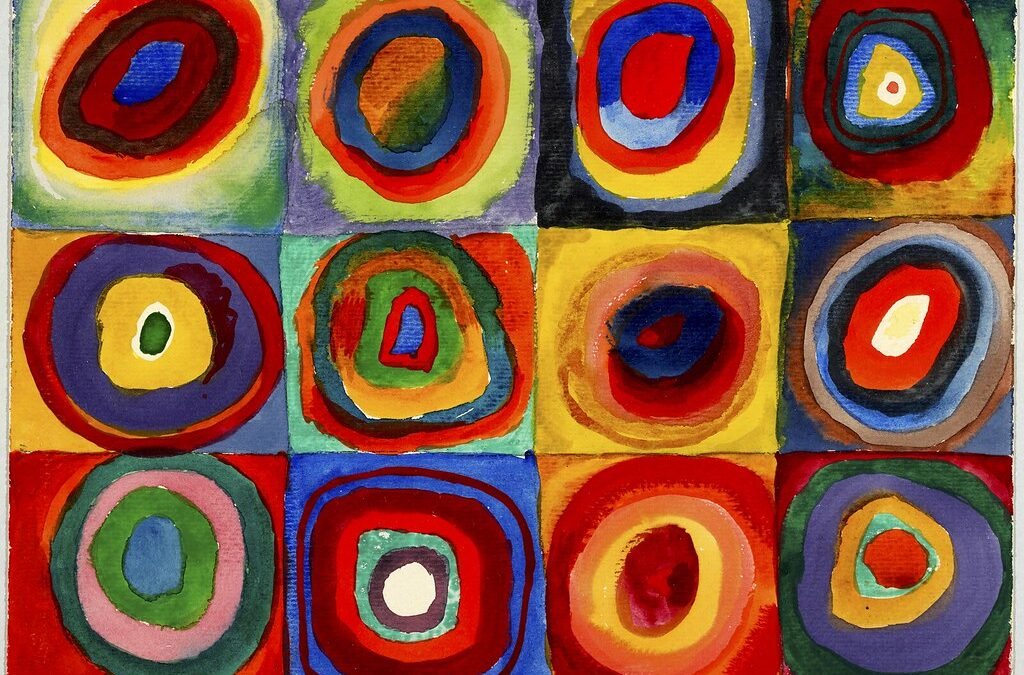
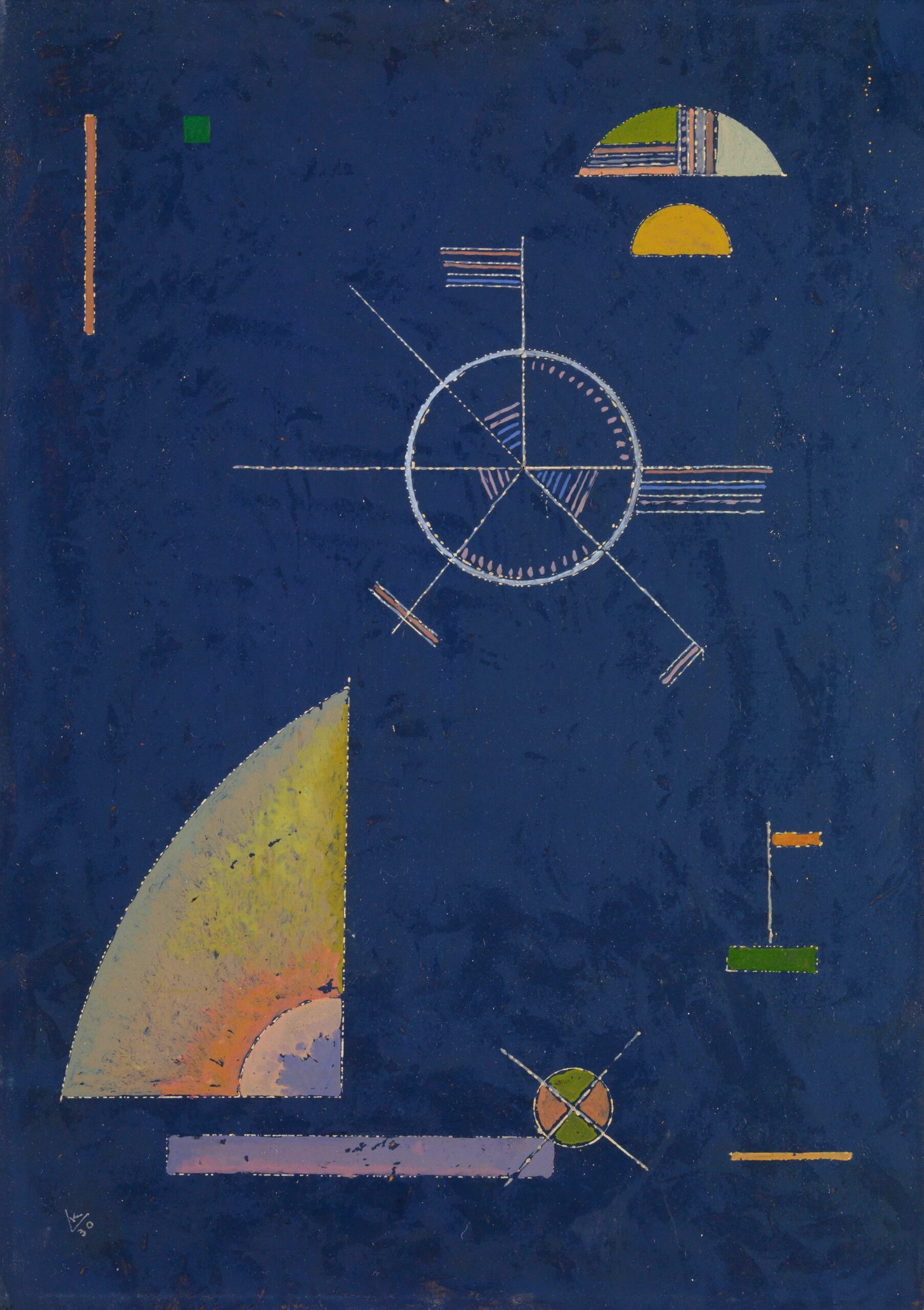
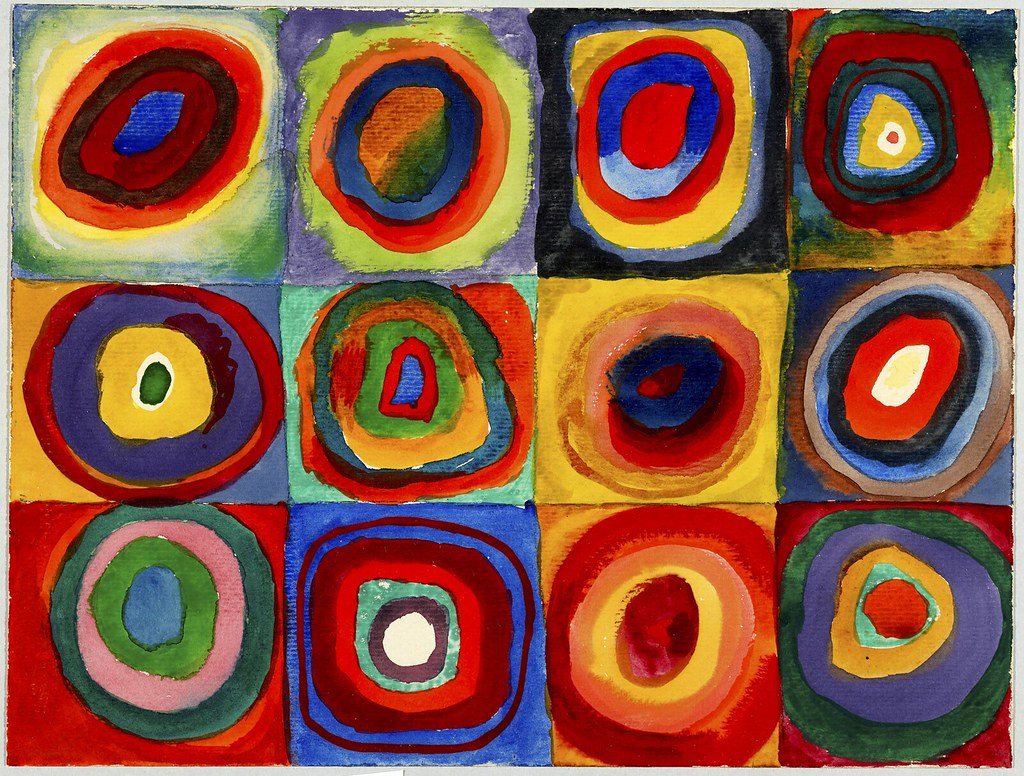
Wassily Kandinsky (1866–1944):
A leading figure in abstract art, he was a member of the influential Der Blaue Reiter group and taught at the Bauhaus.
Paul Klee (1879–1940):
Also a member of Der Blaue Reiter, Klee was known for his colorful, geometric abstract paintings and taught at the Bauhaus from 1921 to 1932.
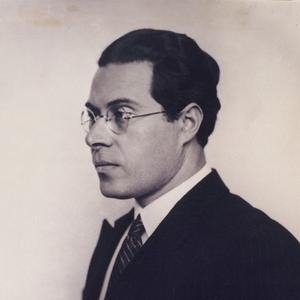
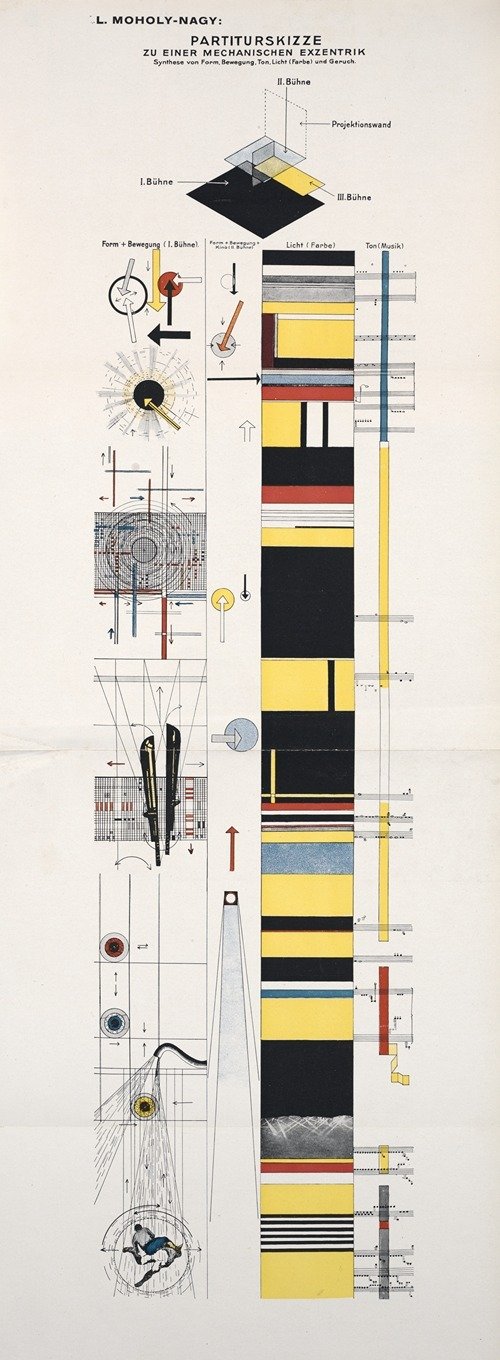
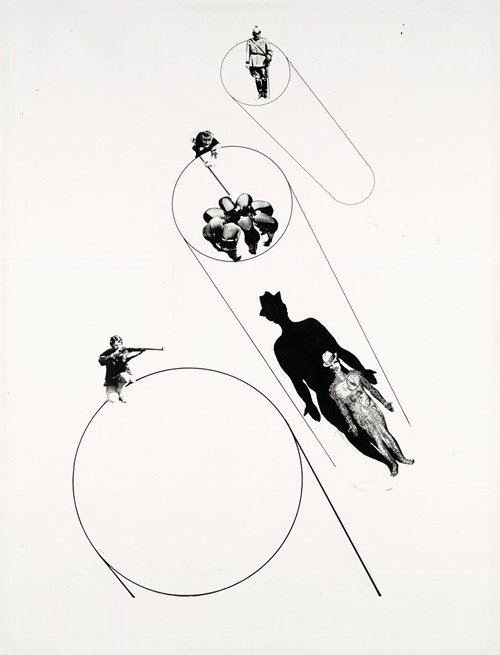
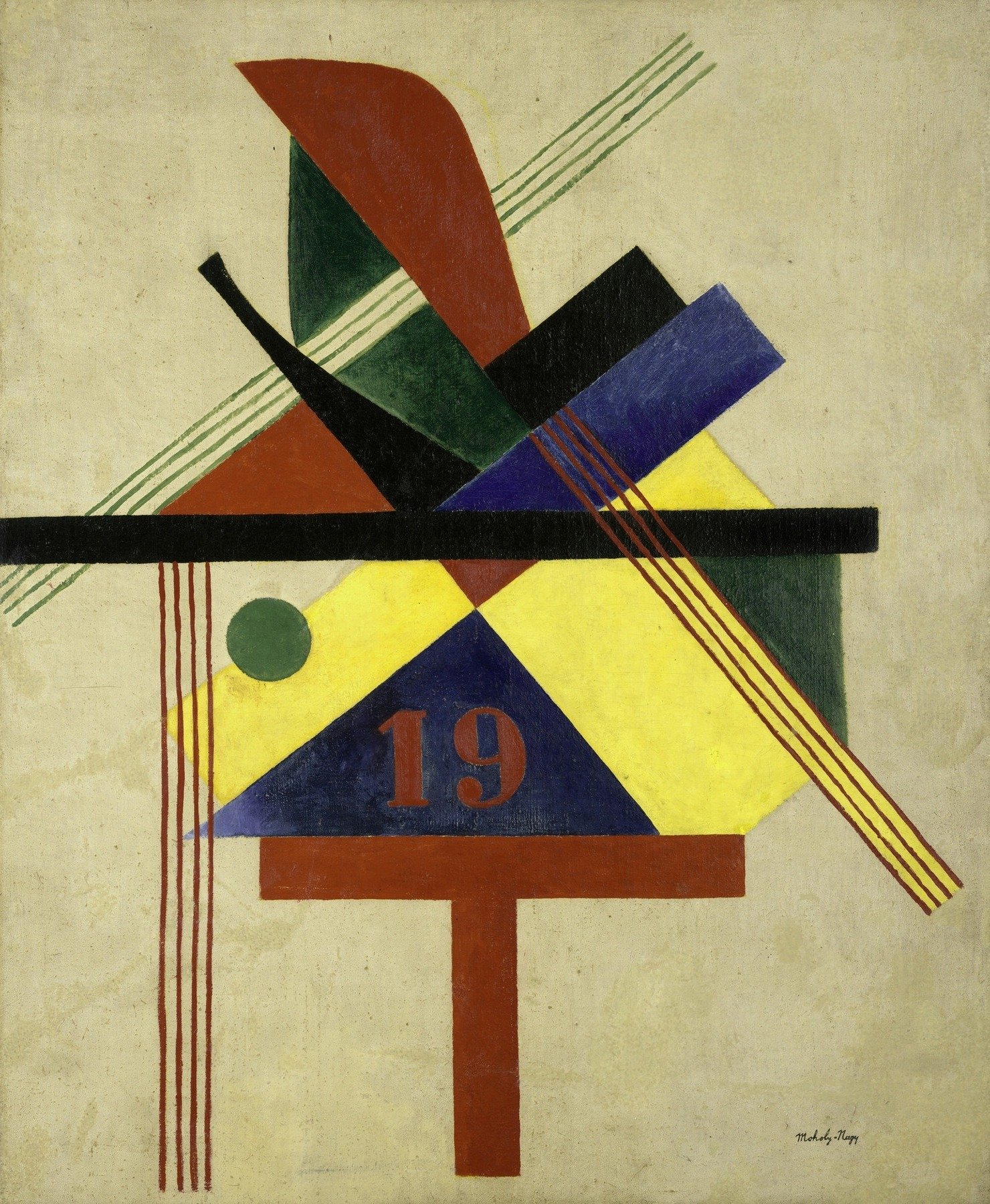
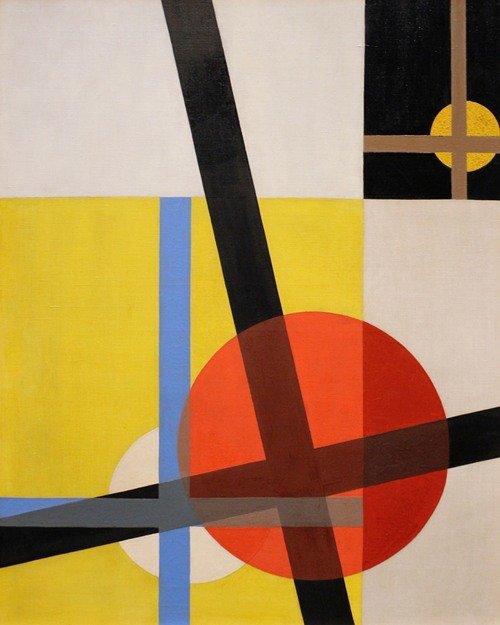
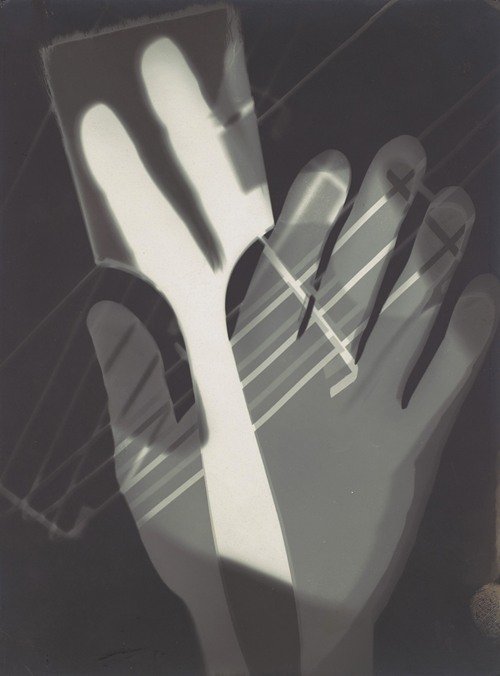
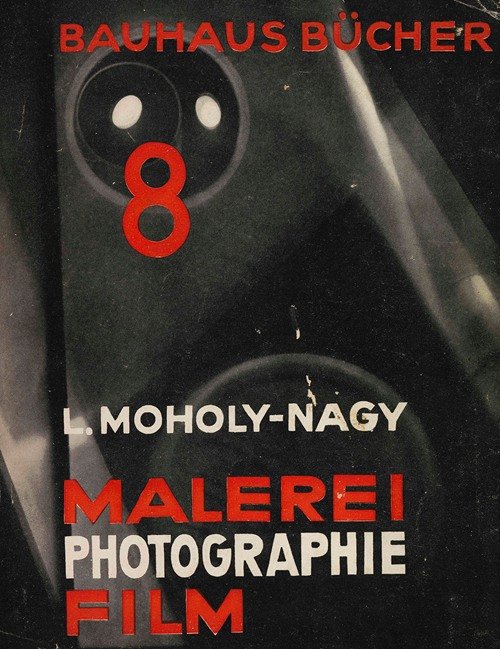
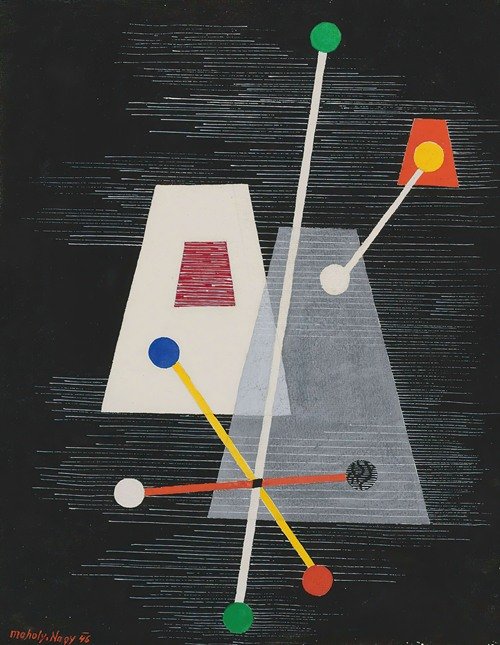
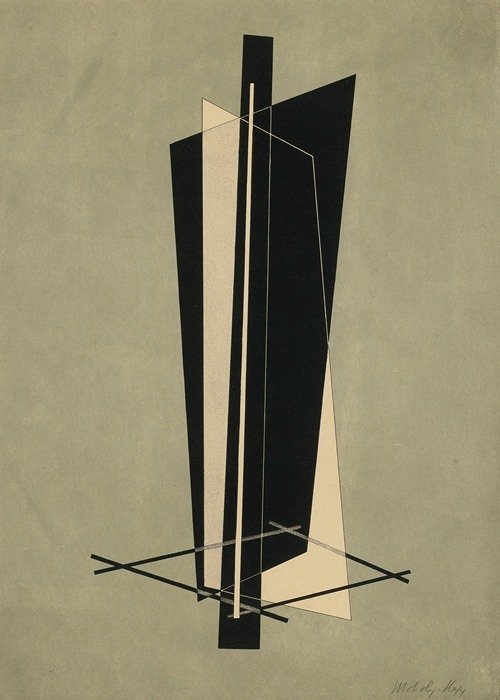
László Moholy-Nagy (1895–1946):
A Hungarian artist who taught painting and photography, known for his work in kinetic sculpture and his use of light and form.
Josef Albers (1888–1976):
A German artist who was both a student and later a master at the Bauhaus, known for his work with color and geometric forms.
Oskar Schlemmer (1888–1943):
A painter and sculptor who designed the Bauhaus emblem and taught painting, known for his work on the ballet “The Triadic Ballet”.
Anni Albers (1899–1994):
A significant textile artist and printmaker, she was a key figure in the women artists of the Bauhaus.
Although Gropius’ initial aim was a unification of the arts through craft, aspects of this approach proved financially impractical. While maintaining the emphasis on craft, he repositioned the goals of the Bauhaus in 1923, stressing the importance of designing for mass production. It was at this time that the school adopted the slogan “Art into Industry.”
In 1925, the Bauhaus moved from Weimar to Dessau, where Gropius designed a new building to house the school. This building contained many features that later became hallmarks of modernist architecture, including steel-frame construction, a glass curtain wall, and an asymmetrical, pinwheel plan, throughout which Gropius distributed studio, classroom, and administrative space for maximum efficiency and spatial logic.
The cabinetmaking workshop was one of the most popular at the Bauhaus. Under the direction of Marcel Breuer (1983.366) from 1924 to 1928, this studio reconceived the very essence of furniture, often seeking to dematerialize conventional forms such as chairs to their minimal existence. Breuer theorized that eventually chairs would become obsolete, replaced by supportive columns or air. Inspired by the extruded steel tubes of his bicycle, he experimented with metal furniture, ultimately creating lightweight, mass-producible metal chairs. Some of these chairs were deployed in the theater of the Dessau building.

The Bauhaus weaving workshop was one of the most inventive and commercially successful departments of the pioneering 20th-century school of art and design. Notably, most of the artists involved were women.
These women were “exploring textiles’ potential, both as works of art and as utilitarian fabrics,” said Laura Muir, research curator for academic and public programs and curator of The Bauhaus and Harvard at the Harvard Art Museums.
Collaboration and innovation were paramount in the workshop: artists pursued new designs suitable for industrial production and experimented with novel materials and techniques.
Source —Harvard Art Museums
The textile workshop, especially under the direction of designer and weaver Gunta Stölzl (1897–1983), created abstract textiles suitable for use in Bauhaus environments.
Students studied color theory and design as well as the technical aspects of weaving. Stölzl encouraged experimentation with unorthodox materials, including cellophane, fiberglass, and metal. Fabrics from the weaving workshop were commercially successful, providing vital and much needed funds to the Bauhaus. The studio’s textiles, along with architectural wall painting, adorned the interiors of Bauhaus buildings, providing polychromatic yet abstract visual interest to these somewhat severe spaces.
While the weaving studio was primarily comprised of women, this was in part due to the fact that they were discouraged from participating in other areas. The workshop trained a number of prominent textile artists, including Anni Albers (1899–1994), who continued to create and write about modernist textiles throughout her life.
Metalworking was another popular workshop at the Bauhaus and, along with the cabinetmaking studio, was the most successful in developing design prototypes for mass production. In this studio, designers such as Marianne Brandt (2000.63a–c), Wilhelm Wagenfeld (1986.412.1–16), and Christian Dell (1893–1974) created beautiful, modern items such as lighting fixtures and tableware. Occasionally, these objects were used in the Bauhaus campus itself; light fixtures designed in the metalwork shop illuminated the Bauhaus building and some faculty housing.
Brandt was the first woman to attend the metalworking studio, and replaced László Moholy-Nagy (1987.1100.158) as studio director in 1928. Many of her designs became iconic expressions of the Bauhaus aesthetic. Her sculptural and geometric silver and ebony teapot (2000.63a–c), while never mass-produced, reflects both the influence of her mentor, Moholy-Nagy, and the Bauhaus emphasis on industrial forms. It was designed with careful attention to functionality and ease of use, from the nondrip spout to the heat-resistant ebony handle.
The typography workshop, while not initially a priority of the Bauhaus, became increasingly important under figures like Moholy-Nagy and the graphic designer Herbert Bayer (2001.392). At the Bauhaus, typography was conceived as both an empirical means of communication and an artistic expression, with visual clarity stressed above all. Concurrently, typography became increasingly connected to corporate identity and advertising. The promotional materials prepared for the Bauhaus at the workshop, with their use of sans serif typefaces and the incorporation of photography as a key graphic element, served as visual symbols of the avant-garde institution.
Gropius stepped down as director of the Bauhaus in 1928, succeeded by the architect Hannes Meyer (1889–1954). Meyer maintained the emphasis on mass-producible design and eliminated parts of the curriculum he felt were overly formalist in nature. Additionally, he stressed the social function of architecture and design, favoring concern for the public good rather than private luxury. Advertising and photography continued to gain prominence under his leadership.
Under pressure from an increasingly right-wing municipal government, Meyer resigned as director of the Bauhaus in 1930. He was replaced by architect Ludwig Mies van der Rohe (1980.351). Mies once again reconfigured the curriculum, with an increased emphasis on architecture. Lilly Reich (1885–1947), who collaborated with Mies on a number of his private commissions, assumed control of the new interior design department.
Other departments included weaving, photography, the fine arts, and building. The increasingly unstable political situation in Germany, combined with the perilous financial condition of the Bauhaus, caused Mies to relocate the school to Berlin in 1930, where it operated on a reduced scale. He ultimately shuttered the Bauhaus in 1933.
During the turbulent and often dangerous years of World War II, many of the key figures of the Bauhaus emigrated to the United States, where their work and their teaching philosophies influenced generations of young architects and designers.
Breuer and Gropius taught at Harvard. Josef and Anni Albers taught at Black Mountain College, and later Josef taught at Yale.
Moholy-Nagy established the New Bauhaus in Chicago in 1937.
Mies van der Rohe designed the campus and taught at the Illinois Institute of Technology.
It remains to this day, standing as a distinguished monument to the power of art.
The page you requested could not be found. Try refining your search, or use the navigation above to locate the post.
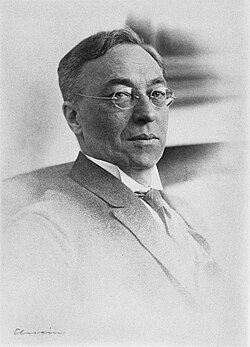
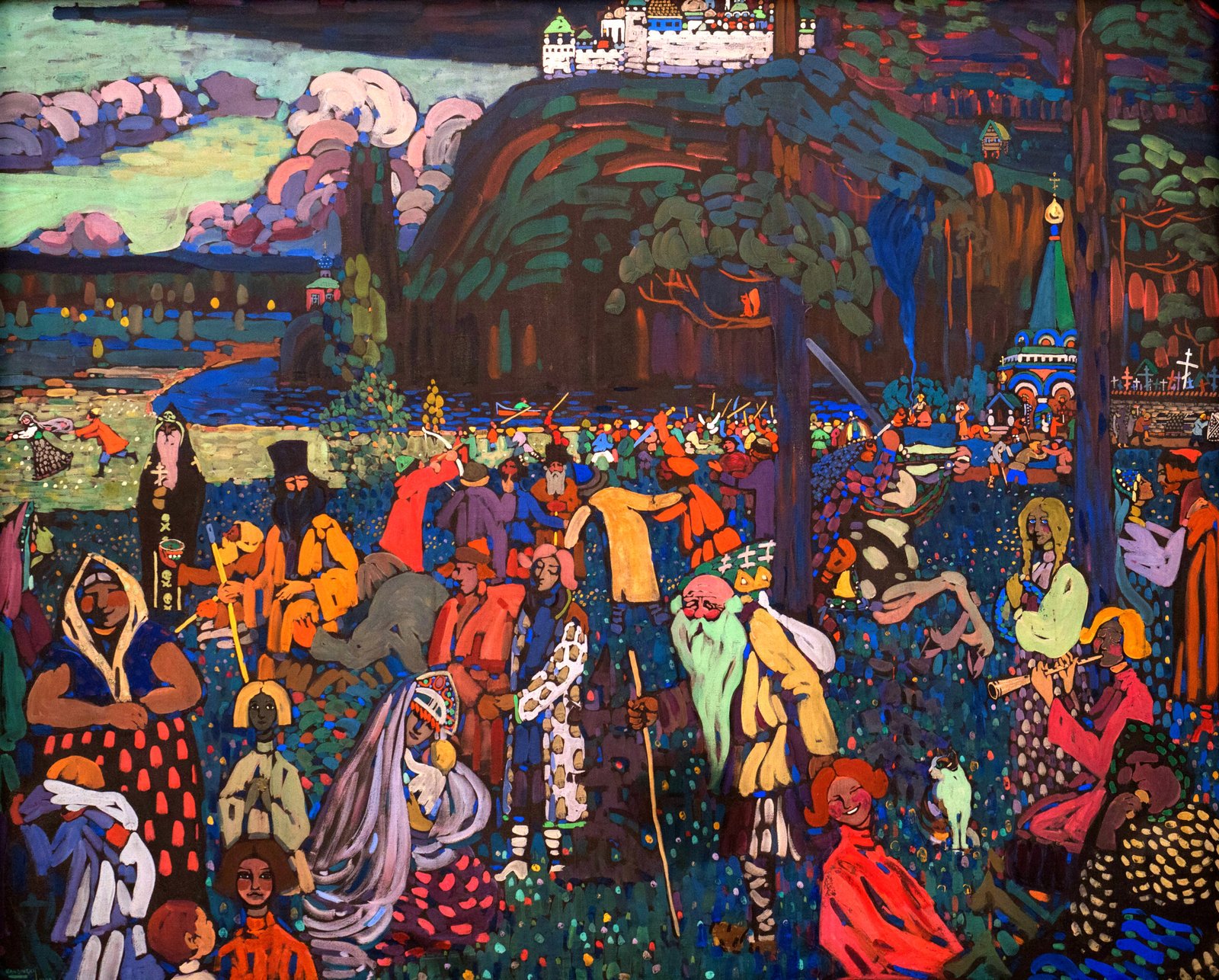
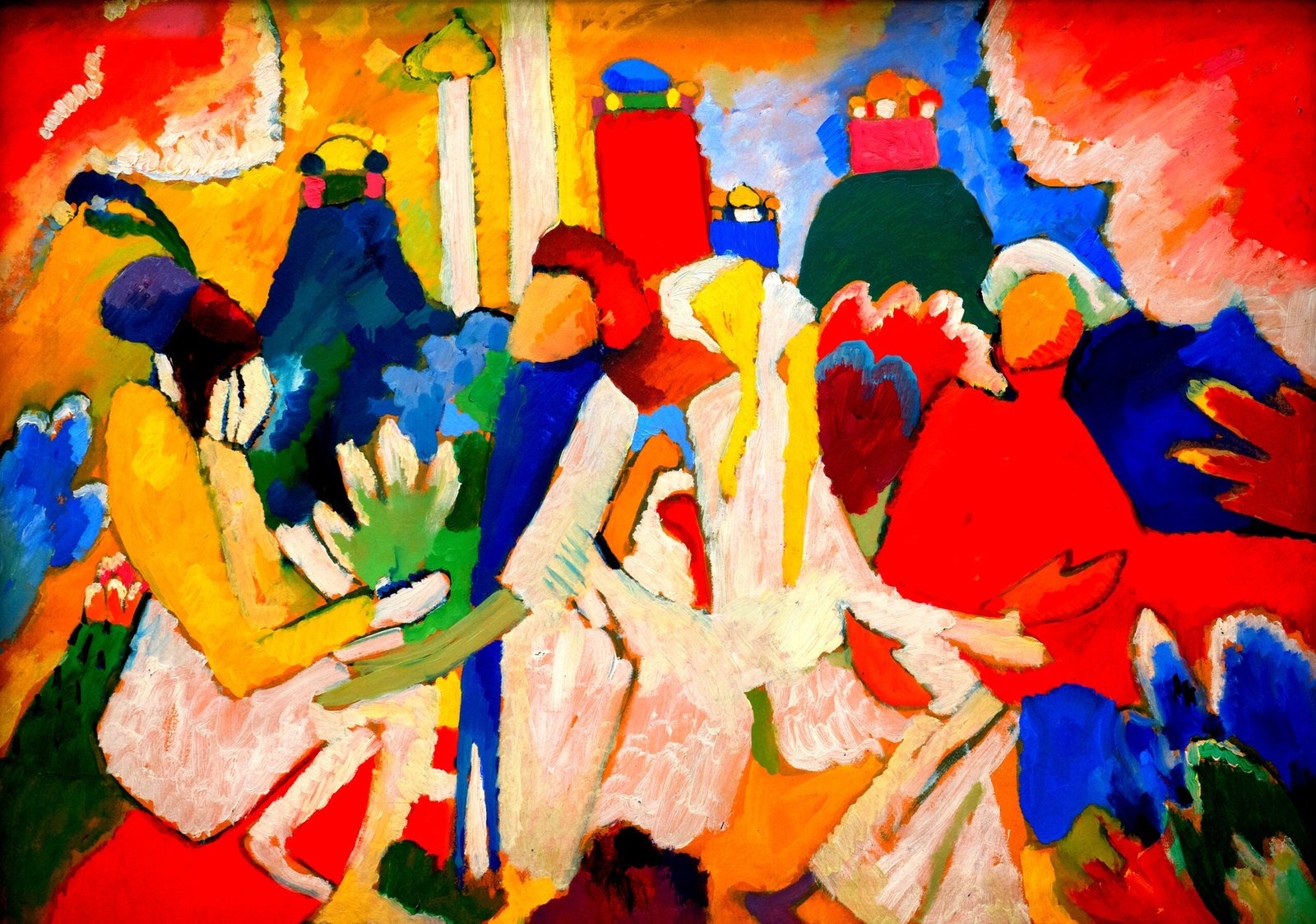
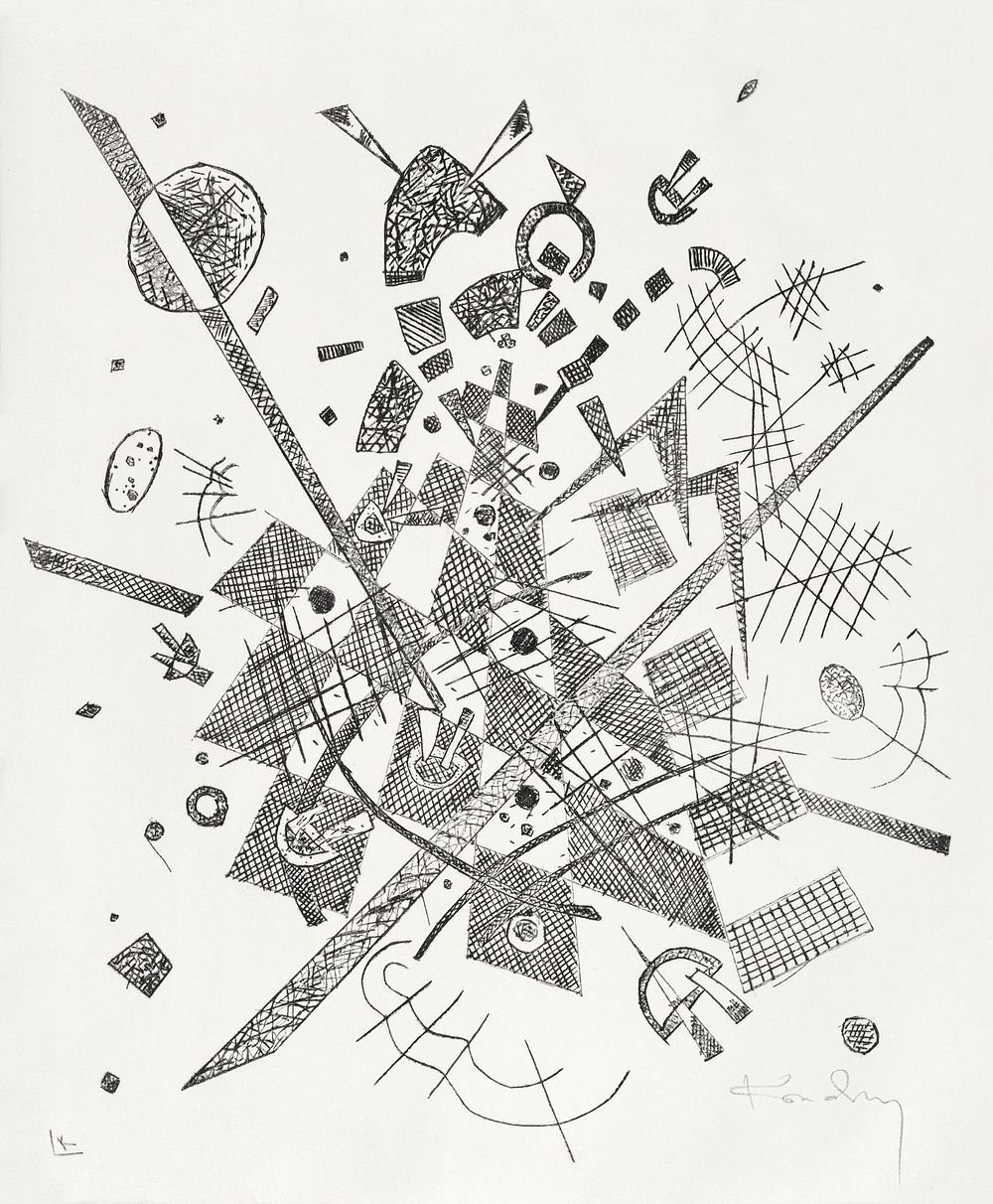
Wassily Wassilyevich Kandinsky (b. 1866) was a Russian painter and art theorist. Kandinsky is generally credited as one of the pioneers of abstraction in western art. Born in Moscow, he began painting studies (life-drawing, sketching and anatomy) at the age of 30.
In 1896, Kandinsky settled in Munich, studying first at Anton Ažbe’s private school and then at the Academy of Fine Arts. During this time, he was first the teacher and then the partner of German artist Gabriele Münter. He returned to Moscow in 1914 after the outbreak of World War I. Following the Russian Revolution, Kandinsky “became an insider in the cultural administration of Anatoly Lunacharsky” and helped establish the Museum of the Culture of Painting. However, by then, “his spiritual outlook… was foreign to the argumentative materialism of Soviet society” and opportunities beckoned in Germany, to which he returned in 1920. There, he taught at the Bauhaus school of art and architecture from 1922 until the Nazis closed it in 1933. He then moved to France, where he lived for the rest of his life, becoming a French citizen in 1939 and producing some of his most prominent art. He died in Neuilly-sur-Seine in 1944.
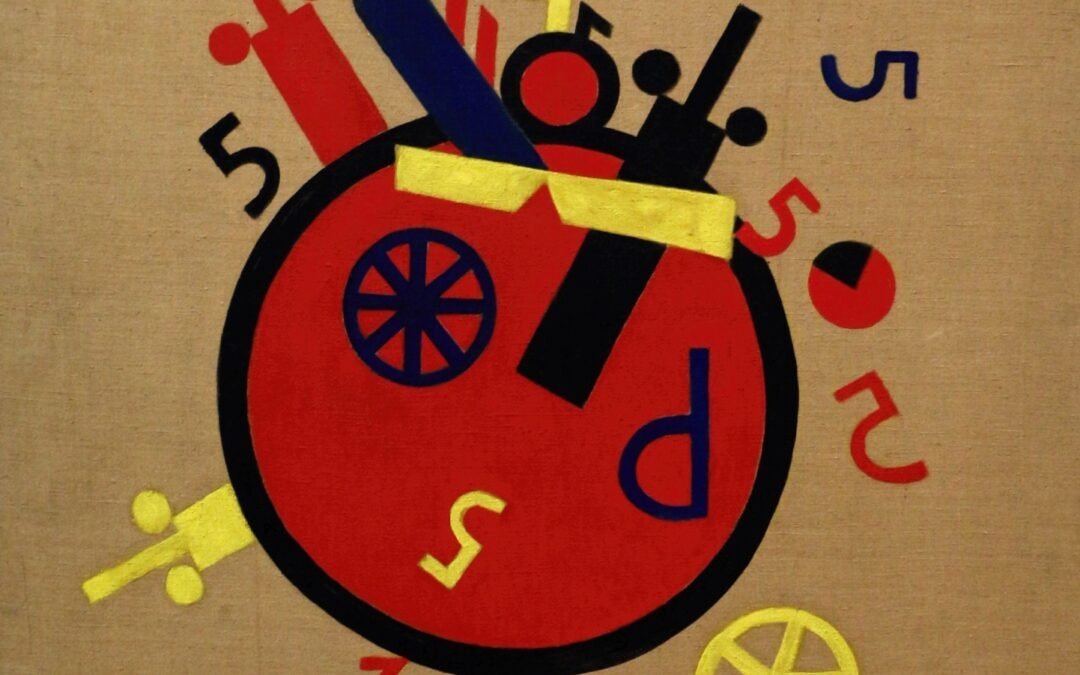
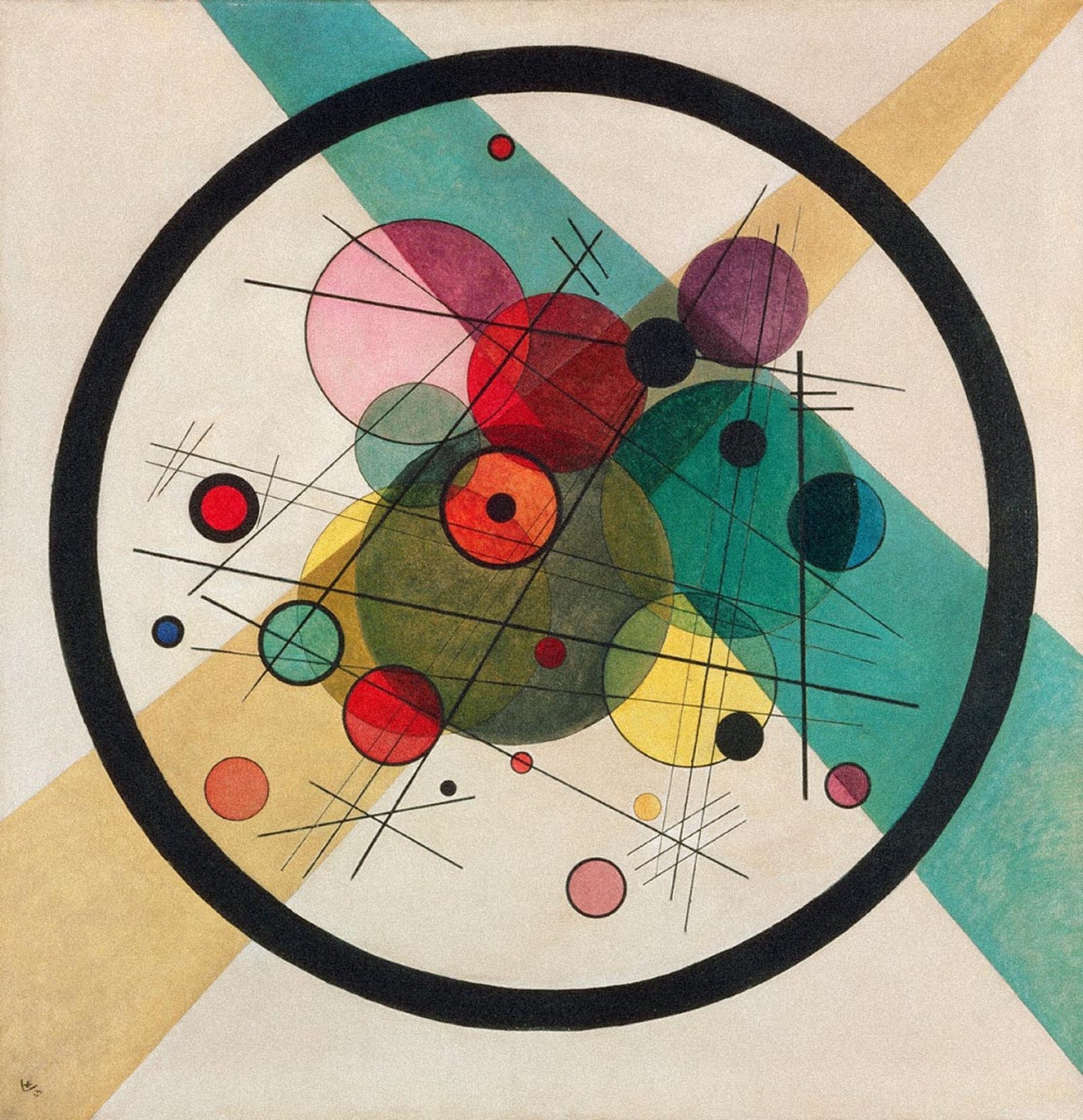
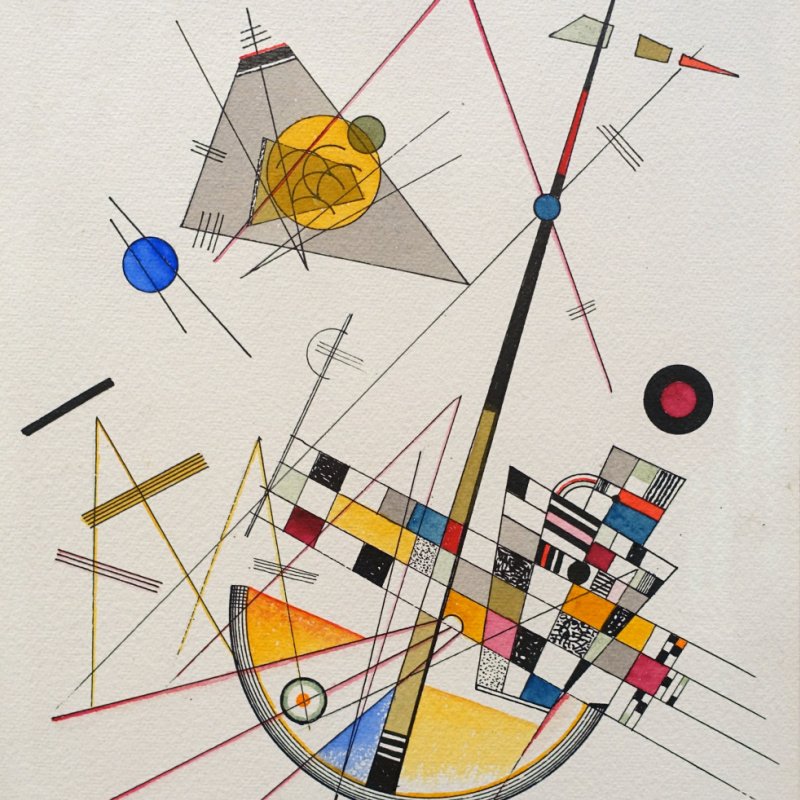
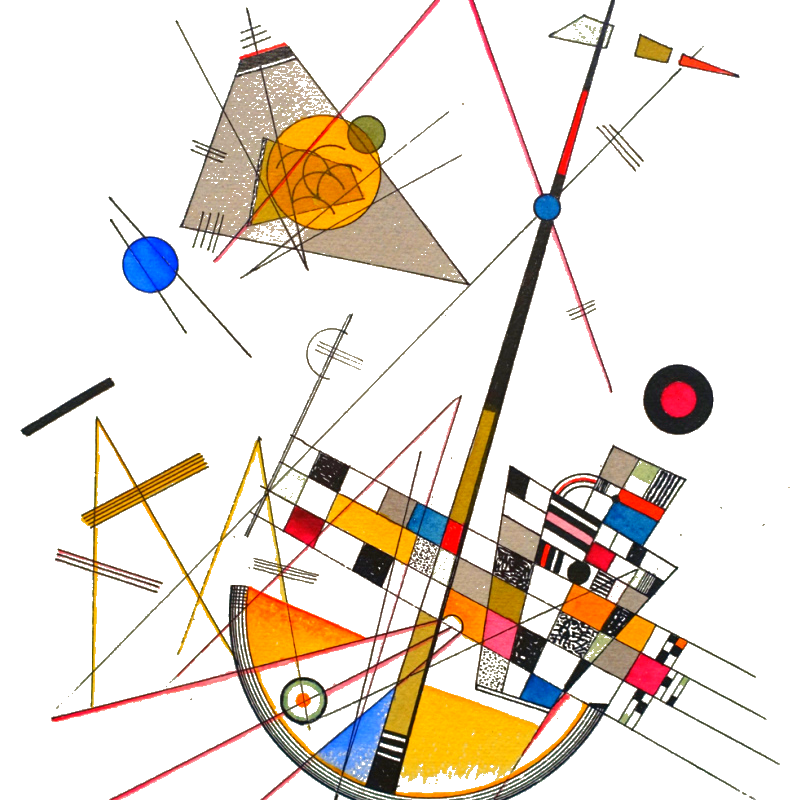
Delicate Tension no. 85, Kandinsky (1923)
Delicate Tension no. 85 was executed by Kandinsky at the Bauhaus during the prestigious school’s most rationalist period under the directorship of Theo van Doesburg, from 1923 to 1925. During these years the initial Expressionistic style of this avant-garde centre evolved towards greater commitment to the Constructivist aesthetic which was spreading internationally. Kandinsky delved more deeply in his investigation of the correspondences between forms and colours, and the geometric shapes found in his works from this period, which is sometimes described as “cold, ” are basically the circle and the triangle, which he considered to be “the two primary, most strongly contrasting plane figures.”
This item is part of our Fine Arts Collection where we design new items influenced by the masters of fine art, design, decorative arts and textiles. Explore our growing list of featured artists.
The Great Depression, starting in 1929, was a severe global economic downturn characterized by widespread unemployment, poverty, and financial instability. The U.S. saw a quarter of its workforce unemployed, industrial production plummet, and millions lose their homes and savings. The crisis impacted not just the U.S. but also economies worldwide, marking the deepest and longest economic recession in modern history.
These programs reached the entire popoulation and made sizeable, results-driven improvements to the US and world economies.
We’re exploring some of the period’s artwork. Explore:
A significant aspect of the Works Progress Administration was the Federal Project Number One, which had five different parts: the Federal Art Project, the Federal Music Project, the Federal Theatre Project, the Federal Writers’ Project, and the Historical Records Survey. The government wanted to provide new federal cultural support instead of just providing direct grants to private institutions. After only one year, over 40,000 artists and other talented workers had been employed through this project in the United States. Cedric Larson stated that “The impact made by the five major cultural projects of the WPA upon the national consciousness is probably greater in total than anyone readily realizes. As channels of communication between the administration and the country at large, both directly and indirectly, the importance of these projects cannot be overestimated, for they all carry a tremendous appeal to the eye, the ear, or the intellect—or all three.”
This project was directed by Holger Cahill, and in 1936 employment peaked at over 5,300 artists. The Arts Service Division created illustrations and posters for the WPA writers, musicians, and theaters. The Exhibition Division had public exhibitions of artwork from the WPA, and artists from the Art Teaching Division were employed in settlement houses and community centers to give classes to an estimated 50,000 children and adults. They set up over 100 art centers around the country that served an estimated eight million individuals.

Directed by Nikolai Sokoloff, former principal conductor of the Cleveland Orchestra, the Federal Music Project employed over 16,000 musicians at its peak. Its purpose was to create jobs for unemployed musicians, It established new ensembles such as chamber groups, orchestras, choral units, opera units, concert bands, military bands, dance bands, and theater orchestras. They gave 131,000 performances and programs to 92 million people each week. The Federal Music Project performed plays and dances, as well as radio dramas. In addition, the Federal Music Project gave music classes to an estimated 132,000 children and adults every week, recorded folk music, served as copyists, arrangers, and librarians to expand the availability of music, and experimented in music therapy. Sokoloff stated, “Music can serve no useful purpose unless it is heard, but these totals on the listeners’ side are more eloquent than statistics as they show that in this country there is a great hunger and eagerness for music.”
Main article: Federal Theatre Project
In 1929, Broadway alone had employed upwards of 25,000 workers, onstage and backstage; in 1933, only 4,000 still had jobs. The Actors’ Dinner Club and the Actors’ Betterment Association were giving out free meals every day. Every theatrical district in the country suffered as audiences dwindled. The New Deal project was directed by playwright Hallie Flanagan, and employed 12,700 performers and staff at its peak. They presented more than 1,000 performances each month to almost one million people, produced 1,200 plays in the four years it was established, and introduced 100 new playwrights. Many performers later became successful in Hollywood including Orson Welles, John Houseman, Burt Lancaster, Joseph Cotten, Canada Lee, Will Geer, Joseph Losey, Virgil Thomson, Nicholas Ray, E.G. Marshall and Sidney Lumet. The Federal Theatre Project was the first project to end; it was terminated in June 1939 after Congress zeroed out the funding.
This project was directed by Henry Alsberg and employed 6,686 writers at its peak in 1936. The FWP created the American Guide Series which, when completed, consisted of 378 books and pamphlets providing a thorough analysis of the history, social life and culture for every state, city and village in the United States including descriptions of towns, waterways, historic sites, oral histories, photographs, and artwork. An association or group that put up the cost of publication sponsored each book, the cost was anywhere from $5,000 to $10,000. In almost all cases, the book sales were able to reimburse their sponsors. Additionally, another important part of this project was to record oral histories to create archives such as the Slave Narratives and collections of folklore. These writers also participated in research and editorial services to other government agencies.
This project was the smallest of Federal Project Number One and served to identify, collect, and conserve United States’ historical records. It is one of the biggest bibliographical efforts and was directed by Luther H. Evans. At its peak, this project employed more than 4,400 workers.
The Works Progress Administration (WPA; from 1935 to 1939, then known as the Work Projects Administration from 1939 to 1943) was an American New Deal agency that employed millions of jobseekers (mostly men who were not formally educated) to carry out public works projects, including the construction of public buildings and roads. It was set up on May 6, 1935, by presidential order, as a key part of the Second New Deal.
The WPA’s first appropriation in 1935 was $4.9 billion (about $15 per person in the U.S., around 6.7 percent of the 1935 GDP). Headed by Harry Hopkins, the WPA supplied paid jobs to the unemployed during the Great Depression in the United States, while building up the public infrastructure of the US, such as parks, schools, and roads. Most of the jobs were in construction, building more than 620,000 miles (1,000,000 km) of streets and over 10,000 bridges, in addition to many airports and much housing. In 1942, the WPA played a key role in both building and staffing internment camps to incarcerate Japanese Americans.
These ordinary men and women proved to be extraordinary beyond all expectation. They were golden threads woven in the national fabric. In this, they shamed the political philosophy that discounted their value and rewarded the one that placed its faith in them, thus fulfilling the founding vision of a government by and for its people. All its people.
The WPA reached its peak employment of 3,334,594 people in November 1938. To be eligible for WPA employment, an individual had to be an American citizen, 18 or older, able-bodied, unemployed, and certified as in need by a local public relief agency approved by the WPA. The WPA Division of Employment selected the worker’s placement to WPA projects based on previous experience or training. Worker pay was based on three factors: the region of the country, the degree of urbanization, and the individual’s skill. It varied from $19 per month to $94 per month, with the average wage being about $52.50 (equivalent to $1,200 in 2024). The goal was to pay the local prevailing wage, but limit the hours of work to 8 hours a day or 40 hours a week; the stated minimum being 30 hours a week, or 120 hours a month.
Something quite important happened in the US from 1939-1943. The New Deal. Crippled by an economic collapse, a sitting US President actually did something good. FDR had the clarity to see what America stands for: equality, freedome and agency.
Not like the brazen giant of Greek fame,
With conquering limbs astride from land to land;
Here at our sea-washed, sunset gates shall stand
A mighty woman with a torch, whose flame
Is the imprisoned lightning, and her name
Mother of Exiles. From her beacon-hand
Glows world-wide welcome; her mild eyes command
The air-bridged harbor that twin cities frame.
“Keep, ancient lands, your storied pomp!” cries she
With silent lips. “Give me your tired, your poor,
Your huddled masses yearning to breathe free,
The wretched refuse of your teeming shore.
Send these, the homeless, tempest-tost to me,
I lift my lamp beside the golden door!”
Emma Lazarus
November 2, 1883
Our designs are digital, so we can (mostly) take any design and place it on any other item. So, if you like the design of, say, a shirt, we can replicate it on a wine glass, duvet cover or anything, really. Tell us what you have in mind!
Personalized tees are a great example of how customization can be accessible to everyone. Dates, names, events and, well… anything can be designed to make each item your own.
Create a truly unique celebration by providing your guests with bespoke items at your next event. Glassware, napkins, ice buckets, aprons and tableware are a few of the items we’ve customized for customers.
A personalized journal makes the personal content visible. Each journal has it’s own tone, purpose and utility. Express yourself with a personalized journal or card.
Making a gift personal is, perhaps, the best use of the capability to customize almost any item at cgk.ink! Jewelry boxes, posters, mugs and more.
He is credited to revolutionize the old thinking of poster illustration during his time. Cappiello’s concept of poster art was simple, to simply engage audience faster by creating unconventional visual impact. He was the first poster artist to boldly experiment and innovate new graphical styles at the time. His presentation was straight forward with use of enlarged bold subjects with unconventional colors,contrasted by the very dark background, which make his art “pop out”. By doing so he moved away from illustrating intricate details in his artworks, which was famous at the time as art nouveau movement was popular.
His new functionalist style of graphic art, in which a single bold image would be used to grab the viewer’s attention. This graphic design proved highly effective, not only in drawing attention to the product but also in building a brand. It made Capiello the acknowledged master of the advertising poster in his time for almost 20 years.
Hawaiian style is all about ease and comfort. It’s also about celebrating the colors and forms of this unique tropical, Pacific location.
As with most creative expression, we always seek out the most profane, bastardized version of whatever we are are admiring.
A few of the worst Hawaiian shirts a short Google Image Search uncovered:
Though its precise origins are lost to history, the aloha shirt first appeared in Hawaii in the 1920s or ’30s, probably when local Japanese women adapted kimono fabric for use in men’s shirting. The shirts achieved some popularity among tourists to Hawaii and found greater commercial success when they hit the mainland in the mid-1930s. America at the time was riddled with hardship and anxiety, with many men out of work and many others struggling to hold on to their breadwinner status. Perhaps in response, hyper-manliness came into vogue—the popularity of bodybuilding skyrocketed, Superman burst onto the scene. It may seem paradoxical that men embraced a garment with such feminine appeal. “You’d better get two or three because it’s a cinch your daughter, sister, wife or even mother will want this bright-colored shirt as soon as she sees it,” the Los Angeles Times teased in 1936. That didn’t stop men from buying. By 1940, aloha shirts were bringing in more than $11 million annually (in today’s money).
By the 1960s, the shirt had become truly ubiquitous. Aloha Fridays were a fixture of a certain kind of workplace, and everyone—from Elvis to the decidedly unhip Richard Nixon—seemed to have an aloha shirt. Over time, perhaps inevitably, it lapsed into the realm of corny suburban-dad-wear.
Yet in just the past five years, fashion magazines have been heralding a comeback, and high-end labels like Gucci are taking the aloha shirt to new heights, with prints that draw on Japanese designs favored in the garment’s early days. Meanwhile, some shirtmakers from Hawaii’s old guard are still going strong. Kahala, founded in 1936 as one of the first brands producing aloha shirts, has been raiding its vaults to reproduce designs dating back to the 1930s—including some popularized by Duke Kahanamoku. “People are looking to bring some light, some color, some vibrancy into their lives,” says Jason Morgan, Kahala’s general manager. “I think that’s needed now more than ever. If an aloha shirt can help improve somebody’s day, I think that’s pretty powerful.”
Source: Smithonian Magazine May, 2020