INDIGO

INDIGO

cgk.ink journal — the color series

425–450 nanometers · blue + violet · a study in four movements

INDIGO

It is the color Newton added to make seven, the dye that built empires and dressed the working world, and the sky a few minutes after the sun has gone.

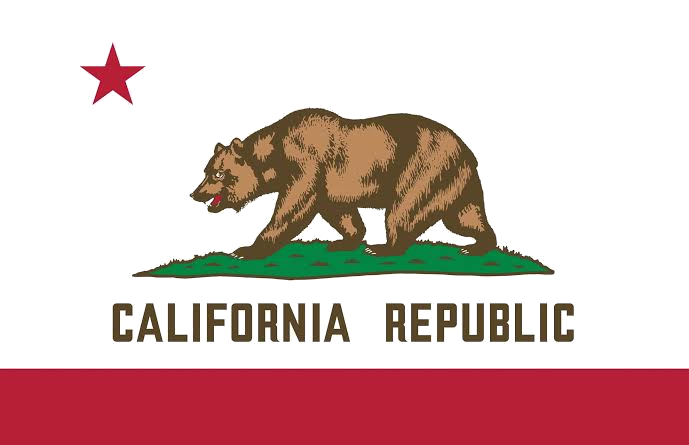
California gave indigo its most durable job. In 1873 a San Francisco dry-goods merchant and a Reno tailor patented riveted work pants, dyed them in the oldest blue on Earth, and the world has been wearing the result ever since. It is also the color of the Pacific about twenty minutes after sunset. Here it is in four parts.

Interlude

Ten indigos

From a spring flower to a samurai's undercoat, the full register of one color.

01 Periwinkle

Periwinkle

#CCCCFF

Named for a creeping flower. The palest point at which blue begins to lean toward violet.

02 Bluebell

Bluebell

#A2A2D0

The floor of an English wood in late April, when the flowers come up before the leaves can shade them.

03 Slate Blue

Slate Blue

#6A5ACD

One of the original named colors of the web, and a good deal more violet than any slate.

04 Iris

Iris

#5A4FCF

Named for the flower, which was named for the Greek goddess of the rainbow.

05 Electric

Electric Indigo

#6F00FF

About as close as a screen can get to the indigo of the spectrum. No dye vat ever produced it.

06 Han Purple

Han Purple

#5218FA

A synthetic pigment made in China more than two thousand years ago and found on the Terracotta Army. Then the recipe was lost.

07 Web Indigo

Web Indigo

#4B0082

What a browser gives you when you type the word. Closer to purple than any dyer would allow.

08 Persian

Persian Indigo

#32127A

Named for the indigo-dyed cloth that traveled west from Persia along the trade roads.

09 Indigo Dye

Indigo Dye

#00416A

The real thing, straight from the vat. Dyers have always known indigo is a blue. It was Newton who pushed it toward violet.

10 Kachi-iro

Kachi-iro

#181B39

The darkest indigo in the Japanese vat. Kachi also sounds like the word for victory, so samurai wore it under their armor.

I / IV — trivia, vat-dyed

Movement I

Six things
about indigo

Small facts, suitable for denim counters and long twilights.

01

The seventh color

Newton first sorted the spectrum into five colors. He later added orange and indigo to reach seven, because he wanted the rainbow to match the seven notes of a musical scale.

02

It's green in the vat

Dissolved indigo is a murky yellow-green. Cloth comes out of the vat that color and turns blue in front of you as the dye meets the oxygen in the air.

03

Why jeans fade

Indigo never soaks to the center of a cotton yarn. It coats the outside and leaves a white core, so every crease and wash rubs a little off. The fade is the dye working as designed.

04

Named for a country

The Greeks called the dye indikon, "the Indian thing," after the place it came from. The Romans made it indicum, and English wore it down to indigo.

05

Almost none of it grows

For thousands of years indigo was a crop. Today nearly all of it is made in chemical plants, and nearly all of that goes into denim.

06

It may not exist

Many scientists now leave indigo out of the spectrum and count six colors. One popular theory holds that Newton's "blue" was our cyan and his "indigo" was simply our blue.

II / IV — a cabinet of curiosities

Movement II

Strange
indigos

Seven places indigo turns up where it has no business being.

01

A bird with no blue

Eastern North AmericaThe indigo bunting has no blue pigment at all. Its feathers are dark, and the color is a trick of their microscopic structure scattering light. It migrates at night and steers by the stars.

02

The bleeding mushroom

Oak and pine forestsCut an indigo milk cap and it bleeds dark blue latex. It is edible, and it is sold by the basket in markets in Mexico and Guatemala.

03

The blue men

The SaharaTuareg veils are traditionally beaten with indigo powder instead of dipped, which saves water in the desert. The dye rubs off on the face and hands and is worn as a mark of standing.

04

The indigo snake

Florida and GeorgiaThe longest native snake in the United States is a glossy blue-black that flashes indigo in the sun. It is harmless to people and eats rattlesnakes.

05

Blue from a snail

Eastern MediterraneanA sea snail's gland produces a purple dye. Leave it in sunlight at the right moment and it becomes indigo, the same molecule the plant makes. Many scholars think this was the sacred blue of the Hebrew Bible.

06

Maya blue

YucatánThe Maya heated indigo with a rare white clay and got a turquoise paint that ignores sun, acid and a thousand years of jungle. Chemists only worked out how in the twentieth century.

07

The pits of Kano

Kano, NigeriaOpen-air dye pits, deep as wells, said to have been in use since 1498. Cloth goes in pale, and comes out the blue-black the city has traded across the Sahara for five centuries.

III / IV — six thousand years, abridged

Movement III

The blue
gold

For six thousand years indigo was a crop, a fortune and a cause of revolt. Then a chemist made it in a flask.

c. 4000 BCE

Huaca Prieta

The oldest indigo-dyed cloth yet found is a scrap of striped cotton from the coast of Peru, about six thousand years old. It predates the earliest Egyptian examples by well over a millennium.

77 CE

Indicum

Pliny the Elder describes a pigment that arrives from India as a dark cake and dissolves into a marvelous mix of purple and blue. Rome prized it and paid accordingly.

1498

The sea road

Vasco da Gama reached India by ship, and indigo began arriving in Europe by the ton. Growers of woad, the weaker local blue, fought back. Several German and French authorities banned the import as "the devil's dye."

1704

Opticks

Isaac Newton published his book on light and fixed seven colors in print, with indigo between blue and violet. Every schoolchild's rainbow has carried it ever since.

1744

Carolina indigo

Eliza Lucas, a planter's daughter still in her early twenties, raised South Carolina's first successful crop. Within a generation it was the colony's second export, and it was grown and processed by enslaved people.

1859

The Indigo Revolt

Farmers in Bengal refused to plant indigo for British planters who paid them almost nothing for it. The strike spread across the province and became an early chapter in the story of Indian independence.

1873

Patent No. 139,121

Levi Strauss of San Francisco and Jacob Davis of Reno patented work pants with copper rivets at the stress points. The denim was dyed indigo, and California had its uniform.

1897

The flask

The German firm BASF put synthetic indigo on the market, after Adolf von Baeyer had worked out how to build the molecule. Within about fifteen years the indigo fields of India were all but gone.

IV / IV — how it actually works

Movement IV

The disputed
band

Indigo is the narrowest stripe in the rainbow, and the only one whose existence physicists still argue about.

380 nm · violetvisible lightred · 750 nm
n = c/v

This is the refractive index: the speed of light in empty space divided by its speed inside a material. Glass slows short wavelengths more than long ones, so indigo light takes a sharper turn through a prism than red does. That small difference is the whole reason Newton saw a band of colors on his wall in the first place. Indigo sat near the far end of it, bent almost as hard as light can be and still be seen.

The dye is not the band

Indigo dye soaks up orange light near 600 nanometers and hands back the blue. So the color named for the dye sits deeper in the spectrum than the dye itself, which is a plain dark blue.

Twilight's ozone

After sunset the sky overhead stays deep blue, and scattering alone can't explain it. The ozone layer absorbs orange and red from the last slanting light. Without it, dusk would be a dull yellowish gray.

Seen well, focused badly

Indigo lands near the peak of the eye's short-wavelength cones. But those cones are only a few percent of the total and are missing from the very center of the retina, so fine detail in indigo always looks slightly soft.

The screen forgery

A screen has no indigo light to give. It adds a little red to its blue, and the brain accepts the mixture. The indigo of a prism is a single wavelength, and no display can show it.

425–450 nmwavelength
666–705 THzfrequency
2.76–2.92 eVenergy per photon
coda — wear it accordingly

Coda

A plant, a pair of jeans, an argument inside a prism. It sits between two colors and belongs to neither. Wear it without care about those things.
cgk.ink · the color series · no. 6 — indigo

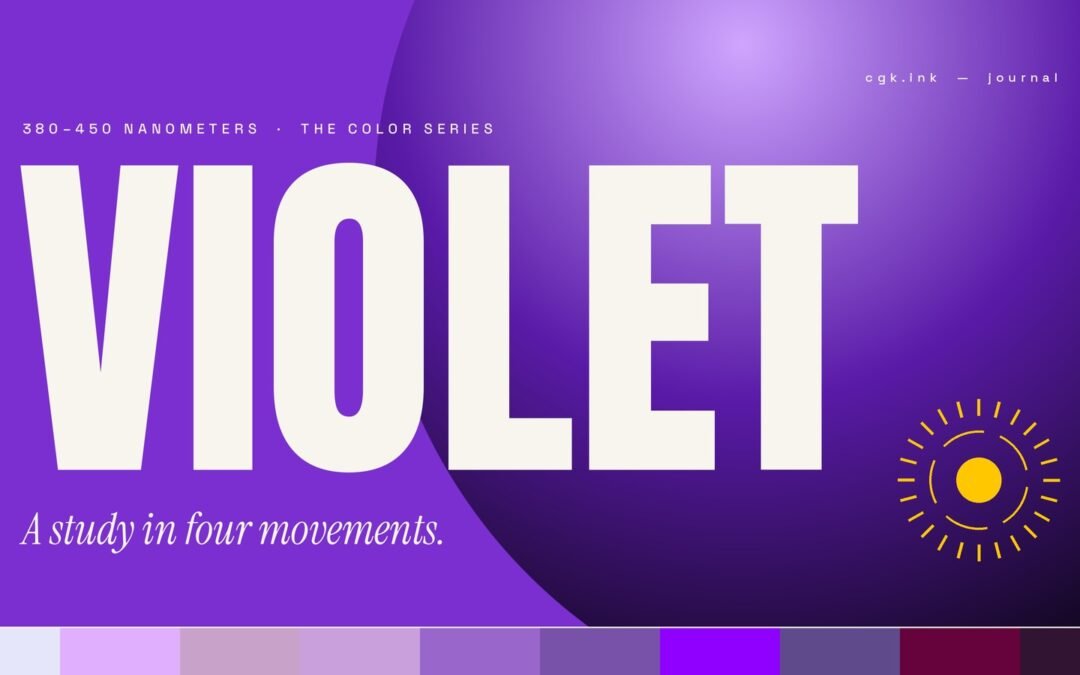
VIOLET

VIOLET

cgk.ink journal — the color series

380–425 nanometers · red + blue · a study in four movements

VIOLET

The last color the eye can catch before light goes invisible: the cloth of emperors, a teenager's lab accident, and the shadows the Impressionists were laughed at for painting.

California goes violet twice a day and once a year. The San Gabriels turn it at dusk, the desert turns it just before sunrise, and every May the jacarandas bloom and bury the parked cars of Los Angeles in petals. It is the end of the rainbow and the end of this series. Here it is in four parts.

Interlude

Ten violets

From the linen closet to the throne room, the full register of one color.

01 Lavender

Lavender

#E6E6FA

Named for the plant, whose own name probably comes from the Latin for "to wash." The Romans scented their baths with it.

02 Mauve

Mauve

#E0B0FF

The French word for the mallow flower, and the name given to the first synthetic dye in 1856.

03 Lilac

Lilac

#C8A2C8

The shrub reached Europe from Ottoman gardens in the 1500s. Its name travels back through Persian to a word for dark blue.

04 Wisteria

Wisteria

#C9A0DC

A single vine planted in Sierra Madre, California, in 1894 now covers about an acre and blooms by the million every March.

05 Amethyst

Amethyst

#9966CC

From the Greek for "not drunk." The Greeks carved wine cups from it in the hope that it worked.

06 Royal Purple

Royal Purple

#7851A9

Under Elizabeth I, the law reserved purple silk for the queen and her closest family. Everyone else could admire it.

07 Electric Violet

Electric Violet

#8F00FF

About as close as a screen can get to the true end of the rainbow, and still only an impression of it.

08 Ultra Violet

Ultra Violet

#5F4B8B

Pantone's color of the year for 2018, chosen with Prince, Bowie and Hendrix in mind.

09 Tyrian

Tyrian Purple

#66023C

Boiled out of sea snails by the thousand. The dye works could be smelled long before they could be seen.

10 Eggplant

Eggplant

#311432

The plant was named for its small white varieties, which look like eggs. The color took after the purple ones.

I / IV — trivia, lightly perfumed

Movement I

Six things
about violet

Small facts, suitable for gallery openings and long drives through the desert.

01

Purple isn't in the rainbow

Violet is a real wavelength of light. Purple is a mix of red and blue that the brain assembles for itself, and no single wavelength will ever produce it.

02

Carrots started out purple

The first cultivated carrots, grown in Central Asia about a thousand years ago, were purple and yellow. The orange one is a later European arrival.

03

Bees see past it

Bees see into the ultraviolet, and many flowers carry markings there that point straight to the nectar. We walk past them without a clue.

04

The Purple Heart

America's oldest military award still given began in 1782 as a heart cut from purple cloth, created by George Washington for soldiers of unusual merit.

05

Flags avoid it

Almost no national flag uses purple. For most of history the dye cost too much to fly from a pole. Dominica's parrot and Nicaragua's rainbow are the small exceptions.

06

Purple prose is ancient

The complaint is two thousand years old. The Roman poet Horace mocked writers who stitched showy purple patches onto otherwise plain work.

II / IV — a cabinet of curiosities

Movement II

Strange
violets

Seven places violet turns up where it has no business being.

01

A purple beach

Pfeiffer Beach, Big SurAfter winter storms, streaks of purple run through the sand. It is manganese garnet, washed down from the cliffs above and sorted by the surf.

02

Sun-purpled glass

Mojave ghost townsOld bottles were made clear with a pinch of manganese. Leave one in the desert sun for a few decades and ultraviolet light slowly turns it amethyst.

03

The violet snail

Open ocean, worldwideJanthina spends its whole life adrift, hanging upside down from a raft of bubbles it blows itself. The shell is violet from end to end.

04

The purple frog

Western Ghats, IndiaRound, glossy and the color of a plum, it lives underground and comes up for a few days a year to breed. Science did not describe it until 2003.

05

Purple urchins

Northern California coastWhen the sea stars that hunted them died off, purple urchins multiplied and grazed whole kelp forests down to bare rock. Divers call what is left an urchin barren.

06

A purple Earth

Three billion years ago, maybeOne hypothesis holds that early microbes caught sunlight with retinal instead of chlorophyll. If so, the young planet was violet before it was ever green.

07

Ube

The PhilippinesA yam that is violet all the way through, colored by the same pigments as blueberries. It has been dessert in Manila for generations and in Los Angeles for about ten years.

III / IV — three thousand years, abridged

Movement III

The expensive
color

For three thousand years violet belonged to whoever could afford it. Then a teenager made it by accident, and everyone could.

c. 1500 BCE

Tyrian purple

Phoenician dyers on the coast of what is now Lebanon learned to draw a purple from the glands of murex sea snails. It took thousands of snails to trim a single robe, and the color never faded.

301 CE

Worth more than gold

Emperor Diocletian's edict on prices listed a pound of the finest purple silk at roughly twice the price of a pound of gold. By then, wearing the full imperial shade without permission could be treated as treason.

900s

Born in the purple

Byzantine empresses gave birth in a palace chamber lined with purple porphyry. A child delivered there carried the title for life, and the phrase outlasted the empire.

1464

The Church changes color

Constantinople had fallen and the snail dye works went with it. Pope Paul II ruled that cardinals would wear scarlet instead, which is why they wear red today.

1856

Perkin's accident

William Perkin, eighteen, was trying to make quinine from coal tar in a home laboratory in London. He got a dark sludge that dyed silk a brilliant purple. He called it mauve, built a factory, and started the synthetic dye industry.

1870s

Violettomania

New cobalt and manganese pigments gave painters a true violet in a tube. The Impressionists used it for shadows, and critics decided they were suffering from an eye disease.

1908

Votes for women

Britain's suffragettes adopted purple, white and green as their colors, with purple standing for dignity. American suffragists soon marched under purple, white and gold.

1984

Purple Rain

Prince released the album and the film, and the color changed hands one more time, from emperors to a musician from Minneapolis. After his death, Pantone gave him a purple of his own.

IV / IV — how it actually works

Movement IV

The edge
of sight

Violet is the shortest wavelength the eye can register. One step past it, light keeps going and we stop seeing.

380 nm · violetvisible lightred · 750 nm
E = hc/λ

This is Planck's relation: the shorter the wavelength, the more energy each photon carries. Violet has the shortest waves in the visible range, so a violet photon delivers about 3 electron volts where a red one delivers under 2. Go a little shorter and you reach ultraviolet, where photons carry enough to break chemical bonds. That is the physics of a sunburn.

Why the sky isn't violet

Air scatters violet light even more strongly than blue. But the sun sends less of it, the upper atmosphere absorbs some, and our eyes respond to it weakly. Blue wins on a technicality.

Violet is not purple

On a painter's wheel violet is red mixed with blue. In the spectrum it is a pure color at the far end, nowhere near red. The mixture is purple; the wavelength is violet. They only look alike.

Your screen is faking it

A display has no violet light to give. It shows blue with a little red added, and the brain accepts the substitution. A real violet, from a prism or a rainbow, has never appeared on a phone.

What the lens holds back

The lens of the eye blocks most ultraviolet. People who have had a lens removed sometimes report seeing further into it, and Monet's late water lilies, painted after cataract surgery, are often read that way.

380–425 nmwavelength
705–789 THzfrequency
2.92–3.26 eVenergy per photon
coda — wear it like you were born in it

Coda

The last color before light slips out of sight, and the last word in this series. Wear it like you were born in it.

cgk.ink · the color series · no. 7 — violet

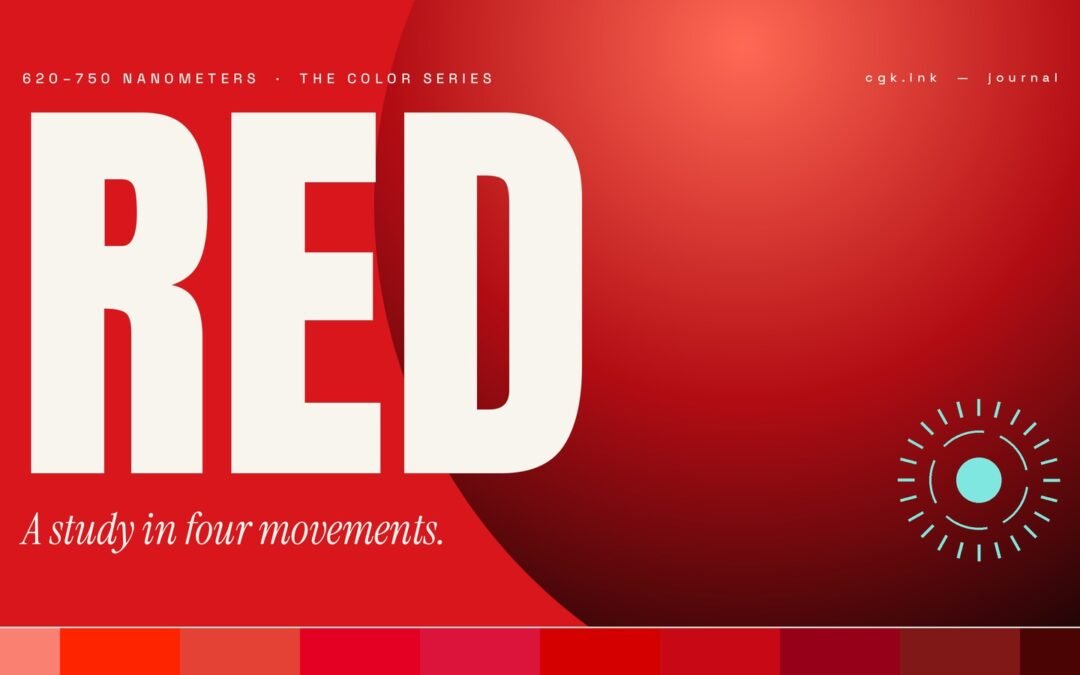
RED

RED

cgk.ink journal — the color series

620–750 nanometers · a study in four movements

RED

The first color we painted with, the first we named after dark and light, and the last one left in the sky every evening.

Californians know red better than we admit. It's the brake lights stacked up on the 405, the bark of a coast redwood, and the sun dropping into the Pacific like it has somewhere to be. It's also crushed insects, rusted planets, and the longest wave your eye can catch. Here is the color in four parts.

interlude — the range, light to dark

Interlude

Ten reds

One word, ten temperaments. Hover, tap or tab through the range.

Salmon
#FA8072

Named for the fish, which gets its color secondhand from the pigment in the krill and shrimp it eats.

Scarlet
#FF2400

Originally the name of a costly medieval cloth, not a color. The cloth was so often dyed red that the word changed sides.

Vermilion
#E34234

Ground cinnabar, a mercury ore. The red of Chinese lacquer and Pompeii's walls, and mildly poisonous the whole time.

Cadmium Red
#E30022

A twentieth-century arrival, on sale around 1910. Matisse took to it early and never really gave it back.

Crimson
#DC143C

From kermes, a scale insect that lives on Mediterranean oaks. The word shares a root with carmine.

Rosso Corsa
#D40000

"Racing red," the color assigned to Italian cars in early international motor racing. Ferrari simply kept it.

Venetian Red
#C80815

An iron oxide earth and the Renaissance painter's workhorse. Chemically speaking, it's very elegant rust.

Carmine
#960018

Made from cochineal insects, by most counts around 70,000 of them to the pound of dye.

Falu Red
#801818

The red of Swedish cottages and barns, a paint made from the leftovers of the great copper mine at Falun.

Oxblood
#4A0404

Cousin to sang de boeuf, the Chinese copper glaze. Also the official color of good boots and better loafers.

I / IV — trivia, served warm

Movement I

Six things
about red

Small facts, suitable for red lights, red-eye flights and second glasses of red.

01

Third word in

Linguists Brent Berlin and Paul Kay found in 1969 that when a language has only three color words, they are dark, light and red. Every time. Blue and green can wait.

02

Bulls don't care

Cattle are red-green colorblind. The bull charges the movement of the cape, not its color. The red is tradition and theater, and it's for the audience.

03

The Golden Gate isn't

Our most famous red landmark is officially painted International Orange. We've all agreed to call it red anyway, and nobody in San Francisco is going to stop you.

04

Stop signs were yellow

Until 1954, American stop signs were yellow, because nobody could make a red finish that survived the weather without fading. Better coatings arrived and red took the corner.

05

Red wins, slightly

A 2005 study of the Athens Olympics looked at combat sports where red or blue gear was assigned at random. The athletes in red won about 55 percent of the bouts.

06

Read the rubric

Medieval scribes wrote headings and feast days in red ink. That gave us "red-letter day" and the word "rubric," from the Latin rubrica, meaning red ochre.

II / IV — things that have no business being red

Movement II

Strange
reds

Seven places the color shows up uninvited.

01

Blood Falls

Taylor Glacier, Antarctica

A rust-red stain pouring down a white glacier. Iron-rich brine from a buried lake seeps out and oxidizes the moment it meets air.

02

Lake Natron

Northern Tanzania

A caustic soda lake turned red by salt-loving microbes. Flamingos, undeterred, use it as a nursery.

03

Mars

Fourth rock out

An entire planet dusted in iron oxide. The twist is the sunset, which on Mars comes out blue.

04

Red sprites

50 miles above a thunderstorm

Jellyfish-shaped electrical flashes high over storm clouds, glowing red from excited nitrogen and gone in milliseconds.

05

Hippo sweat

Sub-Saharan Africa

Hippos ooze a red secretion once mistaken for blood. It works as sunscreen and antibiotic at once.

06

Cochineal

On a prickly pear near you

The white fuzz on cactus pads hides an insect that crushes to brilliant red. It still colors lipstick, yogurt and candy as carmine.

07

Red tide

La Jolla, California

Plankton blooms stain our surf rust-red by day. After dark the same water breaks in electric blue.

III / IV — a hundred thousand years, abridged

Movement III

Red, a
history

From a seashell in a cave to a diode in a lab.

100,000BCE

The first paint kit

At Blombos Cave in South Africa, someone mixed red ochre in abalone shells and left the tools behind. It is the oldest known paint workshop on Earth.

79CE

Pompeii, sealed in red

Vesuvius buried villas whose walls were painted in vermilion from ground cinnabar, a pigment so prized that Rome regulated its price.

1464

The cardinals change color

With Tyrian purple cut off after the fall of Constantinople, Pope Paul II put his cardinals in scarlet dyed with kermes. They have worn red ever since.

1519

Spain finds the bug

Conquistadors found Aztec markets selling cochineal, a red far stronger than anything in Europe. It became New Spain's most valuable export after silver.

1869

Red from coal tar

Chemists patented synthetic alizarin, the coloring agent in madder root. Within a few years the madder fields of Europe were out of business.

1911

The Red Studio

Matisse flooded his own studio in a single flat red and let the furniture dissolve into outline. Painting has been arguing with it ever since.

1917

The flag goes red

Revolution made red the color of the left for a century. Red Square, though, got its name in the 1600s, when krasnaya also meant beautiful.

1962

The first LED

Nick Holonyak Jr. built the first practical visible-light LED at General Electric. It glowed red, and every standby light since owes it a nod.

IV / IV — the long, slow end of the rainbow

Movement IV

The physics
of red

The longest wave we can see, and the last stop before the invisible.

Red · 620–750 nm
380 nm · violet750 nm · infrared begins

z = (λseen − λsent) / λsent

This is redshift. Light from a galaxy moving away from us arrives stretched toward longer, redder wavelengths. Measure the stretch and you have measured an expanding universe, which is, quite literally, going red.

Long and low

Red has the longest wavelength and the lowest energy of any visible light. One step further and you're in infrared, which you feel as heat instead of seeing.

Why sunsets work

Air scatters blue light roughly five times more than red. At sunset the light crosses so much atmosphere that the blue is scattered away and red is what's left.

The ocean eats it first

Water absorbs red within the first thirty feet or so. Dive off Catalina and a red fish reads as gray, which is why so many deep-sea animals are red: down there it's camouflage.

Your eye is bluffing

The "red" cones in your retina actually peak in yellow-green. Red is something the brain works out by comparing them with their neighbors.

620–750 nmWavelength
400–484 THzFrequency
1.65–2.00 eVPhoton energy
coda — wear it like you mean it

Coda

Red never asks whether you noticed. It already knows.

cgk.ink · the color series · no. 2 — red

Pick A California

Pick A California

cgk.ink · The California Collection

Pick Your
California.

Four places, four moods, one Golden State. Choose your spot and let cgk.ink dress it.

By cgk.ink  ·  Travel Collection  ·  Special Collections 2.0

Choose your spot

California runs on dreams, aspiration, and hope.

cgk.ink is a native Californian, and we know this state the way you know a hometown: by its weather, its attitudes, and which freeway to avoid at five o'clock. That's why nobody here agrees on which California is the real one. There's the one you surf at dawn, the one with your name on a billboard, the one wrapped in fog, and the one that shimmers poolside in 110-degree heat.

So we stopped trying to pick for you. The California Collection is a city picker: four destinations, each with its own attitude and its own shelf of curated pieces. Designed and curated in Downtown LA, where fashion, art, and freeway-adjacent weirdness collide.

Beach & Military

San Diego

Perfect Weather, Perfect Waves

Dawn patrol, salt air, and Semper Fi swagger. San Diego is the easy California, where the forecast never changes and neither does the dress code: a cap, a tee, and somewhere to be by the water.

Start with the Cali Bear Bucket Hat at $20, or the So Cali Distressed Denim Bucket Hat at $25. The California Flag Unisex Heavy Cotton Tee starts at $16.02, and the Southern California Beachy Luggage Tag at $19 marks the bag. When the marine layer rolls in, the California Republic Relaxed Knitted Crew Neck Sweater at $67.50 does the work.

Shop San Diego
Beach & Celebrities

Los Angeles

You're A Star, Baby

Auditions by day, billboards by night. Los Angeles gets the biggest shelf in the collection, twelve pieces for a city that dresses for the part and the parking lot.

The Really? Billboard T-Shirt is $18.50 and says what everyone in traffic is thinking. The LA Essential Heavyweight Hoodie is $45, and the DTLA Premium Full Zip Hoodie runs $46.50 to $49. Add the Urban LA Crossbody Bag at $35.50, the Sunny Los Angeles Travel Wallet at $19, and the Golden State Bear Women's Luxe Fitted Tee at $30. The Made in DTLA Reusable Boutique Gift Bag, from $17.58, wraps the present.

Shop Los Angeles
City & Glam

San Francisco

West Coast Sophistication

Fog rolls in, the sweater comes out. San Francisco dresses in layers and polish: a little glam, a little city edge, and always one more layer than you planned.

The California Republic Relaxed Knitted Crew Neck Sweater at $67.50 is the anchor. Pair it with the California Organic Dad Hat at $27 or the Small California Organic Bucket Hat at $29, and tag the bag with the San Francisco Luggage Tag at $19. The Golden State Bear Women's Luxe Fitted Tee at $30 handles the evening.

Shop San Francisco
Poolside & Nirvana

The Deserts

Utopia, Poolside

Palm Springs mid-century style, desert heat, and a drink with attitude. Sunscreen is mandatory.

This is where the collection turns to fine art. The men's board shorts at $55 each carry Paul Klee's May Picture, his Color Chart "Qu 1", and Late Evening Looking Out of the Woods, along with Albert Racinet's Renaissance pattern and a Fleur de Lis Rouge print. Keep it loose with the Women's Cotton Tank Top at $22 and the Cecilia Women's Pajama Pants from $36.50. The Cali Crew 1/4 Zip Sweatshirt at $36 is for the cold desert night.

Shop The Deserts

Can't pick just one coast?

All 32 pieces live together on the collection page. Sort by latest, popularity, or price, and mix your Californias however you like.

Shop the Full Collection
Designed in DTLA Organic Options Stripe Climate Member

Filed under: California Collection · Travel Collection · Special Collections 2.0 · San Diego · Los Angeles · San Francisco · Palm Springs · Paul Klee

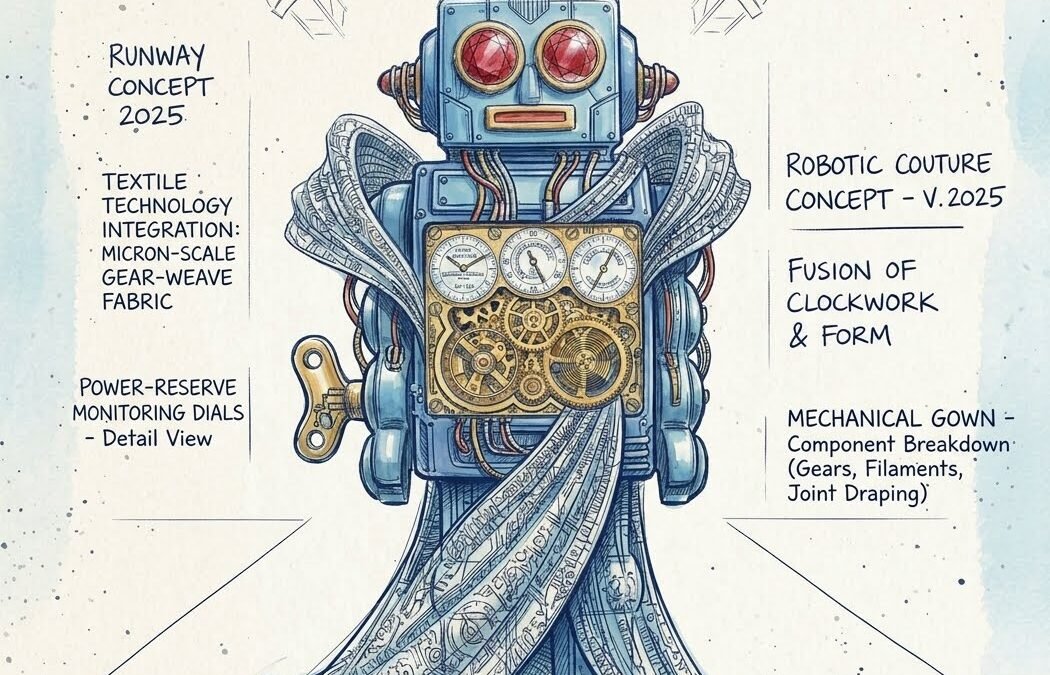
AI, Fashion and Print on Demand

AI, Fashion and Print on Demand

The global print-on-demand (POD) fashion market is undergoing a massive transformation, projected to expand tenfold from roughly $10 billion to over $100 billion by 2034. At the heart of this explosive growth is Artificial Intelligence, which acts as the ultimate catalyst for the "zero-inventory, highly-personalized" retail model.

AI is fundamentally altering how POD fashion is designed, marketed, produced, and consumed, steering the industry toward a highly automated, hyper-localized "smart supply chain."

Print-on-demand is a business model where products, primarily customized items, are produced in response to specific customer orders, eliminating the need for pre-printed inventory.

Speed-to-Market & Trend Transmutation

Traditionally, fashion cycles took months from concept to retail window. Today, AI algorithms scan massive data streams—including video trends on TikTok, global search behavior, and even real-time weather changes—to predict micro-trends before they physically materialize.

The POD Impact: Independent creators can spot a viral phrase or visual aesthetic and launch an entire apparel collection on a storefront like Shopify, Etsy, or TikTok Shop within hours without ever holding physical inventory.

Concept "Transmutation": Instead of starting from a blank canvas daily, sellers use tools like Gemini or Midjourney to analyze historical best-selling graphics, change out isolated variables (like the target niche, text, or art style), and effortlessly churn out highly optimized, mathematically proven variations.

Eliminating the Technical Bottlenecks of Design

Historically, the barrier to entry for apparel design was high; creators had to master software like Adobe Illustrator to ensure high-resolution formatting, transparent layers, and proper color management.

Scaling and Vectorization: AI has revolutionized surface and print design. If a designer has a low-resolution graphic or a basic sketch, platforms like KADy, Kittl, or specialized AI upscalers instantly remove backgrounds, vectorize lines, and intelligently scale print patterns so the repeat design elements fit perfectly across different garment sizes without pixelation.

Automated Mockups: Instead of hiring real-world models and organizing photoshoots, POD platforms like Printify use AI to instantly render ultra-realistic digital mockups of the custom clothing on various bodies and diverse backgrounds, vastly reducing customer hesitation at checkout.

Hyper-Personalization: The Co-Created Closet

AI is shifting the consumer's role from a passive buyer to a co-designer. Major fashion labels and POD storefronts alike are introducing interactive generative-design widgets.

Real-Time Previews: Customers typing a personal phrase, uploading a custom pet photo, or selecting an aesthetic (such as "surrealist neon rave" or "minimalist geometry") can watch an AI generate a distinct, tailored pattern onto a 3D clothing render in real time.

Tailored Fit: Advanced 3D pattern generators can take a customer’s unique body measurements and instantly adapt a ready-to-sew digital clothing file, eliminating standard size charts and ensuring the piece fits perfectly straight from the print machine.

Back-End Optimization and Prepress Precision

A massive chunk of print-on-demand overhead lies in hidden production mistakes.

Error Detection: AI-driven prepress checks automatically audit digital order files before they touch a printer, flagging incorrect bleed lines, formatting bugs, resolution drops, or color mismatches.

Intelligent Routing: When an order is placed on a social platform, AI routing systems calculate production costs, raw material availability, and proximity to the customer to fulfill the print job locally via advanced Direct-to-Garment (DTG) or Direct-to-Film (DTF) microfactories. This cuts down shipping timelines and minimizes carbon footprints, helping brands naturally satisfy rising EU sustainability regulations.


The Crucial Counter-Trend: The Threat of "Fashion Slop"

While AI makes the backend of print-on-demand incredibly frictionless, it has created a critical friction point on the front end: market saturation and an authenticity crisis.

The ease of AI has led to what critics call "fashion slop"—an influx of hollow, highly automated, algorithm-optimized listings generated in seconds purely to capture trending keywords. Because these listings are designed by machines for machines, they often lack a human connection and feel "emotionally empty" to consumers.

As a direct reaction, the dominant consumer trends of 2026— prioritize an unpolished, authentic, and "analog" look. Audiences are actively searching out hand-drawn illustrations, sketchy textures, imperfect lines, and nostalgic, faux-vintage aesthetics over hyper-clean, obviously AI-generated vector graphics.

The Takeaway for Brands

The most successful modern print-on-demand brands are not using AI to completely replace human creativity. Instead, they use AI to eliminate operational friction (scaling patterns, generating backend SEO, rout​ing orders, and creating mockups) while keeping a tight, intentional hold on the cultural meaning, artistic history, and human soul behind the design.

MOLAS: textile design & political identity

MOLAS: textile design & political identity

cgk.ink journal — textile & identity
cgk.ink journal · Guna Yala, Panamá

MolasTextile design & political identity

A blouse panel, cut and stitched by hand, that helped a people keep their land, their language and their name.

“Clothes aren’t going to change the world. The women who wear them are.”— Anne Klein
01 / 04 — What is a mola
01
The garment

What is a mola?

molaDulegaya (Guna language): “clothing” or “blouse.”

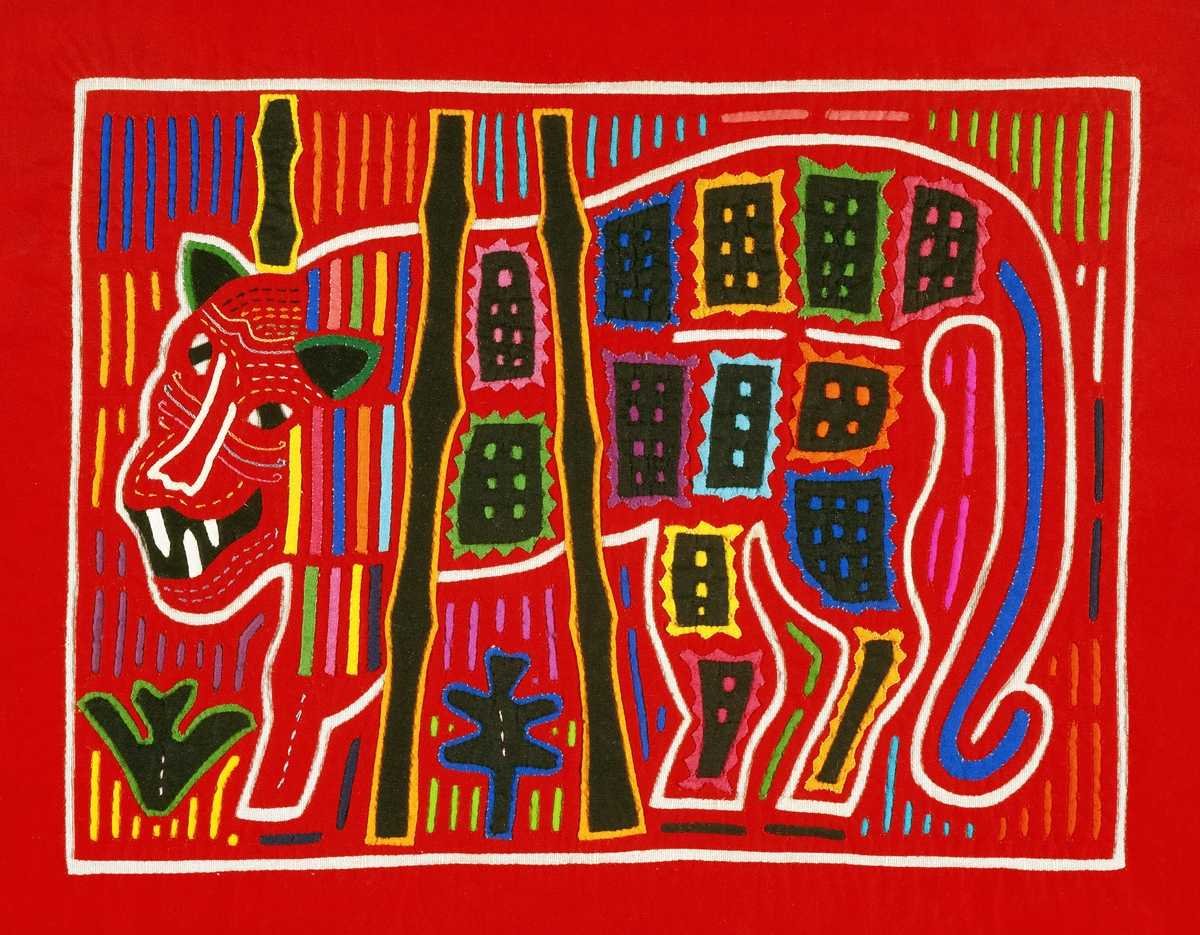
To the Guna, mola simply means clothing. To the rest of the world it means the panels: two vivid, hand-stitched rectangles worn front and back on a woman’s blouse, the centerpiece of a full ensemble of wrapped skirt, headscarf, gold and beaded wini wrapped at wrist and calf.

The Guna live along Panamá’s Caribbean coast and across the San Blas archipelago they call Guna Yala. Their textile art is believed to descend from body painting: the same geometric language moved from skin to cotton once trade cloth and needles reached the islands.

Every mola is a statement of who made it, and of who she is.

Guna mola panel in layered reverse appliqué, Panamá
Layered
Colorful mola textile with geometric and animal motifs
Storied
Detail of a hand-cut mola showing layered cotton and fine stitching
Cut
Mola textile art in red, orange and black
Stitched
02 / 04 — Reverse appliqué
02
The technique

Cut down to the color

Stack

Several layers of brightly colored cotton are basted together, darkest or boldest on top.

Cut

The maker slices through the top layer to expose the color beneath, then cuts again, deeper.

Turn

Each raw edge is folded under, so every line of the design becomes a channel of color.

Stitch

Tiny, nearly invisible hand stitches lock it all in place. A complex panel can take weeks or months.

The tell of a great mola: more layers, finer cuts, smaller stitches.

03 / 04 — Dress as resistance
03
The politics

Dress as resistance

1919

Assimilation

Panamá’s government begins pressing the Guna to give up traditional dress, including the mola, nose rings and wini, in favor of Western clothes.

1925

The Guna Revolution

In February, the Guna rise up against police occupation of the islands. Wearing the mola becomes an open act of defiance, and the uprising is still commemorated every year.

1938

Recognition

The San Blas territory is established as a comarca, the first step toward the self-government the Guna fought for.

Today

Guna Yala

An autonomous region governed by the Guna General Congress, where the mola is still worn daily as identity, not costume.

04 / 04 — Why it matters
04
The influence

Why it matters for design

Contrast

Saturated reds, oranges and blacks set edge to edge. No gradients, no hedging: color as pure graphic force.

Depth

Layers you can read. The eye travels down through the cloth, which is why the look keeps returning to fashion and interiors.

Story

Birds, sea creatures, maze-like geometry and daily life. Every panel is a narrative before it is a pattern.

Credit the source. When mola aesthetics show up on a runway or a throw pillow, the design debt belongs to Guna women. Name them.

Shop — mola-inspired
→
Curated by cgk.ink

Mola-inspired pieces

These pieces are curated by cgk.ink and inspired by the mola art form. They are not made by Guna artisans. For an authentic mola, buy from cooperatives and sellers who work directly with Guna makers.

No products were found matching your selection.