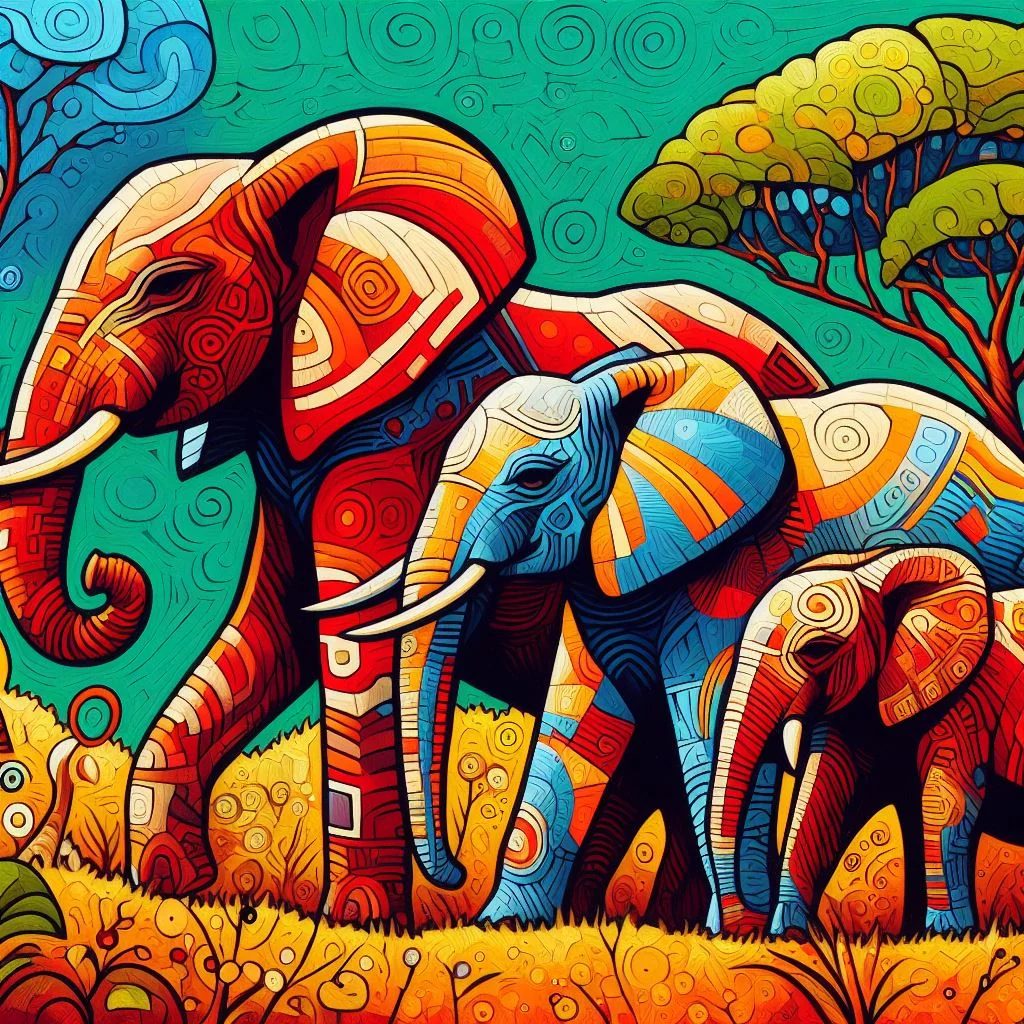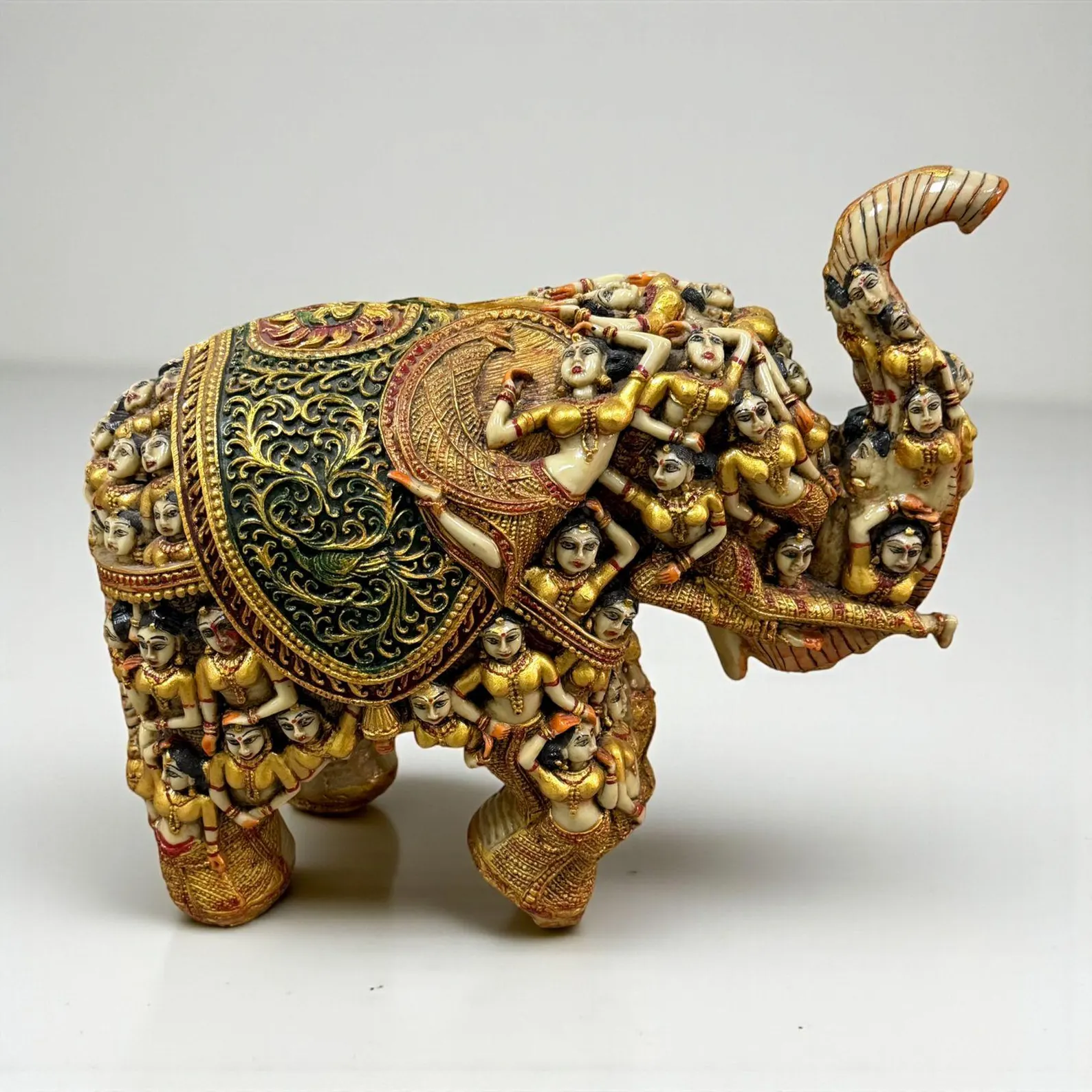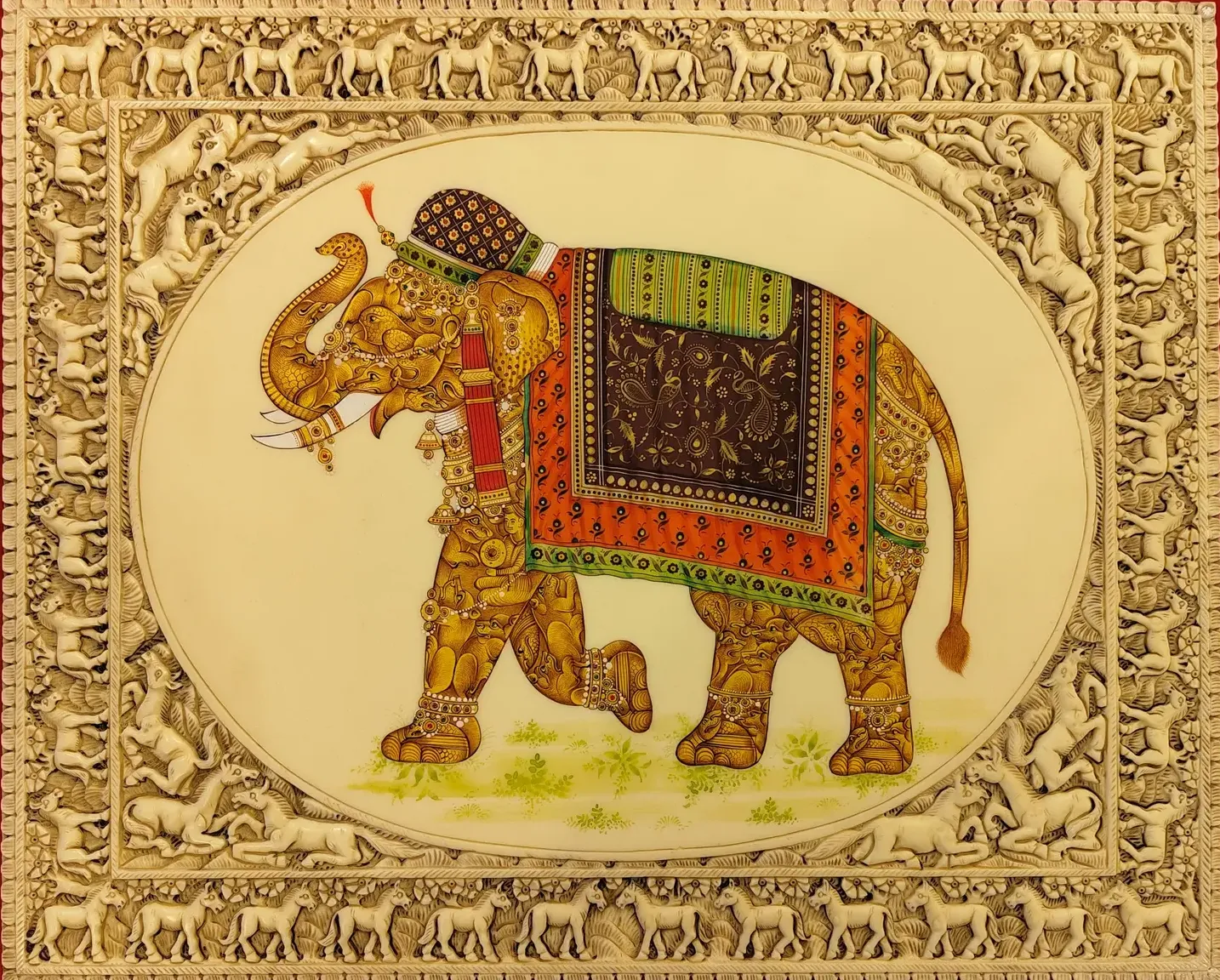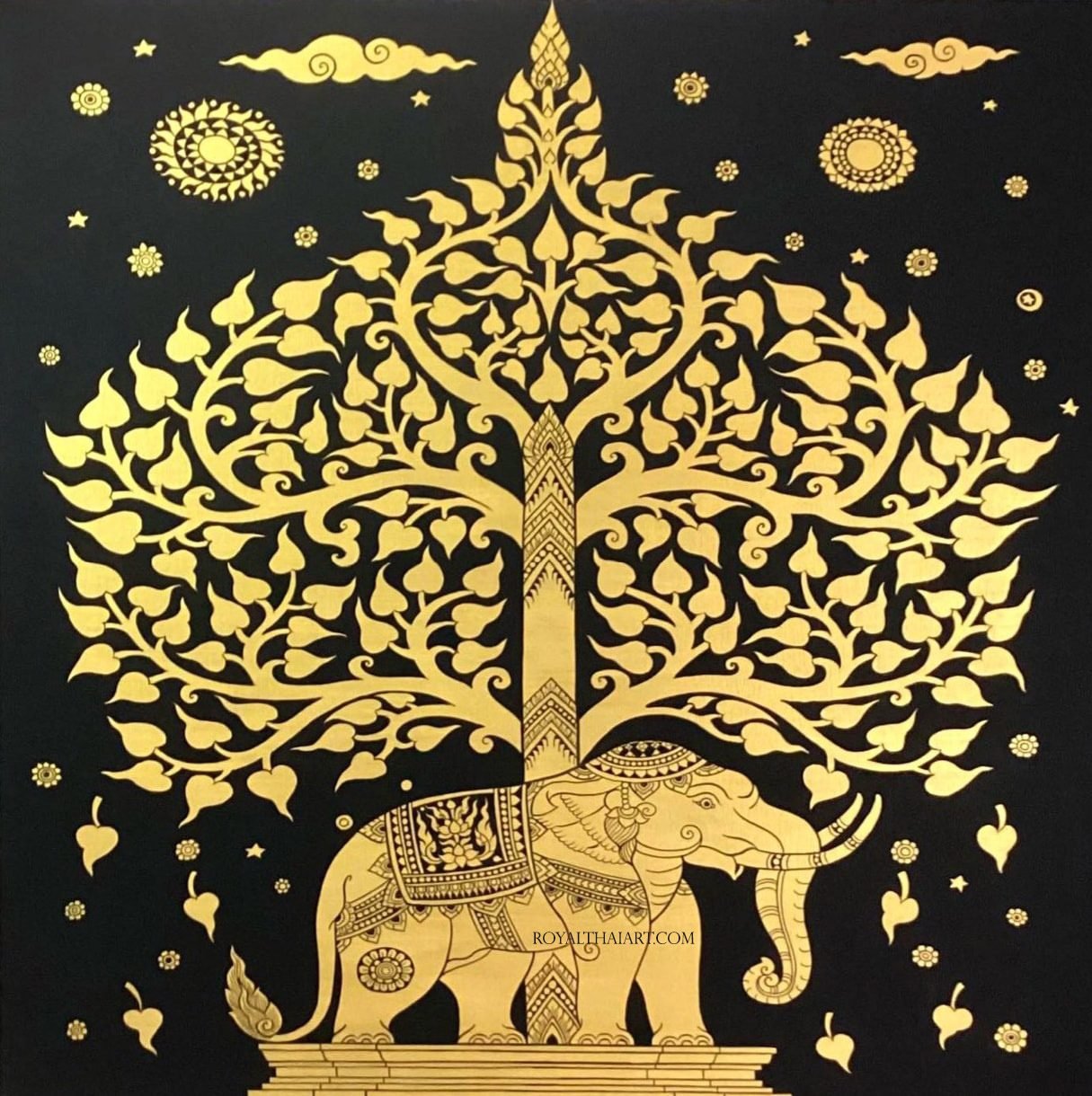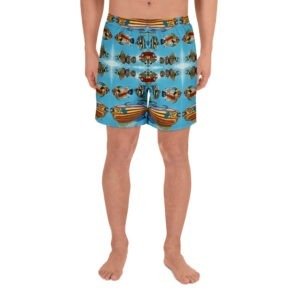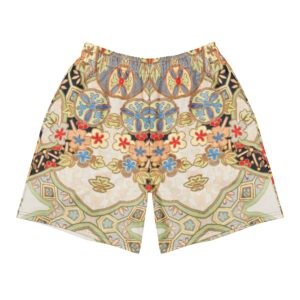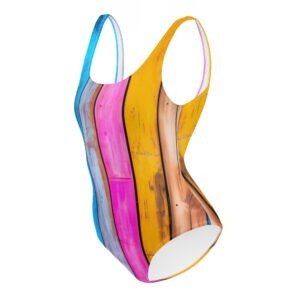

Elephants

Elephants

Elephants in Fine Art: Sacred, Symbolic, and the Sublime

Few animals have captured the imagination of artists across cultures and centuries quite like the elephant. Massive yet gentle, intelligent, long-lived, and deeply social, elephants have been rendered in stone, bronze, silk, and pigment as symbols of royalty, divinity, wisdom, and strength. This post surveys how elephants have appeared across major artistic traditions, with a special focus on the rich visual cultures of India and Southeast Asia, where the elephant holds a uniquely sacred status.

IMAGE: The Elephants (1948), Salvador Dalí

Elephants in Western Art

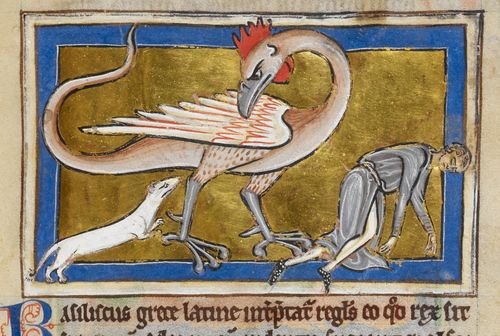
In European art, elephants were long considered exotic curiosities, appearing mostly through secondhand accounts before live specimens reached royal courts. Medieval bestiaries depicted elephants with fanciful, often inaccurate features, since most illustrators worked from written descriptions rather than direct observation. By the Renaissance, as trade routes expanded and menageries became a status symbol among European nobility, artists gained access to actual elephants and began rendering them with greater anatomical accuracy.

The animal became a favorite subject for artists interested in scale, texture, and the sublime — the wrinkled hide, the improbable trunk, the sheer bulk of the creature offered a technical challenge that appealed to draftsmen and printmakers alike. Later, the elephant became a fixture of Orientalist painting in the 19th century, often depicted in exoticized hunting or ceremonial scenes set in Africa or Asia, reflecting the colonial gaze of the period rather than the animal's actual cultural context.

An orientalist elephant refers to 19th-century and early 20th-century Western decorative arts, paintings, and sculptures depicting elephants in romanticized, opulent, or exoticized South and West Asian royal settings. These pieces often feature majestic pachyderms adorned with ornate howdahs (seats) and ceremonial trappings.

Elephants in African Art

Across the African continent, the elephant has long been a symbol of leadership, power, and continuity. In West African traditions, particularly among the Akan peoples of Ghana, elephant motifs appear in goldweights, textiles, and royal regalia, often associated with chieftaincy and the durability of communal memory. Ivory carving — though now rightly restricted due to conservation concerns — was historically one of the most prized art forms across Central and West Africa, with elephant tusks transformed into ceremonial objects, masks, and finely detailed figural carvings.


Contemporary African and African-diaspora sculptors continue to work with the elephant as a subject, frequently in bronze, celebrating the animal's association with matriarchal social structures, memory, and environmental stewardship — themes that resonate strongly with elephants' real-world social behavior.

Elephants in Indian and Southeast Asian Fine Art

Nowhere is the elephant more central to a visual and spiritual tradition than in South and Southeast Asia, where the animal is woven into religious cosmology, royal iconography, and everyday decorative art.

Ganesha and Hindu Sculpture

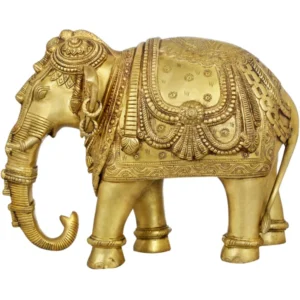
The elephant-headed deity Ganesha is among the most widely reproduced figures in Indian art, appearing in temple stone carvings, bronze icons, and household shrines across the subcontinent and wherever Hindu communities have settled. Ganesha sculptures range from monumental temple guardians to small portable icons, but nearly all share the recognizable iconography of the elephant head atop a human body, symbolizing wisdom, the removal of obstacles, and the union of intellect and strength.

Your Title Goes Here

Your content goes here. Edit or remove this text inline or in the module Content settings. You can also style every aspect of this content in the module Design settings and even apply custom CSS to this text in the module Advanced settings.

Mughal and Rajput Miniature Painting

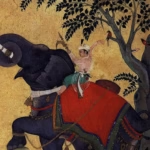
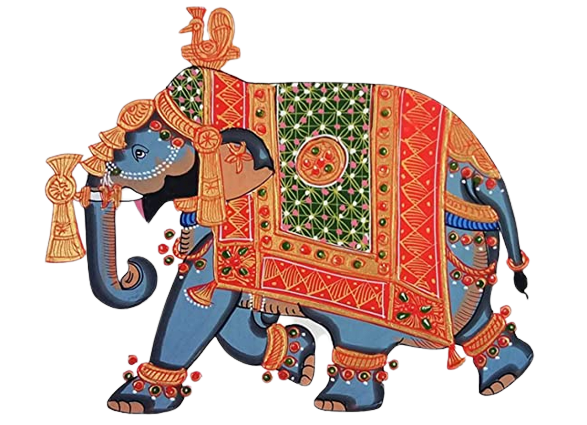
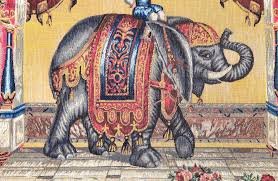
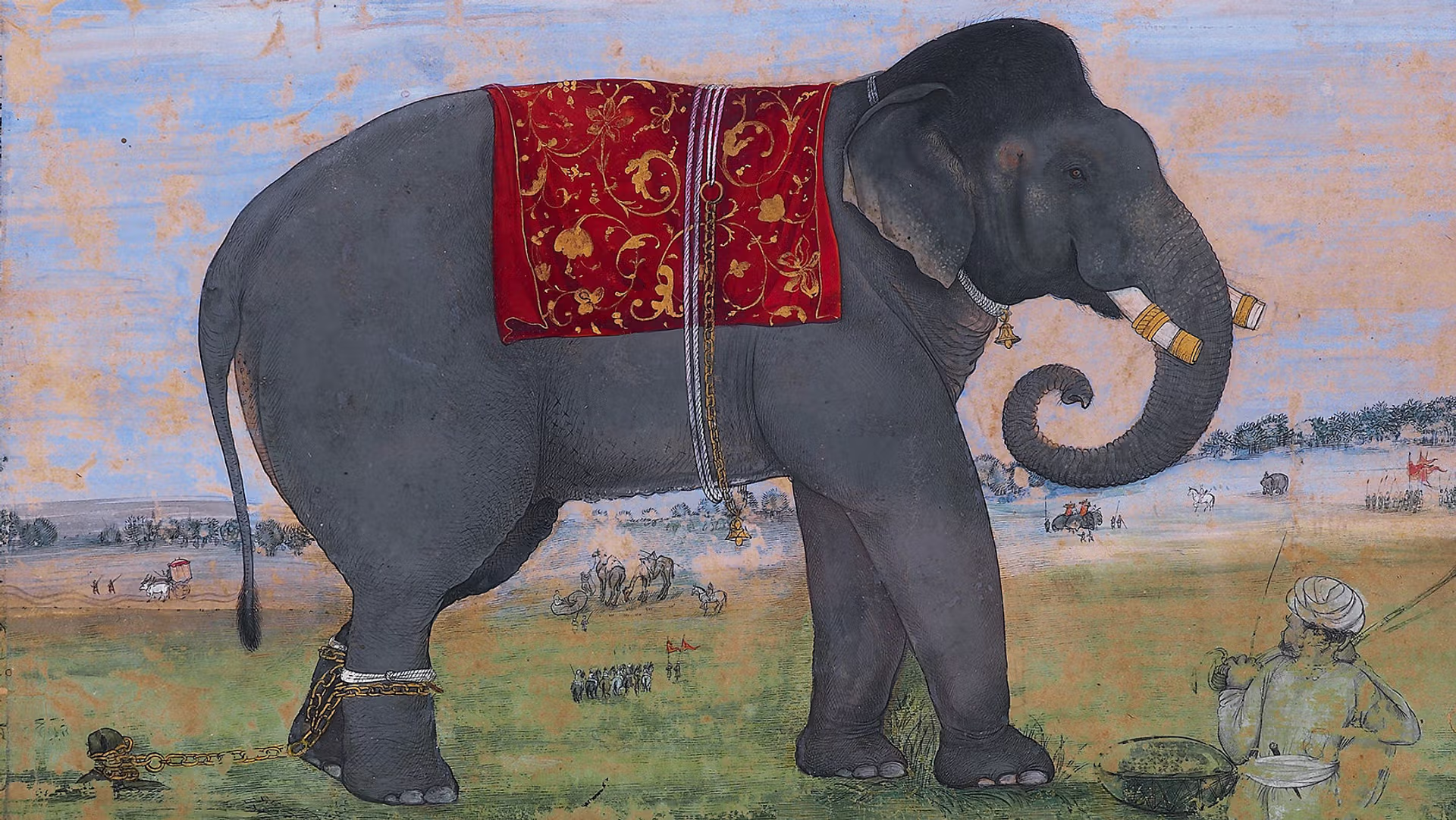
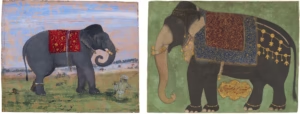
During the Mughal era, court painters developed an extraordinarily refined tradition of miniature painting, and elephants were among their favorite subjects. Royal processions, hunting expeditions, and elephant duels (a courtly sport) were rendered in intricate detail, with painters capturing not just the animal's anatomy but its caparison — the elaborate painted and jeweled trappings used to dress ceremonial elephants.

These paintings served as records of royal power, since the number and quality of a ruler's elephants was a direct measure of prestige.

In Thailand, the white elephant holds special significance as a symbol of royal legitimacy and Buddhist merit, tied to legends of the Buddha's birth. Temple murals (often found lining the interior walls of a wat) frequently depict elephants in scenes from the Jataka tales — stories of the Buddha's previous lives — as well as in courtly and battle scenes. These murals, painted in vivid mineral pigments, remain some of the most vibrant surviving examples of Southeast Asian narrative art.

Across the region, elephants also appear constantly in decorative and applied arts: batik and songket textiles, wood carving, shadow puppetry (wayang) in Indonesia, and lacquerware, reflecting how deeply the animal is embedded in daily cultural life rather than confined to elite or religious commissions.

Southeast Asian Temple Art

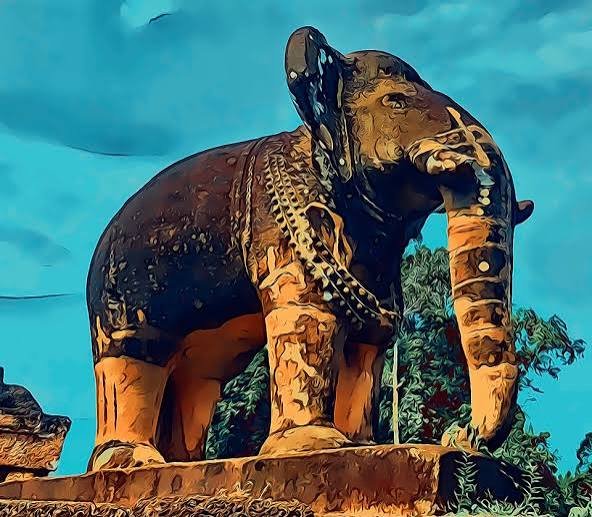
In Cambodia, the bas-reliefs of Angkor Wat and the Bayon depict elephants in both mythological and historical contexts — as war mounts in the depicted battles of the Khmer Empire and as vehicles of gods and kings. The stone carvers achieved remarkable dynamism, showing elephants mid-stride or engaged in combat, their forms integrated seamlessly into the larger narrative reliefs that wrap the temple walls..

Elephant Soul, Indian Brush

Take a closer look at the Asian elephant through the eyes of Indian court painters.
No products were found matching your selection.
Octopuses

Octopuses

Eight Arms, Limitless Mystery

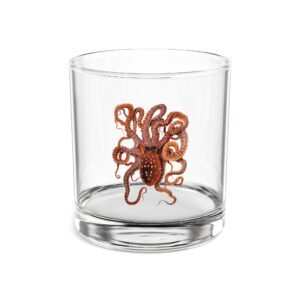
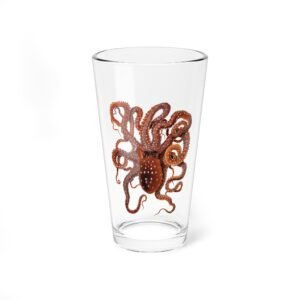
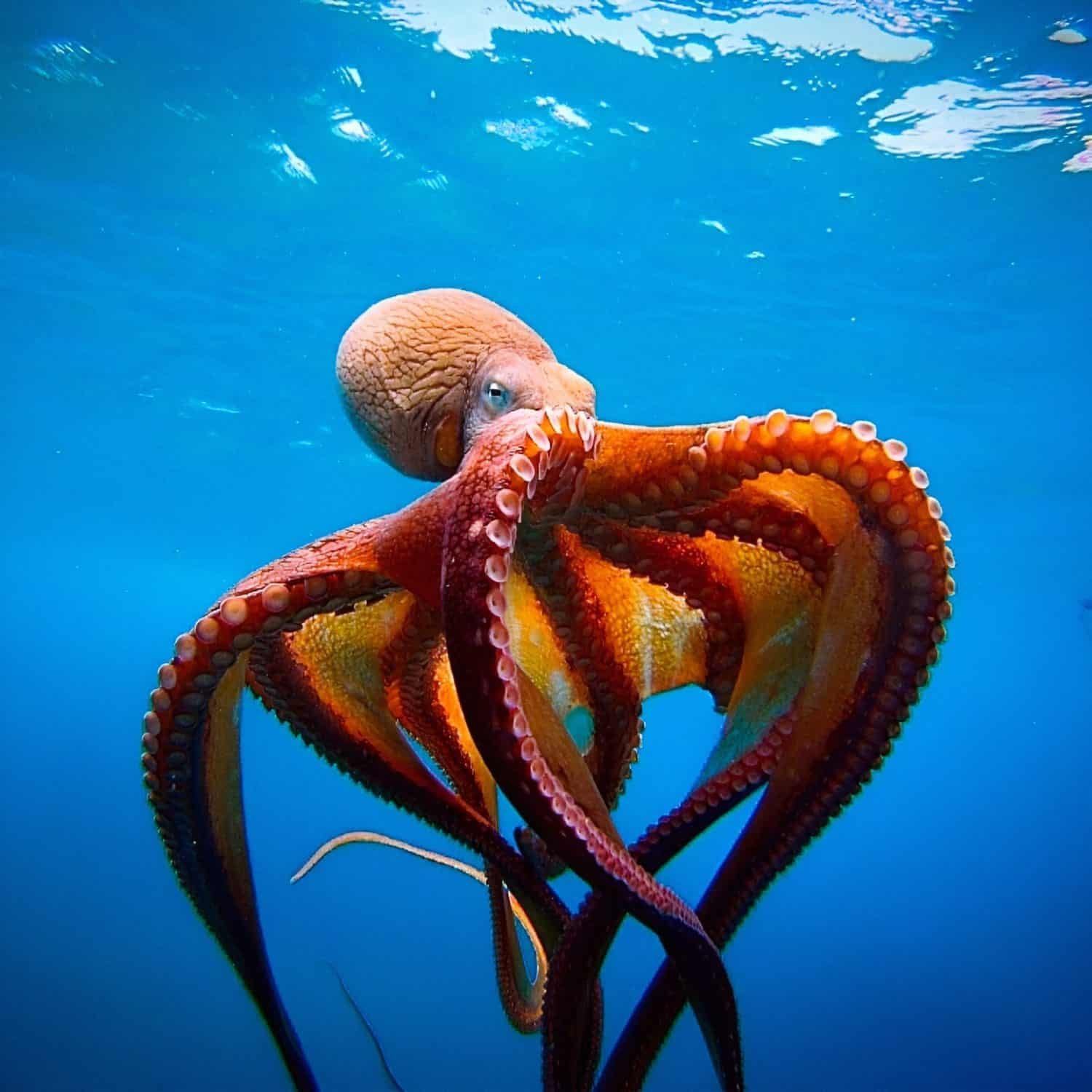
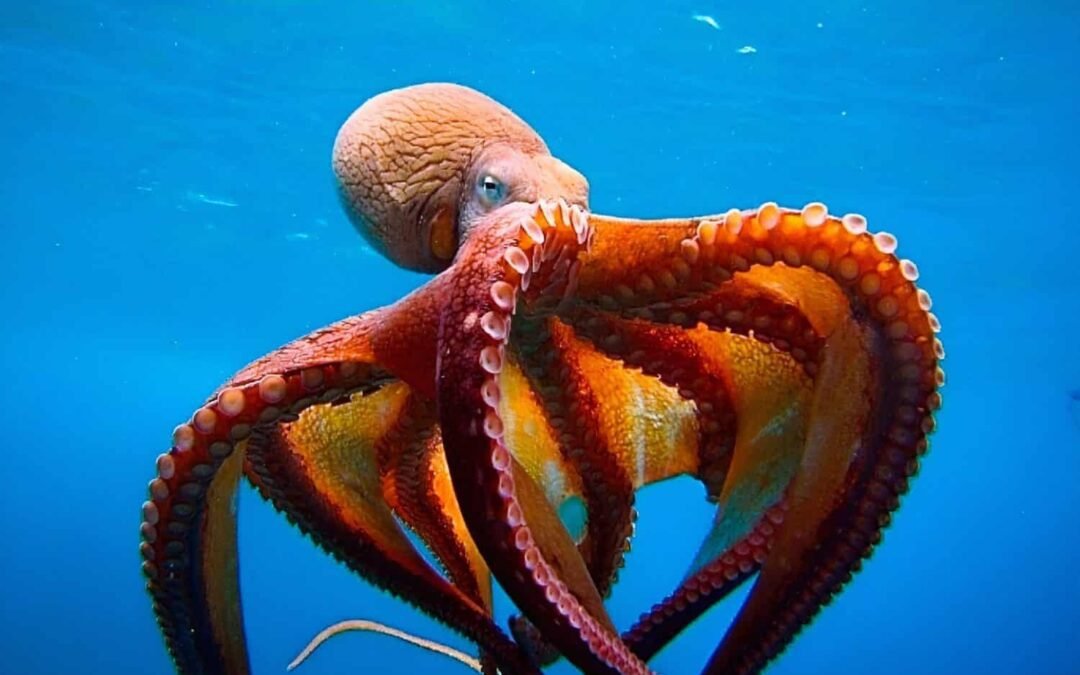
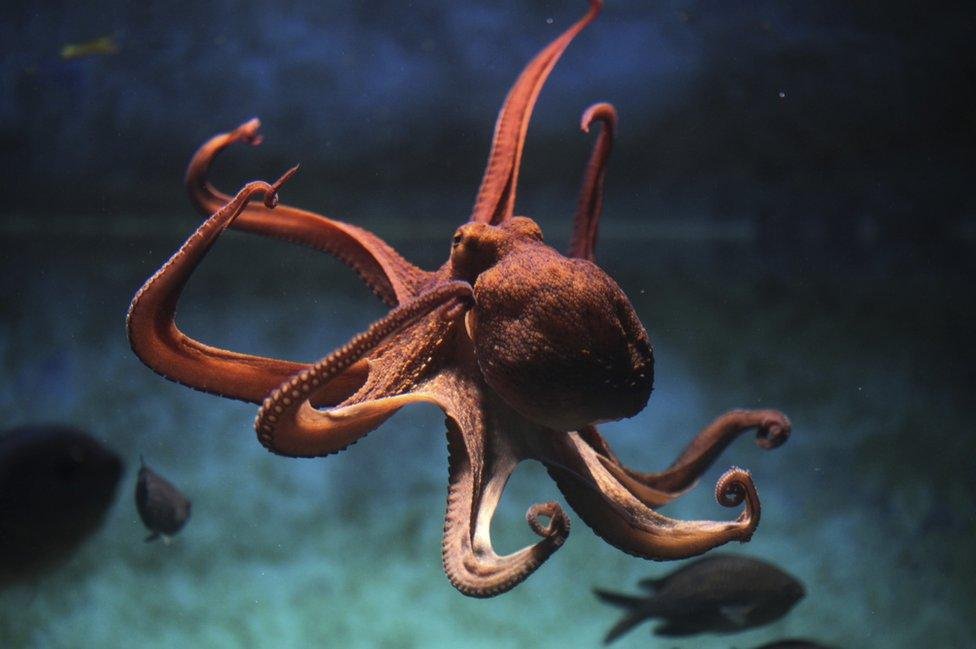
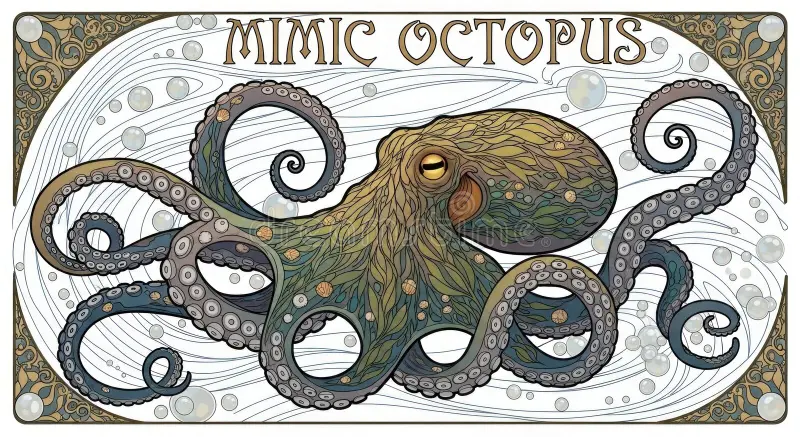
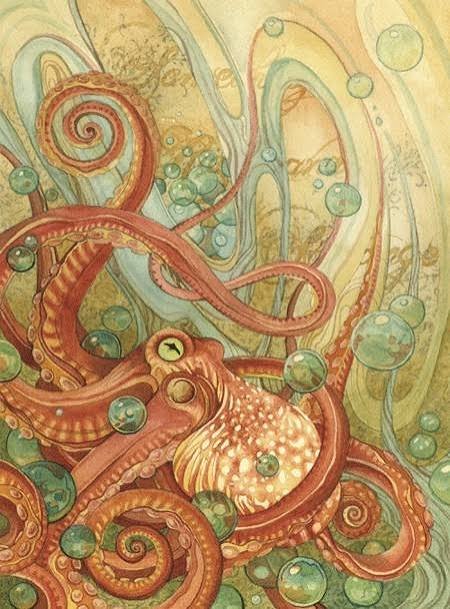
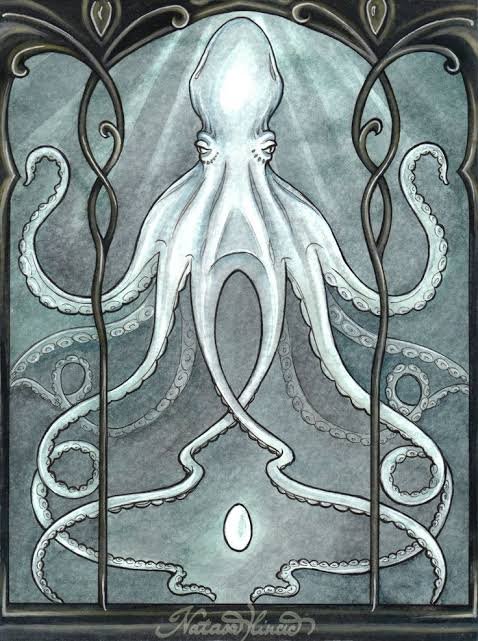
Octopuses have long fascinated artists, appearing in works that span centuries and continents. From the intricate cephalopod motifs found on ancient Minoan pottery to the dramatic, tentacled creatures of Japanese ukiyo-e prints, these creatures have symbolized everything from mystery and intelligence to eroticism and the unknowable depths of the sea. Their fluid, alien forms — capable of near-total transformation in color and shape — offer artists a subject that resists easy representation, making the octopus a recurring emblem of metamorphosis and otherness in visual culture. Whether rendered in delicate line work, bold woodblock printing, or contemporary surrealist compositions, the octopus continues to captivate as both a natural wonder and a rich artistic symbol.

... and by the way, while we're on the topic, it's Octopuses: following the standard English plural formed by adding -es​. It is the most widely used and recommended choice.

Octopi: A historical form based on the mistaken idea that octopus is a Latin word needing a Latin -i ending. It is common in casual speech but etymologically incorrect.

Octopodes: Pronounced oc-TOP-uh-deez, this follows the original Greek root (oktōpous). It is rarely used.

Art & Symbolism

Eight Arms, Infinite Meanings: The Octopus in Fine Art

From Minoan pottery to Surrealist canvases, no other creature has slipped so easily between the sacred, the erotic, and the monstrous. Here's why artists keep reaching for the octopus.

Long before marine biologists could explain how an octopus reasons with three hearts and a brain distributed through its arms, artists had already cast it as a symbol of everything human vision struggles to hold at once: intelligence and alienness, seduction and horror, chaos and grace. Few creatures have moved through so many artistic traditions while keeping their charge intact. The octopus doesn't just appear in art — it argues with it, twisting the frame the way it twists its own body through impossible spaces.

The Ancient Aegean: A Creature of the Sea's Own Logic

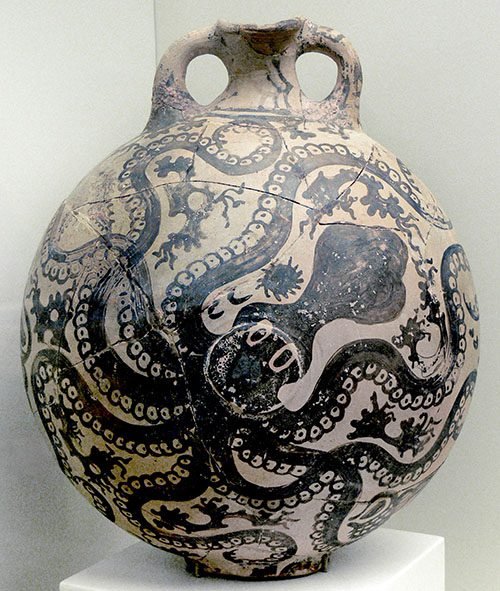
The octopus's art-historical career begins over 3,500 years ago, on the Greek island of Crete. Minoan potters covered their vessels with octopuses whose arms curled outward to fill the curved surface of a jar or flask, an approach so well suited to the animal's form that art historians still point to Minoan "Marine Style" pottery as an early masterclass in letting subject and structure shape each other. There's no anxiety in these images — the octopus reads as a creature of abundance, tied to the rhythms of a seafaring culture that depended on the ocean for survival and trade. It is decorative, yes, but also votive: an emblem of a world where the boundary between land and water, human and animal, felt porous rather than threatening.

Edo Japan and the Erotic Sublime

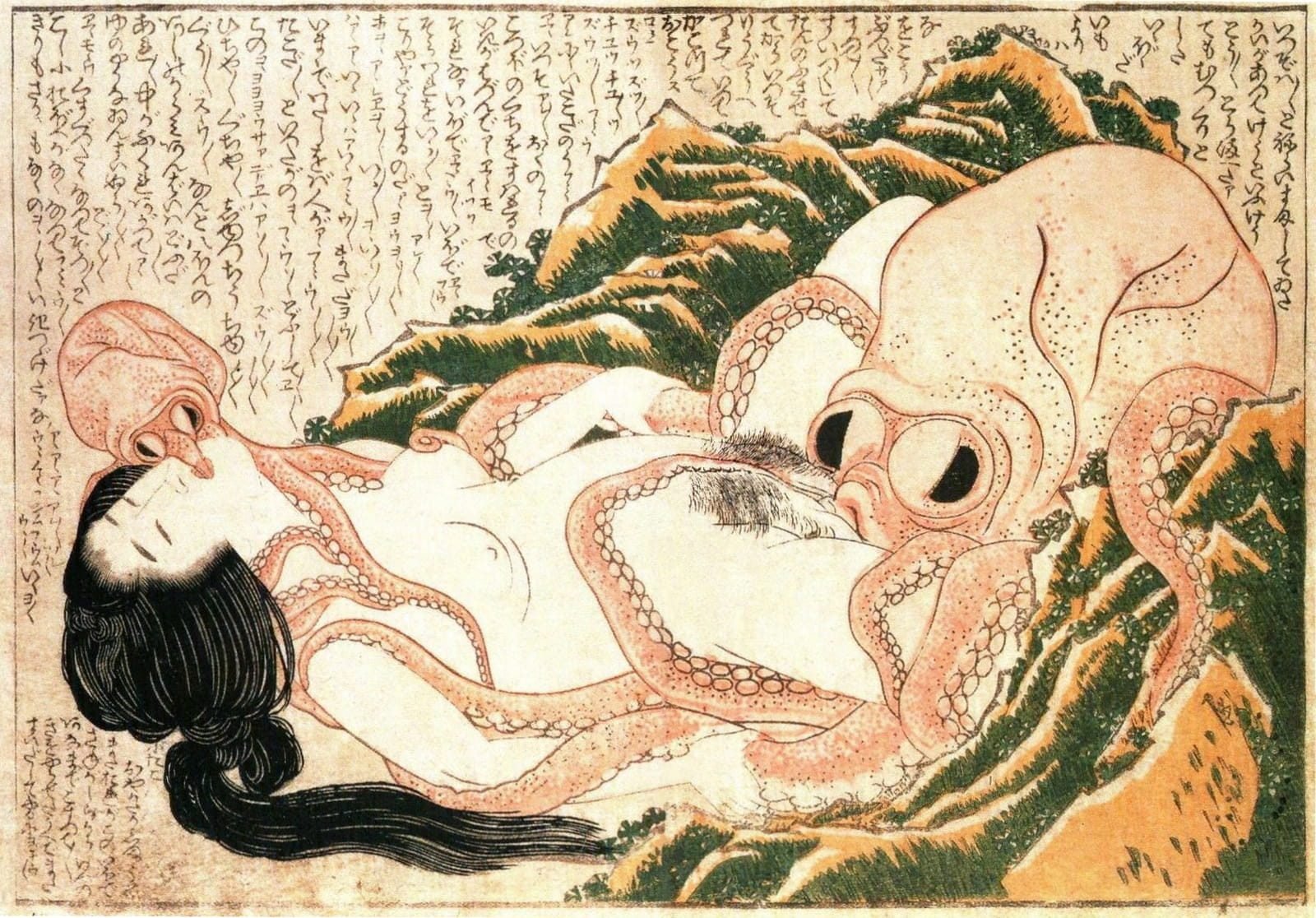
The most famous octopus in art history is arguably a woodblock print: Katsushika Hokusai's The Dream of the Fisherman's Wife (1814), part of his erotic shunga tradition. A pearl diver is shown in an intimate embrace with two octopuses, one large and one small, in a composition so frank it startled Western audiences when it resurfaced in the 20th century. The print draws on older Japanese folklore about sea creatures as both erotic and supernatural agents, and it set a visual template — human and octopus intertwined — that later Western Surrealists and contemporary artists would return to again and again, whether or not they knew the source.

The octopus becomes shorthand for a desire that exceeds ordinary human proportion — too many arms, too much intimacy, too much knowing.

Victorian Naturalism and the Monstrous Unknown

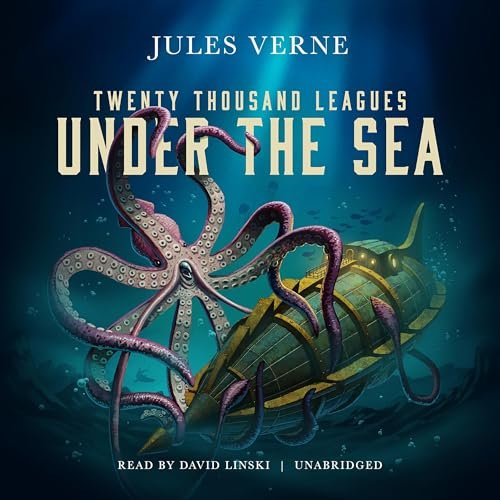
By the 19th century, as naturalists began cataloguing deep-sea life and Jules Verne sent readers twenty thousand leagues under the sea, the octopus took on a darker charge in the Western imagination. Victor Hugo — better known as a novelist, but also a serious draftsman — filled his own ink washes with monstrous octopus-like beings, using the creature's tentacled form to visualize obsession, temptation, and cosmic dread. Illustrators of Verne's novels gave the giant squid and octopus their now-iconic role as ship-swallowing menace: a stand-in for everything the era's scientific confidence couldn't yet explain. This is where the "kraken" association hardens into popular culture — the octopus as chaos made flesh, an intelligence too foreign to reason with.

Art Nouveau: The Octopus as Ornament

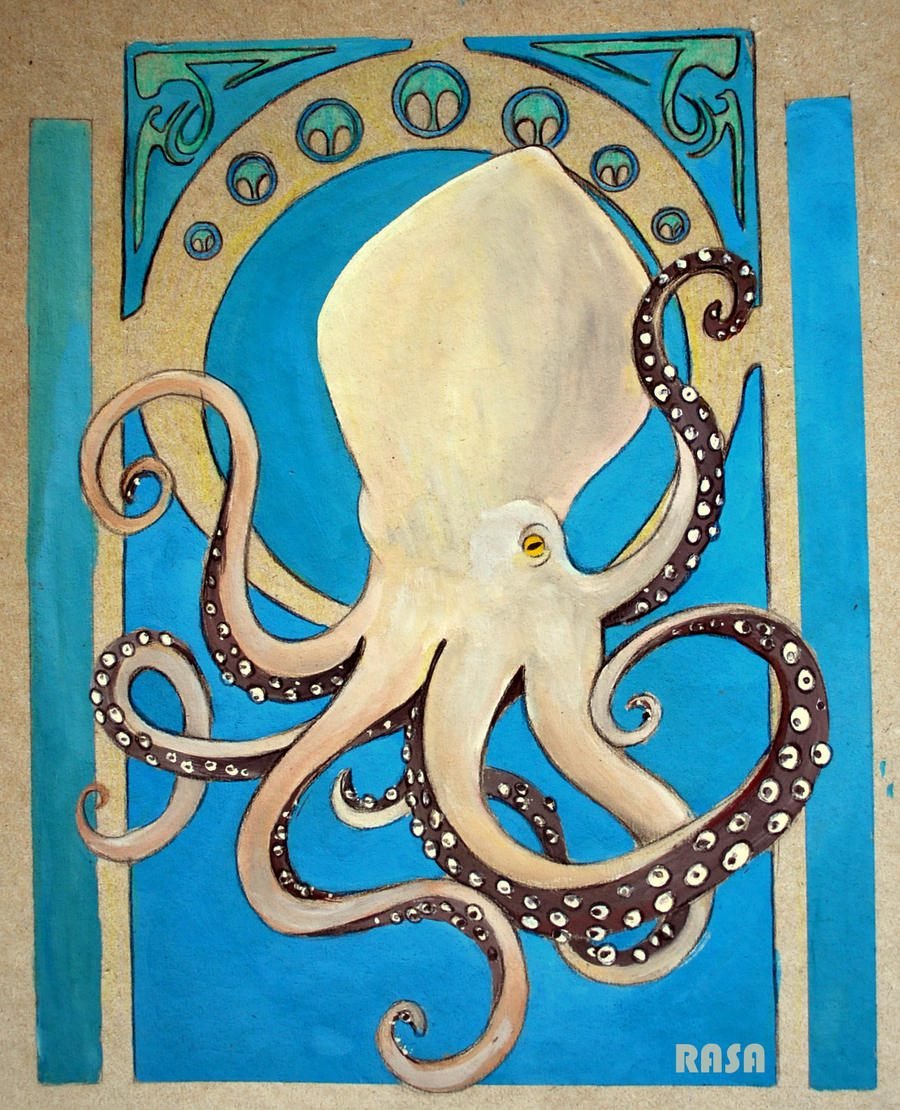
At the turn of the 20th century, Art Nouveau designers rehabilitated the octopus into pure decorative grace. Its curling arms mapped naturally onto the movement's whiplash line — the same sinuous curve that shaped Tiffany glass, Mucha's posters, and Gaudí's ironwork. Here the octopus loses most of its menace and becomes instead a study in organic asymmetry, proof that nature itself was the era's greatest designer. It's a useful reminder that the octopus's meaning was never fixed; each period projected its own preoccupations onto that same eight-armed silhouette.

Showing 5–6 of 10 resultsSorted by latest

Surrealism and the Unconscious Made Visible

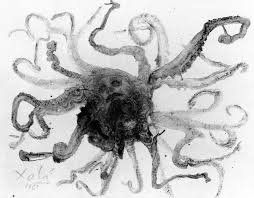
The Surrealists, hunting for images that could bypass rational thought entirely, found the octopus irresistible. Its boneless, shape-shifting body, its alien intelligence, and its associations with the unconscious depths of the ocean made it a natural metaphor for the unconscious mind itself. Salvador Dalí and his contemporaries returned to cephalopod forms as symbols of metamorphosis and the instability of identity — a body that refuses to hold one shape is a perfect image for a psyche that refuses to hold one meaning.

Why the Symbolism Endures

Intelligence without a familiar mind. The octopus is one of the few creatures whose evident intelligence doesn't resemble our own, making it a natural symbol for knowledge or consciousness that exceeds human categories.

Camouflage and transformation. Its ability to change color and texture instantly has made it an emblem of disguise, adaptability, and the instability of appearances.

Too many arms. The multiplicity of limbs reads as both erotic excess and monstrous threat — the same visual fact producing opposite emotional effects depending on the era.

The deep unknown. As a creature of the ocean depths, it carries the same symbolic weight as the sea itself: the unconscious, the unmapped, the sublime.

The Contemporary Afterlife

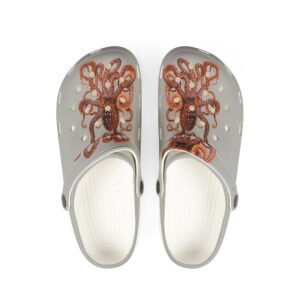
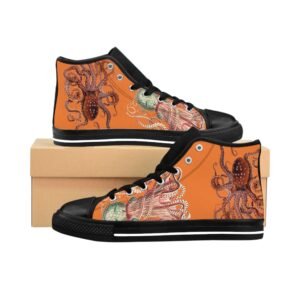
Today the octopus is everywhere in art and design again, from gallery ceramics to editorial illustration to the art-inspired textiles and home goods that draw on centuries of this same visual language. What's remarkable is how much of the old symbolism survives intact even in playful, contemporary treatments — a curling tentacle motif still carries a faint charge of mystery and transformation, whether the artist intends it or not. Few creatures offer that kind of built-in depth: pull an octopus into a composition, and three and a half thousand years of meaning come with it.

No products were found matching your selection.

“Truly obscure animals, like the axolotl (a type of salamander) or the Wunderpus photogenicus (a type of octopus which, true to its name, is very photogenic), don't have nicknames in common use, although I expect to hear from the Association for Researchers of the Axolotl and the Wunderpus Photogenicus (ARAWP?) any day now informing me that they say them often enough that they've devised more efficient names for them.”
― Gretchen McCulloch, Because Internet: Understanding the New Rules of Language

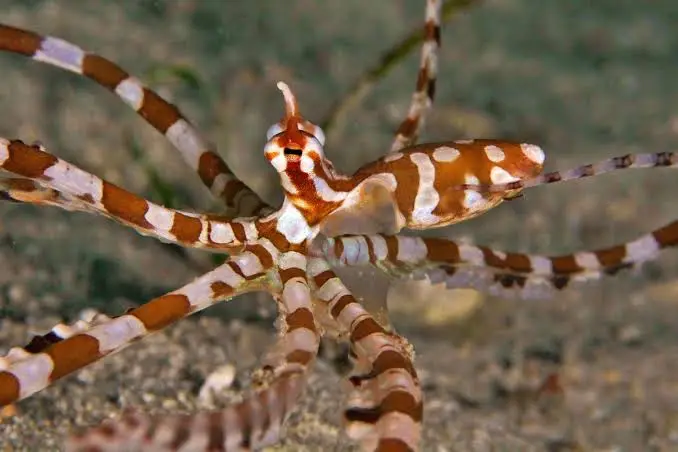
Wunderpus photogenicus, the wunderpus octopus, is a small-bodied species of octopus with distinct white and rusty brown coloration. 'Wunderpus' from German "wunder" meaning 'marvel' or 'wonder'. Due to the appearance and behavior of the wunderpus, it is frequently confused with its close relative, the mimic octopus. Wikipedia

Cheap Fashion: Expensive Consequences

Cheap Fashion: Expensive Consequences

Your daily choices create immediate, measurable ripples across the globe. Nowhere is this impact more visible—or more destructive—than in the multi-trillion-dollar fashion industry. Behind the glamour of affordable style lies an environmental, human, and cultural crisis second only to oil production.
Looking good shouldn't break the planet.
Consider the baseline data of our current clothing culture:

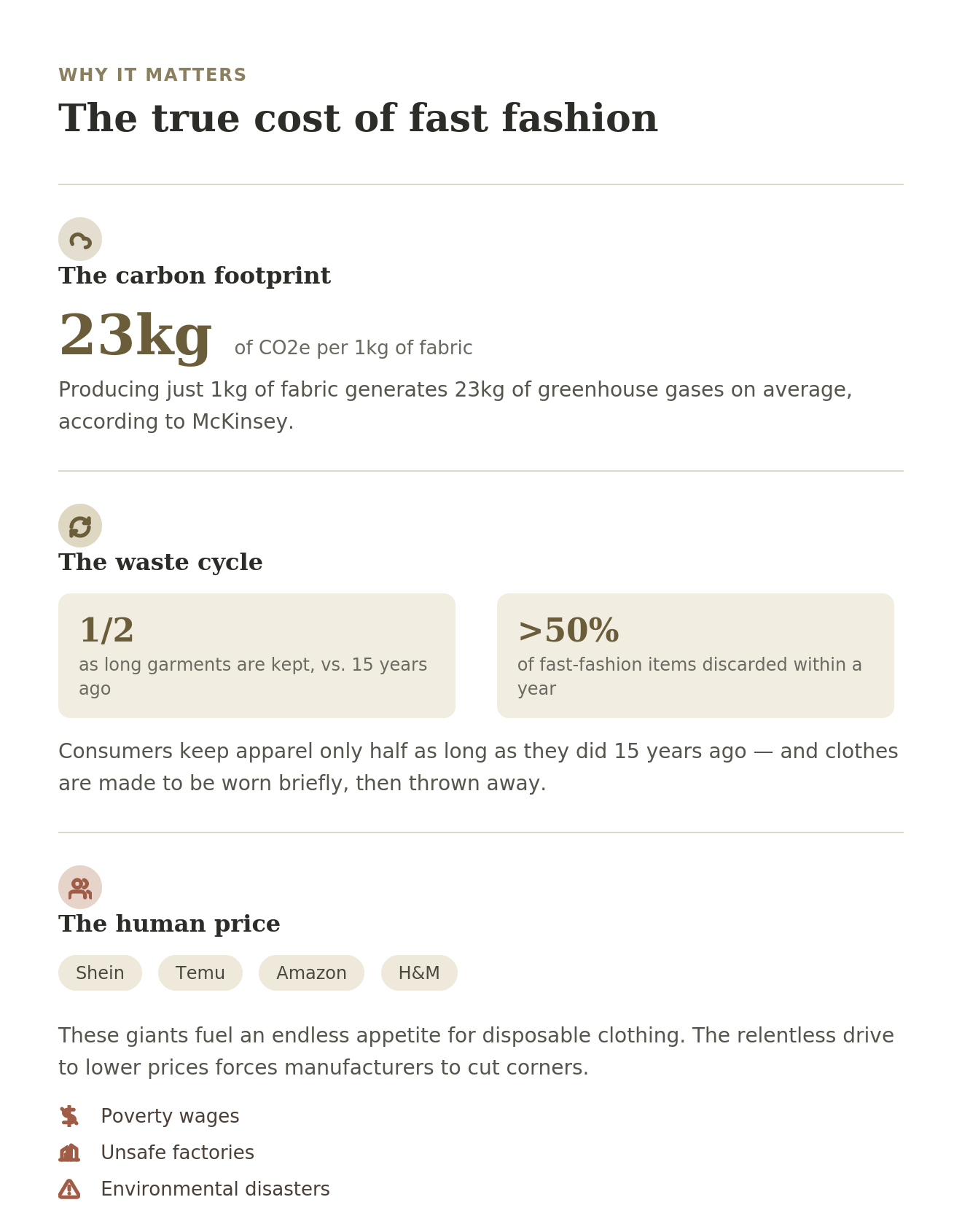
The Carbon Footprint: Producing just 1kg of fabric generates 23kg of greenhouse gases on average, according to McKinsey.

The Waste Cycle: Consumers keep apparel only half as long as they did 15 years ago. More than half of all fast-fashion items are discarded within a year of production.

The Human Price: Giants like Shein, Temu, Amazon, and H&M fuel an endless appetite for disposable clothing. This relentless drive to lower prices forces manufacturers to cut corners, resulting in poverty wages, unsafe factories, and environmental disasters.

Our Blueprint for Change: What cgk.ink is Doing

We refuse to participate in careless production and mindless consumption.
Here is how we are actively lowering our footprint and supporting global equity:

Sourcing Responsibly: We selectively source environmentally beneficial materials. You can view our sustainable designs by choosing the Eco-Logical Collection from our Special Collections menu.

Carbon-Neutral Shipping: We provide a transparent carbon-offset option at checkout to neutralize the emissions generated by moving your order from our doors to yours.

Stripe Climate Partnership: As an early member of the Stripe Climate initiative alongside 200,000 global businesses, we contribute 1% of every payment fee directly to advanced carbon removal technologies.

Human-Centric Mindfulness: Sustainability includes people. We partner exclusively with suppliers who guarantee fair, equitable compensation and strictly adhere to international labor laws.

Care to Join Us?
True style outlasts temporary trends. Choose durability over disposability. Explore the Eco-Logical Collection today and vote for a cleaner, fairer world with your wallet.

The Toxic Cultural Shift: Transforming How We Live

Fast fashion doesn't just pollute our air and rivers; it fundamentally re-engineers our psychology, habits, and global communities.

The 52-Season Cycle: Traditional spring/summer and autumn/winter models are dead. Brands now push weekly micro-seasons to hook you on constant novelty.

The Disposable Mentality: Clothing is no longer viewed as a durable investment. ​Instead, aggressive corporate marketing trains us to treat garments like chewing gum or cigarettes—to be used up once and immediately thrown away.

The Illusion of Wealth: Rock-bottom price tags deceive shoppers into feeling wealthy because they can buy in massive quantities. In reality, it masks financial regression while making corporate owners billionaires.

The Psychological Toll: Psychological studies prove that as materialistic values rise, personal happiness plummets.  The continuous cycle of "retail therapy" creates chronic anxiety and persistent dissatisfaction.


Erasing Global Heritage: The flood of cheap, secondhand clothing dumped onto developing countries completely wipes out proud, historical local tailoring and textile sectors.

Elephants

Elephants

Elephants in Fine Art: Sacred, Symbolic, and the Sublime Few animals have captured the imagination of artists across cultures and centuries quite like the elephant. Massive yet gentle, intelligent, long-lived, and deeply social, elephants have been rendered in stone,...

Cheap Fashion: Expensive Consequences

Cheap Fashion: Expensive Consequences

LOOKING good can be bad for the planet. Massive amounts of energy, water and other resources are needed to make clothes. From the pesticides poured on cotton fields to the washes in which denim is dunked, making 1kg of fabric generates 23kg of greenhouse gases on average, reckons McKinsey, a consultancy. Because consumers keep almost every type of apparel only half as long as they did 15 years ago, these inputs go to faster than ever before. More than half of the fastest-fashion items made are chucked away within a year of production. But such rampant retail therapy costs the earth.https://www.economist.com/the-economist-explains/2017/04/11/the-environmental-costs-of-creating-clothes?utm_medium=cpc.adword.pd&utm_source=google&ppccampaignID=17210591673&ppcadID=&utm_campaign=a.22brand_pmax&utm_content=conversion.direct-response.anonymous&gclid=Cj0KCQjwxuCnBhDLARIsAB-cq1oYxEVo5hCbcyps9SNVNujmZqgcSOe79OTnwTlN9HilD6gSLaMpR6waApeeEALw_wcB&gclsrc=aw.ds

A Green Christmas

A Green Christmas

Sustainable ecommerce How we're working to reduce ecommerce's climate impact Carbon offsetting is a way to compensate for the carbon dioxide we spew into the atmosphere by funding projects that reduce greenhouse gases or absorb carbon from the air. At cgk.ink, this...

Climate Stripes

Climate Stripes

Admit it. It's fun to laugh at global warming deniers. Until you realize that they're serious. Design can be many things, but the thing at which it succeeds best is education. Professor Ed Hawkins (University of Reading) has created a graphic entitled "Climate...

The Global Bestiary

The Global Bestiary

Global Bestiaries

How Exotic Animals Shaped Human Art History

For millennia, the appearance of exotic animals in art has chronicled the outer limits of human trade, diplomacy, science, and imagination.

When rare creatures crossed oceans and deserts as royal gifts, they fractured public imagination.

In the West, artists struggled to balance mythical folklore with the sudden reality of live, breathing beasts. In contrast, non-Western traditions bypassed simple portraiture, integrating these magnificent creatures into cosmic balance, divine lineages, and profound political allegories.

From prehistoric rock art to the heights of global empires—and expanding from land mammals to the deep, luminescent organisms of the sea—the history of exotic animals in art reveals how humanity visualizes the unknown.

Ancient Foundations and Prehistoric Rock Art

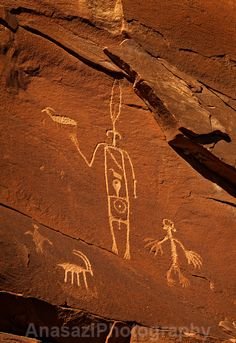
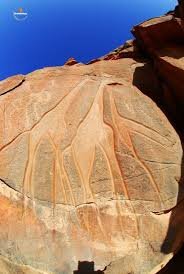
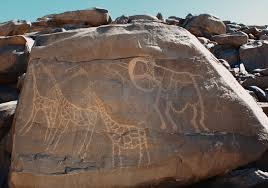
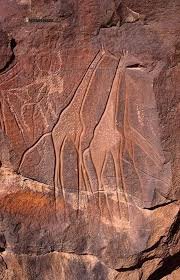
The Ténéré Petroglyphs: Located in the Sahara Desert of Niger, the Dabous Giraffes are the world’s largest known rock art petroglyphs. Carved nearly 10,000 years ago, these life-sized, anatomically detailed rock engravings date back to a time when the Sahara was a fertile savanna. Lines trailing from the muzzles of the giraffes suggest deep spiritual or early hunting connections.

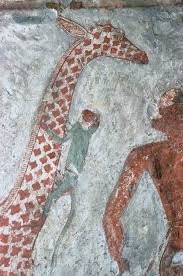
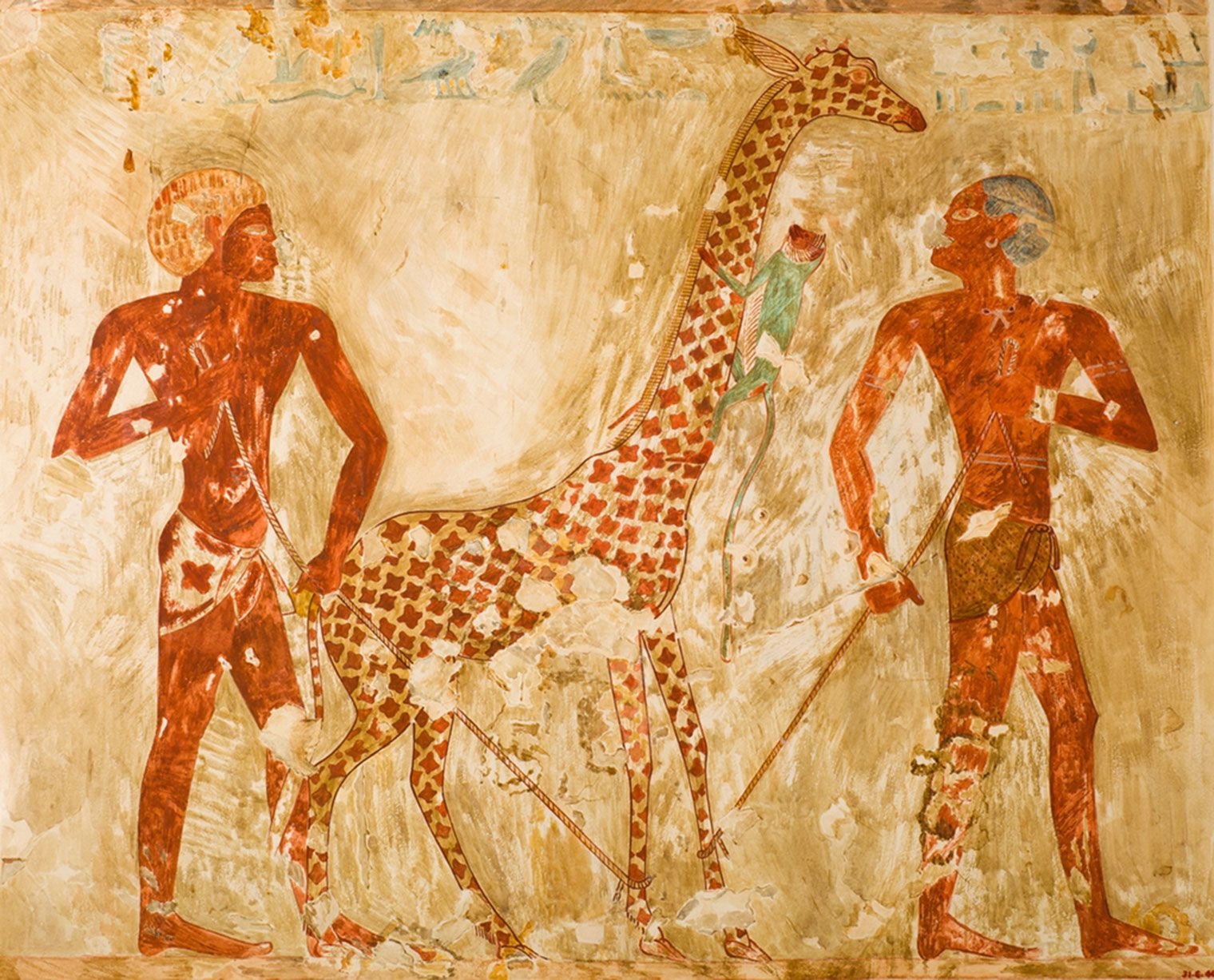
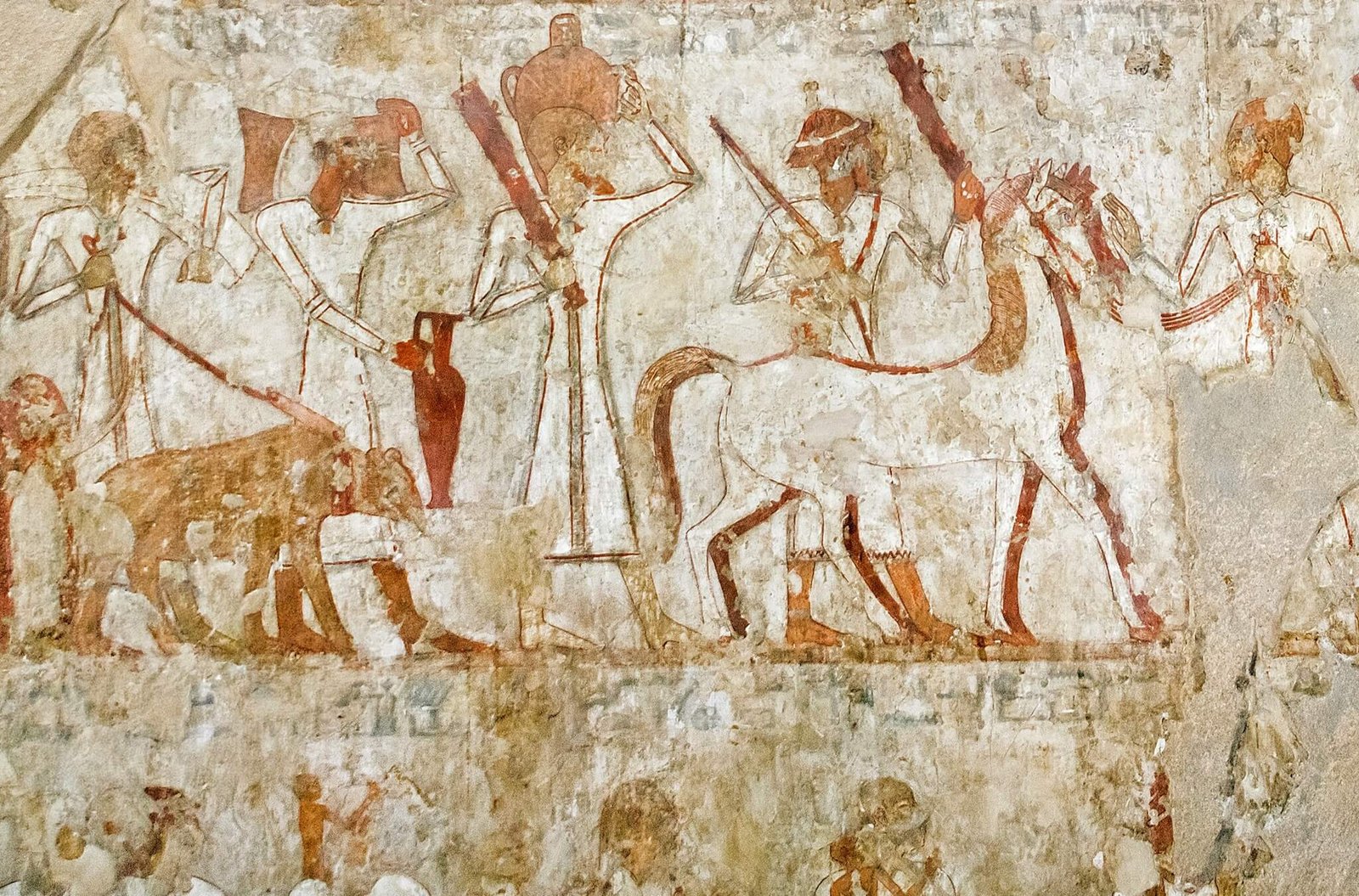
Egyptian Tributes: the New Kingdom era, animals shifted from local wildlife to symbols of imperial reach. In the tomb of Rekhmire, vibrant frescoes depict Nubian delegations bringing giraffes, big cats, and elephant tusks as tribute to the Pharaoh, cementing the exotic animal as a visual currency of geopolitical power.

History and Origins

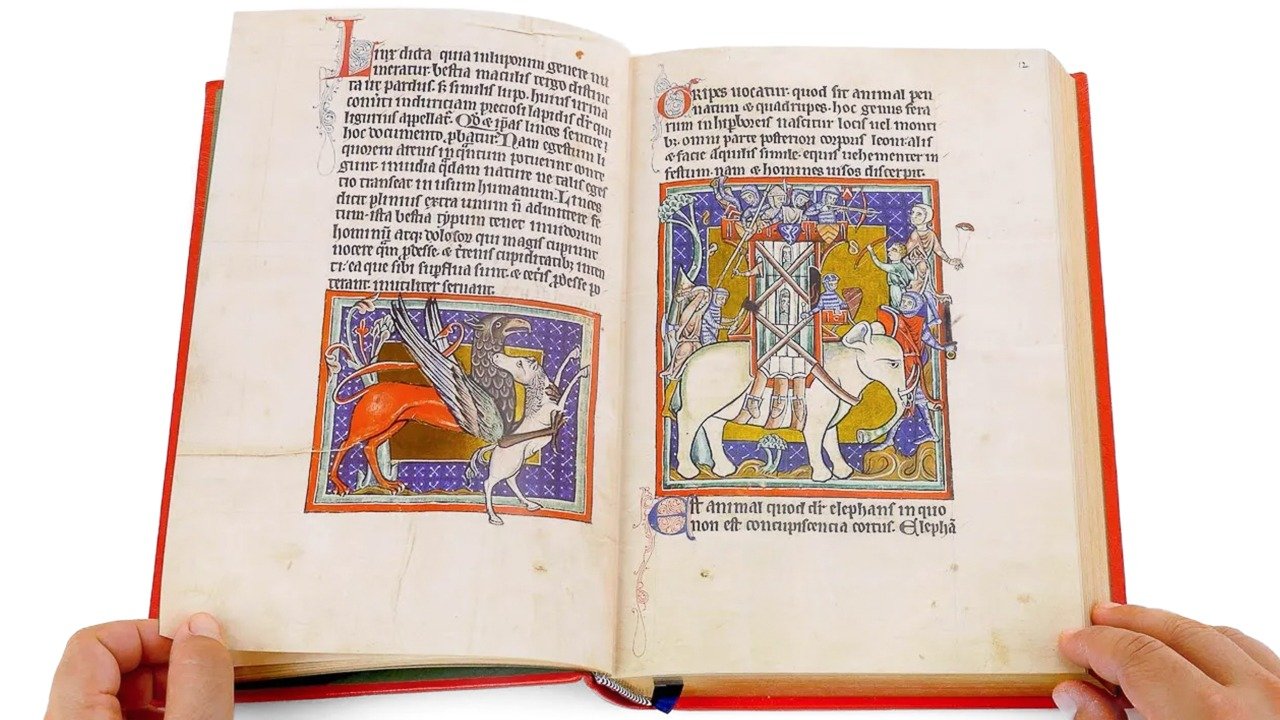
Physiologus is an ancient Christian text, originally written in Greek, that describes real and mythical animals, plants, and stones, assigning them Christian allegorical meanings, and is the ancestor of the medieval bestiary. It was widely translated and adapted across Europe, becoming a popular work that linked Eastern and Western traditions through its moral and mystical interpretations of nature. 

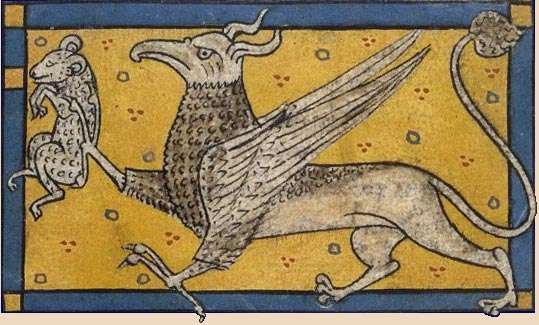
Bestiaries (or "Books of Beasts") are medieval encyclopedias that cataloged both real and mythical animals, plants, and even rocks.

Originating in the ancient world, these richly illustrated manuscripts used the natural behaviors of animals as allegories to teach Christian moral lessons and biblical truths.

The Physiologus: The foundation of the genre is an anonymous text compiled in Alexandria, Egypt, between the 2nd and 4th centuries. It was translated into Latin, sparking a surge of illustrated bestiaries throughout Western Europe in the 12th and 13th centuries.

Medieval society viewed the natural world as a second Bible. Every creature was believed to have been designed by God to instruct humanity.

Modern Analogy: While they act as early natural history, they are often described as creative, moral or entertainment catalogs rather than pure scientific textbooks.

Famous Examples

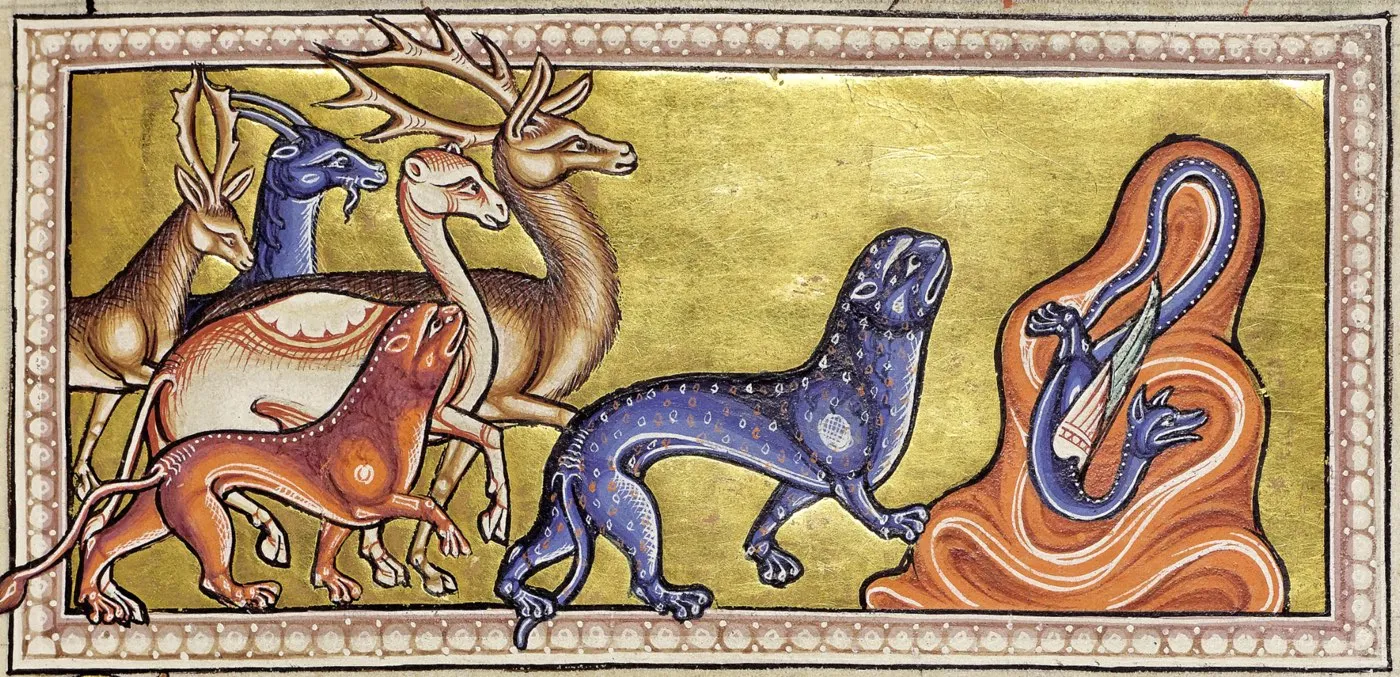
The Aberdeen Bestiary: One of the most famous and well-preserved examples, offering incredibly detailed descriptions and vivid gold-leaf illuminations.

The Aberdeen Bestiary (University of Aberdeen) is historically important because it is one of the finest, most lavishly illuminated medieval manuscripts in existence, offering an unparalleled window into 12th-century art, education, and manuscript production. Written and illuminated in England around 1200, it survived the tumultuous dissolution of the monasteries and eventually entered the royal library of King Henry VIII

The Ashmole Bestiary: Known for its highly stylized illustrations and comprehensive compilation of lore.

The Ashmole Bestiary is historical important because it is one of the most lavish, structurally complete, and artistically brilliant "Second Family" bestiaries ever created. Produced in England around 1210, it acts as a twin counterpart to the Aberdeen Bestiary, revealing the height of early Gothic art and religious storytelling.

The Bodleian Bestiary: A heavily studied manuscript representing classic 12th-century English compilations.

The Bodleian Bestiary is historically significant  because it represents the peak transition from Romanesque to the late Gothic art style, introducing newly secular and localized elements into the traditional medieval theological universe. Created in England around the mid-13th century (c. 1225–1250), it is regarded by scholars as one of the most complete, artistically sophisticated, and charmingly naturalistic luxury manuscripts of its era

The European Shift: From Myth to Celebrity Portraits

For centuries, European artists had to rely purely on hearsay to depict exotic wildlife, resulting in bizarre, monstrous interpretations in medieval bestiaries. However, the arrival of actual live animals via trade and diplomacy radically transformed Western realism.

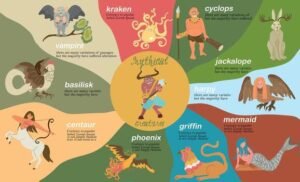
Bestiaries blurred the lines between fact and folklore, generally categorizing creatures into beasts, birds, fish, and serpents:

Real Animals: Familiar domesticates (dogs, horses) and exotic animals (lions, elephants, ostriches) were described, though sometimes with exaggerated traits or fantastical tales, as European artists rarely saw them firsthand.

Mythical Creatures: Entries frequently featured legendary beings like the unicorn, phoenix, manticore, and griffin.

The Creatures: Real and Mythical

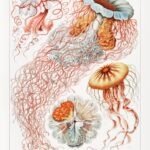
As humans mastered land trade, the frontiers of "exoticism" plunged underwater. No creature challenged traditional art forms quite like the jellyfish. Lacking bones, eyes, or a central brain, its translucent fluid movement sat on the boundary of plant, animal, and ghost.

From Mythic Terrors to Pure Lineage

The Classical Medusa: Early Western art viewed the jellyfish through a monstrous mythological lens. Ancient Greeks linked the floating invertebrates to the snake-haired Gorgon, naming the umbrella-shaped animal stage the Medusa. For centuries, maritime illustrations treated them as dangerous, alien anomalies of the dark abyss.

Haeckel’s Art Forms in Nature: The ultimate marriage of marine biology and fine art arrived at the turn of the 20th century via German biologist Ernst Haeckel. In his landmark publication Kunstformen der Natur (1899–1904), Haeckel’s masterfully symmetrical illustrations of deep-sea jellyfish (Discomedusae) transformed public perception. He rendered their radial tentacles and translucent bell shapes with absolute mathematical precision, sparking the aesthetic foundation of the Art Nouveau movement.

Modern Superflat Interventions: In contemporary East Asian art, Japanese master Takashi Murakami incorporates jellyfish-like motifs into his signature Superflat pop art style. Blending traditional Edo-period woodblock flatness with neon anime culture, Murakami uses the undulating, multi-eyed forms of jellies to explore post-war consumerism and deep oceanic mysticism.


Discomedusae–Scheibenquallen from Kunstformen der Natur (1904) by Ernst Haeckel. Original from Library of Congress. Digitally enhanced by rawpixel.

The Rhinoceros and Elephant

Dürer's Mythic Armor: In 1515, Albrecht Dürer created his legendary woodcut, The Rhinoceros, without ever seeing the live animal. Working strictly off a brief sketch and letter, he illustrated the beast covered in riveted armor plates and a fictional second horn. This magnificent error remained Europe's definitive visual reference for over 200 years.

Shattering the Illusion: The myth was finally broken by Clara, an Indian rhinoceros who toured Europe for 17 years in the mid-18th century. Master painters like Pietro Longhi and Jean-Baptiste Oudry captured her with absolute scientific precision, rendering her true, heavy skin folds and coarse textures for a fascinated public.

Rembrandt's Realism: A similar leap in precision occurred when Rembrandt van Rijn encountered Hansken, a traveling Asian elephant, in 1637. Using black chalk, Rembrandt bypassed medieval heraldry to capture her deeply wrinkled skin and lifelike weight with unprecedented anatomical honesty.

The Cephalopod Motif: Octopuses in Fine Art
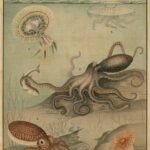
Just like the ethereal jellyfish, the octopus has fascinated fine artists across centuries and continents. However, while jellyfish were primarily celebrated for their delicate, radial symmetry, the octopus has occupied a far more complex visual dualism. It has been depicted as a master of camouflage and mimicry, a terrifying sea monster of the deep, and a symbol of fluid, cosmic grace.

Ancient Maritime Civilizations: Mimicry and Decoration

In the ancient Mediterranean, the octopus was a daily reality for coastal communities, valued both as a food source and as a marvel of natural engineering.

Minoan "Marine Style" Pottery (c. 1500 BCE): The artisans of ancient Crete were the first to truly master the octopus form. On the famous Minoan Stirrup Jars, painters wrapped the creature's bulbous body around the vessel's center, allowing its fluid, looping tentacles to dynamically follow the natural, rounded curves of the terracotta. It was celebrated as a sacred symbol of ocean life.

Graeco-Roman Mosaics and Fish Plates (c. 1st Century BCE): In ancient Roman villas, such as the House of Geometric Mosaics in Pompeii, highly realistic stone mosaics featured octopuses entwined with other marine life. Classical writers like Aristotle marveled at the octopus's ability to seamlessly change colors and mimic underwater rocks. Art historians note that painting or tiling an octopus became a self-reflexive exercise for classical artists: imitating nature’s ultimate master of visual illusion.

East Asian Traditions: Monsters, Myths, and Metaphor

In Japan's Edo and Meiji periods, the octopus transformed into a prominent figure within woodblock printing (Ukiyo-e), representing everything from deep-sea terrors to playful folklore.

The Giant Sea Monster: Ukiyo-e master Utagawa Kuniyoshi frequently depicted the dramatic clashes between man and nature. In prints like Ariō Maru Battling a Giant Octopus (c. 1833–1835), the cephalopod is elevated to a terrifying monster with massive, bulging eyes and sweeping tentacles crashing against ships and heroes.

The Dream of the Fisherman's Wife (1814): In a radically different register, Katsushika Hokusai used the fluid, boneless anatomy of the octopus to pioneer erotic surrealism. His famous shunga print depicts a woman entwined with a large and a small octopus, using the undulating, enveloping forms of the creature as a metaphor for overwhelming desire and the mysteries of the deep ocean.

The Scientific Revolution to Modern Surrealism:

As the maritime world shifted from myth to empirical science, the octopus became a subject of meticulous documentation before transitioning into 20th-century fantasy.

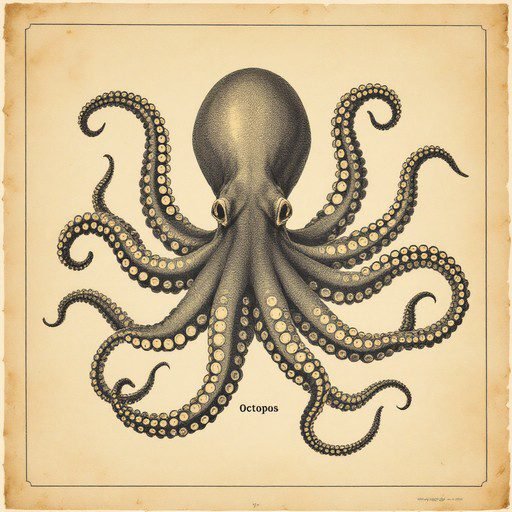
Lord Bodner's Deep Sea Studies (1826): In London, scientist and illustrator Lord Bodner published highly influential copperplate engravings of cephalopods. His portraits stripped away the legendary "Kraken" myths, presenting the octopus on a clean white background with fine, textured anatomical precision, capturing every individual sucker with scientific clarity.

Victor Grasso's Surreal Narratives: In modern surrealist watercolor painting, artists continue to use the octopus to symbolize emotional entanglement and mystery. In works by contemporary artists like Victor Grasso, massive octopuses are lifted out of the ocean and perched atop domestic architecture like chimneys, clutching odd human artifacts (like umbrellas and skull ornaments) in their arms to create an ominous, dreamlike atmosphere.

Contemporary Interventions: Animals as Co-Creators

In the 21st century, artists have pushed the boundary of fine art by treating the octopus not just as a subject, but as an active collaborator.

Shimabuku's Octopus Collaborations: Contemporary Japanese artist Shimabuku has spent over two decades exploring the inner minds of marine invertebrates. In his avant-garde installation pieces, he places custom ceramic sculptures and marbles on the ocean floor, filming wild octopuses as they curiously examine, collect, and rearrange the items. By centering the choices and aesthetic preferences of the animal, Shimabuku completely upends the traditional human-dominated definition of fine art.

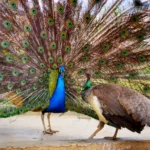
Among all avian subjects, the peacock holds an unrivaled position in global art history. Its iridescent plumage, sweeping train, and regal bearing made it the ultimate canvas for exploring luxury, divinity, immortality, and vanity.
While land mammals often symbolized power or raw danger, the peacock was harnessed by artists across centuries to showcase technical mastery over color, light, and ornamental pattern.

Sacred and Secular Antiquity: Immortality and Divinity

In ancient traditions, the peacock was rarely depicted merely as a decorative bird; it was viewed as a celestial creature deeply linked to the divine and the afterlife.

Roman and Byzantine Mosaics (c. 4th–6th Century CE): Because early Christians adopted the ancient folklore belief that a peacock’s flesh did not decay after death, the bird became the primary symbol of resurrection and eternal life. In stunning glass mosaics within basilicas like San Vitale in Ravenna, flanking peacocks are depicted drinking from central fountains or chalices, symbolizing the soul drinking from the waters of eternal life.

Hindu Iconography and Miniature Paintings: In traditional Indian art, the peacock (Mayura) is revered as the sacred mount (vahana) of the war god Kartikeya (Murugan) and is intimately tied to Krishna, who famously wears a peacock feather in his crown. In Pahari and Rajput miniature paintings, court artists utilized delicate ground-mineral pigments and real gold leaf to capture the deep indigo and emerald sheen of peacocks perched on palace roofs during the monsoon season, symbolizing longing and divine love.

East Asian Masterpieces: Precision and Courtly Prestige

In China and Japan, the peacock was celebrated as a symbol of high official rank, protective guardianship, and pure bird-and-flower (H鳥画) painting mastery.

Ming Dynasty Court Painting (c. 15th–16th Century): Masterpieces like Hundreds of Birds Admiration to the Peacocks by Yin Hong used large-scale silk scrolls to display imperial authority. The peacocks sit at the center of a dense, hyper-detailed natural landscape, functioning as a political allegory where the surrounding smaller birds represent loyal court officials paying tribute to the rightful, dignified ruler.

Japanese Rinpa and Maruyama-Shijō Screens (Edo Period): Japanese painters abandoned flat, rigid portraiture to explore how the peacock interacted with shifting gold leaf backgrounds. Masterpieces by Maruyama Ōkyo utilized a revolutionary blend of Western perspective and traditional ink washes (tarashikomi). By rendering individual feather barbs with absolute weightlessness against shimmering gold leaf screens, they captured a glowing, ethereal quality that mirrored live light.

The Decadent West: Aestheticism and Art Nouveau

By the late 19th century, the peacock moved from sacred spaces into the heart of Western decorative arts, defining an entire era of interior architecture and luxury design.

James McNeill Whistler’s The Peacock Room (1876–1877): Originally designed as a dining room for a London shipowner, Whistler transformed the space into a permanent masterpiece of the Aesthetic Movement. Titled Harmony in Blue and Gold, Whistler coated the walls in rich turquoise and painted sweeping, aggressive golden peacocks across the shutters. The room stands as a self-reflexive monument to "art for art's sake," using the bird's feathers as a totalizing decorative environment.

Louis Comfort Tiffany’s Favrile Glass (c. 1900): At the height of Art Nouveau, American designer Louis Comfort Tiffany became obsessed with capturing the peacock's iridescence in physical matter. His famous Peacock Vases and stained-glass lamps used specialized chemical treatments to create trailing, organic patterns of "peacock eyes" trapped directly within molten, iridescent glass, allowing light to illuminate the feathers from within.

The Giraffe as Celebrity
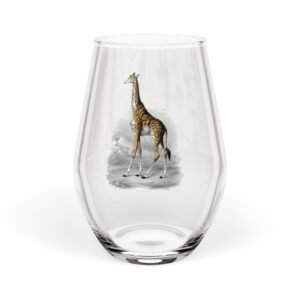
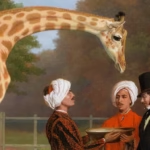
The Renaissance Marvel: In 1487, the Sultan of Egypt gifted a live giraffe to Lorenzo de' Medici. The Medici Giraffe became an overnight Renaissance sensation. Giorgio Vasari later immortalized the event in his fresco Lorenzo the Magnificent Receives Tribute, capturing the Florentine awe at this towering beast.

"Giraffemania": Centuries later in 1827, a Nubian giraffe named Zarafa arrived in Paris as a gift to King Charles X. Painted by Jacques-Laurent Agasse, this majestic animal sparked a massive European design craze known as giraffemania, heavily influencing French fashion, ceramics, and wallpapers.

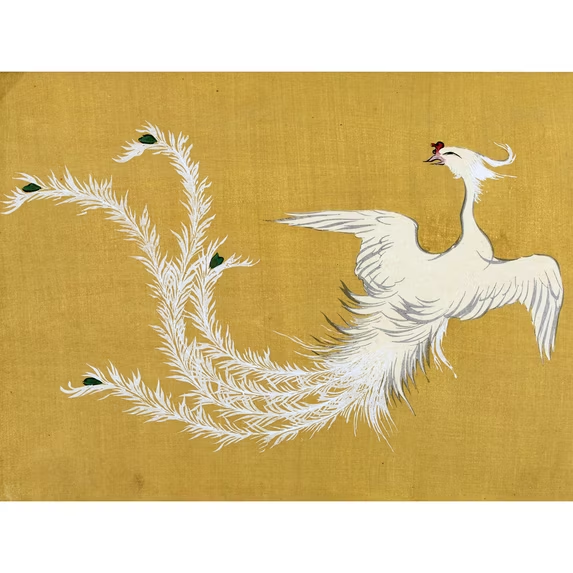
The Simurgh and Chinese Influence (Persian Miniatures): Following the Mongol conquests, Persian and Ilkhanid manuscripts heavily adopted East Asian motifs.

Exotic birds like the phoenix merged with the Persian Simurgh—a benevolent, mythical winged creature.

These were painted with hyper-detailed, swirling, iridescent feathers on borders and manuscript illuminations to guard royal settings.

Non-Western Art: Divine Omens and Cosmic Harmony

While Western art frequently emphasized individual animals as realistic "portraits" or domestic status symbols, non-Western traditions used wildlife to navigate the spiritual world and validate imperial rule.

East Asian Imperial Omens

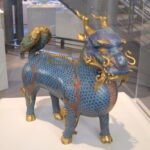
The Ming Dynasty Qilin: When a live African giraffe arrived at the Chinese court in 1414, the Yongle Emperor did not view it as a mere mammal. The empire identified it as the Qilin—a divine, dragon-like chimera whose appearance signaled a perfectly righteous ruler. Silk paintings from the era intentionally altered the giraffe’s coat patterns to look geometrically uniform and scaly, conforming to ancient legend rather than biology.

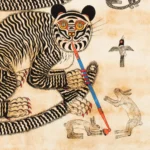
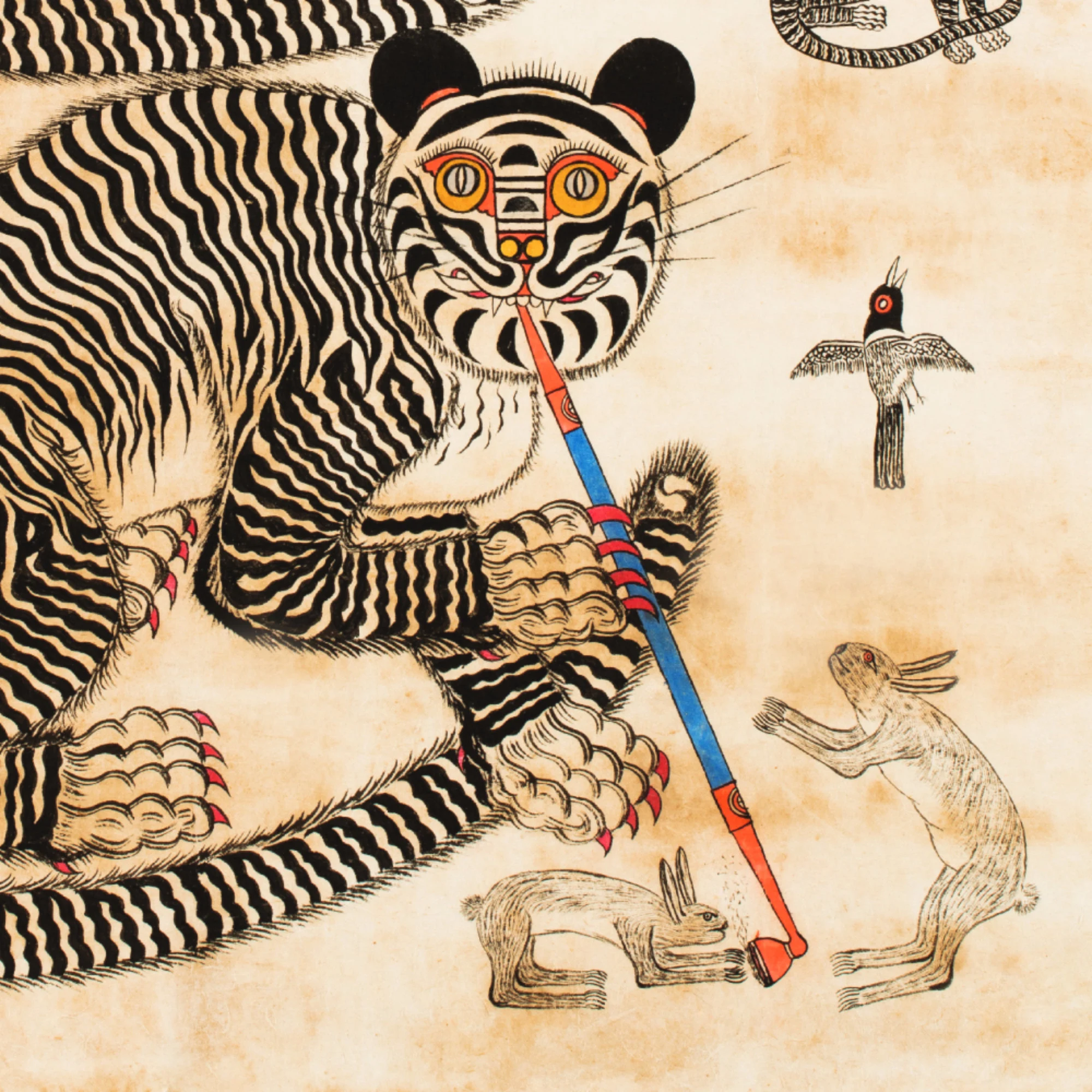
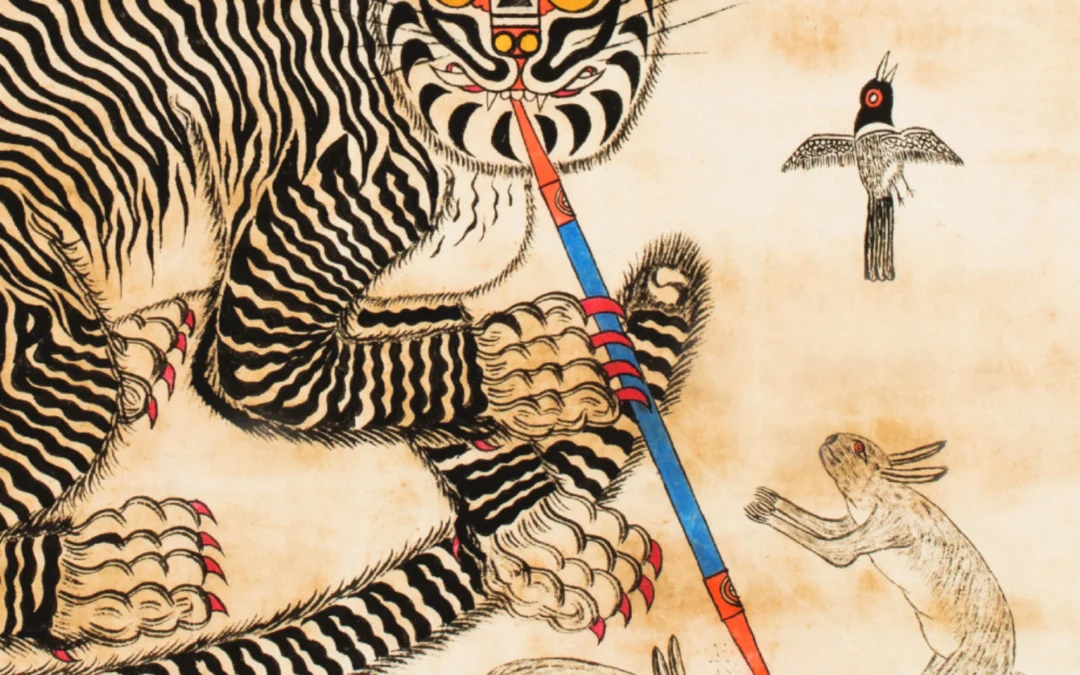
The Joseon Smoking Tiger: In Korean folk art (Minhwa), the native tiger was stripped of its terrifying reality. The Jakhodo motif depicts a smiling, cartoonish tiger sitting alongside magpies—and occasionally smoking a tobacco pipe. Here, the apex predator is transformed into a friendly spiritual guardian meant to ward off evil spirits.

Mughal India and Persian Miniatures

Akbar's Harmonious Realm: Under the Mughal Emperor Akbar, court painters like Miskin pioneered highly detailed wildlife studies. These paintings frequently depicted lions, rhinos, cheetahs, and ostriches lounging peacefully beside one another. This was a sophisticated political allegory: it asserted that Akbar’s rule was so perfectly balanced that even natural predators and prey could live in total harmony.

Mesoamerican and African Spiritual Power

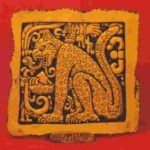
The Maya Jaguar: In Pre-Columbian Mesoamerica, apex rainforest predators represented the human soul. To the Maya, the jaguar was the ruler of the underworld and the night sky. Kings took the name B'alam (Jaguar) and were depicted on ceremonial pottery wearing pelts and physically transforming into the beast during shamanic rituals.

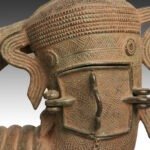
The Benin Mudfish and Leopard: In the Kingdom of Benin (modern Nigeria), cast brass plaques reserved specific animal traits exclusively for the monarch (Oba). The king was routinely juxtaposed with the leopard (king of the forest) and the mudfish. Because the mudfish could survive on land and water, it symbolized the Oba's liminal power to navigate both the physical world and the spiritual realm of the ancestors.

Modern Metamorphosis: The Subconscious Monster

By the 20th century, global travel, modern psychology, and environmental consciousness completely recontextualized exotic animals, transforming them into symbols of untamed nature or the human subconscious.

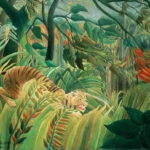
The Purely Imagined Jungle: Henri Rousseau painted lush, wild masterpieces like Tiger in a Tropical Storm (1891) despite never leaving France. His raw, striking big cats were completely imagined, pieced together from visits to the Paris botanical gardens, taxidermy rooms, and domestic zoo cages.

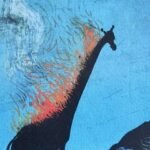
The Surrealist Monster: For Salvador Dalí, exotic animals became tools to shock the subconscious mind. In The Burning Giraffe (1937), he used a distant giraffe with its back set on fire as an apocalyptic omen of war. Later, in The Elephants (1948), he flipped Rembrandt’s realism entirely on its head, painting the massive mammals with hyper-elongated, spindly spider legs to create a striking tension between immense weight and absolute weightlessness.

Showing 49–72 of 76 resultsSorted by latest

Elephants

Elephants

Elephants in Fine Art: Sacred, Symbolic, and the Sublime Few animals have captured the imagination of artists across cultures and centuries quite like the elephant. Massive yet gentle, intelligent, long-lived, and deeply social, elephants have been rendered in stone,...

read more...
Octopuses

Octopuses

Eight Arms, Limitless Mystery Octopuses have long fascinated artists, appearing in works that span centuries and continents. From the intricate cephalopod motifs found on ancient Minoan pottery to the dramatic, tentacled creatures of Japanese ukiyo-e prints, these...

read more...
Cheap Fashion: Expensive Consequences

Cheap Fashion: Expensive Consequences

LOOKING good can be bad for the planet. Massive amounts of energy, water and other resources are needed to make clothes. From the pesticides poured on cotton fields to the washes in which denim is dunked, making 1kg of fabric generates 23kg of greenhouse gases on average, reckons McKinsey, a consultancy. Because consumers keep almost every type of apparel only half as long as they did 15 years ago, these inputs go to faster than ever before. More than half of the fastest-fashion items made are chucked away within a year of production. But such rampant retail therapy costs the earth.https://www.economist.com/the-economist-explains/2017/04/11/the-environmental-costs-of-creating-clothes?utm_medium=cpc.adword.pd&utm_source=google&ppccampaignID=17210591673&ppcadID=&utm_campaign=a.22brand_pmax&utm_content=conversion.direct-response.anonymous&gclid=Cj0KCQjwxuCnBhDLARIsAB-cq1oYxEVo5hCbcyps9SNVNujmZqgcSOe79OTnwTlN9HilD6gSLaMpR6waApeeEALw_wcB&gclsrc=aw.ds
read more...
The Global Bestiary

The Global Bestiary

Global Bestiaries How Exotic Animals Shaped Human Art History For millennia, the appearance of exotic animals in art has chronicled the outer limits of human trade, diplomacy, science, and imagination. When rare creatures crossed oceans and deserts as royal gifts,...


read more...
You & Polyester: Getting Along, Swimmingly

You & Polyester: Getting Along, Swimmingly

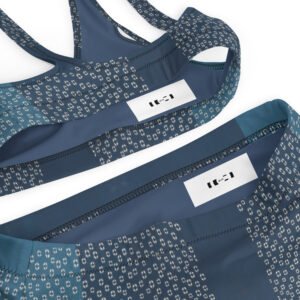
700,000 Each polyester garment can release up to 700,000 fibers per revolution of a washing machine's drum. 78 million tons 80% used in textiles. It represents about 80% of all synthetic fiber production, driven by its low cost, durability, and popularity in fast...

read more...
Sashiko, Kimonos & History

Sashiko, Kimonos & History

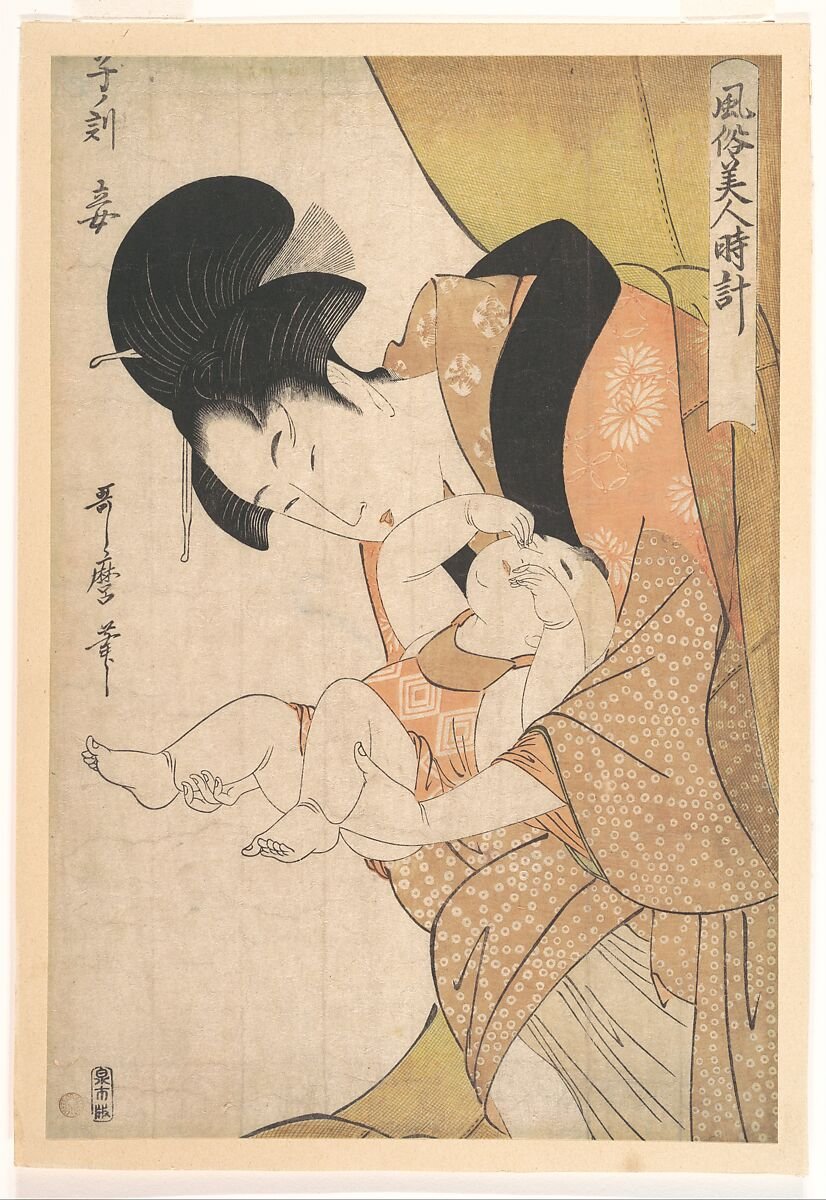
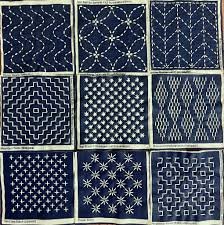
A recent BBC Culture story by Bel Jacobs: The 300-year-old Japanese method of upcycling explores the method of sashiko. Sashiko emerged through necessity, particularly in poor rural areas, during the Edo period. "Cotton came late to the north of Japan," explains craft...

read more...
A Green Christmas

A Green Christmas

Sustainable ecommerce How we're working to reduce ecommerce's climate impact Carbon offsetting is a way to compensate for the carbon dioxide we spew into the atmosphere by funding projects that reduce greenhouse gases or absorb carbon from the air. At cgk.ink, this...

read more...
the Elegance and Subtle Formality of Kimonos

the Elegance and Subtle Formality of Kimonos

The haori (羽織) is a traditional Japanese jacket worn over a kimono. Resembling a shortened kimono with no overlapping front panels (okumi), the haori typically features a thinner collar than that of a kimono, and is sewn with the addition of two thin, triangular...

read more...
next-level gift wrapping

next-level gift wrapping

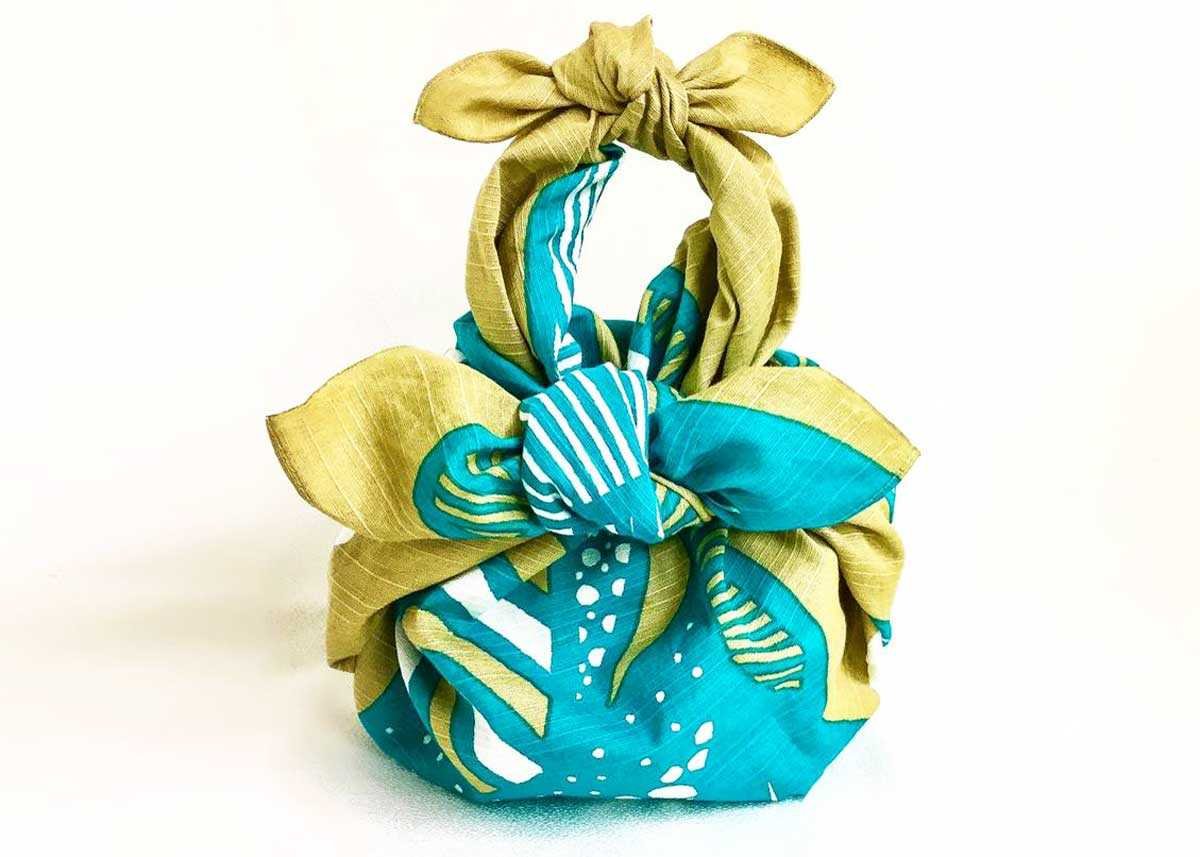
When giving gifts or sending presents in Japan, it is customary to show special care not only to the contents, but to the way a gift is wrapped and the wrapping itself. In Japanese culture, gift wrapping can be as important as the gift, where the gift is viewed as a form of communication between the giver and the receiver.

read more...
You & Polyester: Getting Along, Swimmingly

You & Polyester: Getting Along, Swimmingly

700,000

Each polyester garment can release up to 700,000 fibers per revolution of a washing machine's drum.

78 million tons

80% used in textiles. It represents about 80% of all synthetic fiber production, driven by its low cost, durability, and popularity in fast fashion

Polyester is the dominant fiber in the textile industry, accounting for approximately 57% to 59% of total global fiber production as of 2023-2024. It makes up over half of all fibers used in apparel and textiles, driven by its affordability and versatility. Nearly 90% of this production is fossil-based. 

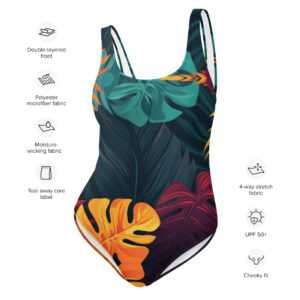
Polyester fabric is lightweight, wrinkle-resistant, quick-drying, and moisture-wicking, making it ideal for activewear, home textiles, and custom (print-on-demand) apparel.

It's also incredibly damaging to the enivironment. Producing nearly 60% of all textiles globally from carbon-dense fossil fuels poses some very serious problems:

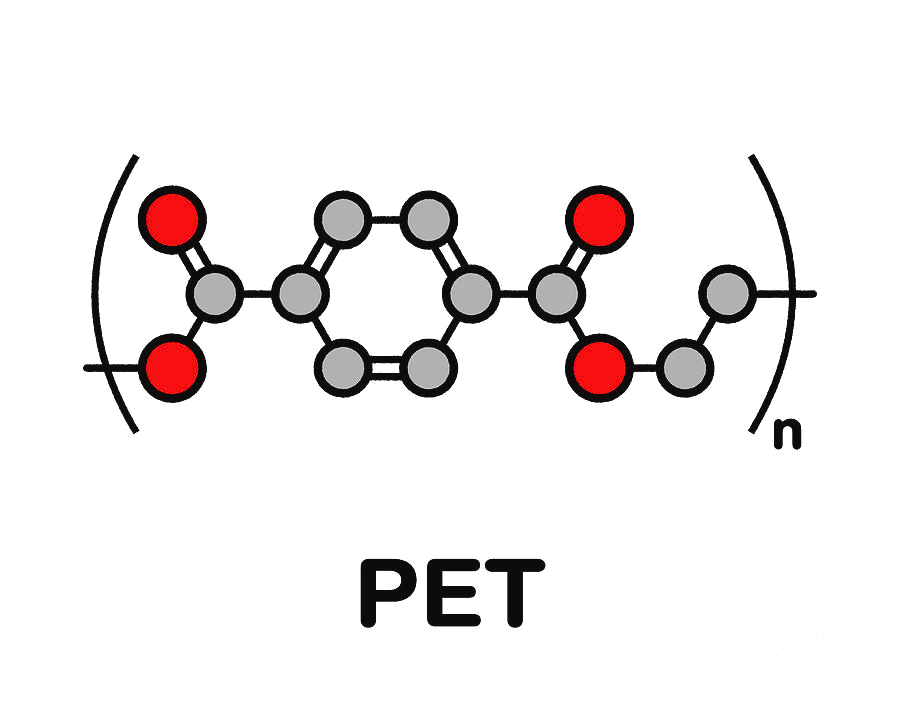
Polyester types include PET, PCDT, microfiber, recycled polyester (rPET), and emerging plant-based polyester fibers.

Recycled polyester helps reduce reliance on fossil fuels, but it still contributes to microplastic pollution during washing.

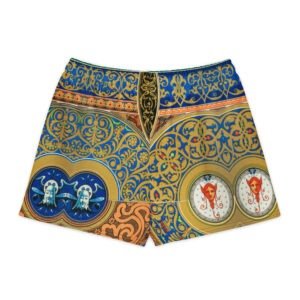
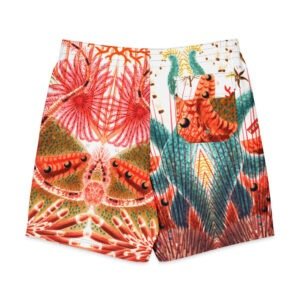
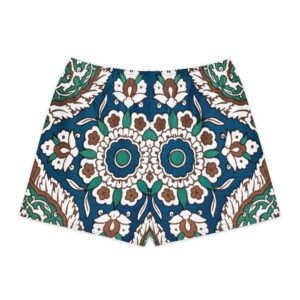
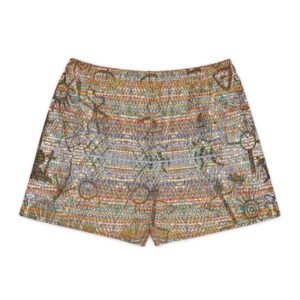
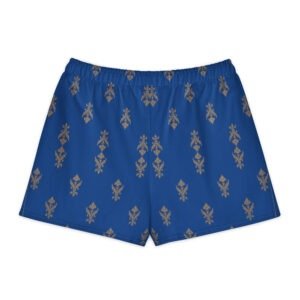
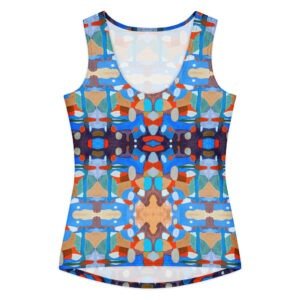
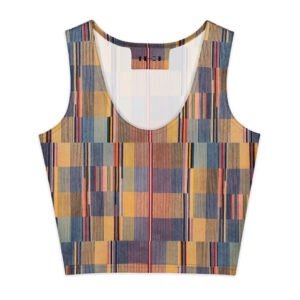
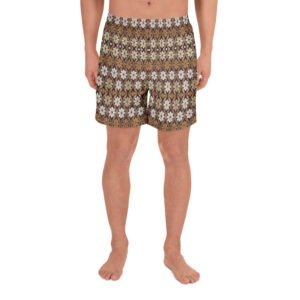
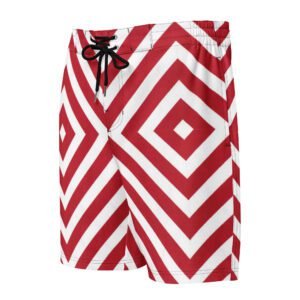
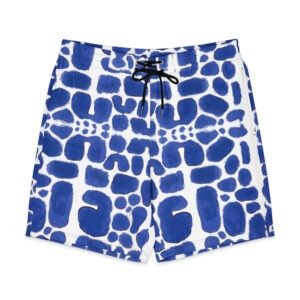
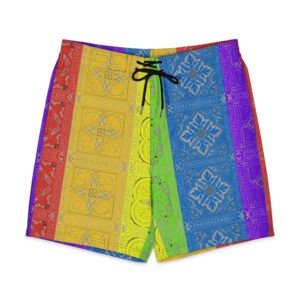
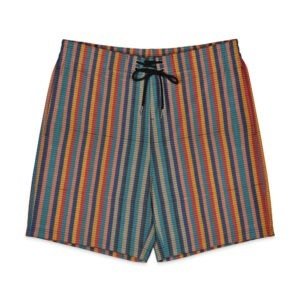
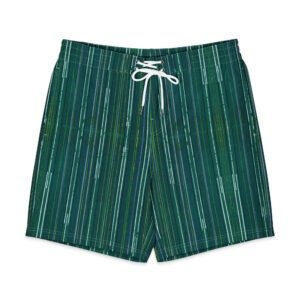
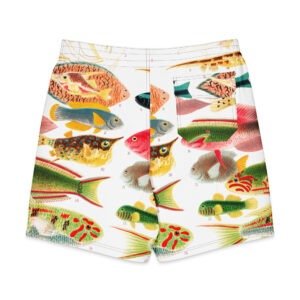
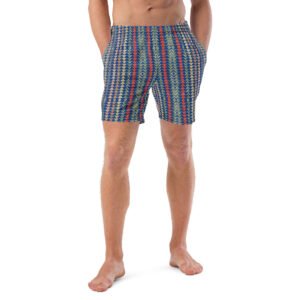
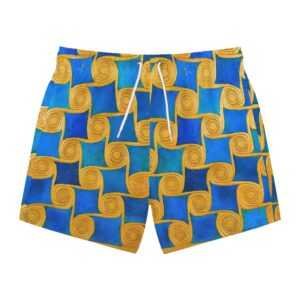
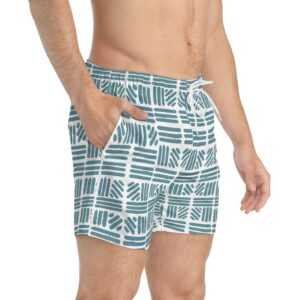
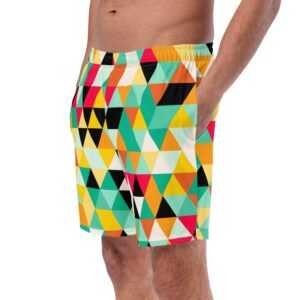
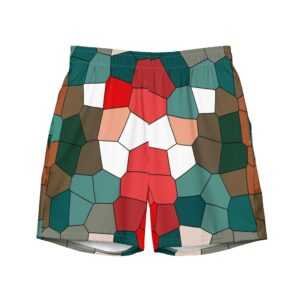
With the above in mind, we've searched for swimwear for women and men that uses the highest percentage of recycled polyester. We looked for durability, quality and particularly, density of the fabric.

We also made sure that the recycled polyester was, indeed, recycled in accordance with best practices.

These are the best matches we found. Each is uniquely manfactured for you and features our bold, modern designs that will make you shine while while showing off your commitment to the environment.

Recycled polyester (rPET), which is made from post-consumer plastic bottles and textile waste, is one of the promising solutions for the swimwear industry. Its use drastically reduces the environmental impact of conventional polyester, which is typically derived from petroleum. It is highly durable and resistant to chlorine, saltwater, and UV rays.

A Green Christmas

A Green Christmas

Sustainable ecommerce

How we're working to reduce ecommerce's climate impact

Carbon offsetting is a way to compensate for the carbon dioxide we spew into the atmosphere by funding projects that reduce greenhouse gases or absorb carbon from the air. At cgk.ink, this means investing in renewable energy sources, reforestation efforts, and energy-efficient technologies that help balance out the environmental impact of shipping and packaging. 

Stripe Climate is the easiest way to help promising permanent carbon removal technologies launch and scale. cgk.ink has  joined a growing group of ambitious businesses that are changing the course of carbon removal.

Of every purchase on cgk.ink, 1% of the total price is donated, without an increase in cost to you. 

Carbon Balance Pte. Ltd. is a sustainability platform based in Singapore providing a calculator API to measure the GHG footprint of ecommerce transactions and an Integration Plugin for popular ecommerce enablers such as WooCommerce, EasyStore, Shopify with flexible options to offset footprint by contributing to trustworthy projects.

These pieces of software complement our other intiatives, such as:

  • Combining shipping when available to further reduce our carbon footprint
  • Allowing you to control the speed of delivery so excessive emmissions are avoided
  • Using recyclable packaging to reduce the overall impact of shipping.

Examples of current carbon-offsetting efforts:

Google Travel, as well as other travel and hotel search sites, have formulated a way to compare carbon emission variations among similar routes. The impetus is on both the airline and the consumer to choose among the available options with ecological criteria being included.