
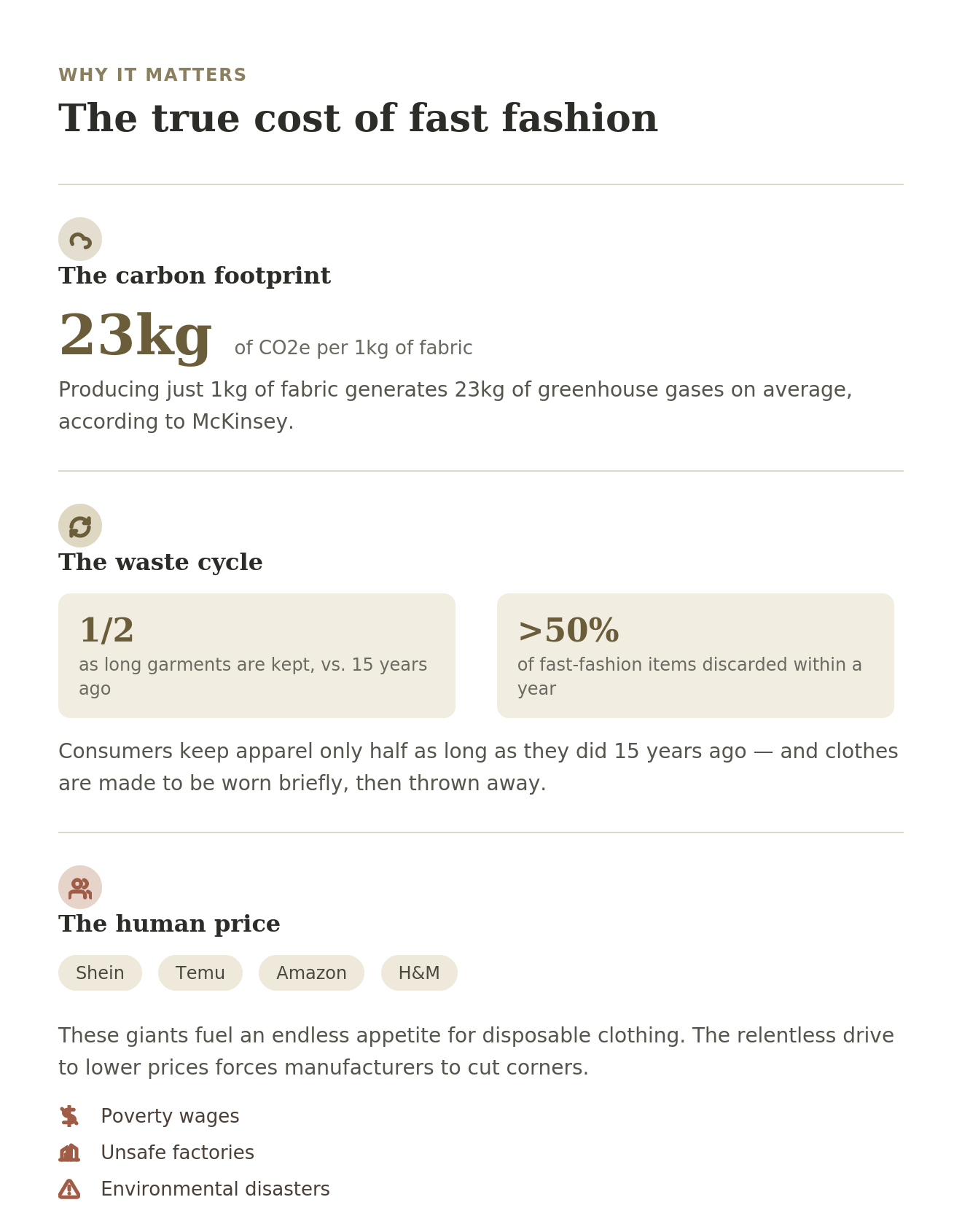
Your daily choices create immediate, measurable ripples across the globe. Nowhere is this impact more visible—or more destructive—than in the multi-trillion-dollar fashion industry. Behind the glamour of affordable style lies an environmental, human, and cultural crisis second only to oil production.
Our Blueprint for Change: What cgk.ink is Doing
Sourcing Responsibly: We selectively source environmentally beneficial materials. You can view our sustainable designs by choosing the Eco-Logical Collection from our Special Collections menu.
Carbon-Neutral Shipping: We provide a transparent carbon-offset option at checkout to neutralize the emissions generated by moving your order from our doors to yours.
Stripe Climate Partnership: As an early member of the Stripe Climate initiative alongside 200,000 global businesses, we contribute 1% of every payment fee directly to advanced carbon removal technologies.
Human-Centric Mindfulness: Sustainability includes people. We partner exclusively with suppliers who guarantee fair, equitable compensation and strictly adhere to international labor laws.
The Toxic Cultural Shift: Transforming How We Live
The 52-Season Cycle: Traditional spring/summer and autumn/winter models are dead. Brands now push weekly micro-seasons to hook you on constant novelty.
The Disposable Mentality: Clothing is no longer viewed as a durable investment. Instead, aggressive corporate marketing trains us to treat garments like chewing gum or cigarettes—to be used up once and immediately thrown away.
The Illusion of Wealth: Rock-bottom price tags deceive shoppers into feeling wealthy because they can buy in massive quantities. In reality, it masks financial regression while making corporate owners billionaires.
The Psychological Toll: Psychological studies prove that as materialistic values rise, personal happiness plummets. The continuous cycle of "retail therapy" creates chronic anxiety and persistent dissatisfaction.
Erasing Global Heritage: The flood of cheap, secondhand clothing dumped onto developing countries completely wipes out proud, historical local tailoring and textile sectors.