
The Global Bestiary

The Global Bestiary

Global Bestiaries

How Exotic Animals Shaped Human Art History

For millennia, the appearance of exotic animals in art has chronicled the outer limits of human trade, diplomacy, science, and imagination.

When rare creatures crossed oceans and deserts as royal gifts, they fractured public imagination.

In the West, artists struggled to balance mythical folklore with the sudden reality of live, breathing beasts. In contrast, non-Western traditions bypassed simple portraiture, integrating these magnificent creatures into cosmic balance, divine lineages, and profound political allegories.

From prehistoric rock art to the heights of global empires—and expanding from land mammals to the deep, luminescent organisms of the sea—the history of exotic animals in art reveals how humanity visualizes the unknown.

Ancient Foundations and Prehistoric Rock Art

The Ténéré Petroglyphs: Located in the Sahara Desert of Niger, the Dabous Giraffes are the world’s largest known rock art petroglyphs. Carved nearly 10,000 years ago, these life-sized, anatomically detailed rock engravings date back to a time when the Sahara was a fertile savanna. Lines trailing from the muzzles of the giraffes suggest deep spiritual or early hunting connections.

Egyptian Tributes: the New Kingdom era, animals shifted from local wildlife to symbols of imperial reach. In the tomb of Rekhmire, vibrant frescoes depict Nubian delegations bringing giraffes, big cats, and elephant tusks as tribute to the Pharaoh, cementing the exotic animal as a visual currency of geopolitical power.

History and Origins

Physiologus is an ancient Christian text, originally written in Greek, that describes real and mythical animals, plants, and stones, assigning them Christian allegorical meanings, and is the ancestor of the medieval bestiary. It was widely translated and adapted across Europe, becoming a popular work that linked Eastern and Western traditions through its moral and mystical interpretations of nature. 

Bestiaries (or “Books of Beasts“) are medieval encyclopedias that cataloged both real and mythical animals, plants, and even rocks.

Originating in the ancient world, these richly illustrated manuscripts used the natural behaviors of animals as allegories to teach Christian moral lessons and biblical truths.

The Physiologus: The foundation of the genre is an anonymous text compiled in Alexandria, Egypt, between the 2nd and 4th centuries. It was translated into Latin, sparking a surge of illustrated bestiaries throughout Western Europe in the 12th and 13th centuries.

Medieval society viewed the natural world as a second Bible. Every creature was believed to have been designed by God to instruct humanity.

Modern Analogy: While they act as early natural history, they are often described as creative, moral or entertainment catalogs rather than pure scientific textbooks.

Famous Examples

The Aberdeen Bestiary: One of the most famous and well-preserved examples, offering incredibly detailed descriptions and vivid gold-leaf illuminations.

The Aberdeen Bestiary (University of Aberdeen) is historically important because it is one of the finest, most lavishly illuminated medieval manuscripts in existence, offering an unparalleled window into 12th-century art, education, and manuscript production. Written and illuminated in England around 1200, it survived the tumultuous dissolution of the monasteries and eventually entered the royal library of King Henry VIII

The Ashmole Bestiary: Known for its highly stylized illustrations and comprehensive compilation of lore.

The Ashmole Bestiary is historical important because it is one of the most lavish, structurally complete, and artistically brilliant “Second Family” bestiaries ever created. Produced in England around 1210, it acts as a twin counterpart to the Aberdeen Bestiary, revealing the height of early Gothic art and religious storytelling.

The Bodleian Bestiary: A heavily studied manuscript representing classic 12th-century English compilations.

The Bodleian Bestiary is historically significant  because it represents the peak transition from Romanesque to the late Gothic art style, introducing newly secular and localized elements into the traditional medieval theological universe. Created in England around the mid-13th century (c. 1225–1250), it is regarded by scholars as one of the most complete, artistically sophisticated, and charmingly naturalistic luxury manuscripts of its era

The European Shift: From Myth to Celebrity Portraits

For centuries, European artists had to rely purely on hearsay to depict exotic wildlife, resulting in bizarre, monstrous interpretations in medieval bestiaries. However, the arrival of actual live animals via trade and diplomacy radically transformed Western realism.

Bestiaries blurred the lines between fact and folklore, generally categorizing creatures into beasts, birds, fish, and serpents:

Real Animals: Familiar domesticates (dogs, horses) and exotic animals (lions, elephants, ostriches) were described, though sometimes with exaggerated traits or fantastical tales, as European artists rarely saw them firsthand.

Mythical Creatures: Entries frequently featured legendary beings like the unicorn, phoenix, manticore, and griffin.

The Creatures: Real and Mythical

As humans mastered land trade, the frontiers of “exoticism” plunged underwater. No creature challenged traditional art forms quite like the jellyfish. Lacking bones, eyes, or a central brain, its translucent fluid movement sat on the boundary of plant, animal, and ghost.

From Mythic Terrors to Pure Lineage

The Classical Medusa: Early Western art viewed the jellyfish through a monstrous mythological lens. Ancient Greeks linked the floating invertebrates to the snake-haired Gorgon, naming the umbrella-shaped animal stage the Medusa. For centuries, maritime illustrations treated them as dangerous, alien anomalies of the dark abyss.

Haeckel’s Art Forms in Nature: The ultimate marriage of marine biology and fine art arrived at the turn of the 20th century via German biologist Ernst Haeckel. In his landmark publication Kunstformen der Natur (1899–1904), Haeckel’s masterfully symmetrical illustrations of deep-sea jellyfish (Discomedusae) transformed public perception. He rendered their radial tentacles and translucent bell shapes with absolute mathematical precision, sparking the aesthetic foundation of the Art Nouveau movement.

Modern Superflat Interventions: In contemporary East Asian art, Japanese master Takashi Murakami incorporates jellyfish-like motifs into his signature Superflat pop art style. Blending traditional Edo-period woodblock flatness with neon anime culture, Murakami uses the undulating, multi-eyed forms of jellies to explore post-war consumerism and deep oceanic mysticism.


Discomedusae–Scheibenquallen from Kunstformen der Natur (1904) by Ernst Haeckel. Original from Library of Congress. Digitally enhanced by rawpixel.

The Rhinoceros and Elephant

Dürer’s Mythic Armor: In 1515, Albrecht Dürer created his legendary woodcut, The Rhinoceros, without ever seeing the live animal. Working strictly off a brief sketch and letter, he illustrated the beast covered in riveted armor plates and a fictional second horn. This magnificent error remained Europe’s definitive visual reference for over 200 years.

Shattering the Illusion: The myth was finally broken by Clara, an Indian rhinoceros who toured Europe for 17 years in the mid-18th century. Master painters like Pietro Longhi and Jean-Baptiste Oudry captured her with absolute scientific precision, rendering her true, heavy skin folds and coarse textures for a fascinated public.

Rembrandt’s Realism: A similar leap in precision occurred when Rembrandt van Rijn encountered Hansken, a traveling Asian elephant, in 1637. Using black chalk, Rembrandt bypassed medieval heraldry to capture her deeply wrinkled skin and lifelike weight with unprecedented anatomical honesty.

The Cephalopod Motif: Octopuses in Fine Art

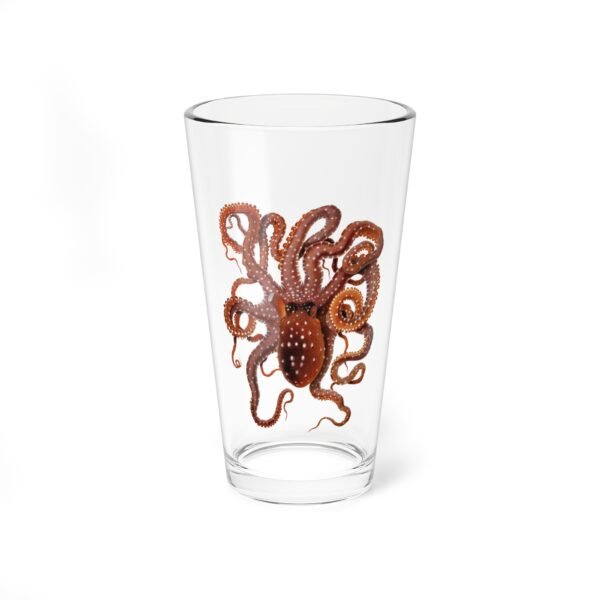
Just like the ethereal jellyfish, the octopus has fascinated fine artists across centuries and continents. However, while jellyfish were primarily celebrated for their delicate, radial symmetry, the octopus has occupied a far more complex visual dualism. It has been depicted as a master of camouflage and mimicry, a terrifying sea monster of the deep, and a symbol of fluid, cosmic grace.

Ancient Maritime Civilizations: Mimicry and Decoration

In the ancient Mediterranean, the octopus was a daily reality for coastal communities, valued both as a food source and as a marvel of natural engineering.

Minoan “Marine Style” Pottery (c. 1500 BCE): The artisans of ancient Crete were the first to truly master the octopus form. On the famous Minoan Stirrup Jars, painters wrapped the creature’s bulbous body around the vessel’s center, allowing its fluid, looping tentacles to dynamically follow the natural, rounded curves of the terracotta. It was celebrated as a sacred symbol of ocean life.

Graeco-Roman Mosaics and Fish Plates (c. 1st Century BCE): In ancient Roman villas, such as the House of Geometric Mosaics in Pompeii, highly realistic stone mosaics featured octopuses entwined with other marine life. Classical writers like Aristotle marveled at the octopus’s ability to seamlessly change colors and mimic underwater rocks. Art historians note that painting or tiling an octopus became a self-reflexive exercise for classical artists: imitating nature’s ultimate master of visual illusion.

East Asian Traditions: Monsters, Myths, and Metaphor

In Japan’s Edo and Meiji periods, the octopus transformed into a prominent figure within woodblock printing (Ukiyo-e), representing everything from deep-sea terrors to playful folklore.

The Giant Sea Monster: Ukiyo-e master Utagawa Kuniyoshi frequently depicted the dramatic clashes between man and nature. In prints like Ariō Maru Battling a Giant Octopus (c. 1833–1835), the cephalopod is elevated to a terrifying monster with massive, bulging eyes and sweeping tentacles crashing against ships and heroes.

The Dream of the Fisherman’s Wife (1814): In a radically different register, Katsushika Hokusai used the fluid, boneless anatomy of the octopus to pioneer erotic surrealism. His famous shunga print depicts a woman entwined with a large and a small octopus, using the undulating, enveloping forms of the creature as a metaphor for overwhelming desire and the mysteries of the deep ocean.

The Scientific Revolution to Modern Surrealism:

As the maritime world shifted from myth to empirical science, the octopus became a subject of meticulous documentation before transitioning into 20th-century fantasy.

Lord Bodner’s Deep Sea Studies (1826): In London, scientist and illustrator Lord Bodner published highly influential copperplate engravings of cephalopods. His portraits stripped away the legendary “Kraken” myths, presenting the octopus on a clean white background with fine, textured anatomical precision, capturing every individual sucker with scientific clarity.

Victor Grasso’s Surreal Narratives: In modern surrealist watercolor painting, artists continue to use the octopus to symbolize emotional entanglement and mystery. In works by contemporary artists like Victor Grasso, massive octopuses are lifted out of the ocean and perched atop domestic architecture like chimneys, clutching odd human artifacts (like umbrellas and skull ornaments) in their arms to create an ominous, dreamlike atmosphere.

Contemporary Interventions: Animals as Co-Creators

In the 21st century, artists have pushed the boundary of fine art by treating the octopus not just as a subject, but as an active collaborator.

Shimabuku’s Octopus Collaborations: Contemporary Japanese artist Shimabuku has spent over two decades exploring the inner minds of marine invertebrates. In his avant-garde installation pieces, he places custom ceramic sculptures and marbles on the ocean floor, filming wild octopuses as they curiously examine, collect, and rearrange the items. By centering the choices and aesthetic preferences of the animal, Shimabuku completely upends the traditional human-dominated definition of fine art.

Among all avian subjects, the peacock holds an unrivaled position in global art history. Its iridescent plumage, sweeping train, and regal bearing made it the ultimate canvas for exploring luxury, divinity, immortality, and vanity.

While land mammals often symbolized power or raw danger, the peacock was harnessed by artists across centuries to showcase technical mastery over color, light, and ornamental pattern.

Sacred and Secular Antiquity: Immortality and Divinity

In ancient traditions, the peacock was rarely depicted merely as a decorative bird; it was viewed as a celestial creature deeply linked to the divine and the afterlife.

Roman and Byzantine Mosaics (c. 4th–6th Century CE): Because early Christians adopted the ancient folklore belief that a peacock’s flesh did not decay after death, the bird became the primary symbol of resurrection and eternal life. In stunning glass mosaics within basilicas like San Vitale in Ravenna, flanking peacocks are depicted drinking from central fountains or chalices, symbolizing the soul drinking from the waters of eternal life.

Hindu Iconography and Miniature Paintings: In traditional Indian art, the peacock (Mayura) is revered as the sacred mount (vahana) of the war god Kartikeya (Murugan) and is intimately tied to Krishna, who famously wears a peacock feather in his crown. In Pahari and Rajput miniature paintings, court artists utilized delicate ground-mineral pigments and real gold leaf to capture the deep indigo and emerald sheen of peacocks perched on palace roofs during the monsoon season, symbolizing longing and divine love.

East Asian Masterpieces: Precision and Courtly Prestige

In China and Japan, the peacock was celebrated as a symbol of high official rank, protective guardianship, and pure bird-and-flower (H鳥画) painting mastery.

Ming Dynasty Court Painting (c. 15th–16th Century): Masterpieces like Hundreds of Birds Admiration to the Peacocks by Yin Hong used large-scale silk scrolls to display imperial authority. The peacocks sit at the center of a dense, hyper-detailed natural landscape, functioning as a political allegory where the surrounding smaller birds represent loyal court officials paying tribute to the rightful, dignified ruler.

Japanese Rinpa and Maruyama-Shijō Screens (Edo Period): Japanese painters abandoned flat, rigid portraiture to explore how the peacock interacted with shifting gold leaf backgrounds. Masterpieces by Maruyama Ōkyo utilized a revolutionary blend of Western perspective and traditional ink washes (tarashikomi). By rendering individual feather barbs with absolute weightlessness against shimmering gold leaf screens, they captured a glowing, ethereal quality that mirrored live light.

The Decadent West: Aestheticism and Art Nouveau

By the late 19th century, the peacock moved from sacred spaces into the heart of Western decorative arts, defining an entire era of interior architecture and luxury design.

James McNeill Whistler’s The Peacock Room (1876–1877): Originally designed as a dining room for a London shipowner, Whistler transformed the space into a permanent masterpiece of the Aesthetic Movement. Titled Harmony in Blue and Gold, Whistler coated the walls in rich turquoise and painted sweeping, aggressive golden peacocks across the shutters. The room stands as a self-reflexive monument to “art for art’s sake,” using the bird’s feathers as a totalizing decorative environment.

Louis Comfort Tiffany’s Favrile Glass (c. 1900): At the height of Art Nouveau, American designer Louis Comfort Tiffany became obsessed with capturing the peacock’s iridescence in physical matter. His famous Peacock Vases and stained-glass lamps used specialized chemical treatments to create trailing, organic patterns of “peacock eyes” trapped directly within molten, iridescent glass, allowing light to illuminate the feathers from within.

The Giraffe as Celebrity

The Renaissance Marvel: In 1487, the Sultan of Egypt gifted a live giraffe to Lorenzo de’ Medici. The Medici Giraffe became an overnight Renaissance sensation. Giorgio Vasari later immortalized the event in his fresco Lorenzo the Magnificent Receives Tribute, capturing the Florentine awe at this towering beast.

“Giraffemania”: Centuries later in 1827, a Nubian giraffe named Zarafa arrived in Paris as a gift to King Charles X. Painted by Jacques-Laurent Agasse, this majestic animal sparked a massive European design craze known as giraffemania, heavily influencing French fashion, ceramics, and wallpapers.

The Simurgh and Chinese Influence (Persian Miniatures): Following the Mongol conquests, Persian and Ilkhanid manuscripts heavily adopted East Asian motifs.

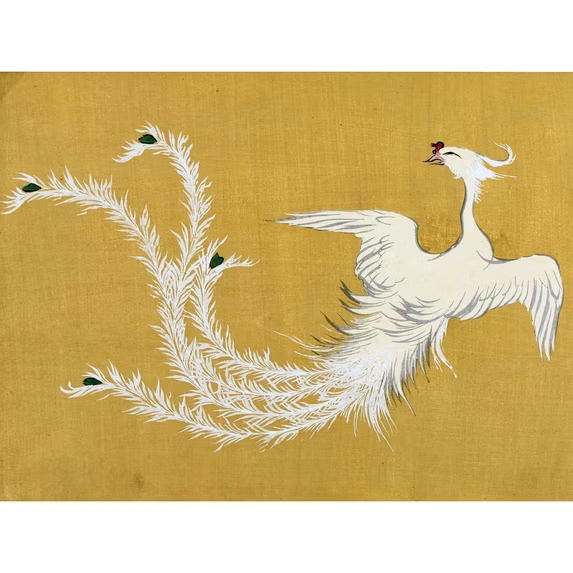
Exotic birds like the phoenix merged with the Persian Simurgh—a benevolent, mythical winged creature.

These were painted with hyper-detailed, swirling, iridescent feathers on borders and manuscript illuminations to guard royal settings.

Non-Western Art: Divine Omens and Cosmic Harmony

While Western art frequently emphasized individual animals as realistic “portraits” or domestic status symbols, non-Western traditions used wildlife to navigate the spiritual world and validate imperial rule.

East Asian Imperial Omens

The Ming Dynasty Qilin: When a live African giraffe arrived at the Chinese court in 1414, the Yongle Emperor did not view it as a mere mammal. The empire identified it as the Qilin—a divine, dragon-like chimera whose appearance signaled a perfectly righteous ruler. Silk paintings from the era intentionally altered the giraffe’s coat patterns to look geometrically uniform and scaly, conforming to ancient legend rather than biology.

The Joseon Smoking Tiger: In Korean folk art (Minhwa), the native tiger was stripped of its terrifying reality. The Jakhodo motif depicts a smiling, cartoonish tiger sitting alongside magpies—and occasionally smoking a tobacco pipe. Here, the apex predator is transformed into a friendly spiritual guardian meant to ward off evil spirits.

Mughal India and Persian Miniatures

Akbar’s Harmonious Realm: Under the Mughal Emperor Akbar, court painters like Miskin pioneered highly detailed wildlife studies. These paintings frequently depicted lions, rhinos, cheetahs, and ostriches lounging peacefully beside one another. This was a sophisticated political allegory: it asserted that Akbar’s rule was so perfectly balanced that even natural predators and prey could live in total harmony.

Mesoamerican and African Spiritual Power

The Maya Jaguar: In Pre-Columbian Mesoamerica, apex rainforest predators represented the human soul. To the Maya, the jaguar was the ruler of the underworld and the night sky. Kings took the name B’alam (Jaguar) and were depicted on ceremonial pottery wearing pelts and physically transforming into the beast during shamanic rituals.

The Benin Mudfish and Leopard: In the Kingdom of Benin (modern Nigeria), cast brass plaques reserved specific animal traits exclusively for the monarch (Oba). The king was routinely juxtaposed with the leopard (king of the forest) and the mudfish. Because the mudfish could survive on land and water, it symbolized the Oba’s liminal power to navigate both the physical world and the spiritual realm of the ancestors.

Modern Metamorphosis: The Subconscious Monster

By the 20th century, global travel, modern psychology, and environmental consciousness completely recontextualized exotic animals, transforming them into symbols of untamed nature or the human subconscious.

The Purely Imagined Jungle: Henri Rousseau painted lush, wild masterpieces like Tiger in a Tropical Storm (1891) despite never leaving France. His raw, striking big cats were completely imagined, pieced together from visits to the Paris botanical gardens, taxidermy rooms, and domestic zoo cages.

The Surrealist Monster: For Salvador Dalí, exotic animals became tools to shock the subconscious mind. In The Burning Giraffe (1937), he used a distant giraffe with its back set on fire as an apocalyptic omen of war. Later, in The Elephants (1948), he flipped Rembrandt’s realism entirely on its head, painting the massive mammals with hyper-elongated, spindly spider legs to create a striking tension between immense weight and absolute weightlessness.

Showing 49–49 of 49 resultsSorted by latest

The Global Bestiary

The Global Bestiary

For millennia, the appearance of exotic animals in art has chronicled the outer limits of human trade, diplomacy, science, and imagination. When rare creatures crossed oceans and deserts as royal gifts, they fractured public imagination. In the West, artists struggled...

read more
You & Polyester: Getting Along, Swimmingly

You & Polyester: Getting Along, Swimmingly

700,000 Each polyester garment can release up to 700,000 fibers per revolution of a washing machine's drum.78 million tons 80% used in textiles. It represents about 80% of all synthetic fiber production, driven by its low cost, durability, and popularity in fast...

read more
Sashiko, Kimonos & History

Sashiko, Kimonos & History

A recent BBC Culture story by Bel Jacobs: The 300-year-old Japanese method of upcycling explores the method of sashiko. Sashiko emerged through necessity, particularly in poor rural areas, during the Edo period. "Cotton came late to the north of Japan," explains craft...

read more
the Flora Glassware COLLECTION: Konan Tanigami (1879-1928)

the Flora Glassware COLLECTION: Konan Tanigami (1879-1928)

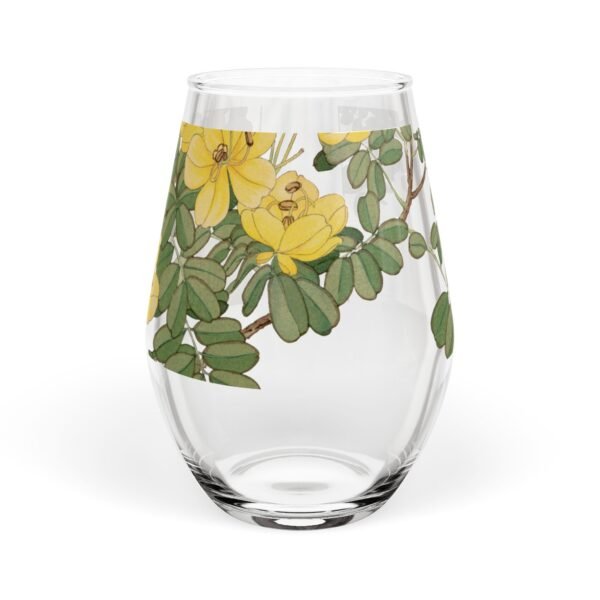
[ez-toc]These items display stunning floral imagery, following the tradition of Japanese kacho-e (depictions of flowers and birds). Konan Tanigami, a prominent Nihon-ga artist from 1879 to 1928, is celebrated for his exceptional contributions to the Kacho-e genre,...

read more
A Green Christmas

A Green Christmas

Carbon offsetting is a way to compensate for the carbon dioxide we spew into the atmosphere by funding projects that reduce greenhouse gases or absorb carbon from the air. At cgk.ink, this means investing in renewable energy sources, reforestation efforts, and...

read more
the Elegance and Subtle Formality of Kimonos

the Elegance and Subtle Formality of Kimonos

The haori (羽織) is a traditional Japanese jacket worn over a kimono. Resembling a shortened kimono with no overlapping front panels (okumi), the haori typically features a thinner collar than that of a kimono, and is sewn with the addition of two thin, triangular...

read more
next-level gift wrapping

next-level gift wrapping

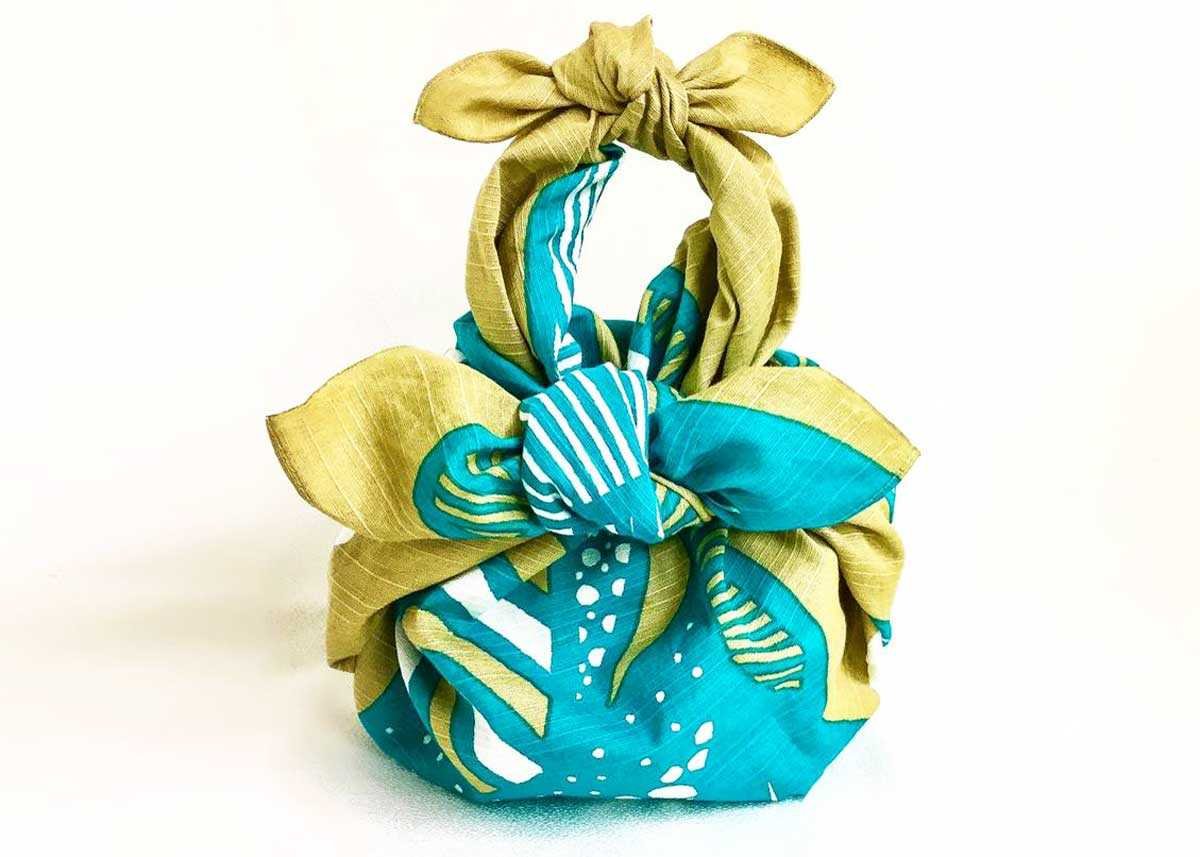
When giving gifts or sending presents in Japan, it is customary to show special care not only to the contents, but to the way a gift is wrapped and the wrapping itself. In Japanese culture, gift wrapping can be as important as the gift, where the gift is viewed as a form of communication between the giver and the receiver.

read more
Climate Stripes

Climate Stripes

Admit it. It's fun to laugh at global warming deniers. Until you realize that they're serious. Design can be many things, but the thing at which it succeeds best is education. Professor Ed Hawkins (University of Reading) has created a graphic entitled "Climate...

read more
Color is a Scam

Color is a Scam

Color is a Myth

It's all in your head

Color is the ultimate cosmic scam, but your brain is the one pulling the con. 

In physics, objects do not possess inherent color. A strawberry is not red, and the sky is not blue. The universe is a colorless landscape of matter interacting with electromagnetic radiation.
Here is why color is essentially a beautifully orchestrated biological illusion:

Your Brain Makes It All Up 

Color only exists inside your skull. When those reflected light waves hit your retina, they trigger three types of cone cells (tuned to red, green, and blue). These cells send electrical pulses to your brain. Your brain processes these signals and paints a conscious experience we call “color” so you can tell a ripe berry from a poisonous leaf. Outside of a conscious mind, color does not exist.


We Are Blind to Most of Reality

Human vision is incredibly limited. The visible light spectrum is a microscopic sliver—about 0.0035%—of the entire electromagnetic spectrum. We are completely blind to:

Ultraviolet light: Which bees use to see secret patterns on flowers.

Infrared light: Which pit vipers use to see the heat signatures of prey.

X-rays and Radio waves: Which pass right through or around us undetected.

If human color vision is a scam, animals are the whistleblowers exposing how much of reality we are actually missing.

The Mantis Shrimp (The Ultimate Color Snob)

Humans navigate the world using three types of color-receptive cones (red, green, and blue). The mantis shrimp possesses 12 to 16 different color receptors. They do not just see colors more intensely; they can see ultraviolet light, infrared light, and polarized light. To a mantis shrimp, a human eye is essentially colorblind. 

Mantis Shrimp can see cancerous cells (NPR)

Bees and Birds (The Secret Pattern Viewers)

Bees cannot see the color red, but they see ultraviolet (UV) light. Flowers have evolved secret, invisible ultraviolet patterns—like runway landing strips—that guide bees directly to the nectar. Birds also have a fourth cone for UV light, allowing them to spot camouflaged insects and fruits that look completely invisible to humans against green leaves.

The Dress (2015)

The internet nearly broke over whether a dress was blue and black or white and gold. This happened because of chromatic adaptation. 

The Setup: The photo was taken in ambiguous lighting.

The Trick: Some brains assumed the dress was illuminated by bright daylight, so they filtered out the blue light, seeing the dress as white and gold. Other brains assumed it was under warm, artificial indoor light, so they filtered out the gold, seeing it as blue and black.

Your brain made a split-second executive decision about the lighting source and altered your conscious reality to fit its assumption.

Color is not a static truth; it is a live, edited broadcast produced by your mind.

Read more about how cgk.ink designs with color, seen and unseen:

The History of: A New Luxury

The History of: A New Luxury

The History of: A New Luxury

Luxury manifests opulence, wealth and scarcity. It has also become an integral part of society, culture and humanity.

There are luxury hotels, de luxe suites and all. Gems, homes and yachts can be luxurious. Even simply being can exhibit it: one can live a life of luxury. You can have the luxury of time while existing. There are gentlemen and ladies of luxury. You can even (inappropriately) sit in its lap. It is everywhere and universally coveted.

What, exactly, is it?

Of all these types of luxury, perhaps the one material thing most associated with the concept of luxury is fashion. It is certainly the most sensual, wrapping our bodies in rare materials masterfully made. It imparts volumes before we even intend to speak and it is known simply by sight. Fashion, as a concept, emdodies so many aspects of our identities that it has become a profoundly important element of our culture.

Luxury in fashion has never stood still. What it means to dress luxuriously has changed with every century, every revolution — social, industrial, digital — and every generation redefines what is worth wanting.

The story is not a straight line from extravagance to restraint. Luxury is a messy spiral: each era reinventing the terms of desire, exclusivity, and self-expression. Understanding where that unruly spiral has been is the only honest way to understand where it is going.

The Origins: Luxury is as old as Power

In the ancient world, luxury clothing was not a matter of taste — it was a matter of law. In Egypt, Greece, and Rome, the quality and material of your garments announced your rank before you spoke a word. Linen, silk, and gold thread were not available to everyone; they were rationed by birth, wealth, and the whims of rulers who understood that the power to dress was the power to govern.

c 300 BCE – c 800 BC Antiquity: Luxury as Status Law

Sumptuary laws restrict precious materials to nobility. Clothing is rank made visible. Purple, silk, and gold are politically controlled.

c 400 – 1453 AD: The Semper Fashionable  Roman Empire

This logic was formalized: the same sumptuary laws formed by the Sumerians now dictated who could wear purple — the color of Tyrian dye, more expensive by weight than gold — and violations were prosecuted. Clothing was, in the most literal sense, political.

c 12th Century Medieval & Renaissance: The Court as Stage

Aristocracy sets the terms of dress. Brocades, lace, and embroidery signal dynastic power. Fashion trickles down — slowly, deliberately.

This logic held largely intact through the medieval period and into the European Renaissance. The court was the center of fashion. The aristocracy dictated terms. Luxury moved in one direction only: downward, from the ruling class to those who could afford to imitate it, at which point the ruling class simply raised the stakes again.

18th Century: The Enlightenment is Lit

“The evolution of luxury fashion since the 18th century was significantly influenced by the Age of Enlightenment, which democratized luxury and separated it from morality, allowing broader access beyond the aristocracy.”

The ancien régime collapses. Philosophers challenge excess. Neoclassicism favors simplicity. The French Revolution eliminates the royal court’s grip. Taste begins replacing rank as the arbiter of dress.

The Death of Old Luxury
Before 1789, luxury was defined by the court at Versailles. It was heavy, restrictive, and exclusive by law.
  • Sumptuary Laws: These legal decrees dictated exactly who could wear what, based on social rank. Only the highest nobility could wear specific silks, furs, or gold embroidery. [1, 2, 3, 4, 5]
  • The “Grand Habit”: The ultimate symbol of Old Luxury. These massive court gowns required rigid corsets made of whalebone and skirts spread over wide hoops (paniers), rendering women physically immobile. [1]
  • The Luxury Statement: Wealth meant spending immense money on garments designed to show you never had to perform physical labor. [1]
    The New Luxury Arrives
    The Revolution democratized fashion, turning luxury into a tool of political allegiance. High-quality silk was abandoned for humble cotton and linen, but the craftsmanship remained a luxury. [1, 2, 3]
      • The Luxury of Muslin: White cotton muslin (mousseline) became the fabric of the elite. While it looked simple and democratic compared to heavy brocade, high-quality imported cotton was actually incredibly expensive. It required meticulous laundering, making it a subtle, “quiet luxury” statement. [1, 2]
      • The Redefinition of Taste: Luxury was no longer about looking like a gilded statue. It was about channeling the “pure” and “democratic” ideals of Ancient Greece and Rome through flowing, high-waisted neoclassical drapery. [1, 2, 3, 4]

      The Birth of Counter-Culture Luxury
      Once the Reign of Terror ended in 1794, luxury returned with a vengeance, but it was twisted, ironic, and rebellious.
      • Anti-Fashion as Luxury: Subcultures like Les Incroyables and Les Merveilleuses used deliberate untidiness as a luxury statement. They wore impossibly high cravats, sheer fabrics, and wild, unpowdered hair. [1, 2, 3]
      • The Luxury of Scandal: For the first time, elite luxury was defined by shocking the older generation rather than pleasing the King. It laid the foundational blueprint for modern avant-garde and punk fashion.

      19th Century: Haute Couture Is Born

      Charles Frederick Worth and The House of Worth present garments on live models and introduces seasonal collections — inventing the modern fashion house. The sewing machine democratizes silhouette while couture doubles down on exclusivity.

      The 20th Century: Democratization and the Designer Myth

      The 20th century broke open luxury fashion. Two world wars, an industrial revolution, and a sequence of cultural upheavals forced fashion to remake itself repeatedly — and each remake pushed luxury further from its aristocratic origins and closer to something that could, in theory, be aspired to by anyone.

      The Present: A Market Under Pressure

      Luxury fashion in 2026 is at an inflection point. The aggressive price hikes of the post-pandemic years — some houses raised prices 40–60% between 2020 and 2024 — have finally alienated the aspirational consumer who had long been the growth engine of the mega-brands. The result is a market that is recalibrating.

      -35%

      Gucci brand value decline (2025)

      −4.9%

      Louis Vuitton brand value (2025)

      +17%

      Hermès brand value growth (2025)

      $1.8T

      Global fashion sales (2025)

      The data tells a clear story. Hermès — which has never chased the mass aspirational market, never discounted, and has maintained an almost perverse commitment to craft and scarcity — grew its brand value by 17% while peers contracted.

      Brands like Ralph Lauren and Burberry are winning back the aspirational middle by offering genuine value rather than inflated prestige. The era of getting away with logo inflation and minimal product improvement is over.

      A profound aesthetic reset is underway. The long dominance of quiet luxury — the tonal minimalism, the logo-less understatement — is giving way to something more expressive. High-saturation color has returned to the runway. Accessories have become protagonists rather than punctuation. Sculptural headwear, architectural heels, and oversized jewellery are defining looks rather than completing them. The message is shifting from “I have nothing to prove” back to “I have something to say.”

      The Future: Six Forces Redefining Luxury

      The next decade of luxury fashion will be shaped by forces that have no precedent in the industry’s history. Some are technological. Some are cultural. All of them point toward a definition of luxury that is fundamentally different from the one the 20th century built.

      From Exclusivity to Hyper-Individuality

      The luxury of the future is not about access. It is about recognition — the garment or object that feels as if it was conceived with you in mind.

      The old model of luxury exclusivity — the thing that is desirable because few can have it — is being supplemented by a new model: the thing that is desirable because it was made specifically for you. AI-driven personalization, bespoke manufacturing at scale, and brands that can offer genuinely individualized experiences are redefining what “exclusive” means.

      As artificial intelligence becomes more prevalent in design and production, the value of the human hand is rising — not falling. Hand-knotted, hand-stitched, hand-formed: the language of artisan luxury is gaining new urgency precisely because it represents what cannot be scaled, replicated, or optimized. The demand for hand-cut gemstones, upcycled couture, and handmade fascinators is not nostalgia. It is a rational response to a world saturated with algorithmic output.

      Craft as the Ultimate Counterargument to AI

      True luxury, going forward, will increasingly be defined by what AI cannot do.

      Sustainability as Operational Advantage

      Sustainability and luxury are converging, not competing.

      Sustainability in 2026 is no longer a marketing slogan. It is an operational advantage and a brand trust signal. Luxury houses that have built transparent, ethical supply chains are reporting better margins, lower overproduction waste, and measurably higher consumer loyalty.

      The consumer who buys a $600 hand-crafted piece from a brand that can account for every material and every hand that touched it is not paying extra for ethics — she is paying for the kind of certainty that fast fashion structurally cannot offer.

      High-net-worth consumers are shifting from acquisition to experience. They no longer want more things — they want things that promise evolution, narrative, and emotional resonance. Luxury is bleeding out of fashion and into hospitality, travel, wellness, and cultural access. Brands that understand this are building thematic retail spaces, exclusive events, and experiences that cannot be purchased online. 

      Experience Over Object


      The fashion house of the future may be less a product company and more a cultural institution — with clothing as the most portable expression of its world.

      The Circular Luxury Economy

      The $522 billion secondhand market by 2030 will include significant luxury volume.

      Upcycled couture is no longer a niche sub-category — it is a centerpiece of runway shows and a growing revenue line for luxury brands. Resale, archive curation, and the revival of deadstock materials are reshaping how luxury garments move through the world. Collectors no longer want the newest item; they want the item that has survived the test of time. Modern luxury is becoming a dialogue between past and present. The brands that engage with their own archives will own that conversation.

      The luxury brands gaining ground in 2026 are the ones that can read culture with genuine intelligence — not just chase it. Prada’s collaboration bringing Kolhapuri artisanship to the global stage. Heritage houses reinterpreting temple jewellery in lighter, contemporary forms. Cross-cultural design that honors tradition while feeling unmistakably present. In a flattened global market, the brands that understand the depth and specificity of cultural context will generate the emotional resonance that generic aspirational marketing cannot buy.

      Cultural Intelligence as the New Brand Value

      The future of luxury is deeply, specifically, human.

      The Only Constant

      What connects ancient Egypt’s linen hierarchy to Chanel’s jersey revolution to the handmade fascinator worn to Royal Ascot in 2026 is not materials, or price, or brand recognition. It is intention. Every era’s luxury has been defined by the things that required the most of someone — the most skill, the most time, the most cultural intelligence, the most personal vision.

      The definition of luxury is always in negotiation. But the negotiation is always about the same underlying question: what does it mean to take dress seriously? The future answers that question with craft, with sustainability, with hyper-individuality, and with the kind of cultural depth that cannot be generated at scale. The future of luxury is not about spending more.

      It is about meaning more.

      For independent designers and brands built on genuine artisanship, cultural reference, and considered production, this is not a threat. It is the market finally arriving at the position they have always held.

      The cgk.ink Perspective

      cgk.ink was built on the principles the luxury market is only now catching up to: globally art-inspired design, sustainability-first production, and the belief that a garment should carry genuine cultural weight. Explore our collections — from a growing collection inspired by fine art to our full apparel, décor and accessories collections — at cgk.ink.

      —Sources:

      History of Luxury · FIT Fashion History Timeline · Advertising Week · Luxury Abode · PAGE Magazine · Flanelle Magazine · GlobalBay · LUXUO · Spa & Beauty Today · Luxebook India · Count Valentine · Historical Today · BrandHistories · WWD · Grazia Magazine · Luster Magazine · JD Institute · myGemma · Glam Observer

      The Enduring Bauhaus: How It Shapes Our World

      The Enduring Bauhaus: How It Shapes Our World


      The Bauhaus school (1919–1933) is, arguably, the single most influential design movement of the 20th century. Its impact runs through virtually every discipline of modern design:

      Core Philosophy

      The Bauhaus broke down the hierarchy between “fine art” and “craft,” insisting that good design should unite beauty and function. The famous motto — form follows function — shaped how designers think about every object they make.


      Typography & graphic design

      Bauhaus experimented radically with sans-serif typefaces, grid systems, and asymmetric layouts. Designers like Herbert Bayer developed typefaces that stripped away decorative flourishes. You see this DNA in modern UI design, brand identity systems, and the clean sans-serif dominance of digital typography (think Helvetica, Futura, and their descendants).

      Industrial & product design

      Marcel Breuer’s tubular steel furniture, Marianne Brandt’s metalwork, and Wilhelm Wagenfeld’s lamp are still in production today. The Bauhaus pioneered designing for mass production — objects that were elegant and manufacturable at scale. This is the philosophical foundation of companies like Braun, Apple, and IKEA.

      Architecture

      Walter Gropius and Ludwig Mies van der Rohe helped launch International Style modernism — open floor plans, flat roofs, glass curtain walls, structural honesty. The glass-and-steel office towers that define every city skyline are a direct inheritance.

      UI/UX and digital design

      The Bauhaus grid, modular composition, and emphasis on usability translate almost directly into digital interfaces. The idea that a design should guide the user intuitively — without ornamentation for its own sake — is foundational to how apps and websites are built today.

      Color theory

      Johannes Itten and Josef Albers developed rigorous, systematic approaches to color interaction that are still taught in every design school and used by brand designers and filmmakers.

      Education

      Perhaps the deepest legacy: the Bauhaus pedagogical model — foundation courses, interdisciplinary workshops, learning by making — restructured design education worldwide. Most art and design schools still follow a version of it.

      If you’ve used a clean sans-serif font, sat in a cantilevered chair, used an intuitive app, or admired a glass building, you’re living in the Bauhaus’s long shadow.

      No Results Found

      The page you requested could not be found. Try refining your search, or use the navigation above to locate the post.

      ecommerce, fashion and what comes next

      ecommerce, fashion and what comes next

      Industry Analysis · 2026

      Fashion, ecommerce:
      Now & What Comes Next

      cgk.ink · May 2026

      Online fashion just crossed a trillion-dollar threshold. The industry that barely existed twenty-five years ago is now the largest B2C e-commerce category on earth — and it's moving faster than at any point in its history. Here's where it stands, what's driving it, and what the next phase looks like for brands paying attention.

      $997B
      Global market 2026
      $1.6T
      Projected by 2030
      47.9%
      Of all fashion sales now online
      81%
      Of traffic from mobile

      Where Things Stand

      Fashion e-commerce in 2026 is simultaneously booming and stressed. Nearly half of all fashion sales worldwide now happen online — a figure that was under 20% a decade ago. The U.S. market alone sits at $163 billion, growing at 13% annually. Asia-Pacific leads globally at $401 billion, with North America and Europe following.

      But growth obscures tension. Returns rates in fashion hover around 30–40%. Cart abandonment sits at 77.6% — meaning the vast majority of shoppers who add something to their cart leave without buying. Customer acquisition costs have risen sharply as paid social becomes more competitive. And the old playbook — launch a site, run ads, ship product — is no longer enough to build a sustainable brand.

      "Fashion in 2026 is moving toward a more integrated model: AI for relevance, resale for liquidity, and social commerce for discovery and conversion. The old e-commerce structure still matters, but it is no longer enough on its own."

      The brands winning right now share a few things in common: they have a genuine point of view, they are discoverable without relying entirely on paid acquisition, and they've built some form of owned relationship with their customer — through content, community, or both.


      The Three Forces Reshaping the Market

      • 01 Social Commerce Is Eating the Funnel Social commerce will generate an estimated $919 billion globally in 2026, with TikTok, Facebook, and Instagram leading as shopping platforms. Around 69.4 million Americans shopped on Facebook in 2025 alone, with Instagram and TikTok Shop close behind. The significance here isn't just the numbers — it's the structural shift. Discovery, consideration, and purchase are now collapsing into a single moment inside a single app. Brands that can create content that converts in that moment have a structural advantage over brands that rely on the traditional browse-to-checkout flow.
      • 02 AI Is Changing How People Find Things In 2026, AI-driven personalization is responsible for nearly 45% of all online conversions. The global AI-in-fashion market is expected to hit $4.3 billion by 2027, and two-thirds of luxury fashion consumers are already using AI when shopping online. We are moving toward "Generative Commerce" — AI shopping assistants that understand context, not just keywords. Being findable by an AI assistant requires rich, accurate, contextually detailed product information and a strong brand signal across the web.
      • 03 Resale and Circular Fashion Are Structural, Not Cyclical The secondhand market is worth $260 billion and climbing toward $522 billion by 2030. 52% of consumers bought secondhand in 2024. Sustainability in 2026 isn't a marketing slogan — it's an operational advantage. Brands with genuine sustainability credentials are not just meeting consumer demand. They are reducing costs, improving margins, and building the kind of brand trust that paid advertising can't manufacture.

      What Comes Next

      The next wave of fashion platforms probably will not win by being just another e-commerce layer. They will need to combine at least three things: discovery that feels relevant, resale infrastructure that ordinary users can actually use, and a broader ecosystem that creates ongoing relationship rather than one-off transactions.

      For independent brands, the path forward is actually cleaner than it is for the big platforms. You don't need to be everywhere. You need to be unmistakably yourself in the places that matter. That means a distinct visual and editorial identity, real relationships with customers who return because of what you stand for, and product that's genuinely worth owning — made with care, shipped with intention, designed to last.

      The trillion-dollar market is real. So is the noise. The brands that cut through it in the next few years will be the ones that understood early that quality of relationship matters more than volume of impressions.

      the cgk.ink perspective

      We build for the part of this market that's growing fastest: design-forward, sustainability-rooted, independent. Our collections — from the globally art-inspired apparel — are made for customers who want to own something considered, not just something convenient. If the data above points anywhere, it points here.


      Sources: Shopify Enterprise Blog · Capital One Shopping Research · Statista · Medium / Cheeky Fit · Gelato Apparel Trends 2026 · Vocal Media · Inventory Source · HMLC · OpenTools.ai