The Global Bestiary

The Global Bestiary

Global Bestiaries

How Exotic Animals Shaped Human Art History

For millennia, the appearance of exotic animals in art has chronicled the outer limits of human trade, diplomacy, science, and imagination.

When rare creatures crossed oceans and deserts as royal gifts, they fractured public imagination.

In the West, artists struggled to balance mythical folklore with the sudden reality of live, breathing beasts. In contrast, non-Western traditions bypassed simple portraiture, integrating these magnificent creatures into cosmic balance, divine lineages, and profound political allegories.

From prehistoric rock art to the heights of global empires—and expanding from land mammals to the deep, luminescent organisms of the sea—the history of exotic animals in art reveals how humanity visualizes the unknown.

Ancient Foundations and Prehistoric Rock Art

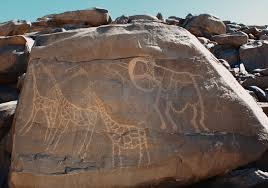
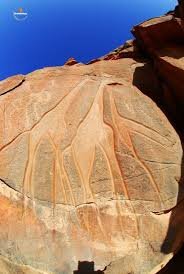
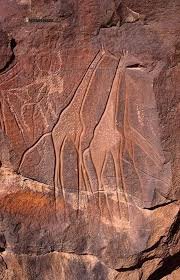
The Ténéré Petroglyphs: Located in the Sahara Desert of Niger, the Dabous Giraffes are the world’s largest known rock art petroglyphs. Carved nearly 10,000 years ago, these life-sized, anatomically detailed rock engravings date back to a time when the Sahara was a fertile savanna. Lines trailing from the muzzles of the giraffes suggest deep spiritual or early hunting connections.

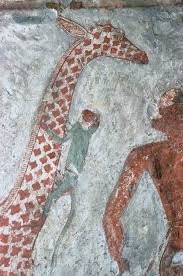
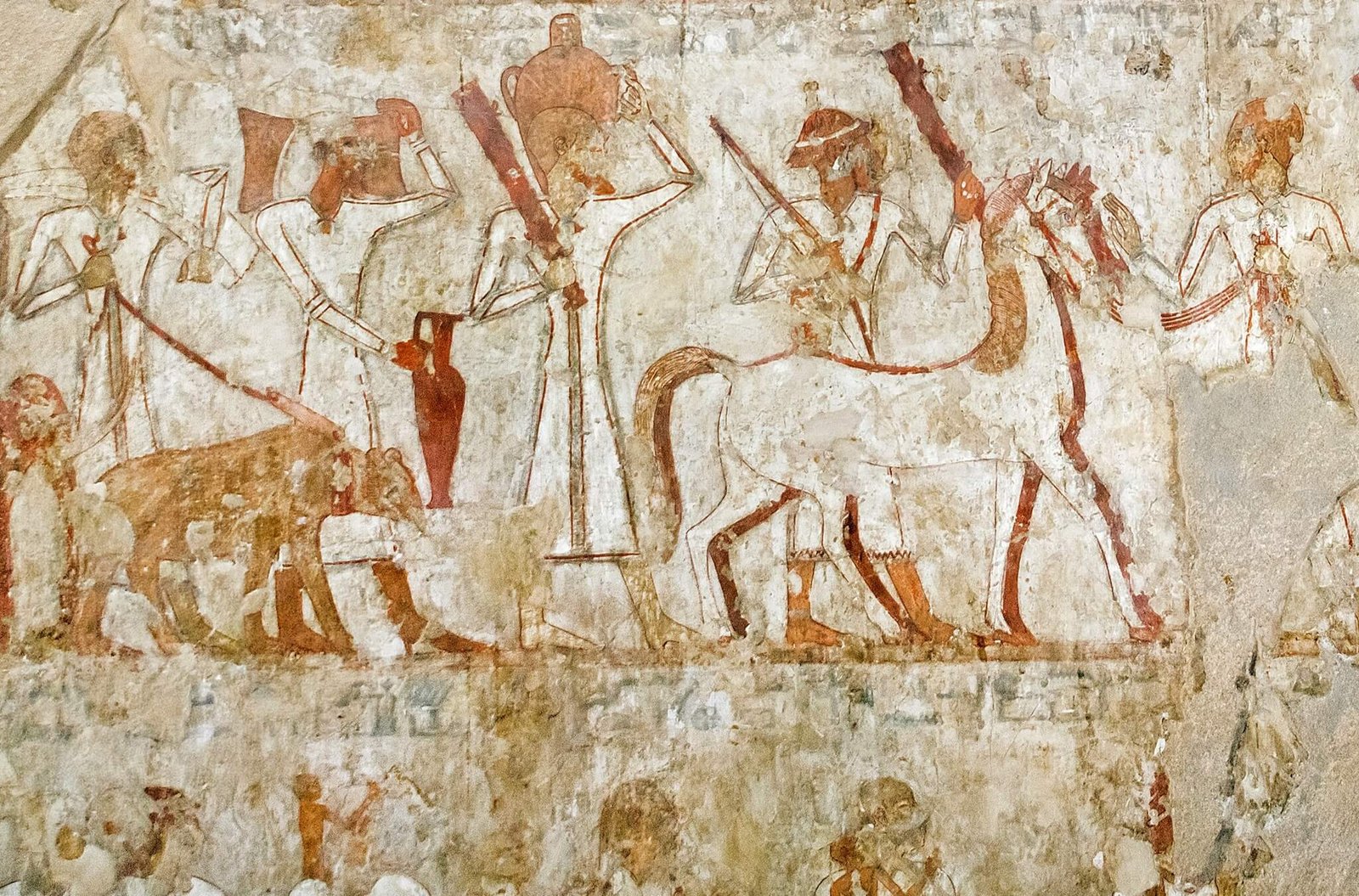
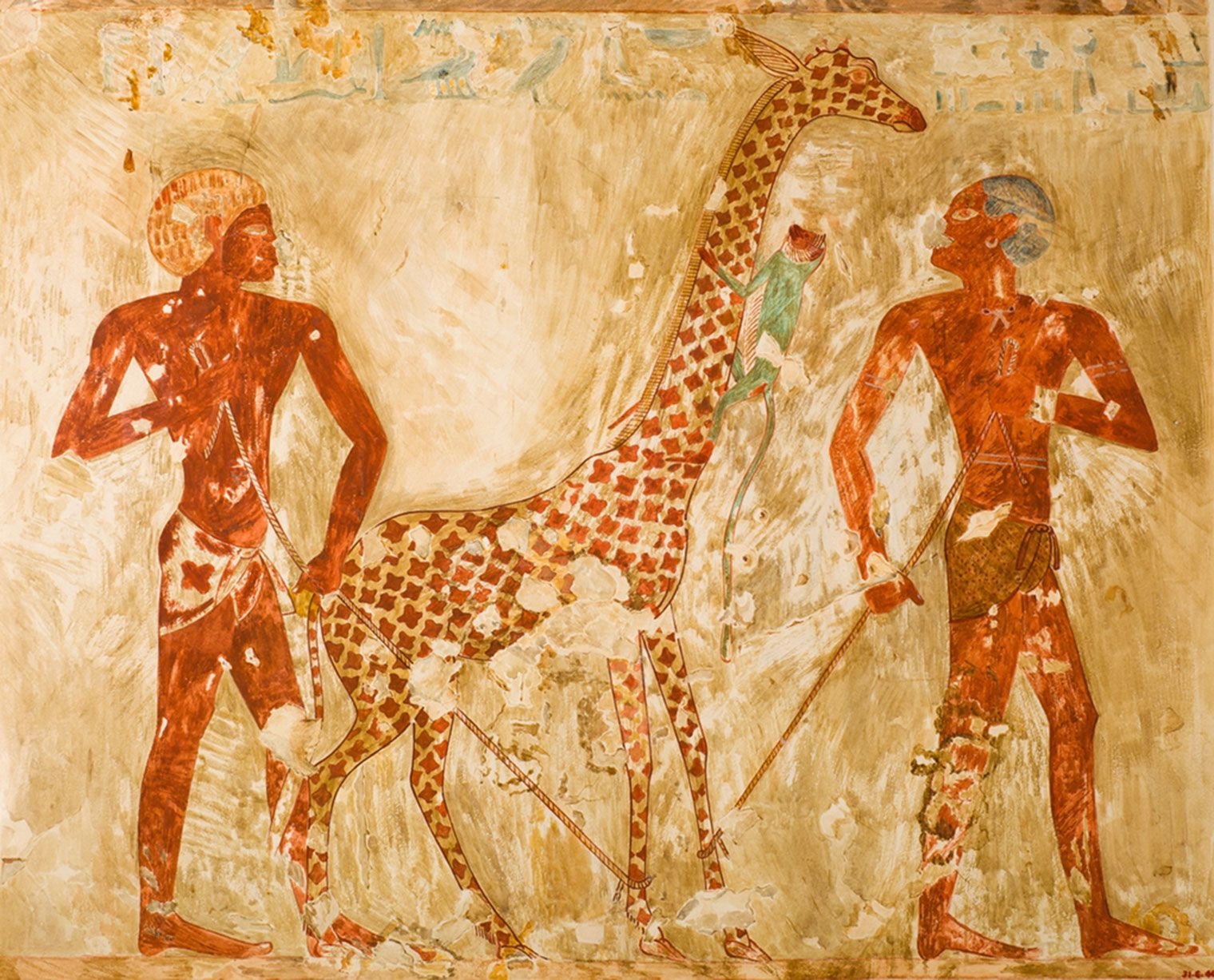
Egyptian Tributes: the New Kingdom era, animals shifted from local wildlife to symbols of imperial reach. In the tomb of Rekhmire, vibrant frescoes depict Nubian delegations bringing giraffes, big cats, and elephant tusks as tribute to the Pharaoh, cementing the exotic animal as a visual currency of geopolitical power.

History and Origins

Physiologus is an ancient Christian text, originally written in Greek, that describes real and mythical animals, plants, and stones, assigning them Christian allegorical meanings, and is the ancestor of the medieval bestiary. It was widely translated and adapted across Europe, becoming a popular work that linked Eastern and Western traditions through its moral and mystical interpretations of nature. 

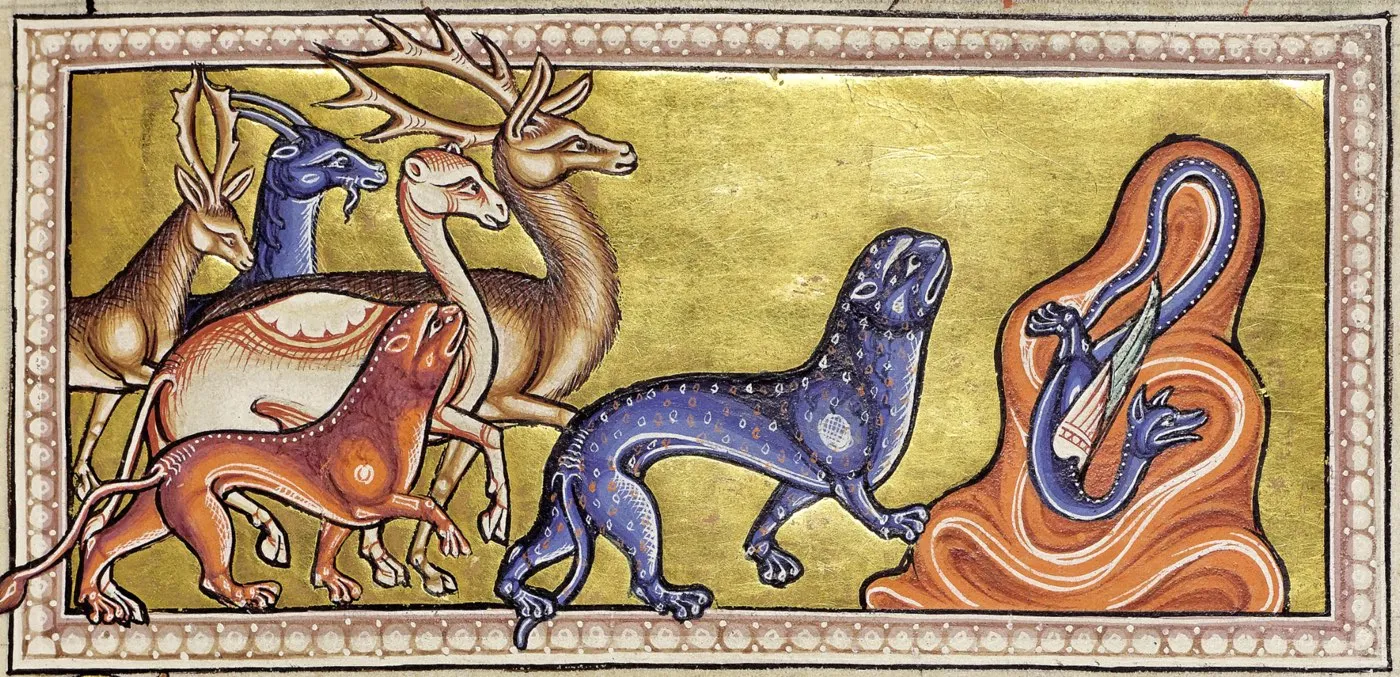
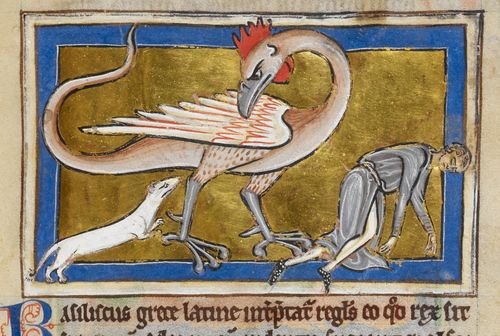
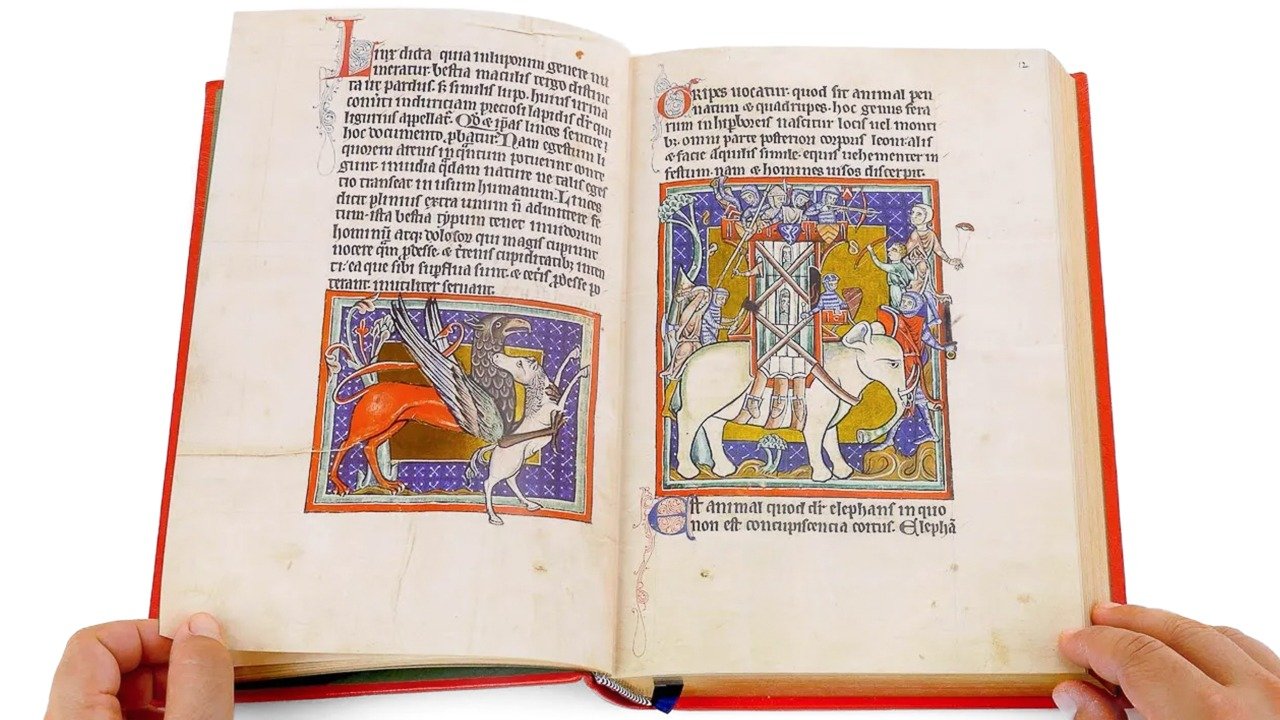
Bestiaries (or “Books of Beasts“) are medieval encyclopedias that cataloged both real and mythical animals, plants, and even rocks.

Originating in the ancient world, these richly illustrated manuscripts used the natural behaviors of animals as allegories to teach Christian moral lessons and biblical truths.

The Physiologus: The foundation of the genre is an anonymous text compiled in Alexandria, Egypt, between the 2nd and 4th centuries. It was translated into Latin, sparking a surge of illustrated bestiaries throughout Western Europe in the 12th and 13th centuries.

Medieval society viewed the natural world as a second Bible. Every creature was believed to have been designed by God to instruct humanity.

Modern Analogy: While they act as early natural history, they are often described as creative, moral or entertainment catalogs rather than pure scientific textbooks.

Famous Examples

The Aberdeen Bestiary: One of the most famous and well-preserved examples, offering incredibly detailed descriptions and vivid gold-leaf illuminations.

The Aberdeen Bestiary (University of Aberdeen) is historically important because it is one of the finest, most lavishly illuminated medieval manuscripts in existence, offering an unparalleled window into 12th-century art, education, and manuscript production. Written and illuminated in England around 1200, it survived the tumultuous dissolution of the monasteries and eventually entered the royal library of King Henry VIII

The Ashmole Bestiary: Known for its highly stylized illustrations and comprehensive compilation of lore.

The Ashmole Bestiary is historical important because it is one of the most lavish, structurally complete, and artistically brilliant “Second Family” bestiaries ever created. Produced in England around 1210, it acts as a twin counterpart to the Aberdeen Bestiary, revealing the height of early Gothic art and religious storytelling.

The Bodleian Bestiary: A heavily studied manuscript representing classic 12th-century English compilations.

The Bodleian Bestiary is historically significant  because it represents the peak transition from Romanesque to the late Gothic art style, introducing newly secular and localized elements into the traditional medieval theological universe. Created in England around the mid-13th century (c. 1225–1250), it is regarded by scholars as one of the most complete, artistically sophisticated, and charmingly naturalistic luxury manuscripts of its era

The European Shift: From Myth to Celebrity Portraits

For centuries, European artists had to rely purely on hearsay to depict exotic wildlife, resulting in bizarre, monstrous interpretations in medieval bestiaries. However, the arrival of actual live animals via trade and diplomacy radically transformed Western realism.

Bestiaries blurred the lines between fact and folklore, generally categorizing creatures into beasts, birds, fish, and serpents:

Real Animals: Familiar domesticates (dogs, horses) and exotic animals (lions, elephants, ostriches) were described, though sometimes with exaggerated traits or fantastical tales, as European artists rarely saw them firsthand.

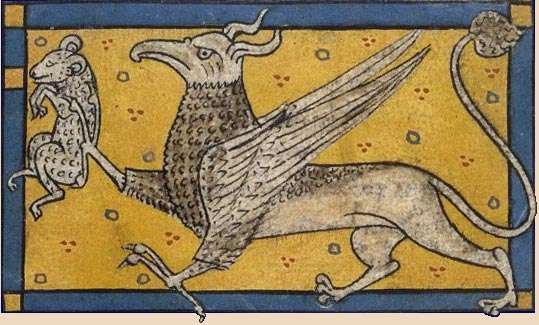
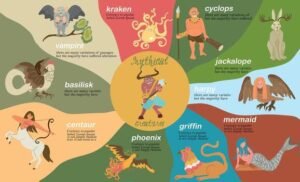
Mythical Creatures: Entries frequently featured legendary beings like the unicorn, phoenix, manticore, and griffin.

The Creatures: Real and Mythical

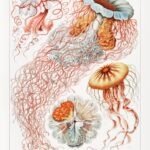
As humans mastered land trade, the frontiers of “exoticism” plunged underwater. No creature challenged traditional art forms quite like the jellyfish. Lacking bones, eyes, or a central brain, its translucent fluid movement sat on the boundary of plant, animal, and ghost.

From Mythic Terrors to Pure Lineage

The Classical Medusa: Early Western art viewed the jellyfish through a monstrous mythological lens. Ancient Greeks linked the floating invertebrates to the snake-haired Gorgon, naming the umbrella-shaped animal stage the Medusa. For centuries, maritime illustrations treated them as dangerous, alien anomalies of the dark abyss.

Haeckel’s Art Forms in Nature: The ultimate marriage of marine biology and fine art arrived at the turn of the 20th century via German biologist Ernst Haeckel. In his landmark publication Kunstformen der Natur (1899–1904), Haeckel’s masterfully symmetrical illustrations of deep-sea jellyfish (Discomedusae) transformed public perception. He rendered their radial tentacles and translucent bell shapes with absolute mathematical precision, sparking the aesthetic foundation of the Art Nouveau movement.

Modern Superflat Interventions: In contemporary East Asian art, Japanese master Takashi Murakami incorporates jellyfish-like motifs into his signature Superflat pop art style. Blending traditional Edo-period woodblock flatness with neon anime culture, Murakami uses the undulating, multi-eyed forms of jellies to explore post-war consumerism and deep oceanic mysticism.


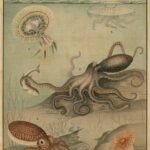
Discomedusae–Scheibenquallen from Kunstformen der Natur (1904) by Ernst Haeckel. Original from Library of Congress. Digitally enhanced by rawpixel.

The Rhinoceros and Elephant

Dürer’s Mythic Armor: In 1515, Albrecht Dürer created his legendary woodcut, The Rhinoceros, without ever seeing the live animal. Working strictly off a brief sketch and letter, he illustrated the beast covered in riveted armor plates and a fictional second horn. This magnificent error remained Europe’s definitive visual reference for over 200 years.

Shattering the Illusion: The myth was finally broken by Clara, an Indian rhinoceros who toured Europe for 17 years in the mid-18th century. Master painters like Pietro Longhi and Jean-Baptiste Oudry captured her with absolute scientific precision, rendering her true, heavy skin folds and coarse textures for a fascinated public.

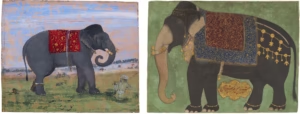
Rembrandt’s Realism: A similar leap in precision occurred when Rembrandt van Rijn encountered Hansken, a traveling Asian elephant, in 1637. Using black chalk, Rembrandt bypassed medieval heraldry to capture her deeply wrinkled skin and lifelike weight with unprecedented anatomical honesty.

The Cephalopod Motif: Octopuses in Fine Art

Just like the ethereal jellyfish, the octopus has fascinated fine artists across centuries and continents. However, while jellyfish were primarily celebrated for their delicate, radial symmetry, the octopus has occupied a far more complex visual dualism. It has been depicted as a master of camouflage and mimicry, a terrifying sea monster of the deep, and a symbol of fluid, cosmic grace.

Ancient Maritime Civilizations: Mimicry and Decoration

In the ancient Mediterranean, the octopus was a daily reality for coastal communities, valued both as a food source and as a marvel of natural engineering.

Minoan “Marine Style” Pottery (c. 1500 BCE): The artisans of ancient Crete were the first to truly master the octopus form. On the famous Minoan Stirrup Jars, painters wrapped the creature’s bulbous body around the vessel’s center, allowing its fluid, looping tentacles to dynamically follow the natural, rounded curves of the terracotta. It was celebrated as a sacred symbol of ocean life.

Graeco-Roman Mosaics and Fish Plates (c. 1st Century BCE): In ancient Roman villas, such as the House of Geometric Mosaics in Pompeii, highly realistic stone mosaics featured octopuses entwined with other marine life. Classical writers like Aristotle marveled at the octopus’s ability to seamlessly change colors and mimic underwater rocks. Art historians note that painting or tiling an octopus became a self-reflexive exercise for classical artists: imitating nature’s ultimate master of visual illusion.

East Asian Traditions: Monsters, Myths, and Metaphor

In Japan’s Edo and Meiji periods, the octopus transformed into a prominent figure within woodblock printing (Ukiyo-e), representing everything from deep-sea terrors to playful folklore.

The Giant Sea Monster: Ukiyo-e master Utagawa Kuniyoshi frequently depicted the dramatic clashes between man and nature. In prints like Ariō Maru Battling a Giant Octopus (c. 1833–1835), the cephalopod is elevated to a terrifying monster with massive, bulging eyes and sweeping tentacles crashing against ships and heroes.

The Dream of the Fisherman’s Wife (1814): In a radically different register, Katsushika Hokusai used the fluid, boneless anatomy of the octopus to pioneer erotic surrealism. His famous shunga print depicts a woman entwined with a large and a small octopus, using the undulating, enveloping forms of the creature as a metaphor for overwhelming desire and the mysteries of the deep ocean.

The Scientific Revolution to Modern Surrealism:

As the maritime world shifted from myth to empirical science, the octopus became a subject of meticulous documentation before transitioning into 20th-century fantasy.

Lord Bodner’s Deep Sea Studies (1826): In London, scientist and illustrator Lord Bodner published highly influential copperplate engravings of cephalopods. His portraits stripped away the legendary “Kraken” myths, presenting the octopus on a clean white background with fine, textured anatomical precision, capturing every individual sucker with scientific clarity.

Victor Grasso’s Surreal Narratives: In modern surrealist watercolor painting, artists continue to use the octopus to symbolize emotional entanglement and mystery. In works by contemporary artists like Victor Grasso, massive octopuses are lifted out of the ocean and perched atop domestic architecture like chimneys, clutching odd human artifacts (like umbrellas and skull ornaments) in their arms to create an ominous, dreamlike atmosphere.

Contemporary Interventions: Animals as Co-Creators

In the 21st century, artists have pushed the boundary of fine art by treating the octopus not just as a subject, but as an active collaborator.

Shimabuku’s Octopus Collaborations: Contemporary Japanese artist Shimabuku has spent over two decades exploring the inner minds of marine invertebrates. In his avant-garde installation pieces, he places custom ceramic sculptures and marbles on the ocean floor, filming wild octopuses as they curiously examine, collect, and rearrange the items. By centering the choices and aesthetic preferences of the animal, Shimabuku completely upends the traditional human-dominated definition of fine art.

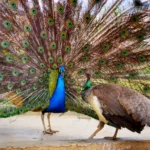
Among all avian subjects, the peacock holds an unrivaled position in global art history. Its iridescent plumage, sweeping train, and regal bearing made it the ultimate canvas for exploring luxury, divinity, immortality, and vanity.

While land mammals often symbolized power or raw danger, the peacock was harnessed by artists across centuries to showcase technical mastery over color, light, and ornamental pattern.

Sacred and Secular Antiquity: Immortality and Divinity

In ancient traditions, the peacock was rarely depicted merely as a decorative bird; it was viewed as a celestial creature deeply linked to the divine and the afterlife.

Roman and Byzantine Mosaics (c. 4th–6th Century CE): Because early Christians adopted the ancient folklore belief that a peacock’s flesh did not decay after death, the bird became the primary symbol of resurrection and eternal life. In stunning glass mosaics within basilicas like San Vitale in Ravenna, flanking peacocks are depicted drinking from central fountains or chalices, symbolizing the soul drinking from the waters of eternal life.

Hindu Iconography and Miniature Paintings: In traditional Indian art, the peacock (Mayura) is revered as the sacred mount (vahana) of the war god Kartikeya (Murugan) and is intimately tied to Krishna, who famously wears a peacock feather in his crown. In Pahari and Rajput miniature paintings, court artists utilized delicate ground-mineral pigments and real gold leaf to capture the deep indigo and emerald sheen of peacocks perched on palace roofs during the monsoon season, symbolizing longing and divine love.

East Asian Masterpieces: Precision and Courtly Prestige

In China and Japan, the peacock was celebrated as a symbol of high official rank, protective guardianship, and pure bird-and-flower (H鳥画) painting mastery.

Ming Dynasty Court Painting (c. 15th–16th Century): Masterpieces like Hundreds of Birds Admiration to the Peacocks by Yin Hong used large-scale silk scrolls to display imperial authority. The peacocks sit at the center of a dense, hyper-detailed natural landscape, functioning as a political allegory where the surrounding smaller birds represent loyal court officials paying tribute to the rightful, dignified ruler.

Japanese Rinpa and Maruyama-Shijō Screens (Edo Period): Japanese painters abandoned flat, rigid portraiture to explore how the peacock interacted with shifting gold leaf backgrounds. Masterpieces by Maruyama Ōkyo utilized a revolutionary blend of Western perspective and traditional ink washes (tarashikomi). By rendering individual feather barbs with absolute weightlessness against shimmering gold leaf screens, they captured a glowing, ethereal quality that mirrored live light.

The Decadent West: Aestheticism and Art Nouveau

By the late 19th century, the peacock moved from sacred spaces into the heart of Western decorative arts, defining an entire era of interior architecture and luxury design.

James McNeill Whistler’s The Peacock Room (1876–1877): Originally designed as a dining room for a London shipowner, Whistler transformed the space into a permanent masterpiece of the Aesthetic Movement. Titled Harmony in Blue and Gold, Whistler coated the walls in rich turquoise and painted sweeping, aggressive golden peacocks across the shutters. The room stands as a self-reflexive monument to “art for art’s sake,” using the bird’s feathers as a totalizing decorative environment.

Louis Comfort Tiffany’s Favrile Glass (c. 1900): At the height of Art Nouveau, American designer Louis Comfort Tiffany became obsessed with capturing the peacock’s iridescence in physical matter. His famous Peacock Vases and stained-glass lamps used specialized chemical treatments to create trailing, organic patterns of “peacock eyes” trapped directly within molten, iridescent glass, allowing light to illuminate the feathers from within.

The Giraffe as Celebrity

The Renaissance Marvel: In 1487, the Sultan of Egypt gifted a live giraffe to Lorenzo de’ Medici. The Medici Giraffe became an overnight Renaissance sensation. Giorgio Vasari later immortalized the event in his fresco Lorenzo the Magnificent Receives Tribute, capturing the Florentine awe at this towering beast.

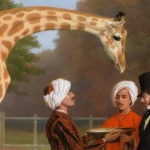
“Giraffemania”: Centuries later in 1827, a Nubian giraffe named Zarafa arrived in Paris as a gift to King Charles X. Painted by Jacques-Laurent Agasse, this majestic animal sparked a massive European design craze known as giraffemania, heavily influencing French fashion, ceramics, and wallpapers.

The Simurgh and Chinese Influence (Persian Miniatures): Following the Mongol conquests, Persian and Ilkhanid manuscripts heavily adopted East Asian motifs.

Exotic birds like the phoenix merged with the Persian Simurgh—a benevolent, mythical winged creature.

These were painted with hyper-detailed, swirling, iridescent feathers on borders and manuscript illuminations to guard royal settings.

Non-Western Art: Divine Omens and Cosmic Harmony

While Western art frequently emphasized individual animals as realistic “portraits” or domestic status symbols, non-Western traditions used wildlife to navigate the spiritual world and validate imperial rule.

East Asian Imperial Omens

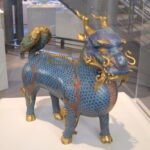
The Ming Dynasty Qilin: When a live African giraffe arrived at the Chinese court in 1414, the Yongle Emperor did not view it as a mere mammal. The empire identified it as the Qilin—a divine, dragon-like chimera whose appearance signaled a perfectly righteous ruler. Silk paintings from the era intentionally altered the giraffe’s coat patterns to look geometrically uniform and scaly, conforming to ancient legend rather than biology.

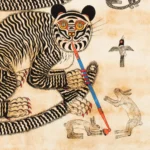
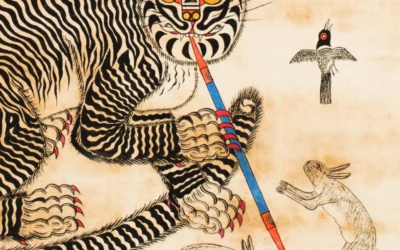
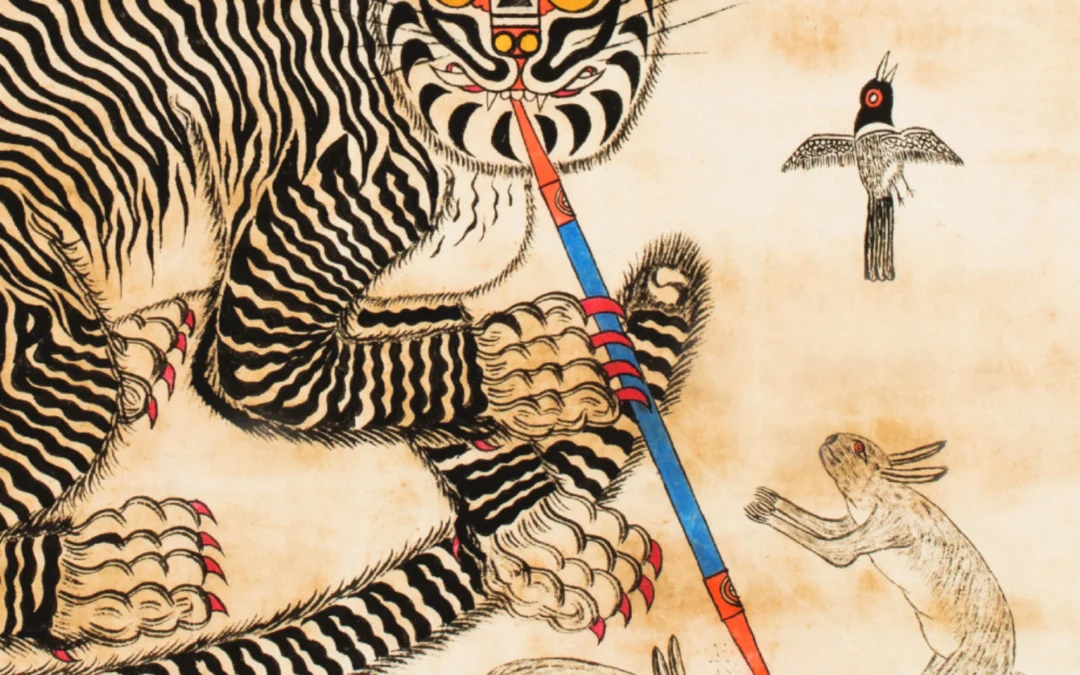
The Joseon Smoking Tiger: In Korean folk art (Minhwa), the native tiger was stripped of its terrifying reality. The Jakhodo motif depicts a smiling, cartoonish tiger sitting alongside magpies—and occasionally smoking a tobacco pipe. Here, the apex predator is transformed into a friendly spiritual guardian meant to ward off evil spirits.

Mughal India and Persian Miniatures

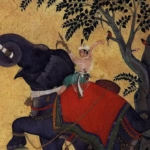
Akbar’s Harmonious Realm: Under the Mughal Emperor Akbar, court painters like Miskin pioneered highly detailed wildlife studies. These paintings frequently depicted lions, rhinos, cheetahs, and ostriches lounging peacefully beside one another. This was a sophisticated political allegory: it asserted that Akbar’s rule was so perfectly balanced that even natural predators and prey could live in total harmony.

Mesoamerican and African Spiritual Power

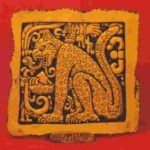
The Maya Jaguar: In Pre-Columbian Mesoamerica, apex rainforest predators represented the human soul. To the Maya, the jaguar was the ruler of the underworld and the night sky. Kings took the name B’alam (Jaguar) and were depicted on ceremonial pottery wearing pelts and physically transforming into the beast during shamanic rituals.

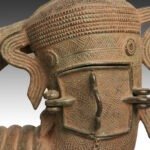
The Benin Mudfish and Leopard: In the Kingdom of Benin (modern Nigeria), cast brass plaques reserved specific animal traits exclusively for the monarch (Oba). The king was routinely juxtaposed with the leopard (king of the forest) and the mudfish. Because the mudfish could survive on land and water, it symbolized the Oba’s liminal power to navigate both the physical world and the spiritual realm of the ancestors.

Modern Metamorphosis: The Subconscious Monster

By the 20th century, global travel, modern psychology, and environmental consciousness completely recontextualized exotic animals, transforming them into symbols of untamed nature or the human subconscious.

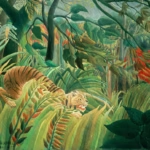
The Purely Imagined Jungle: Henri Rousseau painted lush, wild masterpieces like Tiger in a Tropical Storm (1891) despite never leaving France. His raw, striking big cats were completely imagined, pieced together from visits to the Paris botanical gardens, taxidermy rooms, and domestic zoo cages.

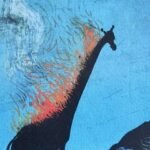
The Surrealist Monster: For Salvador Dalí, exotic animals became tools to shock the subconscious mind. In The Burning Giraffe (1937), he used a distant giraffe with its back set on fire as an apocalyptic omen of war. Later, in The Elephants (1948), he flipped Rembrandt’s realism entirely on its head, painting the massive mammals with hyper-elongated, spindly spider legs to create a striking tension between immense weight and absolute weightlessness.

Showing 49–49 of 49 resultsSorted by latest

The Global Bestiary

The Global Bestiary

For millennia, the appearance of exotic animals in art has chronicled the outer limits of human trade, diplomacy, science, and imagination. When rare creatures crossed oceans and deserts as royal gifts, they fractured public imagination. In the West, artists struggled...
read more
You & Polyester: Getting Along, Swimmingly

You & Polyester: Getting Along, Swimmingly

700,000 Each polyester garment can release up to 700,000 fibers per revolution of a washing machine's drum.78 million tons 80% used in textiles. It represents about 80% of all synthetic fiber production, driven by its low cost, durability, and popularity in fast...
read more
Sashiko, Kimonos & History

Sashiko, Kimonos & History

A recent BBC Culture story by Bel Jacobs: The 300-year-old Japanese method of upcycling explores the method of sashiko. Sashiko emerged through necessity, particularly in poor rural areas, during the Edo period. "Cotton came late to the north of Japan," explains craft...
read more
the Flora Glassware COLLECTION: Konan Tanigami (1879-1928)

the Flora Glassware COLLECTION: Konan Tanigami (1879-1928)

[ez-toc]These items display stunning floral imagery, following the tradition of Japanese kacho-e (depictions of flowers and birds). Konan Tanigami, a prominent Nihon-ga artist from 1879 to 1928, is celebrated for his exceptional contributions to the Kacho-e genre,...

read more
A Green Christmas

A Green Christmas

Carbon offsetting is a way to compensate for the carbon dioxide we spew into the atmosphere by funding projects that reduce greenhouse gases or absorb carbon from the air. At cgk.ink, this means investing in renewable energy sources, reforestation efforts, and...
read more
the Elegance and Subtle Formality of Kimonos

the Elegance and Subtle Formality of Kimonos

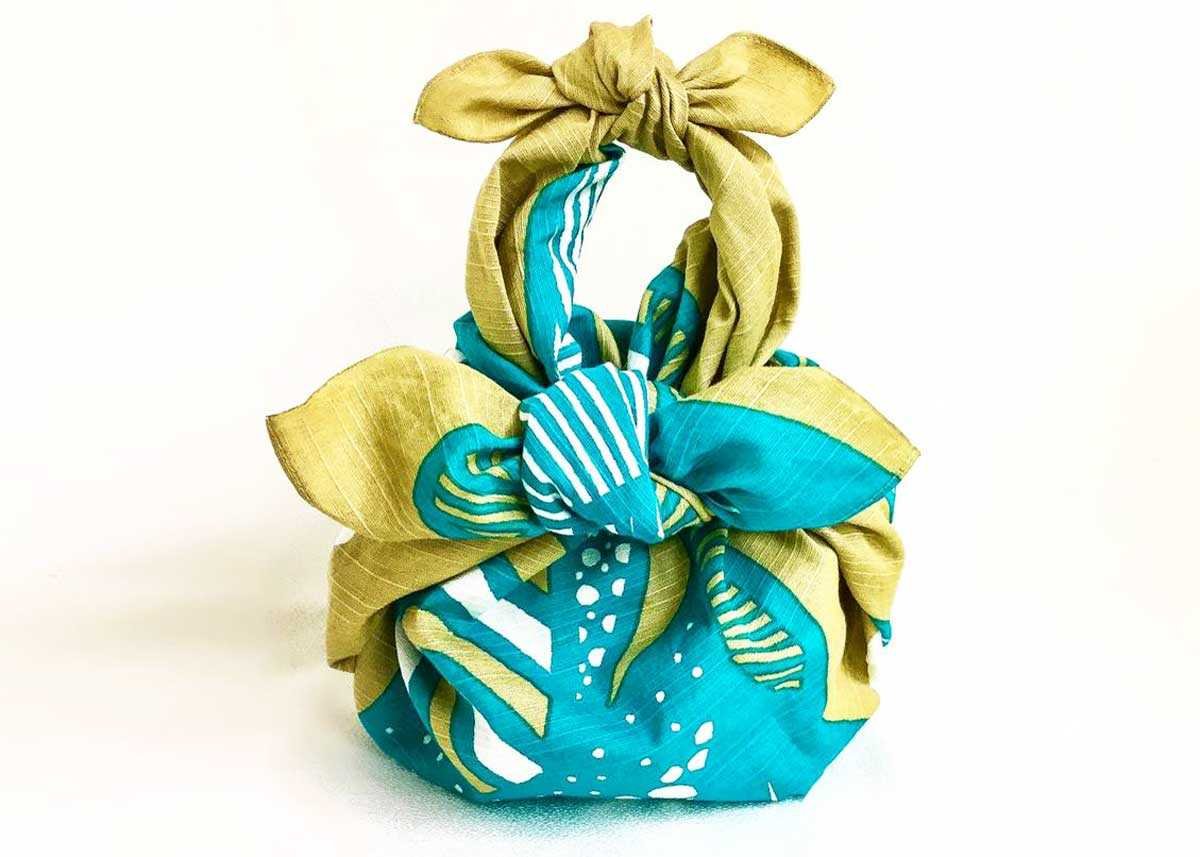
The haori (羽織) is a traditional Japanese jacket worn over a kimono. Resembling a shortened kimono with no overlapping front panels (okumi), the haori typically features a thinner collar than that of a kimono, and is sewn with the addition of two thin, triangular...
read more
next-level gift wrapping

next-level gift wrapping

When giving gifts or sending presents in Japan, it is customary to show special care not only to the contents, but to the way a gift is wrapped and the wrapping itself. In Japanese culture, gift wrapping can be as important as the gift, where the gift is viewed as a form of communication between the giver and the receiver.

read more
Climate Stripes

Climate Stripes

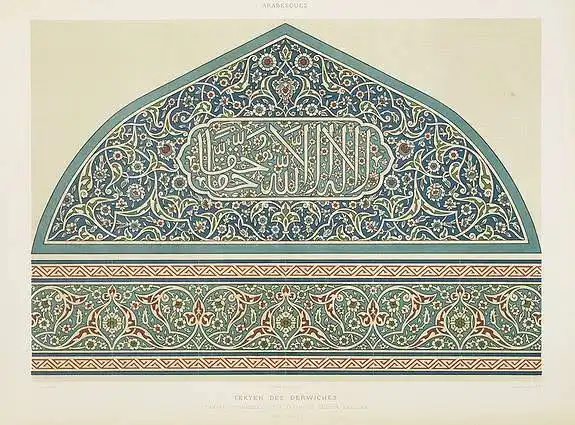
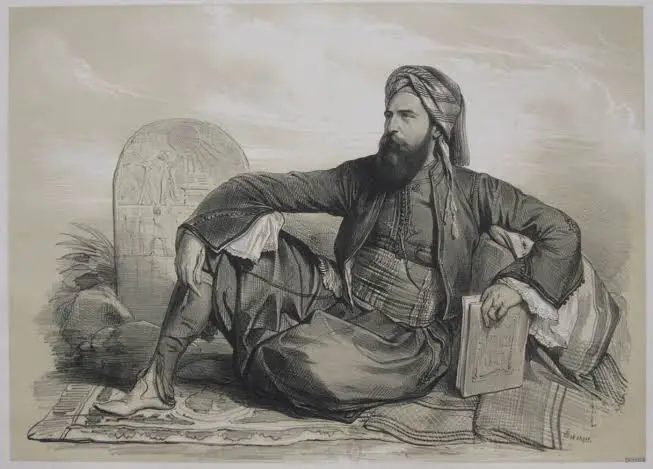
Admit it. It's fun to laugh at global warming deniers. Until you realize that they're serious. Design can be many things, but the thing at which it succeeds best is education. Professor Ed Hawkins (University of Reading) has created a graphic entitled "Climate...
read more
Fine Art Focus: Émile Prisse d’Avennes

Fine Art Focus: Émile Prisse d’Avennes

Prisse d’Avennes was born in Avesnes-sur-Helpe, France, on 27 January 1807, to a noble family of French origin. After the early death of his father in 1814, on the guidance of his grandfather he enrolled at college a year later to train for a career within the legal profession.
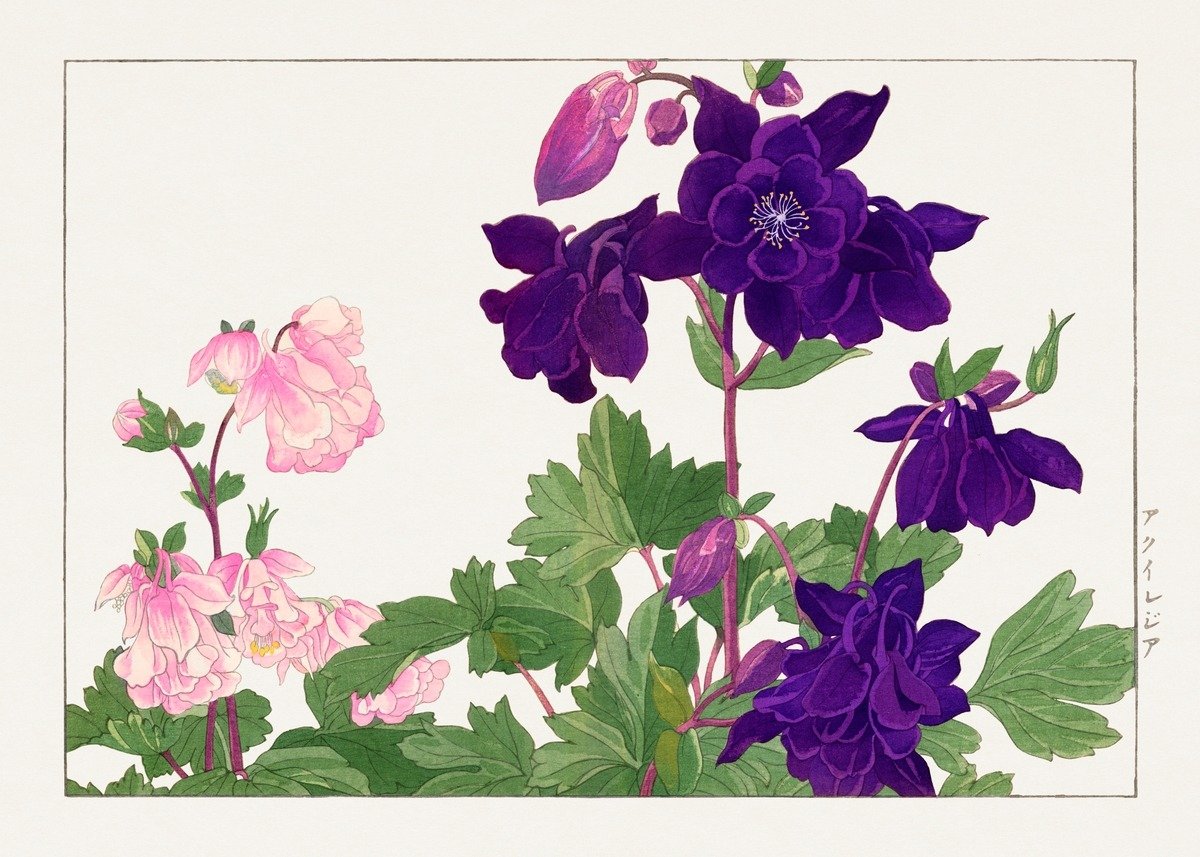
Prisse d’Avennes decided to become an archaeologist in 1836 after a period teaching at the infantry school in Damietta.

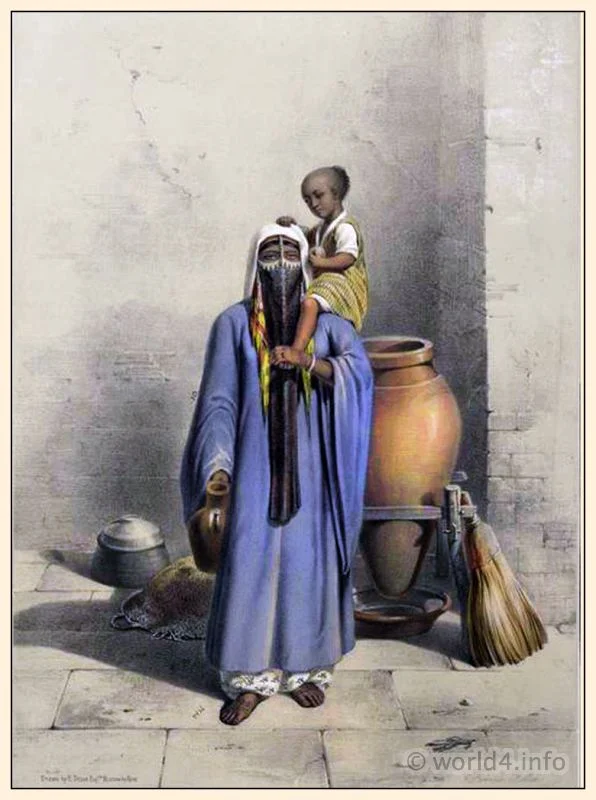
In 1827 when he reached Egypt, he was hired by the viceroy of Egypt, Muhammad Ali Pasha, as a civil engineer. He spent many years living as an Egyptian, adopting the name Idriss-effendi, learning to speak Arabic and practicing Islam. He stated that adopting Egyptian culture resulted in a greater understanding of Egyptian society and people.

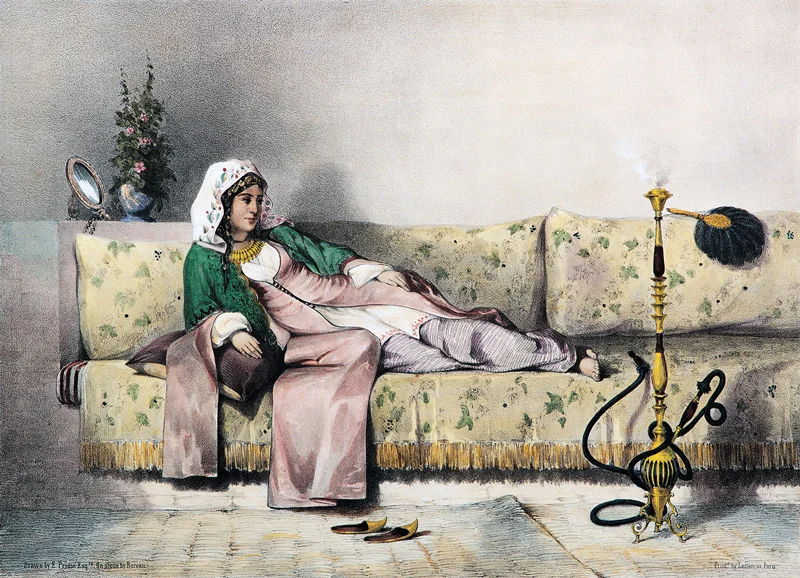
In 1848, he contributed 30 lithograph images depicting the people living on the Nile Valley to a costume book titled Oriental Album written by James Augustus St. John who was a British author and traveler.

No Results Found

The page you requested could not be found. Try refining your search, or use the navigation above to locate the post.

Fine Art Focus: Matthew Digby Wyatt

Fine Art Focus: Matthew Digby Wyatt

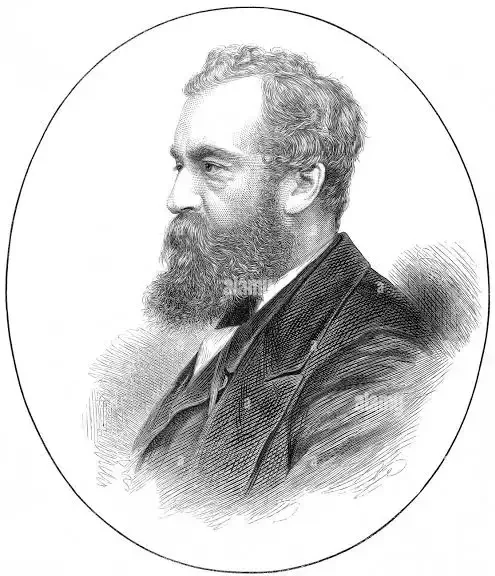
Sir Matthew Digby Wyatt (28 July 1820 – 21 May 1877) was a British architect and art historian who became Secretary of the Great Exhibition, Surveyor of the East India Company and the first Slade Professor of Fine Art at the University of Cambridge. From 1855 until 1859 he was honorary secretary of the Royal Institute of British Architects, and in 1866 received the Royal Gold Medal.

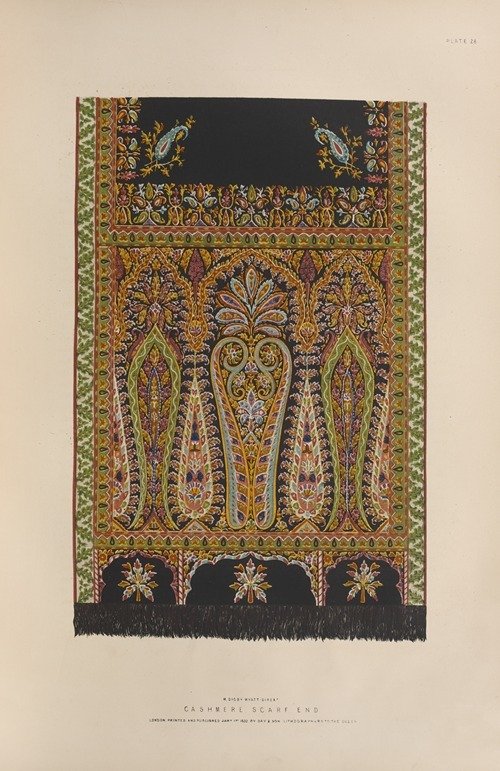
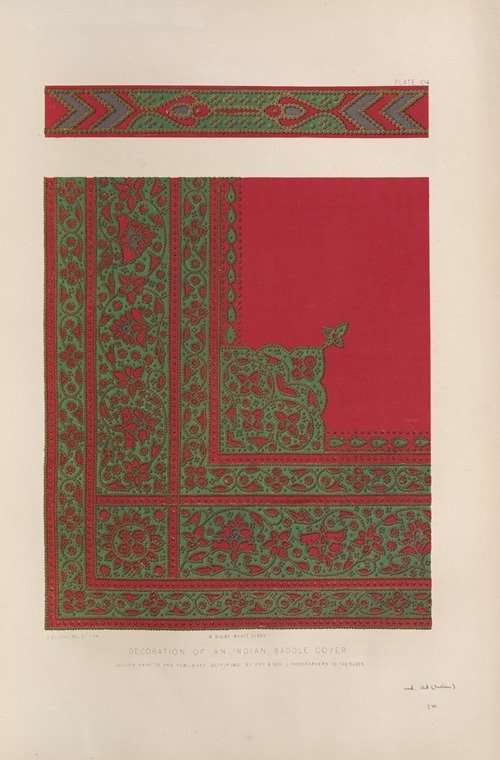
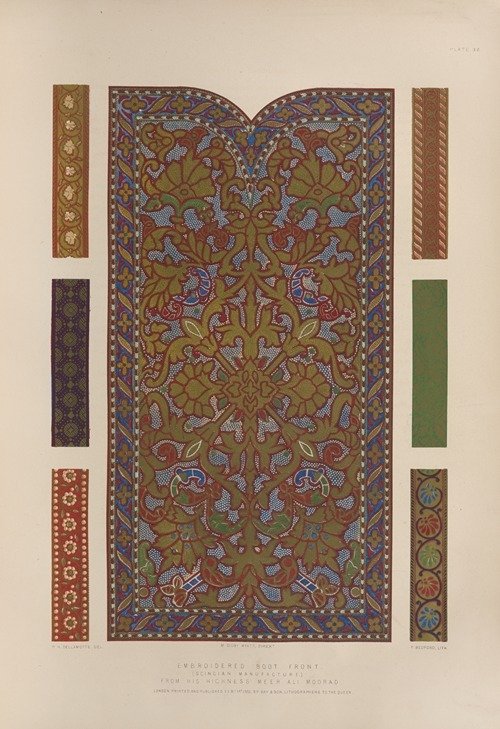
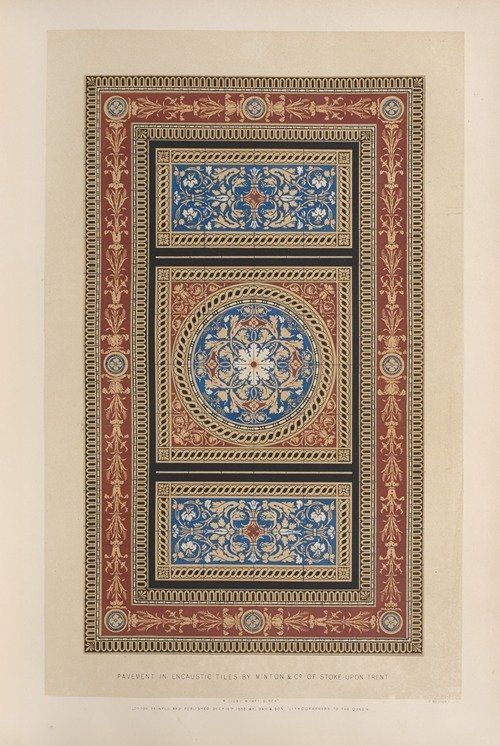
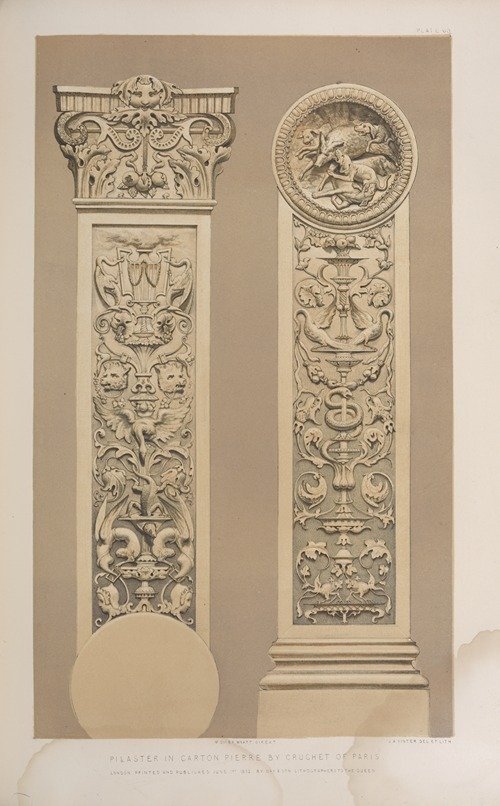
In 1851, Wyatt produced the book The Industrial Arts of the Nineteenth Century, an imposing imperial folio in two volumes which illustrates a selection of items from the Great Exhibition of 1851. The book, which has won widespread acclaim for the quality of its plates, appeared in two parts, with the first dated 1 October 1851, through to the extra-illustrated title pages dated 15 March 1853. There are 160 chromolithographed plates produced by a team of artists and lithographers including Francis Bedford, J. A. Vinter and Henry Rafter.

He was appointed to the post of Surveyor of the East India Company in 1855, shortly before its role in governing India was taken over by the Crown, and subsequently became Architect to the Council of India. In this role he designed the interiors of the India Office in London (1867: now part of the Foreign & Commonwealth Office) and the Royal Indian Engineering College (1871-3: now the Runnymede campus of Brunel University).

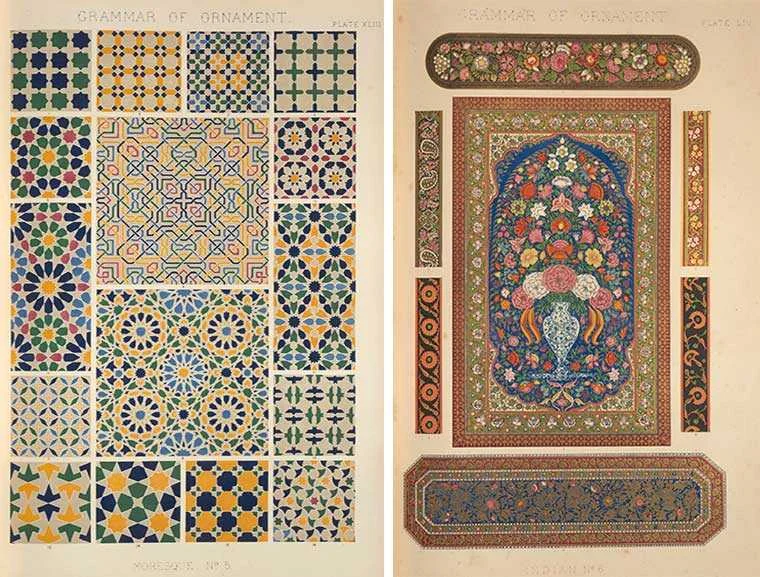
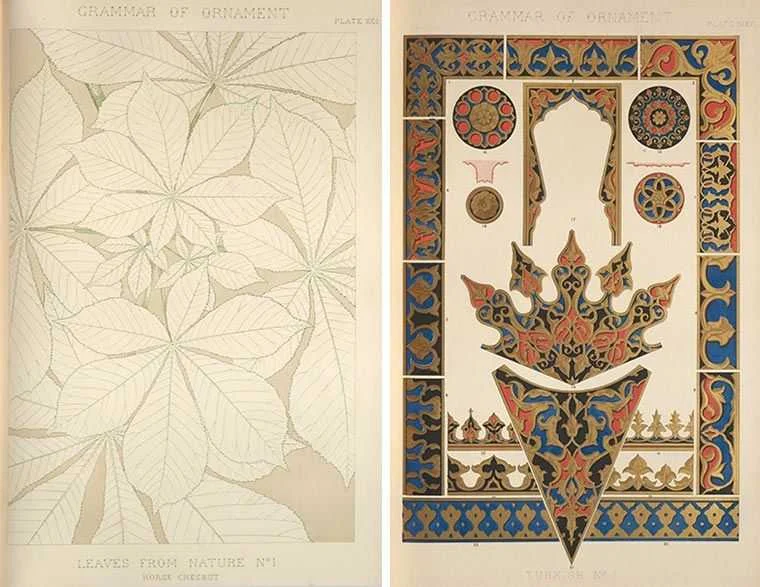
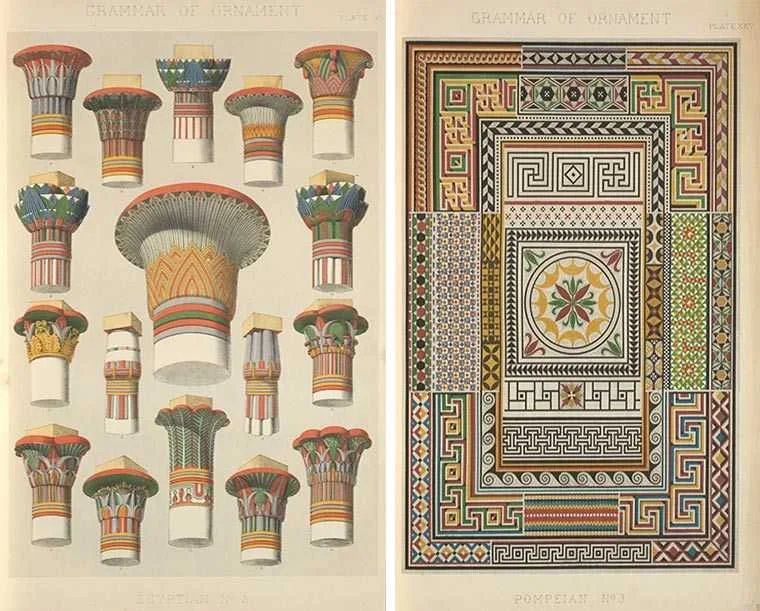
The Grammar of Ornament

The Grammar of Ornament

From the universal testimony of travelers it would appear, that there is scarcely a people, in however early stage of civilisation, with whom the desire to ornament is not a strong instinct. Man’s earliest ambition is to create . . . to stamp on this earth the impress of an individual mind.

—Owen Jones, The Grammar of Ornament

While we may often note that current society is changing at a breakneck speed, we do have to take note that this has happened before. Arguably, the 19th Century beats us at our own game on the fundamental-change level.

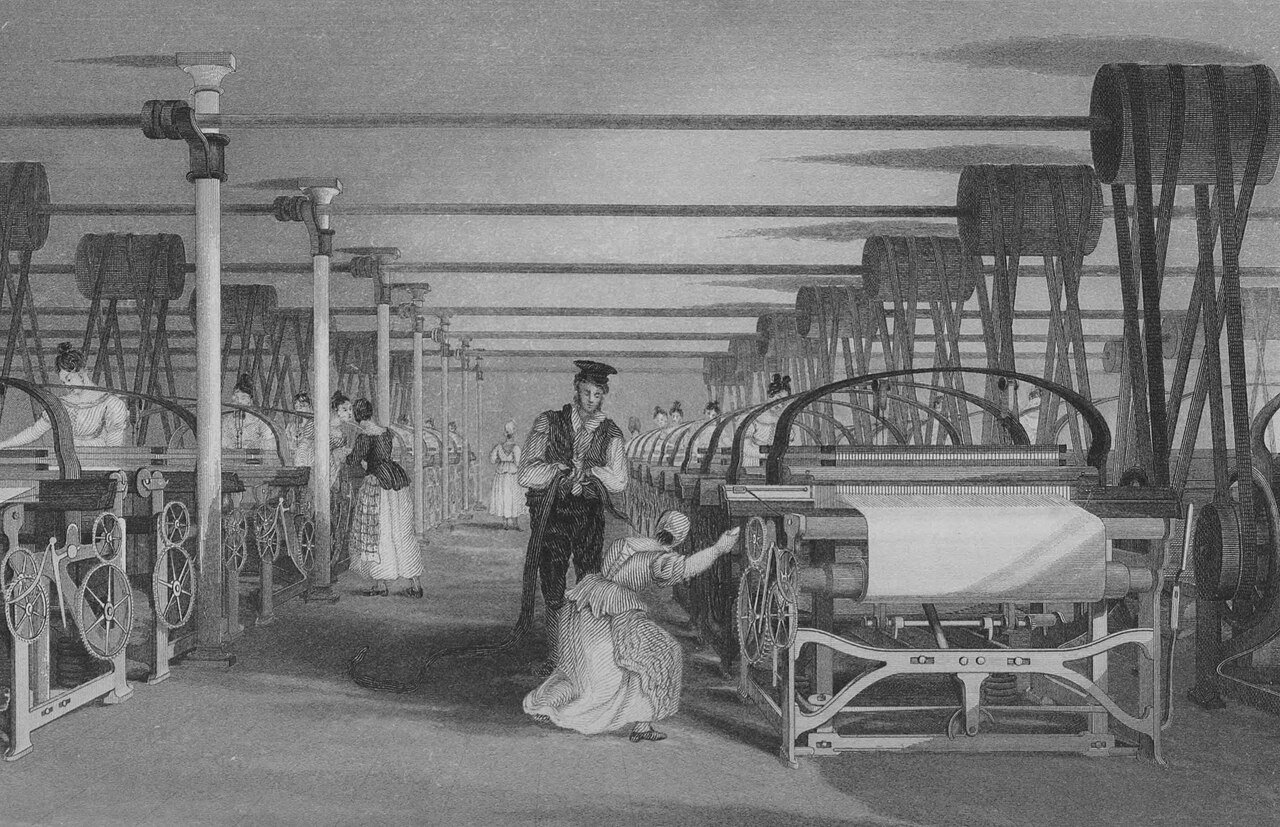
The 19th century was an era of rapidly accelerating scientific discovery and invention, with significant developments in the fields of mathematics, physics, chemistry, biology, electricity, and metallurgy that laid the groundwork for the technological advances of the 20th century. The Industrial Revolution began in Great Britain and spread to continental Europe, North America, and Japan. The Victorian era was notorious for the employment of young children in factories and mines, as well as strict social norms regarding modesty and gender roles.

The 19th century was characterized by vast social upheaval. Slavery was abolished in much of Europe and the Americas. The First Industrial Revolution, though it began in the late 18th century, expanding beyond its British homeland for the first time during this century, particularly remaking the economies and societies of the Low Countries, the RhinelandNorthern Italy, and the Northeastern United States. A few decades later, the Second Industrial Revolution led to ever more massive urbanization and much higher levels of productivity, profit, and prosperity, a pattern that continued into the 20th century.

The first electronics appeared in the 19th century, with the introduction of the electric relay in 1835, the telegraph and its Morse code protocol in 1837, the first telephone call in 1876,[2] and the first functional light bulb in 1878.[3] Society rapidly urbanized, bringing populations increasingly together into smaller spaces. The first notes of globalization brought influences from around the world to the same table, with varying results. From a Western perspective, the new cultures were ripe to be harvested. The Eastern-perspective, it presented new threats and cultural influence without precedent. The world, in fact, was becoming smaller.

The increasingly urbanization of Europe and the United States brought about new challenges to traditional aesthetics and behaviors. How does one distinguish oneself from a sea of common faces? What importance does a dwelling have and how does it become a home? An ever-evolving social hierarchy demanded that new styles, techniques and designs be invented — and quickly.

the Emergence of Decorative Arts

dec·o·ra·tive arts

/ˌdek(ə)rədiv ˈärts,ˌdekəˌrādiv ˈärts/

noun

plural noun: decorative arts; noun: decorative art

the arts concerned with the production of high-quality objects that are both useful and beautiful.

Ceramics, glassware, basketry, jewelry, metalware, furniture, textiles, clothing, and other such goods are the objects most commonly associated with the decorative arts. Many decorative arts, such as basketry or pottery, are also commonly considered to be craft, but the definitions of both terms are arbitrary.

The term “decorative arts” is not meant to be derogative. It was popular in the 70s to dismiss this as a “lesser” art and thankfully, we’ve decided collectively to rather group all functional art under the term “design.” The artists we discuss in our Fine Arts Collection are very much masters of fine art as well as exquisite craftspeople. I argue that decorative arts are actually more democratic and open to including fine art in our everyday life.

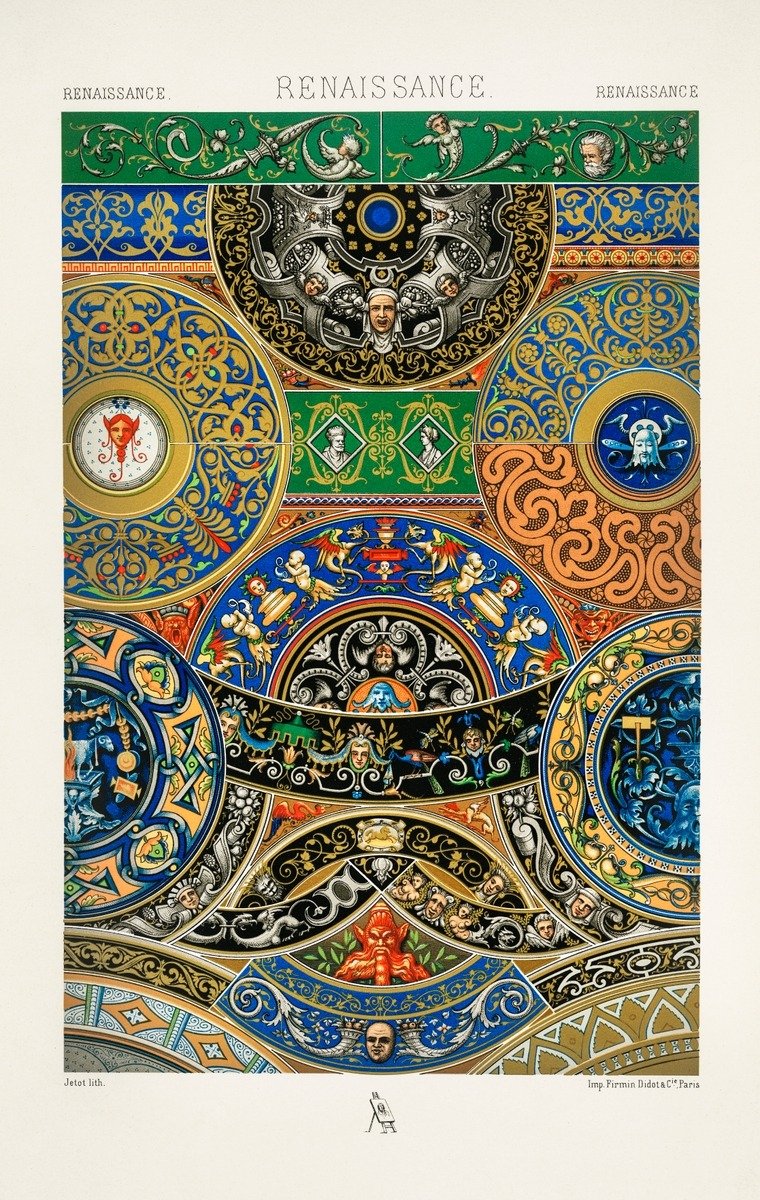
And then there’s “retro.” We constantly revisit previous eras to gain inspiration for our own, modern times. Likewise, The Victorian era is known for its interpretation and eclectic revival of historic styles mixed with the introduction of Asian and Middle Eastern influences in furniture, fittings, and interior decoration. The Arts and Crafts movement, the aesthetic movementAnglo-Japanese style, and Art Nouveau style have their beginnings in the late Victorian era and gothic period.

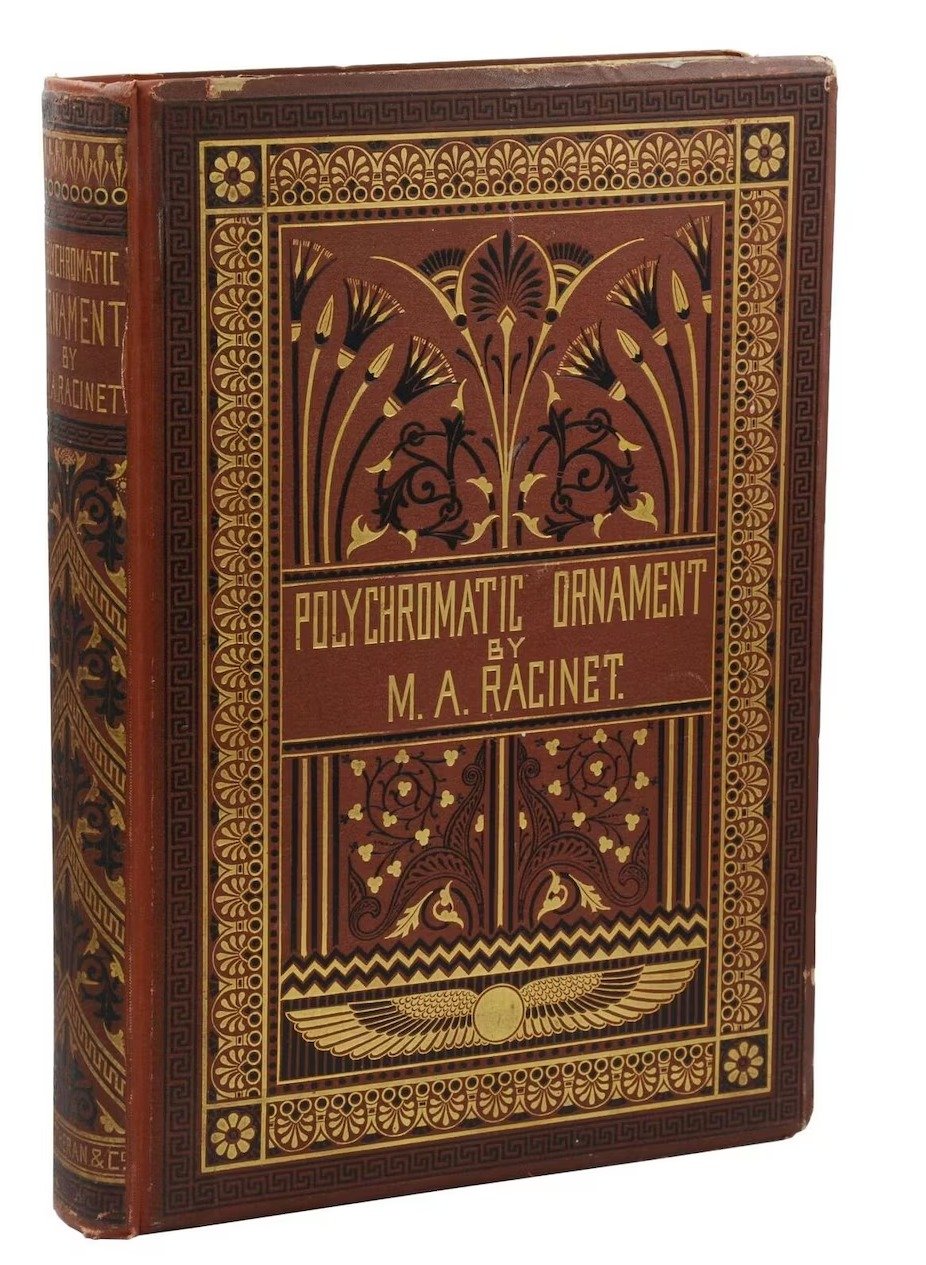
I’m specifically interested in a handful of artists who made a thoughtful, meaningful jump to bring arts to bear weight on everyday existence. We’ve talked about Racinet. And Morris. There are several dozen others including, Tiffany, Lalique, Tamara de Lempicka, Erté (a great article re: “the top 10” is here, click on it!) are among the most notable.

Owen Jones

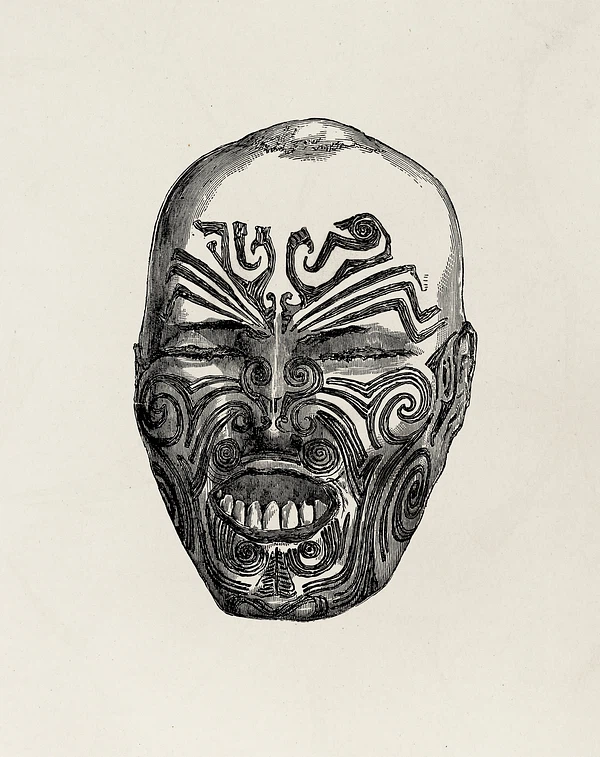
In the opening chapter to his seminal work The Grammar of Ornament, Owen Jones stresses the fact that one of the universal qualities among humankind is the desire to make beautiful things. To illustrate this point, he uses the somewhat macabre example of a severed preserved head of a Maori warrior (mokomokai), then thought to be a woman, which was covered in an elegant pattern of facial tattoos. He admired it particularly for the harmonious way in which the responsible artist had married the tattooed lines with the natural shapes of the human face. Rather than concluding that ornament belongs purely to the primitive, as others would argue later, Jones realized through his confrontation with this ethnological specimen that the Maori possessed an innate understanding of beauty that was alien to modern Western society.

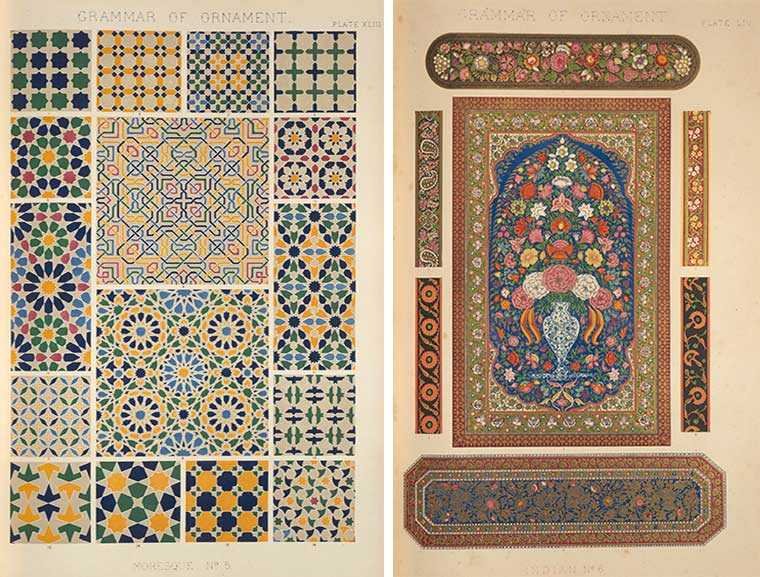
While Jones’s ideas slowly took root in art education over the following decades, which in turn influenced the development of new artistic movements such as Arts & Crafts and Art Nouveau, The Grammar of Ornament did not bring about a direct change in artistic practice. In fact, as Jones himself anticipated, we often find patterns and motifs from the book copied and applied to objects and interiors dating from the third quarter of the nineteenth century.

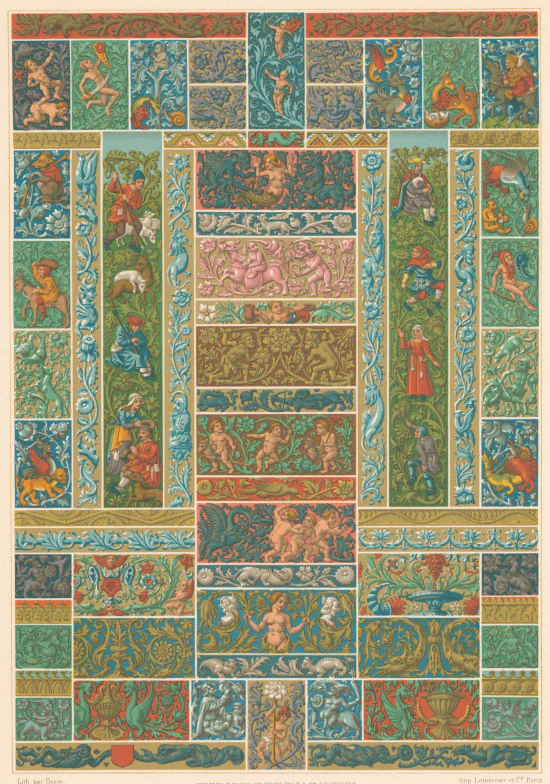
The Grammar was celebrated first and foremost for its outstanding folio-sized color lithographs, which represented the latest and most sophisticated innovations in the field of printmaking. Color lithography had been in use for several decades, but because each color was printed from a separate lithographic stone, most commercial publications were printed in a limited palette of three or four colors. Since color played a crucial role in Jones’s work, he took charge of the production himself and employed assistants to work out the patterns on lithographic stones, with certain plates requiring as many as twenty distinct stones. The high quality of Jones’s color plates quickly turned the luxurious first edition of the book into a collector’s item. Their appeal greatly outlasted Jones’s intellectual arguments, which were omitted altogether in the various posthumous editions, and facsimile reproductions published in the later nineteenth and twentieth century.

As a writer, I have to include at least one reference to literature when discussing art, fine or otherwise.

While he is now seen as the epitome of wit and sophistication, Oscar Wilde was prosecuted and was killed under the same Victorian culture that produced the mentioned artwork.

It is important to note that his trial (3 April 1895) indeed changed the very vocabulary he wrote in: English. Before his trial, there were homosexual acts, however one could not be homosexual. It was not a noun. It was unthinkable to call someone a “homosexual.” Certainly a “sodomite” but that’s a different word altogether. Your identity was not in question, your acts were. That changed from an adjective to a noun due to his trial.

In 2017, Wilde was among an estimated 50,000 men who were pardoned for homosexual acts that were no longer considered offences under the Policing and Crime Act 2017 (homosexuality was decriminalised in England and Wales in 1967). The 2017 Act implements what is known informally as the Alan Turing law.

Oscar Wilde’s Particular Aesthetic

Chief among the literary practitioners of decorative aestheticism was Oscar Wilde, who advocated Victorian decorative individualism in speech, fiction, and essay-form. Wilde’s notion of cultural enlightenment through visual cues echoes that of Alexander von Humboldt who maintained that imagination was not the Romantic figment of scarcity and mystery but rather something anyone could begin to develop with other methods, including organic elements in pteridomania.

By changing one’s immediate dwelling quarters, one changed one’s mind as well;  Wilde believed that the way forward in cosmopolitanism began with as a means eclipse the societally mundane, and that such guidance would be found not in books or classrooms, but through a lived Platonic epistemology. An aesthetic shift in the home’s Victorian decorative arts reached its highest outcome in the literal transformation of the individual into cosmopolitan, as Wilde was regarded and noted among others in his tour of America.

For Wilde, however, the inner meaning of Victorian decorative arts is fourfold: one must first reconstruct one’s inside so as to grasp what is outside in terms of both living quarters and mind, whilst hearkening back to von Humboldt on the way to Plato so as to be immersed in contemporaneous cosmopolitanism, thereby in the ideal state becoming oneself admirably aesthetical.

Fine Art Focus: Artist: Eugène Séguy & the pochoir method

Fine Art Focus: Artist: Eugène Séguy & the pochoir method

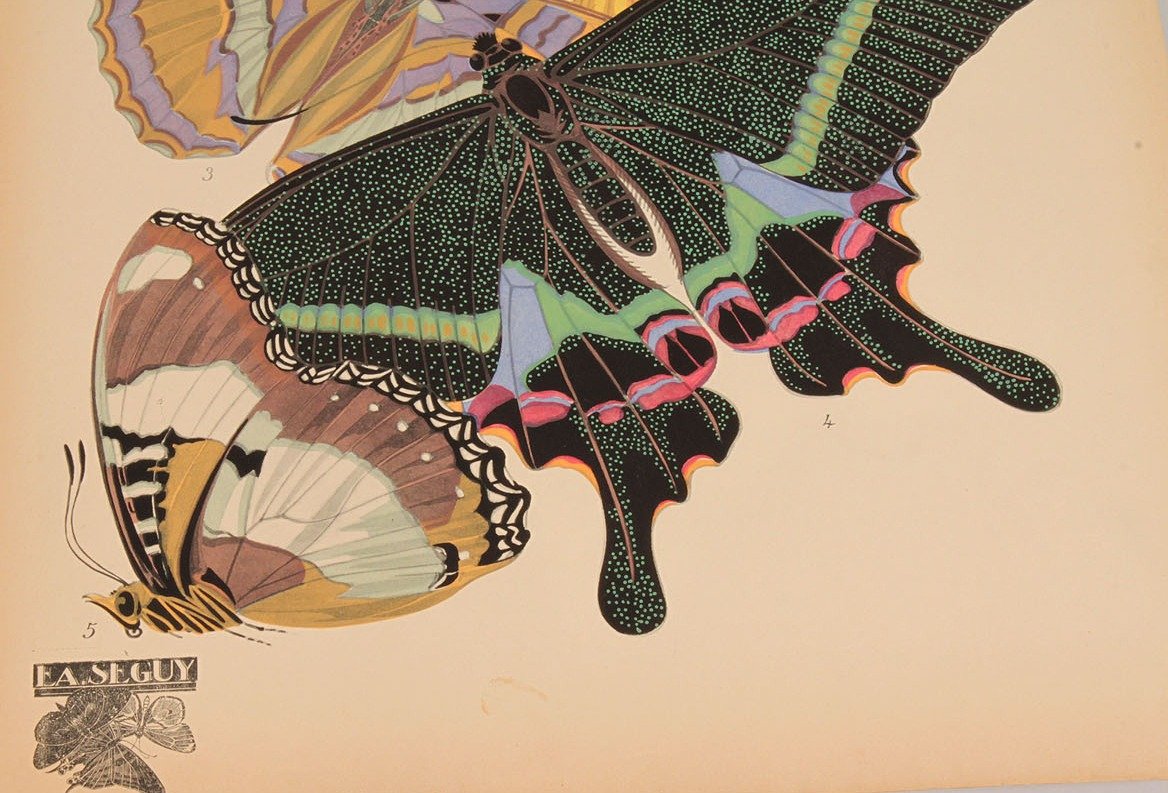
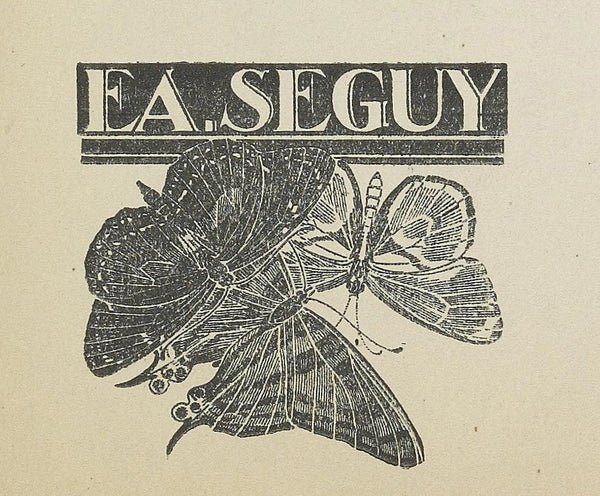
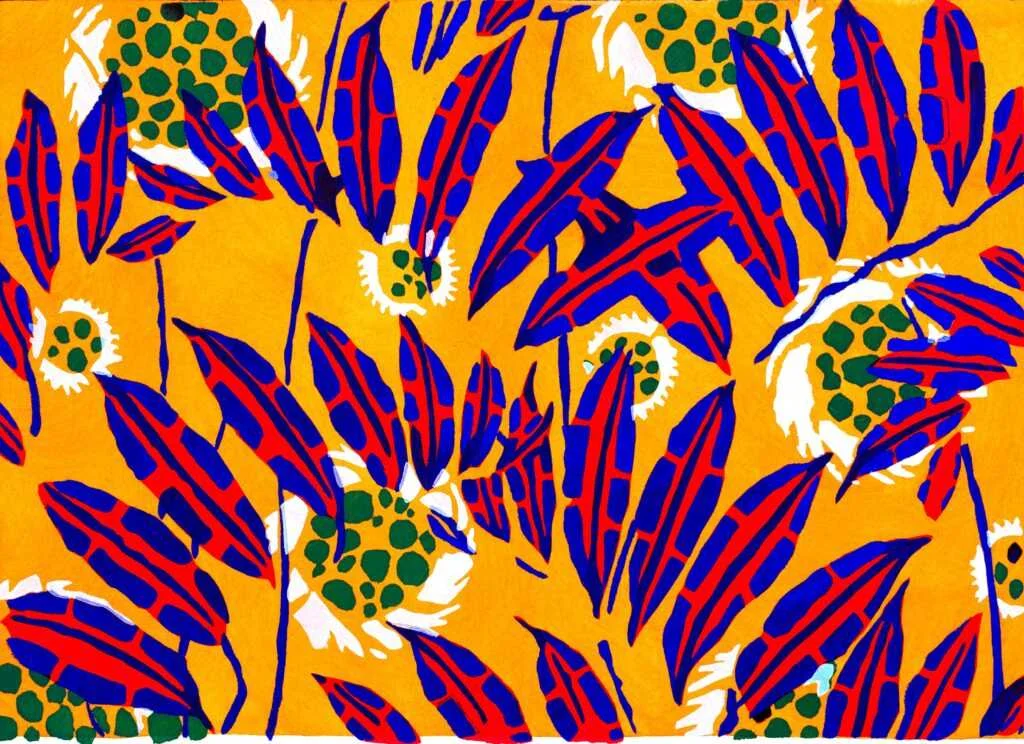
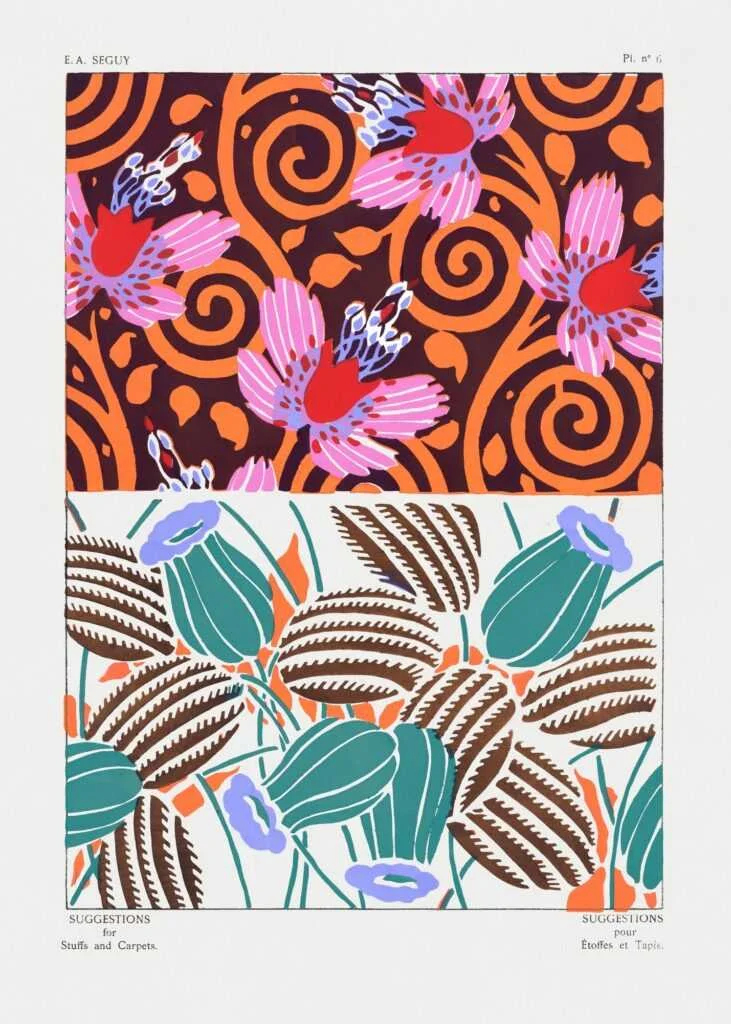
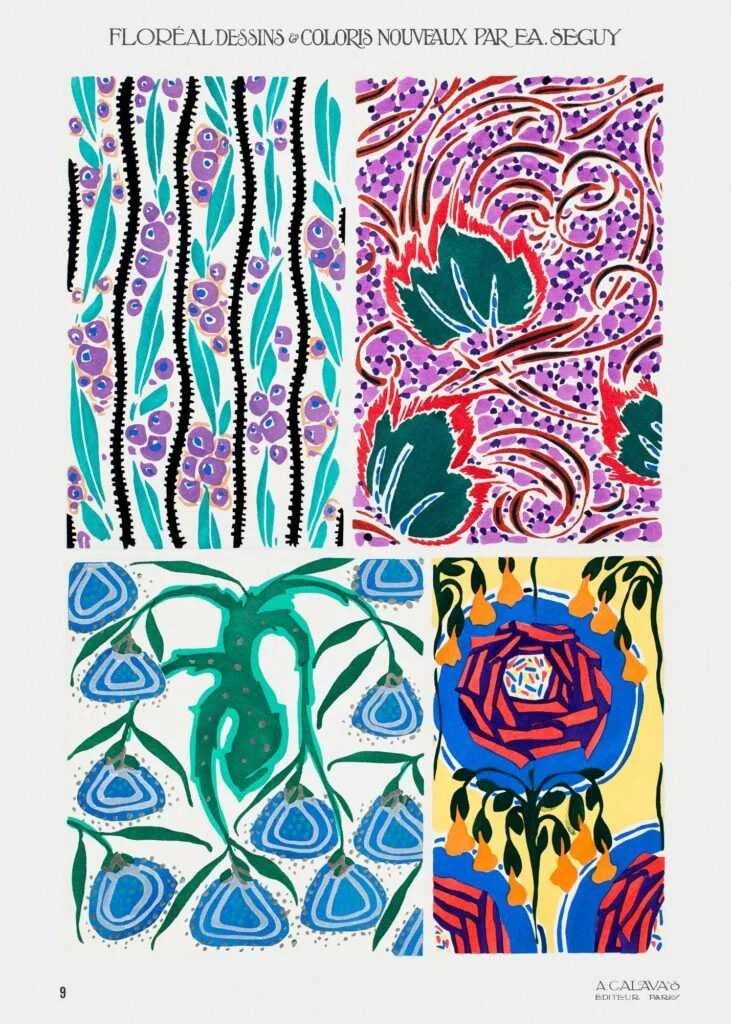
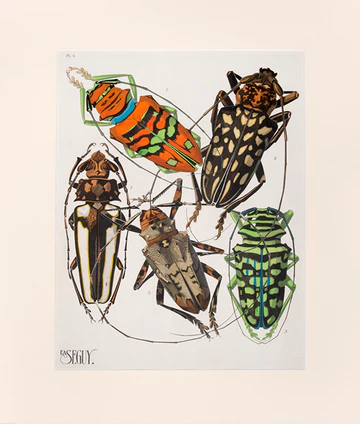
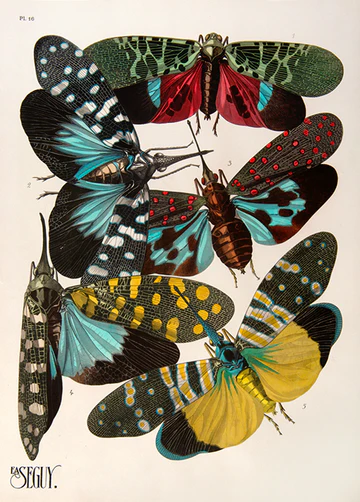
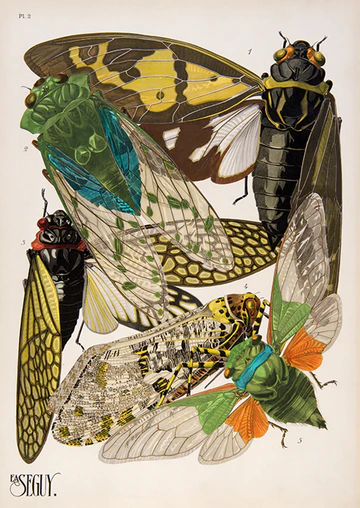
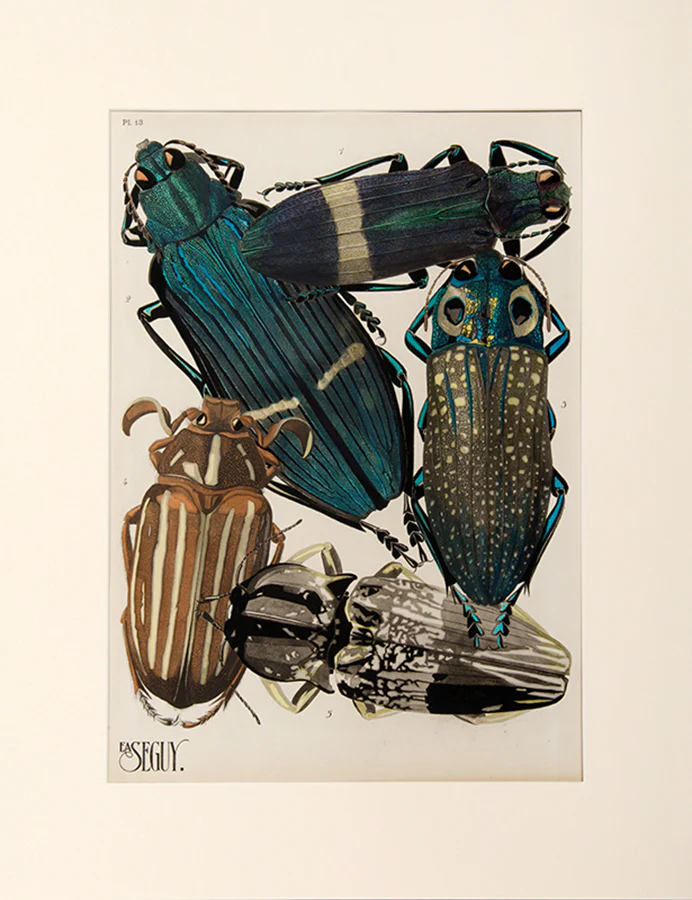
Emile-Allain Séguy, professionally known as E.A. Séguy, was a French designer during the Art Deco and Art Nouveau movements of the 1920s. He primarily created patterns and textiles inspired by the natural world. Because of his particular fascination with insects, he has been confused with Eugene Séguy, a French entomologist active during the same time period. However, it is Emile-Allain who created the popular Papillons and Insectes books, filled with illustrations of vividly colored butterflies and insects made using the pochoir—French for “stencil”—technique.

Simply stated, pochoir is the French word for stencil.  In the 1920’s and 30’s Art Deco era, the color  application process of the stencil was rejuvenated by the French, bringing color illustration processes for books and prints to new glorious heights.  This interest in exploring the stencil process came in reaction to the proliferation of machine printing and the poor quality of color reproductions in publishing.  With pochoir printing, the hand application of layers of pigment created dazzling effects that the camera or printing press could never replicate.  Earlier stencil works, typically used for decorative surface ornament were quite primitive, with applied color areas outlined by the supporting cutout framework.  New experimental techniques in pochoir refined the process using multiple layers of color applications for a single print.   Pochoir printing was also easily combined with images made by lithography, woodcut, wood engraving, line drawings, or etchings, thus turning a decorative technique into fine art.  Jean Saudé was one of the foremost artists to explore and promote pochoir techniques and his treatise, Traité d’Enluminure d’Art au Pochoir, published in 1925 did much to further this art form.

the Pochoir Method

With pochoir, a hand painted fashion plate, decorative or interior design, or illustration to be duplicated was carefully analyzed to determine each color layer.  Often, but not always, an outline of the image was printed as a black and white lithograph and served as a base layer, especially in the design and fashion portfolios.  In many interior illustrations, a line drawing or even a half-tone photograph was lithographed as the base layer. Each succeeding layer of color was then printed over the black and white litho layer.  Depending on how intense the lithograph layer was, it would either be incorporated fully in the final image or be invisible and serve only as a guide to the image layout.

Separate stencils were cut, sometimes in thin sheets of copper, zinc, or aluminum, for every color component.  Later stencil materials were made of celluloid or plastic and contemporary stencil materials are made of coated paper or acetate.  Each successive color layer, using watercolor or gouache, was applied to the stencil with a brush called a pompon.  Pigment on the brush could not be thick or runny, as paint could easily slide underneath the stencil and change the shape of the image. Therefore, it was necessary to really blot the pigment on the brush before applying it to the stencil and in the case of watercolor images, this was even more critical. Skilled printers could achieve incredibly subtle details using gradation and stippling, spattering or even simply drawing additional details with a small brush on the final layer.  Sometimes as many as 100 stencils were used to recreate a single image, and the resulting print was surprisingly rich and detailed.

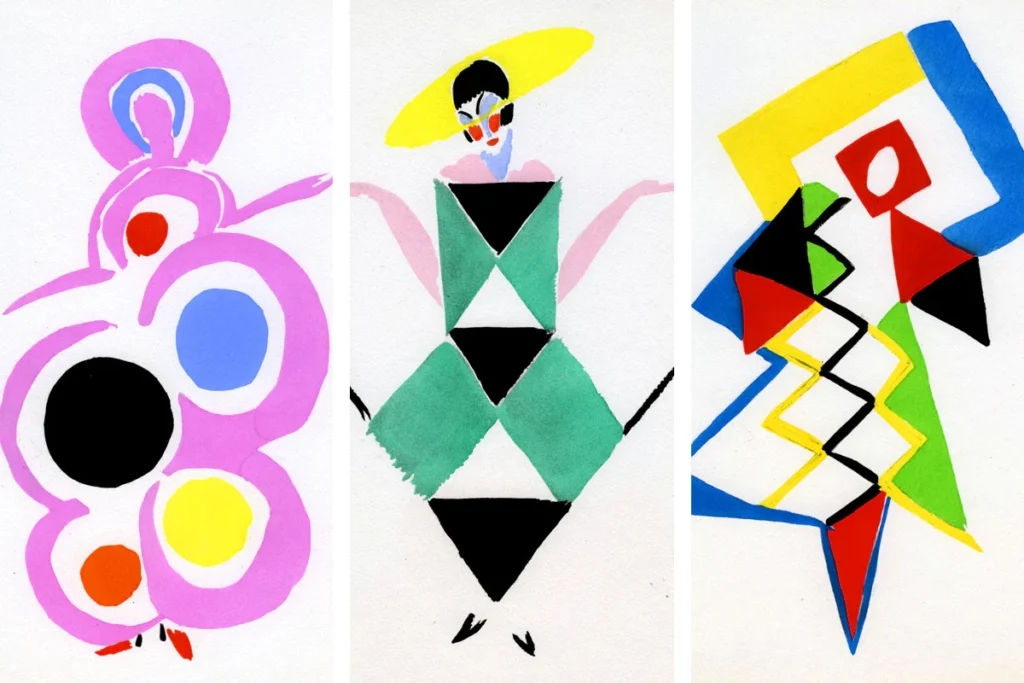
Entirely non mechanised, pochoir was both an intensive and highly luxurious way of producing images, one which suited perfectly the elegance and extravagance of the Art Nouveau and Deco fashion journals that were the source of its enormous popularity from the early 1900s to the glistening Jazz age. Artist-cum-designers, such as George Barbier and Sonia Delaunay, published their costume and textile designs in rich, luminescent pochoir folios, lending a lavish air of the haute couture to each new illustration, while everyone from bespoke furniture and wallpaper producers to high-end architects produced catalogues of exorbitantly expensive products for their endlessly wealthy clients.

Publications

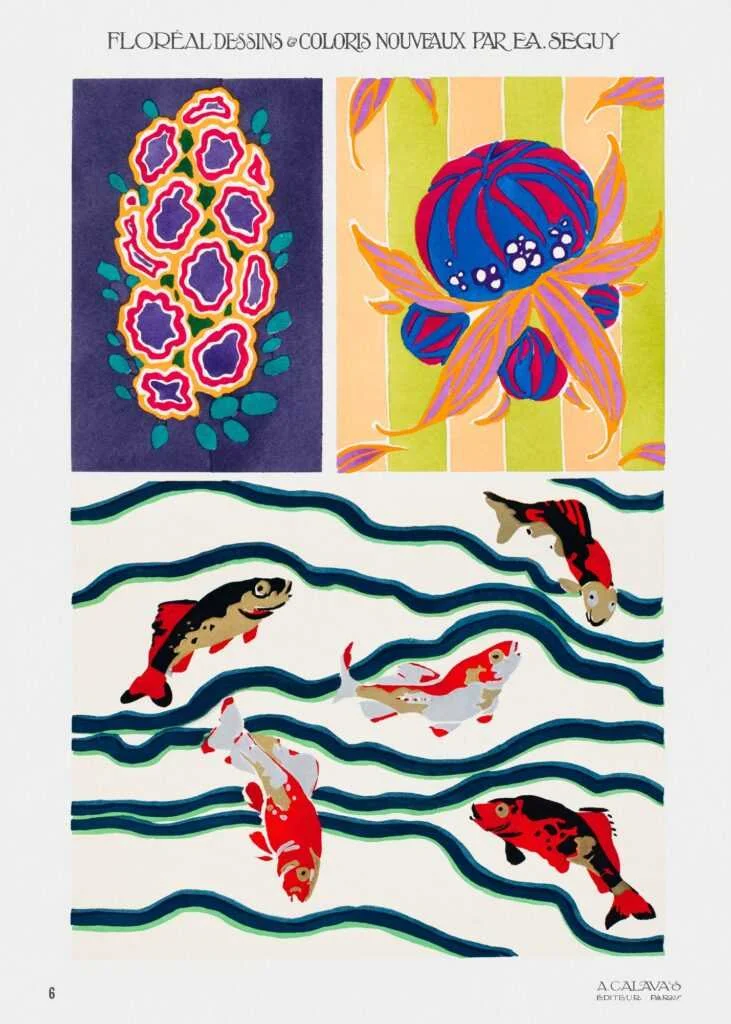
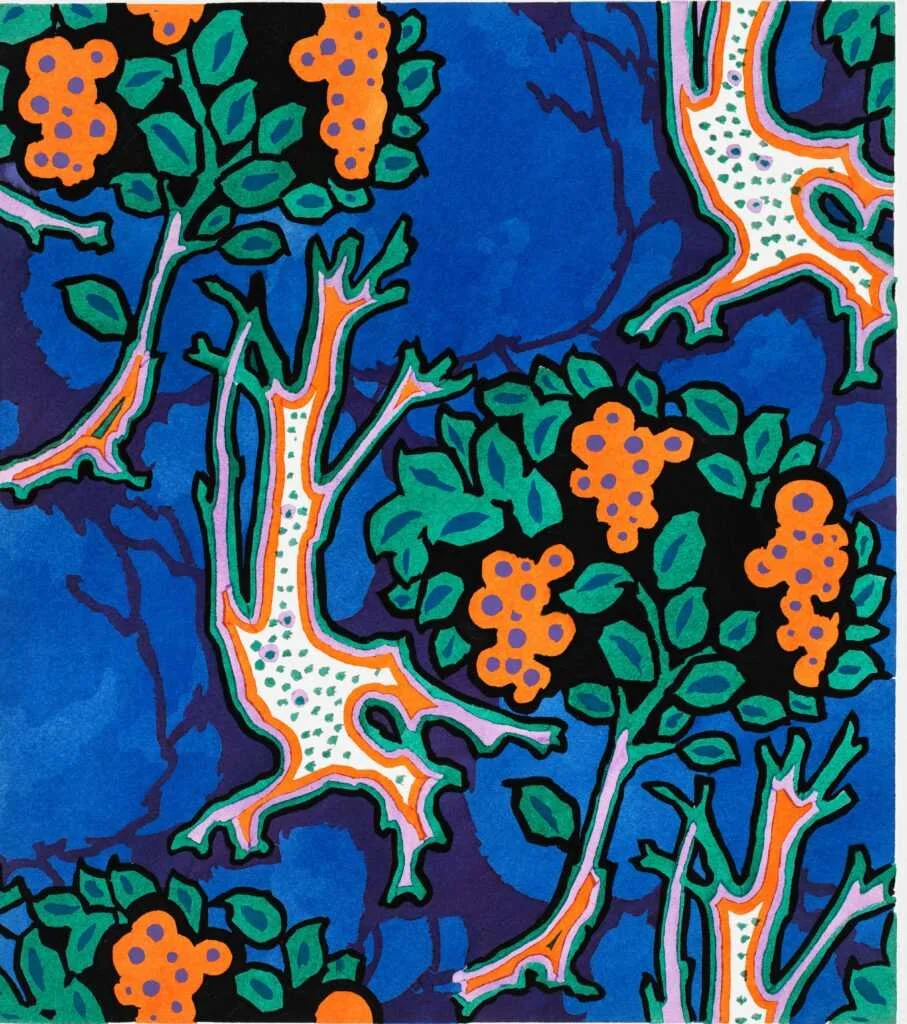
Seguy produced eleven albums of nature themed illustrations and patterns, drawing inspiration from papillons and other insects, flowers, foliage, crystals and animals. Seguy was one of few artists that successfully combined both Art Deco and Art Nouveau styles in his work. His brightly colored geometric patterns were intended to be used as inspiration for such decorative items as textiles and wallpaper.

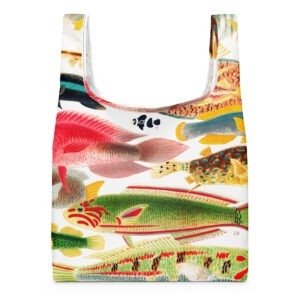
Dover Publications reproduced Seguy’s albums in a book entitled Seguy’s Decorative Butterflies and Insects in Full Color. The publisher had this to say about Seguy: “His aim was to make available dozens of examples of extremely colorful exotic animals that had been unjustly neglected by occidental decorative artists because of their rarity in life and in illustration. It is interesting to note that Seguy, while confident that butterflies would be readily accepted, made the special plea for the other insects that were constructed like wonderful machines and were thus entitled to the same consideration as an airplane fuselage, an ocean liner or locomotive; nature was a successful industrial designer!”

Seguy’s albums were created using a unique printing process called pochoir, which was popular in France at the turn of the 20th century. Pochoir is a process that utilizes the method of applying pigment to paper through the use of stencils. First, the artist created an image in watercolor or gouache. The design was then analyzed to determine the necessary colors and number of stencils needed. The stencils could be cut from any number of materials, including copper, zinc, oiled cardboard, or celluloid. The paint was applied through the stencils by brushes or pompons. The prints were produced entirely by hand assembly line style, and each one was individually examined and approved upon completion.

While simple in concept, pochoir could become quite complex in practice, with some images requiring the use of 100 or so stencils to produce a single print. The technique was regularly used to produce plates in French fashion journals as well as being used to illustrate industrial design, textile, interiors, and architecture folios.

Sources: Miami University

the Flora Glassware COLLECTION: Konan Tanigami (1879-1928)

the Flora Glassware COLLECTION: Konan Tanigami (1879-1928)

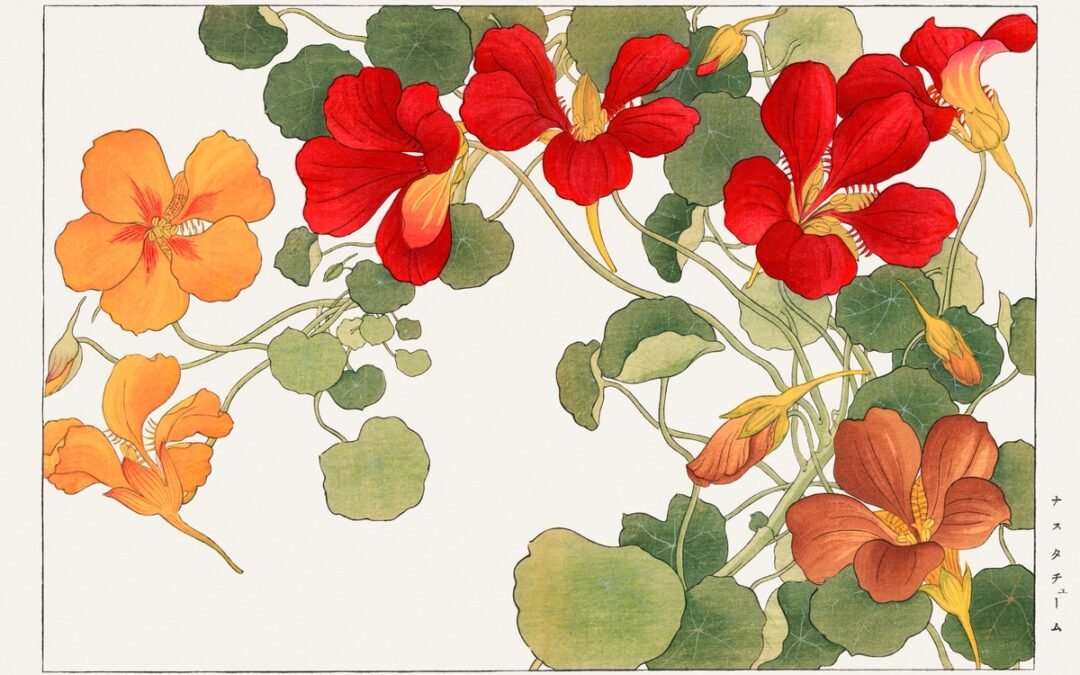
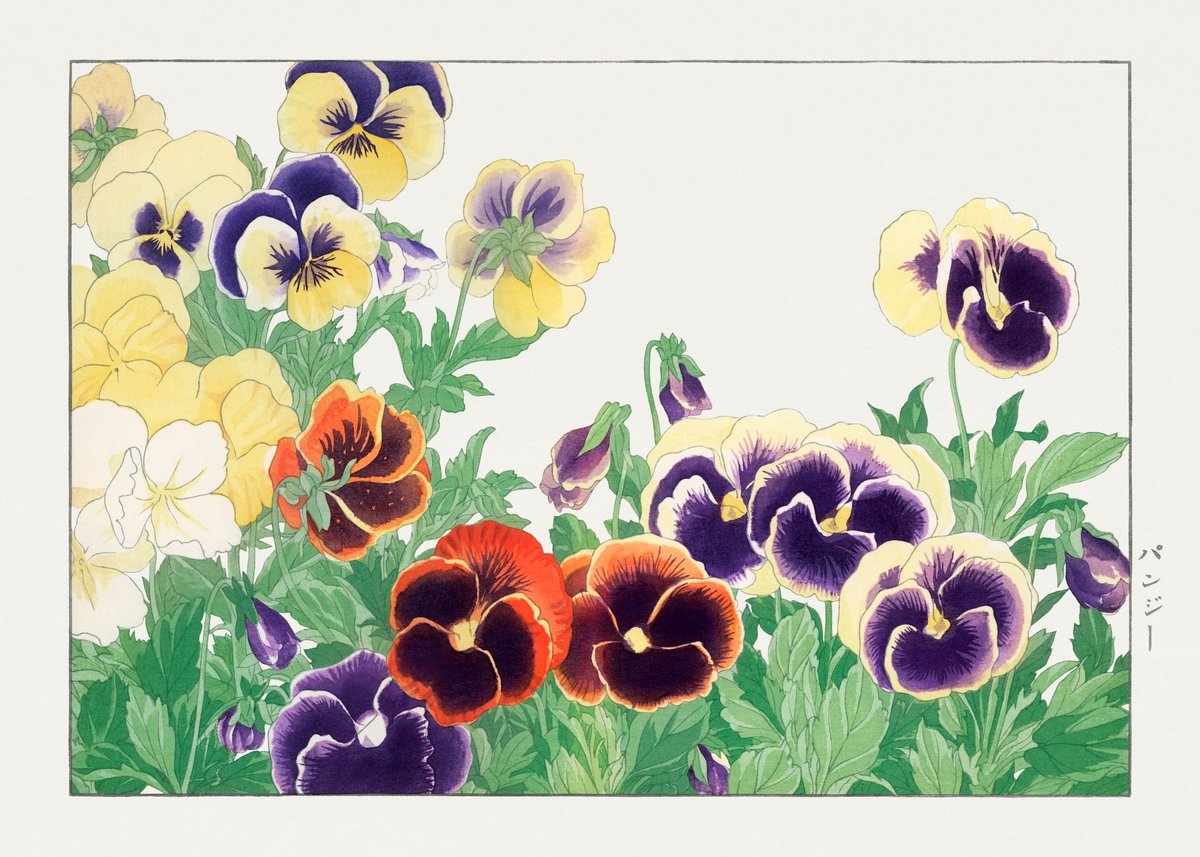
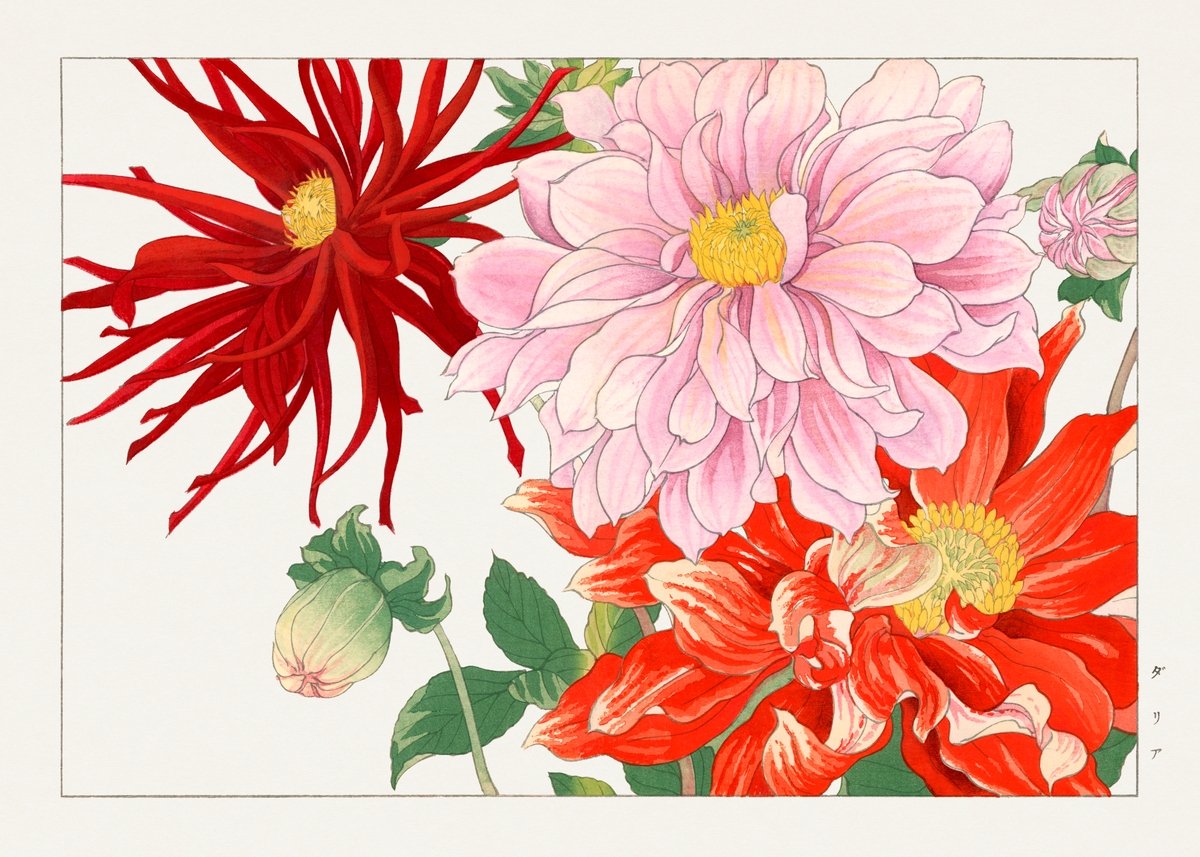
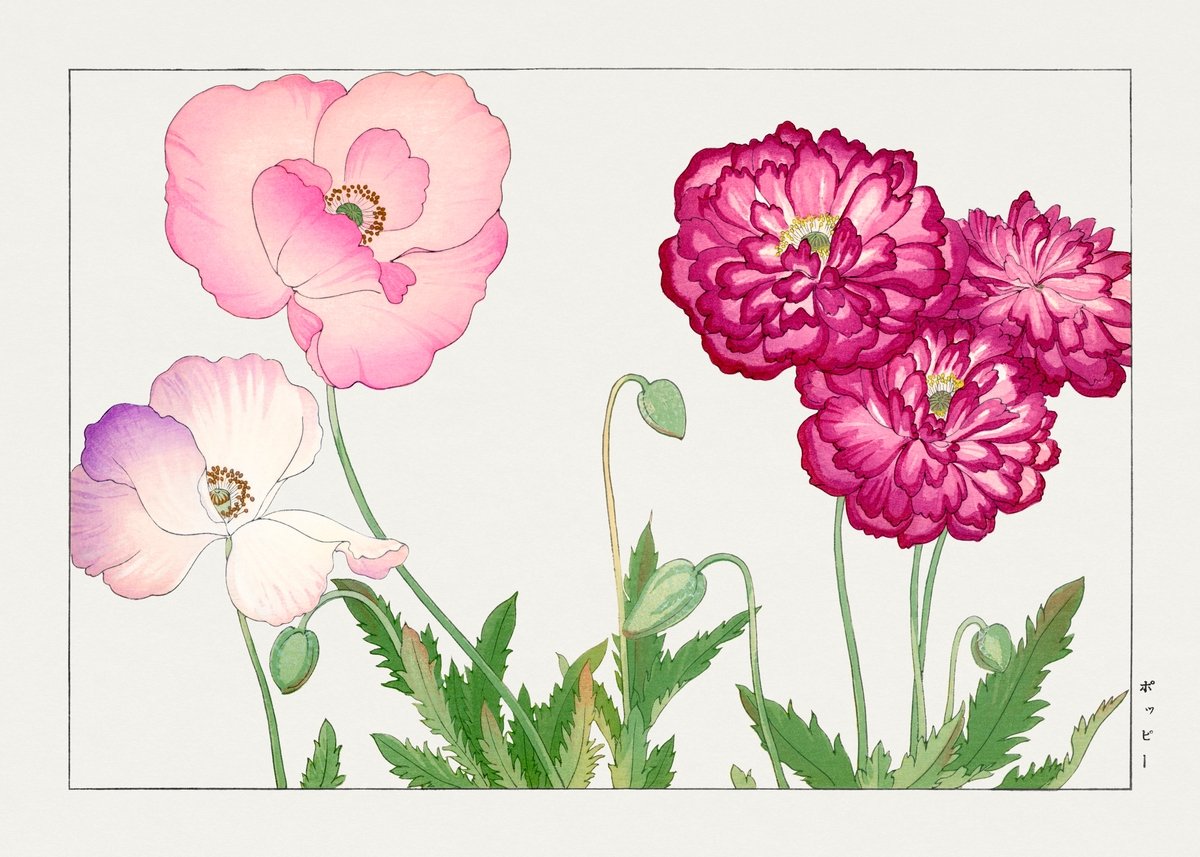
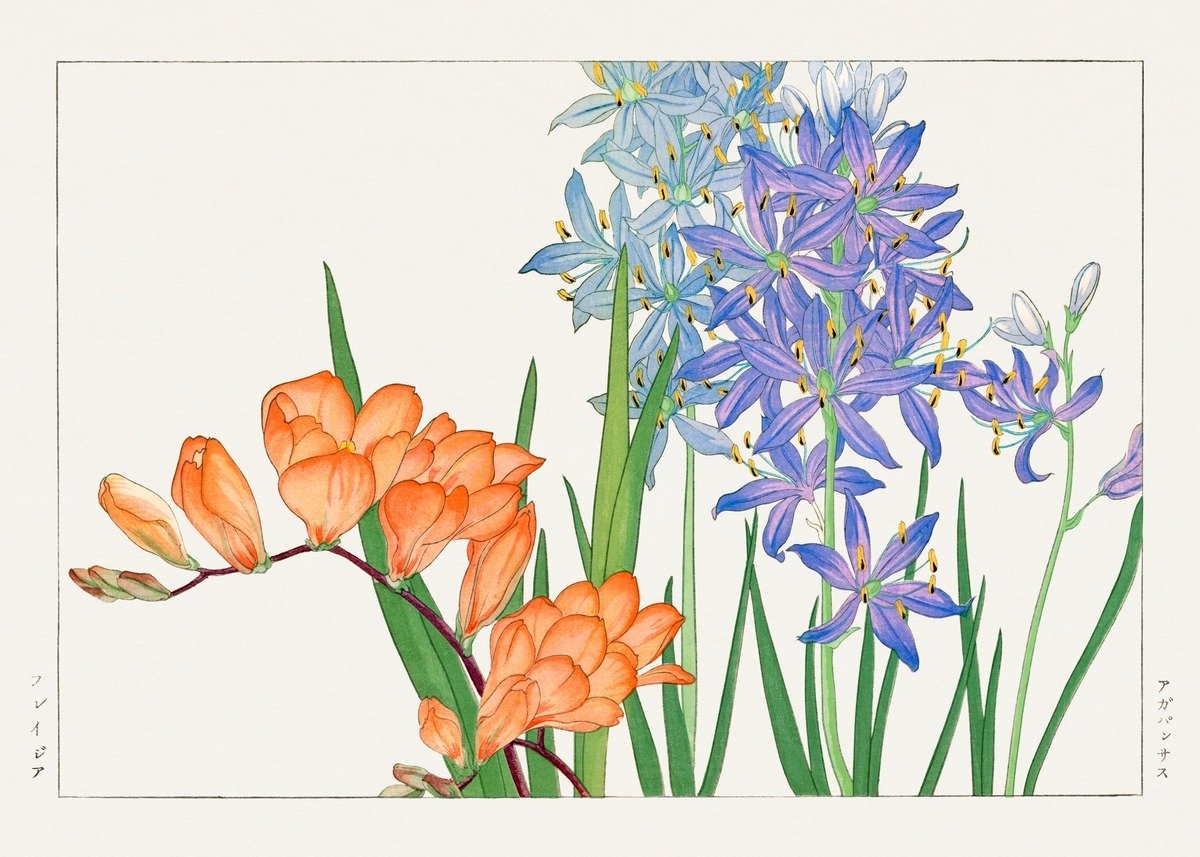
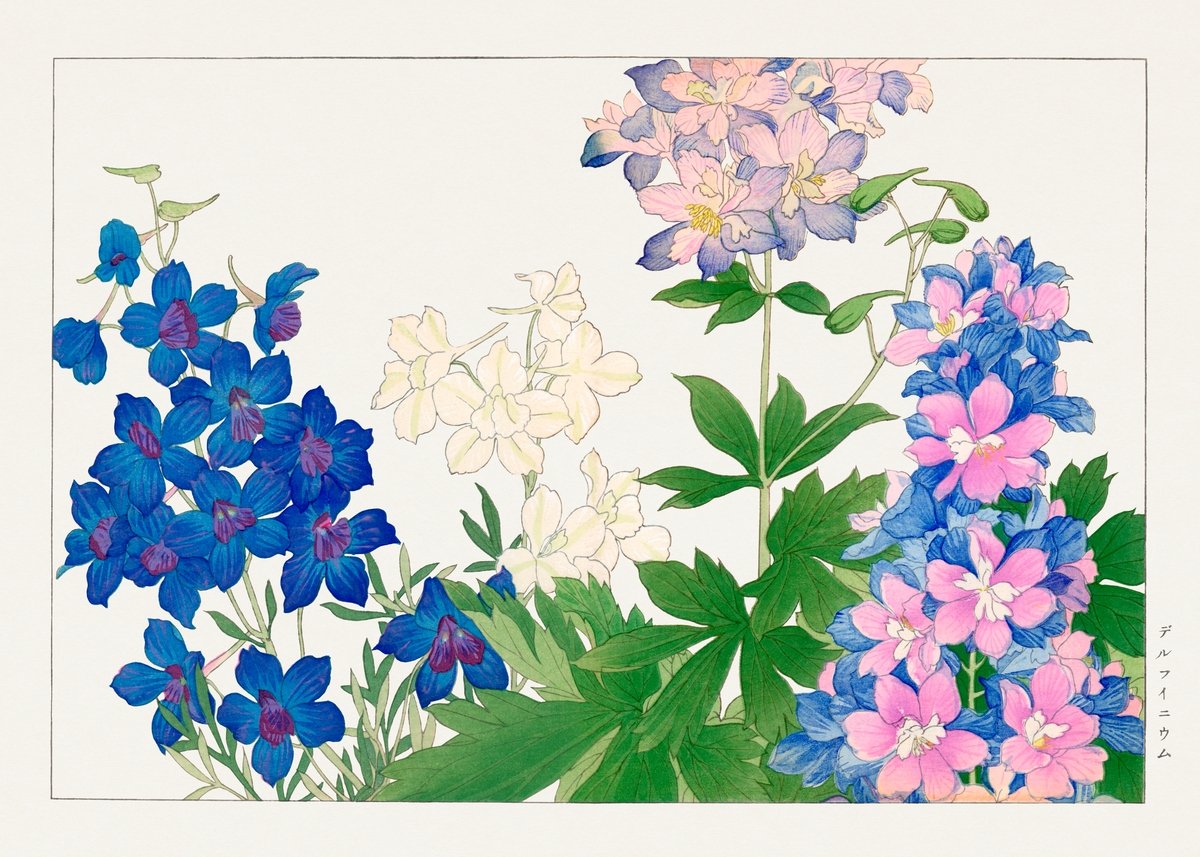
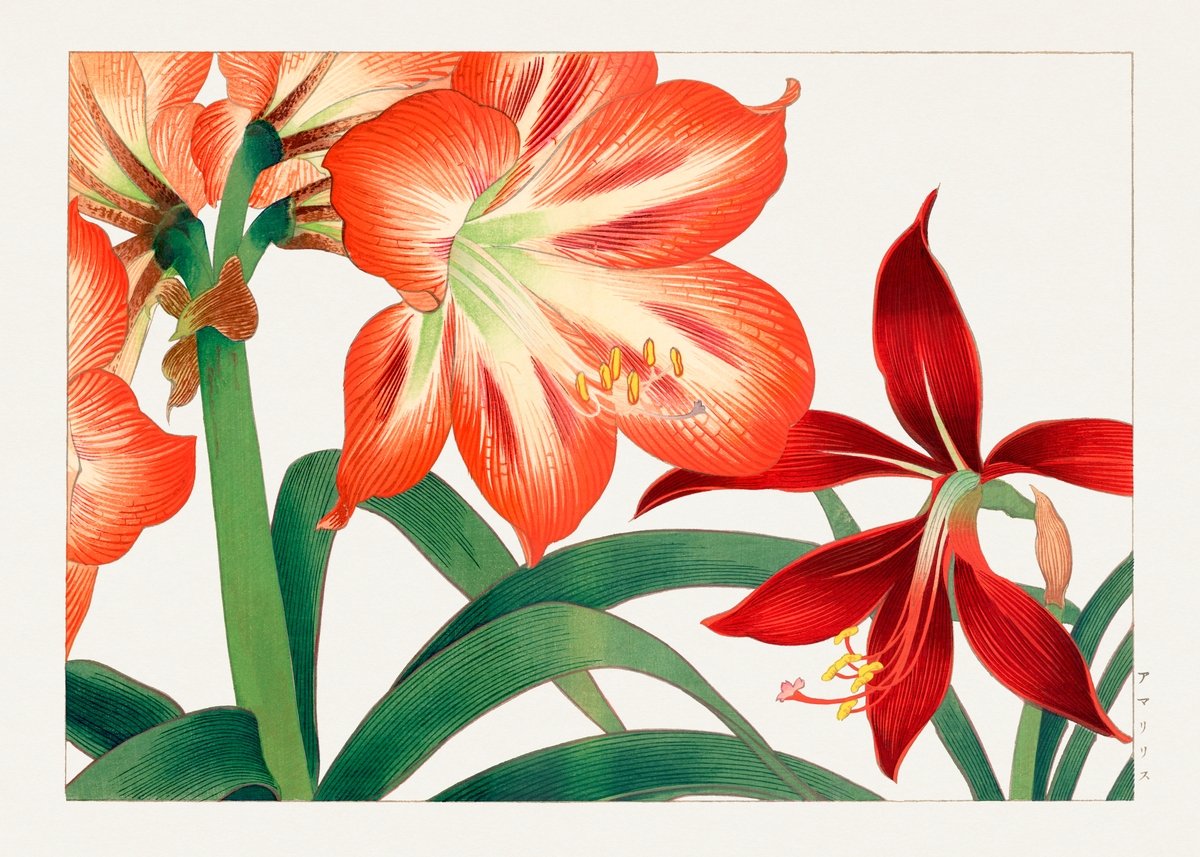
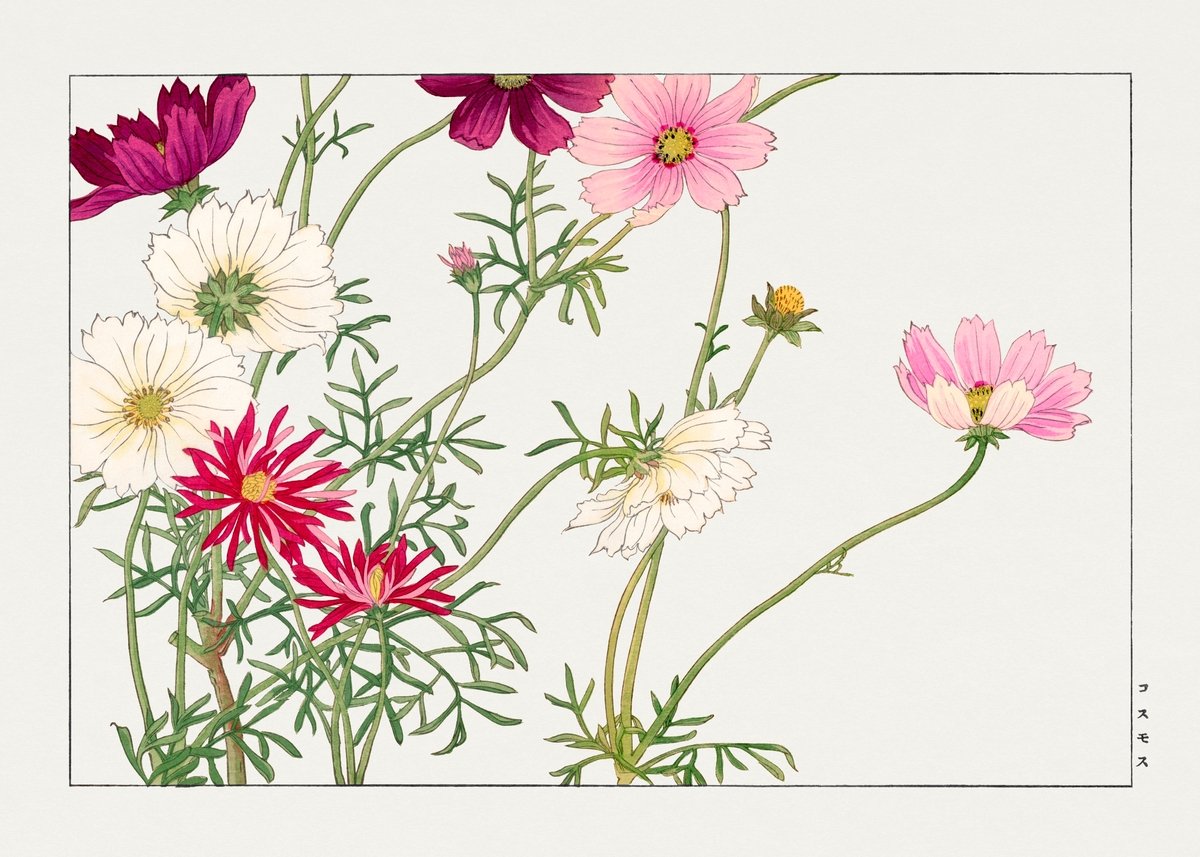
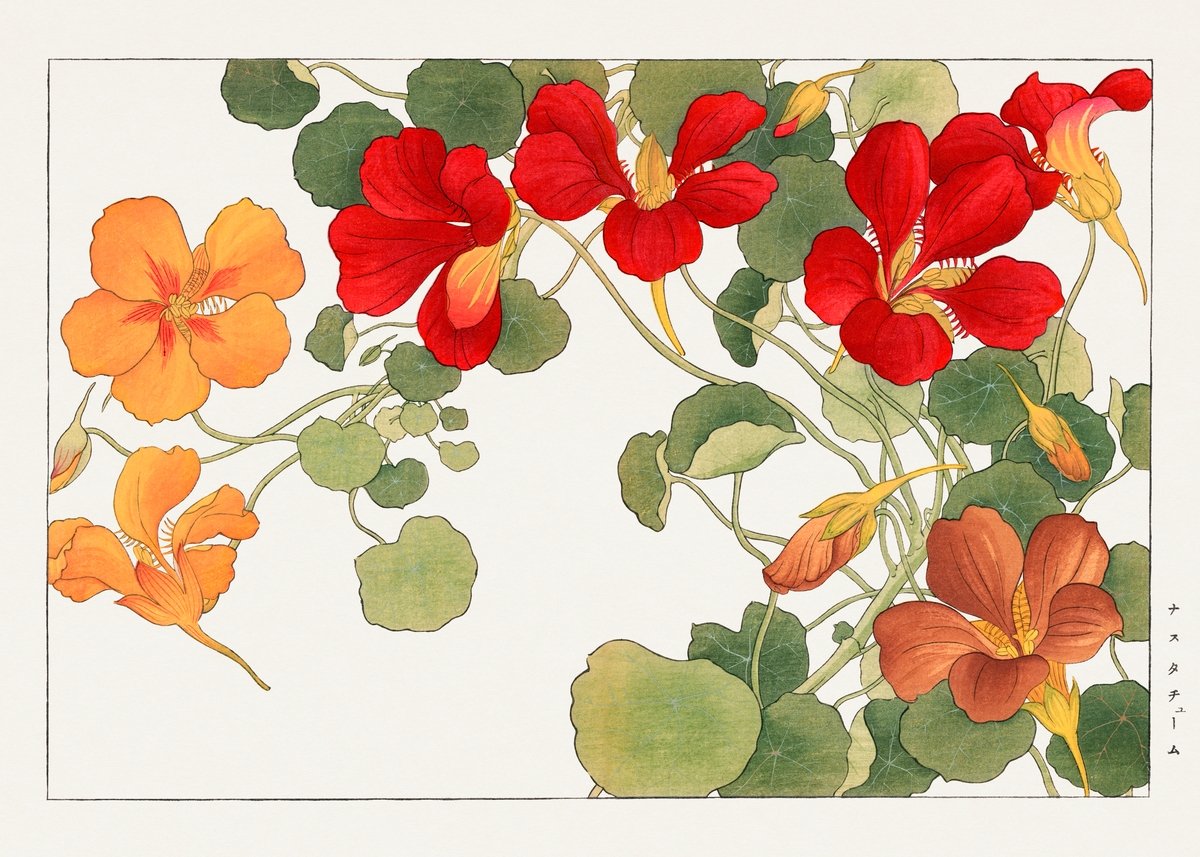
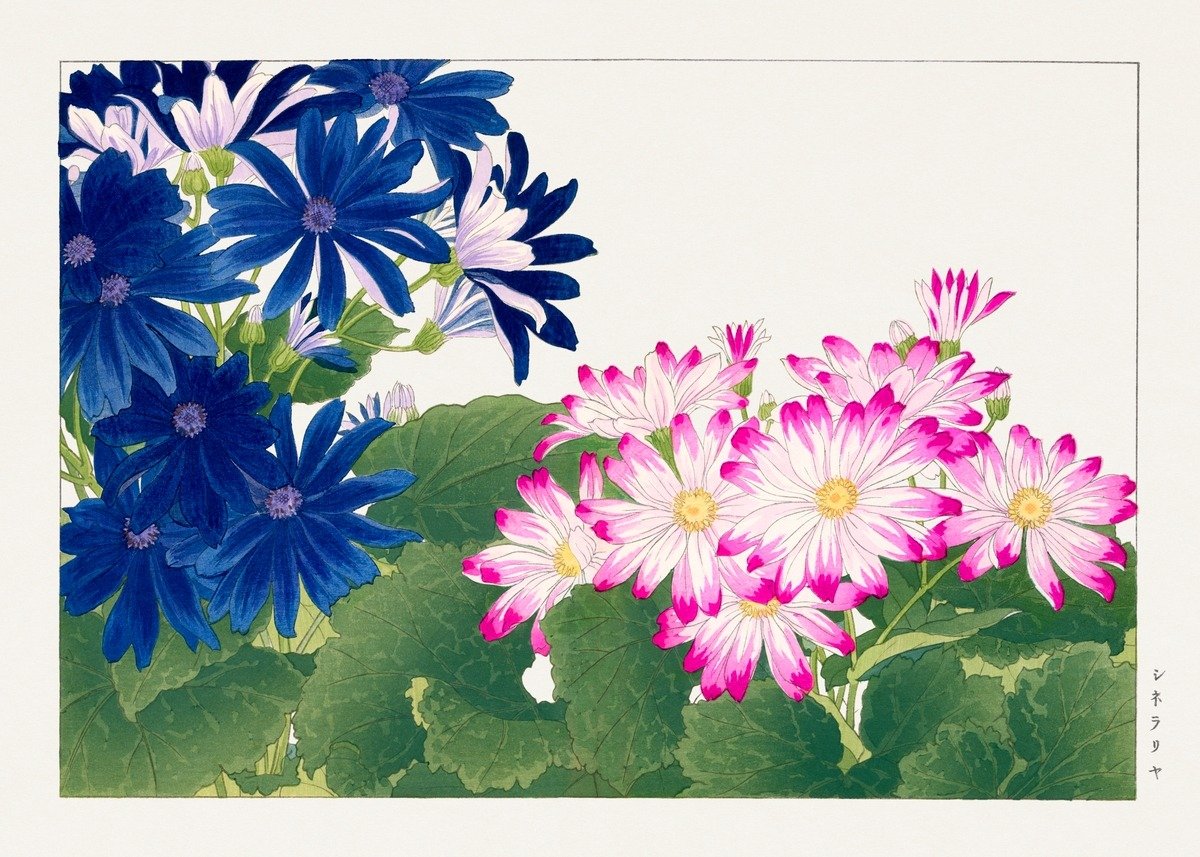
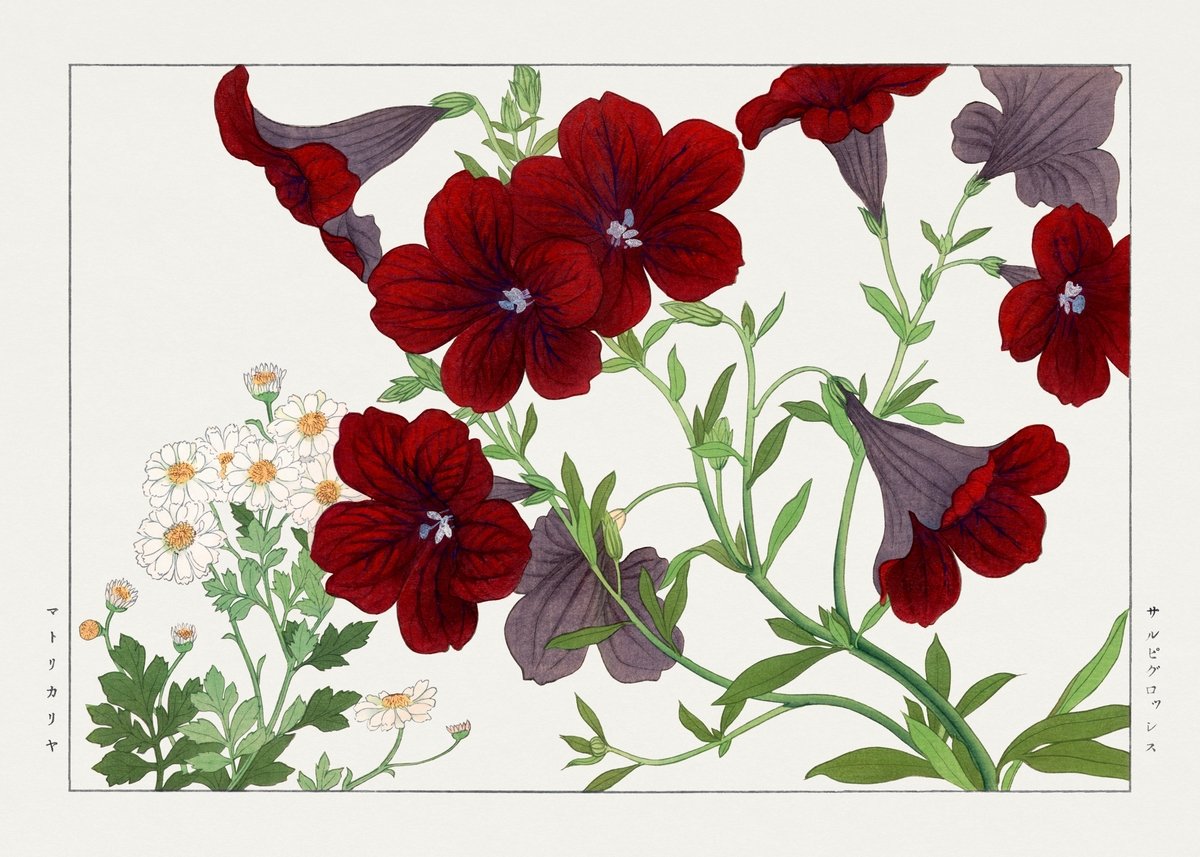
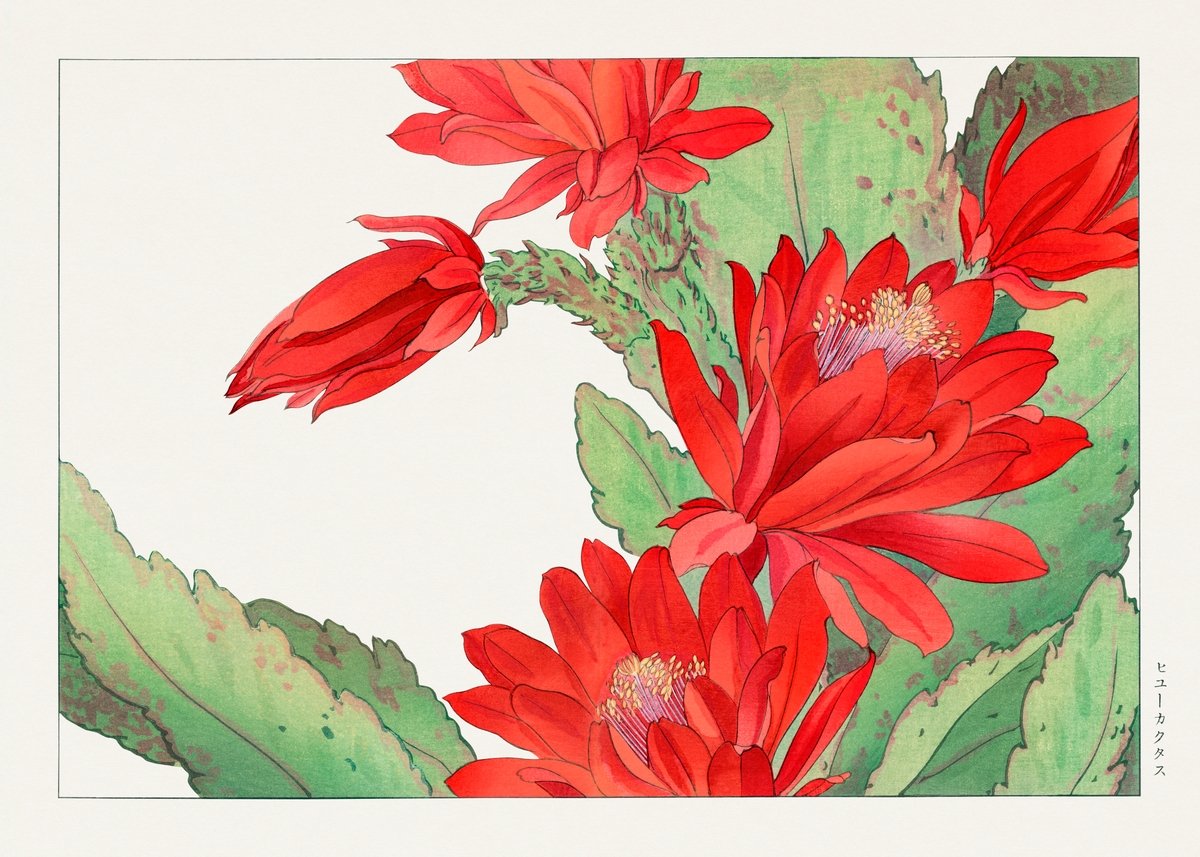
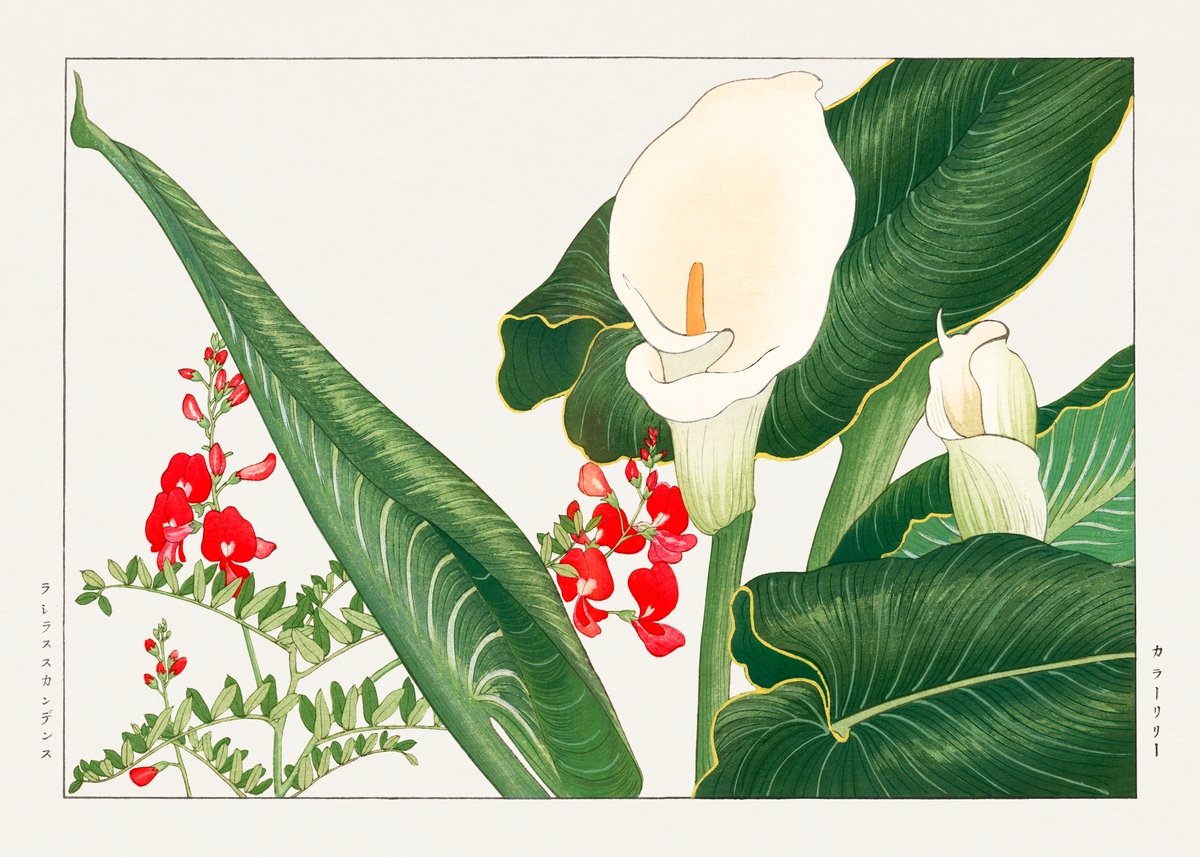
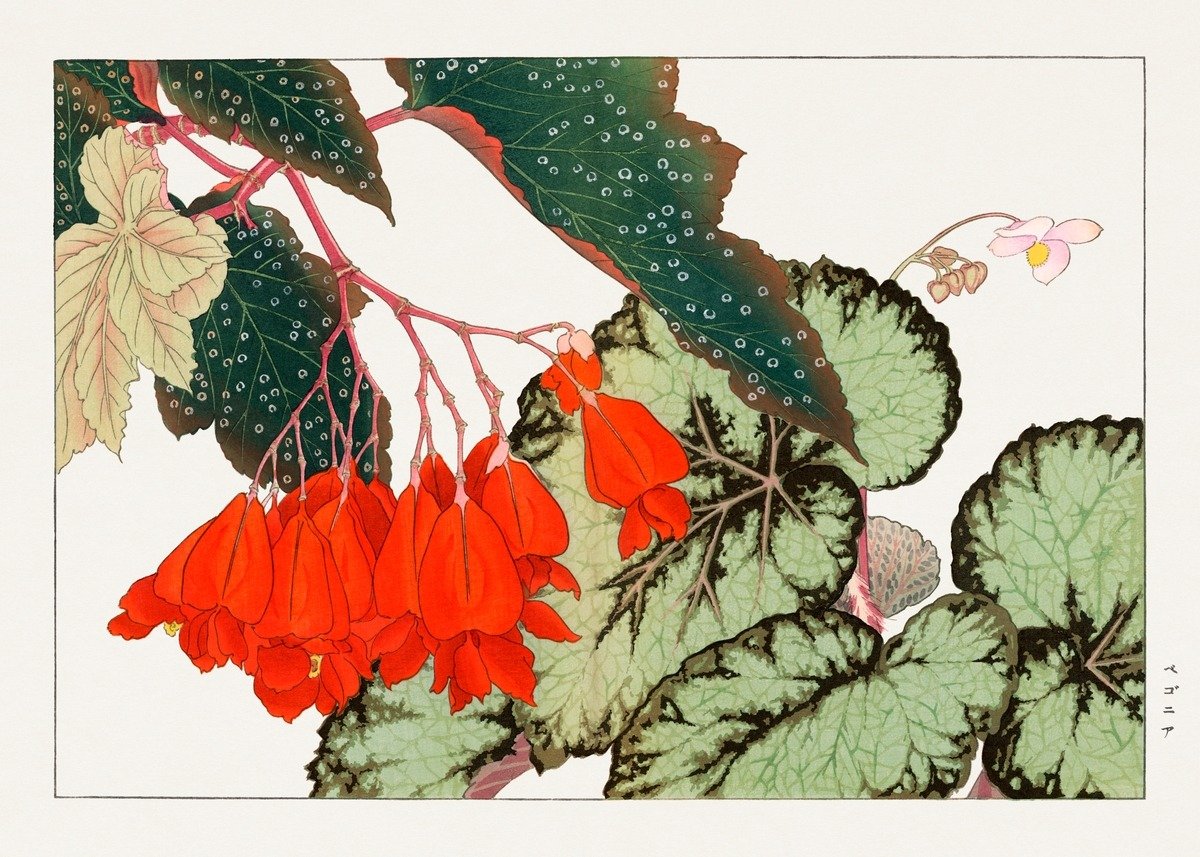
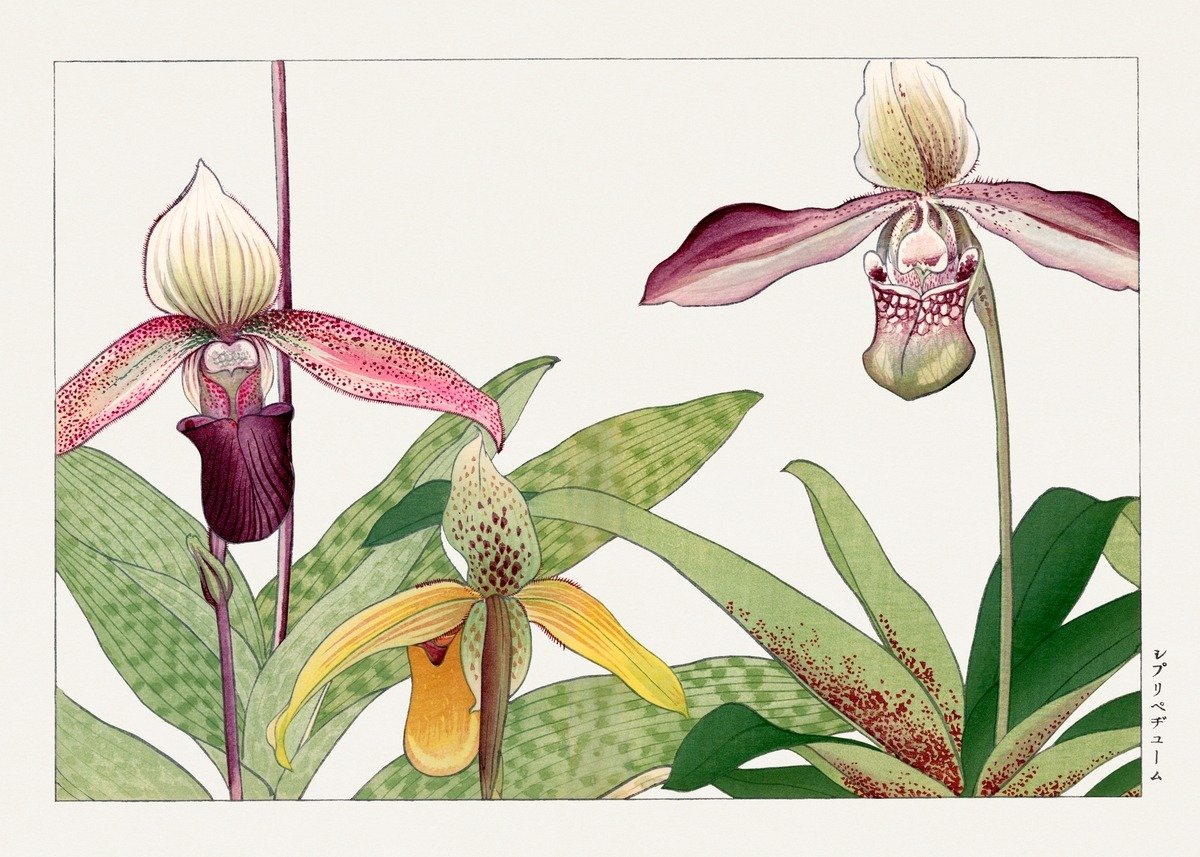
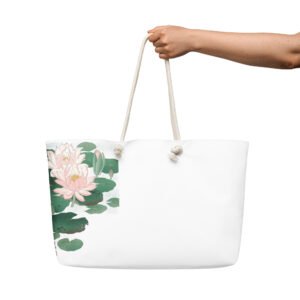
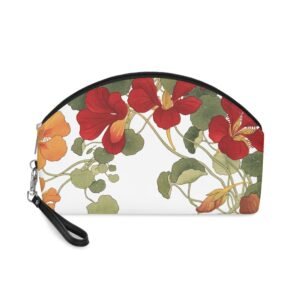
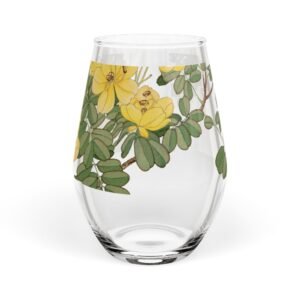
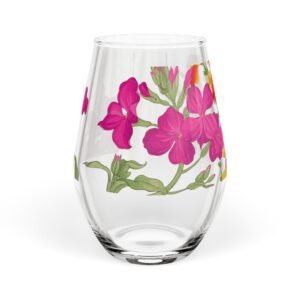
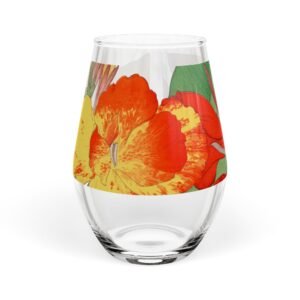
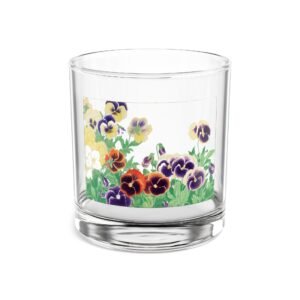
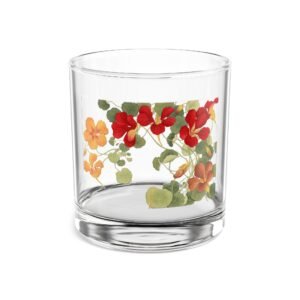
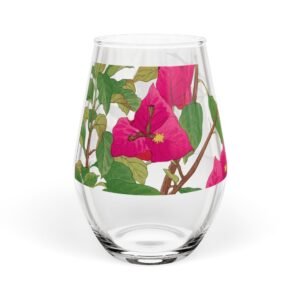
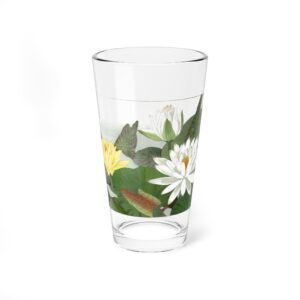
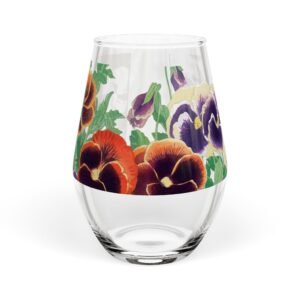
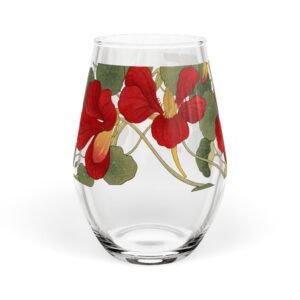
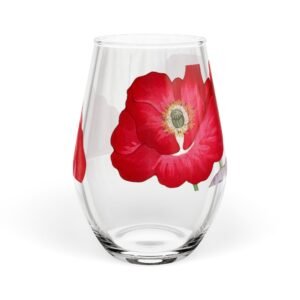
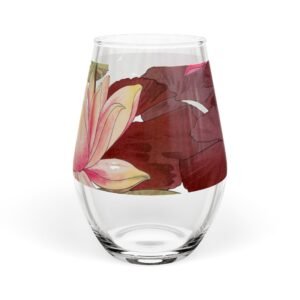
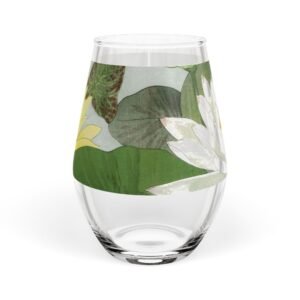
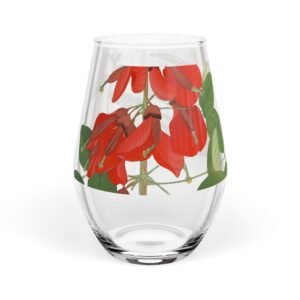
These items display stunning floral imagery, following the tradition of Japanese kacho-e (depictions of flowers and birds). 

Konan Tanigami, a prominent Nihon-ga artist from 1879 to 1928, is celebrated for his exceptional contributions to the Kacho-e genre, which focuses on the intricate depiction of birds and flowers. Notably, he distinguished himself as the first Japanese artist to incorporate Western flowers into his work, bridging the gap between traditional Japanese aesthetics and Western botanical subjects. His innovative approach not only enriched the Kacho-e tradition but also opened new avenues for artistic expression in Japan.

Early Life and Education

Tanigami Konan, born in 1879 in the historical city of Nagoya, Japan, grew up surrounded by the rich cultural tapestry that defined the Meiji era. He was drawn to art from a young age, enrolling in the Kyoto School of Arts where he honed his skills in traditional Nihon-ga techniques. Under the guidance of renowned mentors, Konan developed a keen eye for detail, allowing him to bring a sense of vibrancy to his subjects.

Career Highlights and Milestones

Konan’s artistic journey flourished as he became recognized for his innovative approach to Kacho-e, a genre focused on birds and flowers. His career spanned several decades, during which he not only exhibited widely but also became the first Japanese artist to dive into the world of Western flowers. This daring endeavor, along with his participation in international exhibitions, let the world know that Japanese art was not a solitary island but a bridge connecting diverse natural beauty across oceans.

Definition and Characteristics of Kacho-e

Kacho-e is basically the beautiful lovechild of birds and flowers, taking center stage in the Nihon-ga (Japanese painting) scene. Characterized by delicate brushwork and a focus on natural beauty, Kacho-e pieces often highlight seasonal blooms and graceful wildlife. Imagine a serene setting, where a sparrow is perched on a cherry blossom branch—poetry in visual form. The detail is so fine, it’s like the artist had a mini microscope while painting!

Historical Context of Kacho-e in Japanese Art

Emerging during the Edo period, Kacho-e became a stylish staple for art lovers, reflecting the shifting interests of Japanese society. Capitalizing on the West’s fascination with Japanese culture, Kacho-e blossomed in popularity, often embodying a meditative relationship between nature and humanity. So, while Konan painted Western flowers, he was also part of a long tradition that appreciated the beauty of nature—albeit with a modern twist.

Integration of Western Flora into Traditional Techniques

Konan’s reputation as a daring innovator is well-earned, especially when it comes to his approach to Western flowers. He didn’t just dip his toes into unfamiliar waters; he cannonballed right in! Blending the intricate techniques of Nihon-ga with vibrant blooms like roses and daisies, he created an exciting fusion that made flower arrangements feel fresh and new. His work often had viewers wondering, “Is that a bouquet from my garden or the pages of a Western floral catalog?”

Comparison with Contemporary Artists

While many of his contemporaries timidly stuck to traditional Japanese flora, Konan boldly ventured into the uncharted territory of Western botanicals. Artists like Takehisa Yumeji were also experimenting, but none quite captured the same flair for floral diversity as Konan. His ability to intermingle Western aesthetics with Eastern sensibility set him apart, making him a trendsetter in a field that was still finding its footing in a rapidly changing artistic landscape.

Nature and Its Representation in Konan’s Work

If there’s one thing that defines Konan’s art, it’s his deep connection with nature. Every brushstroke seemed to whisper an ode to the delicate balance of flora and fauna. With a penchant for detail, his pieces captured not just the visual appeal but also the essence of the natural world. Whether it was the play of light on petals or the rustle of leaves, Konan’s paintings felt alive, as if nature was right there in the room with you.

Western Art Movements and Their Impact

The early 20th century was a melting pot of artistic movements, and Konan wasn’t immune to their influence. The Impressionists, with their focus on light and color, left a mark on him, perhaps inspiring his vivid interpretations of Western flowers. Additionally, the Arts and Crafts movement’s emphasis on nature and craftsmanship resonated with his artistic philosophy. This cross-pollination of ideas allowed Konan to create artwork that was a harmonious blend of Eastern and Western aesthetics, proving that art truly knows no boundaries.

Notable Paintings and Their Significance

Tanigami Konan’s portfolio features an impressive array of paintings that boast a harmonious blend of traditional Japanese aesthetics and Western botanical influences. His work, such as “Peonies and Birds,” exemplifies this unique fusion, showcasing not just the beauty of the depicted flowers but also a meticulous attention to detail that invites viewers to appreciate the harmony of nature. Konan’s ability to illustrate Western blooms with the grace typical of Kacho-e art not only expanded the thematic repertoire of Nihon-ga but also sparked conversations about Japan’s engagement with globalization in the early 20th century.

Innovations in Technique and Style

Konan wasn’t just a pretty face in the art world; he was a trailblazer. His innovative use of color and texture reflected his keen observation of natural forms, elevating the Kacho-e genre. Embracing techniques such as layering and the incorporation of new pigments from Western sources, he created works that were more vivid and lifelike than ever before. This innovation didn’t just set a new standard; it redefined how Japanese artists approached floral and avian subjects, ushering in a fresh era of aesthetic exploration.

Influence on Future Generations of Artists

The ripples of Konan’s artistic contributions can be felt even today. Many contemporary artists cite him as an inspiration for their own explorations of nature and the interplay between Eastern and Western art techniques. His fearless approach encourages new generations to experiment with their styles, bridging traditional forms with modern expressions, and invites a re-examination of cultural identity through art.

Preservation and Recognition of His Work Today

Today, Konan’s works are more than just beautiful images; they are treasured artifacts representing the evolution of Japanese art. Museums and galleries around the globe recognize his contributions, often featuring his works in exhibitions that highlight the dialogue between East and West. Art enthusiasts and scholars alike are increasingly dedicated to preserving his legacy, ensuring that the vibrant colors and intricate details of Konan’s flora will continue to flourish for future generations.

Major Exhibitions During His Lifetime

During his lifetime, Tanigami Konan’s works were showcased in several high-profile exhibitions, drawing significant attention and acclaim. His participation in the 1910 Japan-British Exhibition introduced Western audiences to his unique vision and helped establish his reputation as a leading Kacho-e artist. These exhibitions paved the way for broader appreciation of Japanese art, allowing Konan to stand confidently in the spotlight of an evolving art scene.

Posthumous Recognition and Awards

Even after his passing in 1928, Konan’s art has continued to gain recognition. Various art institutions have posthumously honored his work through exhibitions and special collections that celebrate his contributions to the Nihon-ga movement. Additionally, awards recognizing his influence on the Kacho-e genre further cement his status as a pivotal figure in the history of Japanese art.