
Cheap Fashion: Expensive Consequences

Cheap Fashion: Expensive Consequences

Your daily choices create immediate, measurable ripples across the globe. Nowhere is this impact more visible—or more destructive—than in the multi-trillion-dollar fashion industry. Behind the glamour of affordable style lies an environmental, human, and cultural crisis second only to oil production.
Looking good shouldn’t break the planet.
Consider the baseline data of our current clothing culture:

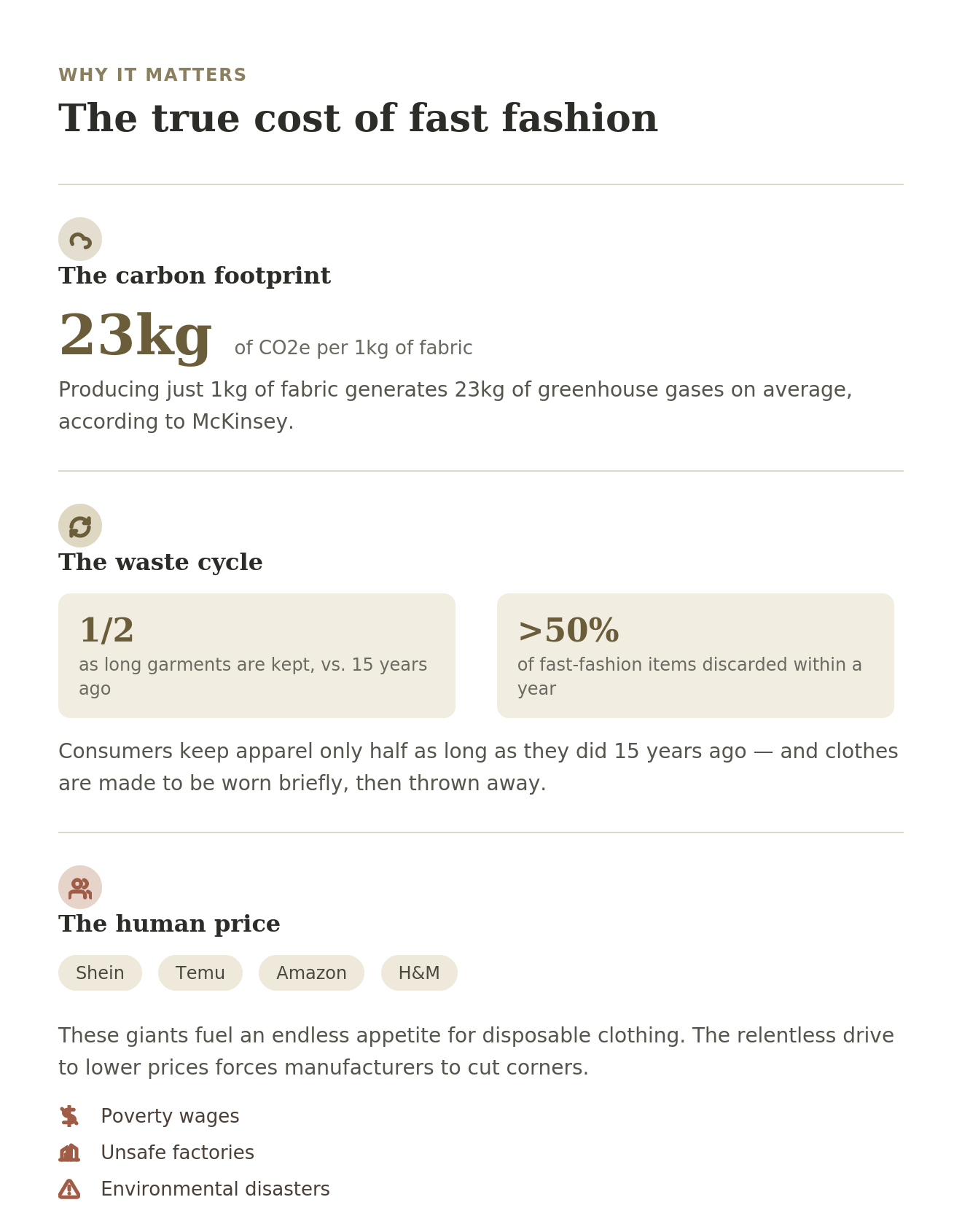
The Carbon Footprint: Producing just 1kg of fabric generates 23kg of greenhouse gases on average, according to McKinsey.

The Waste Cycle: Consumers keep apparel only half as long as they did 15 years ago. More than half of all fast-fashion items are discarded within a year of production.

The Human Price: Giants like Shein, Temu, Amazon, and H&M fuel an endless appetite for disposable clothing. This relentless drive to lower prices forces manufacturers to cut corners, resulting in poverty wages, unsafe factories, and environmental disasters.

Our Blueprint for Change: What cgk.ink is Doing

We refuse to participate in careless production and mindless consumption.
Here is how we are actively lowering our footprint and supporting global equity:

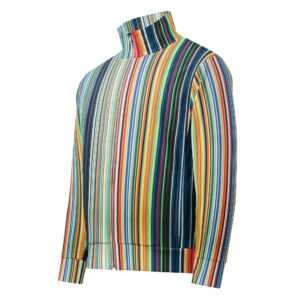
Sourcing Responsibly: We selectively source environmentally beneficial materials. You can view our sustainable designs by choosing the Eco-Logical Collection from our Special Collections menu.

Carbon-Neutral Shipping: We provide a transparent carbon-offset option at checkout to neutralize the emissions generated by moving your order from our doors to yours.

Stripe Climate Partnership: As an early member of the Stripe Climate initiative alongside 200,000 global businesses, we contribute 1% of every payment fee directly to advanced carbon removal technologies.

Human-Centric Mindfulness: Sustainability includes people. We partner exclusively with suppliers who guarantee fair, equitable compensation and strictly adhere to international labor laws.
Care to Join Us?
True style outlasts temporary trends. Choose durability over disposability. Explore the Eco-Logical Collection today and vote for a cleaner, fairer world with your wallet.

The Toxic Cultural Shift: Transforming How We Live

Fast fashion doesn’t just pollute our air and rivers; it fundamentally re-engineers our psychology, habits, and global communities.

The 52-Season Cycle: Traditional spring/summer and autumn/winter models are dead. Brands now push weekly micro-seasons to hook you on constant novelty.

The Disposable Mentality: Clothing is no longer viewed as a durable investment. ​Instead, aggressive corporate marketing trains us to treat garments like chewing gum or cigarettes—to be used up once and immediately thrown away.

The Illusion of Wealth: Rock-bottom price tags deceive shoppers into feeling wealthy because they can buy in massive quantities. In reality, it masks financial regression while making corporate owners billionaires.

The Psychological Toll: Psychological studies prove that as materialistic values rise, personal happiness plummets.  The continuous cycle of “retail therapy” creates chronic anxiety and persistent dissatisfaction.


Erasing Global Heritage: The flood of cheap, secondhand clothing dumped onto developing countries completely wipes out proud, historical local tailoring and textile sectors.

Cheap Fashion: Expensive Consequences

Cheap Fashion: Expensive Consequences

LOOKING good can be bad for the planet. Massive amounts of energy, water and other resources are needed to make clothes. From the pesticides poured on cotton fields to the washes in which denim is dunked, making 1kg of fabric generates 23kg of greenhouse gases on average, reckons McKinsey, a consultancy. Because consumers keep almost every type of apparel only half as long as they did 15 years ago, these inputs go to faster than ever before. More than half of the fastest-fashion items made are chucked away within a year of production. But such rampant retail therapy costs the earth.https://www.economist.com/the-economist-explains/2017/04/11/the-environmental-costs-of-creating-clothes?utm_medium=cpc.adword.pd&utm_source=google&ppccampaignID=17210591673&ppcadID=&utm_campaign=a.22brand_pmax&utm_content=conversion.direct-response.anonymous&gclid=Cj0KCQjwxuCnBhDLARIsAB-cq1oYxEVo5hCbcyps9SNVNujmZqgcSOe79OTnwTlN9HilD6gSLaMpR6waApeeEALw_wcB&gclsrc=aw.ds

A Green Christmas

A Green Christmas

Sustainable ecommerce How we’re working to reduce ecommerce’s climate impact Carbon offsetting is a way to compensate for the carbon dioxide we spew into the atmosphere by funding projects that reduce greenhouse gases or absorb carbon from the air. At cgk.ink , this…

Climate Stripes

Climate Stripes

Admit it. It’s fun to laugh at global warming deniers. Until you realize that they’re serious. Design can be many things, but the thing at which it succeeds best is education. Professor Ed Hawkins (University of Reading) has created a graphic entitled “Climate…

The anti-Trump: The NEW DEAL & HOW THOUGHTFUL GOVERNMENT RESTORED A BATTERED NATION

The anti-Trump: The NEW DEAL & HOW THOUGHTFUL GOVERNMENT RESTORED A BATTERED NATION

71uaokxem+l. uf1000,1000 ql80

It's difficult to imagine today that, at one point, the US led the world in creating societal safety nets; made signifigant investments in the arts and enouraged diversity (and equity and inclusion).

The Great Depression, starting in 1929, was a severe global economic downturn characterized by widespread unemployment, poverty, and financial instability. The U.S. saw a quarter of its workforce unemployed, industrial production plummet, and millions lose their homes and savings. The crisis impacted not just the U.S. but also economies worldwide, marking the deepest and longest economic recession in modern history. 

In response, FDR created The New Deal, a major, long-term response to the Depression's bleak outcome. A large segment of The New Deal was the WPA.

These programs reached the entire popoulation and made sizeable, results-driven improvements to the US and world economies.

We're exploring some of the period's artwork.

It's important to remind ourselves that we are all immigrants to this nation.

Output onlinepngtools (4)
The logo of the Federal Art Project (FAP), a component of the Works Progress Administration (WPA) during the Great Depression era in the United States.

Federal Project Number One

A significant aspect of the Works Progress Administration was the Federal Project Number One, which had five different parts: the Federal Art Project, the Federal Music Project, the Federal Theatre Project, the Federal Writers' Project, and the Historical Records Survey. The government wanted to provide new federal cultural support instead of just providing direct grants to private institutions. After only one year, over 40,000 artists and other talented workers had been employed through this project in the United States. Cedric Larson stated that "The impact made by the five major cultural projects of the WPA upon the national consciousness is probably greater in total than anyone readily realizes. As channels of communication between the administration and the country at large, both directly and indirectly, the importance of these projects cannot be overestimated, for they all carry a tremendous appeal to the eye, the ear, or the intellect—or all three."

Federal Art Project

This project was directed by Holger Cahill, and in 1936 employment peaked at over 5,300 artists. The Arts Service Division created illustrations and posters for the WPA writers, musicians, and theaters. The Exhibition Division had public exhibitions of artwork from the WPA, and artists from the Art Teaching Division were employed in settlement houses and community centers to give classes to an estimated 50,000 children and adults. They set up over 100 art centers around the country that served an estimated eight million individuals.

Federal Music Project

Noon-hour WPA band concert in Lafayette SquareNew Orleans (1940)

Directed by Nikolai Sokoloff, former principal conductor of the Cleveland Orchestra, the Federal Music Project employed over 16,000 musicians at its peak. Its purpose was to create jobs for unemployed musicians, It established new ensembles such as chamber groups, orchestras, choral units, opera units, concert bands, military bands, dance bands, and theater orchestras. They gave 131,000 performances and programs to 92 million people each week. The Federal Music Project performed plays and dances, as well as radio dramas. In addition, the Federal Music Project gave music classes to an estimated 132,000 children and adults every week, recorded folk music, served as copyists, arrangers, and librarians to expand the availability of music, and experimented in music therapy. Sokoloff stated, "Music can serve no useful purpose unless it is heard, but these totals on the listeners' side are more eloquent than statistics as they show that in this country there is a great hunger and eagerness for music."

Federal Theatre Program

In 1929, Broadway alone had employed upwards of 25,000 workers, onstage and backstage; in 1933, only 4,000 still had jobs. The Actors' Dinner Club and the Actors' Betterment Association were giving out free meals every day. Every theatrical district in the country suffered as audiences dwindled. The New Deal project was directed by playwright Hallie Flanagan, and employed 12,700 performers and staff at its peak. They presented more than 1,000 performances each month to almost one million people, produced 1,200 plays in the four years it was established, and introduced 100 new playwrights. Many performers later became successful in Hollywood including Orson Welles, John Houseman, Burt Lancaster, Joseph Cotten, Canada Lee, Will Geer, Joseph Losey, Virgil Thomson, Nicholas Ray, E.G. Marshall and Sidney Lumet. The Federal Theatre Project was the first project to end; it was terminated in June 1939 after Congress zeroed out the funding.

Federal Writers’ Project

This project was directed by Henry Alsberg and employed 6,686 writers at its peak in 1936. The FWP created the American Guide Series which, when completed, consisted of 378 books and pamphlets providing a thorough analysis of the history, social life and culture for every state, city and village in the United States including descriptions of towns, waterways, historic sites, oral histories, photographs, and artwork. An association or group that put up the cost of publication sponsored each book, the cost was anywhere from $5,000 to $10,000. In almost all cases, the book sales were able to reimburse their sponsors. Additionally, another important part of this project was to record oral histories to create archives such as the Slave Narratives and collections of folklore. These writers also participated in research and editorial services to other government agencies.

Historical Records Survey

This project was the smallest of Federal Project Number One and served to identify, collect, and conserve United States' historical records. It is one of the biggest bibliographical efforts and was directed by Luther H. Evans. At its peak, this project employed more than 4,400 workers.

Usaworkprogramwpa

The Works Progress Administration (WPA; from 1935 to 1939, then known as the Work Projects Administration from 1939 to 1943) was an American New Deal agency that employed millions of jobseekers (mostly men who were not formally educated) to carry out public works projects, including the construction of public buildings and roads. It was set up on May 6, 1935, by presidential order, as a key part of the Second New Deal.

The WPA's first appropriation in 1935 was $4.9 billion (about $15 per person in the U.S., around 6.7 percent of the 1935 GDP). Headed by Harry Hopkins, the WPA supplied paid jobs to the unemployed during the Great Depression in the United States, while building up the public infrastructure of the US, such as parks, schools, and roads. Most of the jobs were in construction, building more than 620,000 miles (1,000,000 km) of streets and over 10,000 bridges, in addition to many airports and much housing. In 1942, the WPA played a key role in both building and staffing internment camps to incarcerate Japanese Americans.

These ordinary men and women proved to be extraordinary beyond all expectation. They were golden threads woven in the national fabric. In this, they shamed the political philosophy that discounted their value and rewarded the one that placed its faith in them, thus fulfilling the founding vision of a government by and for its people. All its people.

— Nick Taylor, American-Made: The Enduring Legacy of the WPA

The WPA reached its peak employment of 3,334,594 people in November 1938. To be eligible for WPA employment, an individual had to be an American citizen, 18 or older, able-bodied, unemployed, and certified as in need by a local public relief agency approved by the WPA. The WPA Division of Employment selected the worker's placement to WPA projects based on previous experience or training. Worker pay was based on three factors: the region of the country, the degree of urbanization, and the individual's skill. It varied from $19 per month to $94 per month, with the average wage being about $52.50 (equivalent to $1,200 in 2024). The goal was to pay the local prevailing wage, but limit the hours of work to 8 hours a day or 40 hours a week; the stated minimum being 30 hours a week, or 120 hours a month.

National Park Service

WPA's INFLUENCE

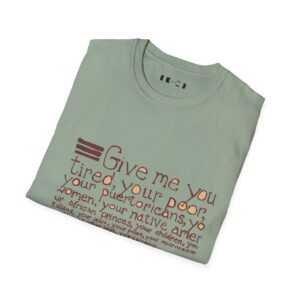
GIVE ME your wretched refuse

Send these, the homeless, tempest-tost to me,

Something quite important happened in the US from 1939-1943. The New Deal. Crippled by an economic collapse, a sitting US President actually did something good. FDR had the clarity to see what America stands for: equality, freedome and agency.

Fdr 1944 campaign portrait (retouched, cropped) (1)
New colossus emma lazarus statue of liberty

Not like the brazen giant of Greek fame,
With conquering limbs astride from land to land;
Here at our sea-washed, sunset gates shall stand
A mighty woman with a torch, whose flame
Is the imprisoned lightning, and her name
Mother of Exiles. From her beacon-hand
Glows world-wide welcome; her mild eyes command
The air-bridged harbor that twin cities frame.
"Keep, ancient lands, your storied pomp!" cries she
With silent lips. "Give me your tired, your poor,
Your huddled masses yearning to breathe free,
The wretched refuse of your teeming shore.
Send these, the homeless, tempest-tost to me,
I lift my lamp beside the golden door!"

Emma Lazarus
November 2, 1883

22
A Green Christmas

A Green Christmas

Sustainable ecommerce

How we're working to reduce ecommerce's climate impact

Carbon offsetting is a way to compensate for the carbon dioxide we spew into the atmosphere by funding projects that reduce greenhouse gases or absorb carbon from the air. At cgk.ink, this means investing in renewable energy sources, reforestation efforts, and energy-efficient technologies that help balance out the environmental impact of shipping and packaging. 

Stripe Climate is the easiest way to help promising permanent carbon removal technologies launch and scale. cgk.ink has  joined a growing group of ambitious businesses that are changing the course of carbon removal.

Of every purchase on cgk.ink, 1% of the total price is donated, without an increase in cost to you. 

Carbon Balance Pte. Ltd. is a sustainability platform based in Singapore providing a calculator API to measure the GHG footprint of ecommerce transactions and an Integration Plugin for popular ecommerce enablers such as WooCommerce, EasyStore, Shopify with flexible options to offset footprint by contributing to trustworthy projects.

These pieces of software complement our other intiatives, such as:

  • Combining shipping when available to further reduce our carbon footprint
  • Allowing you to control the speed of delivery so excessive emmissions are avoided
  • Using recyclable packaging to reduce the overall impact of shipping.

Examples of current carbon-offsetting efforts:

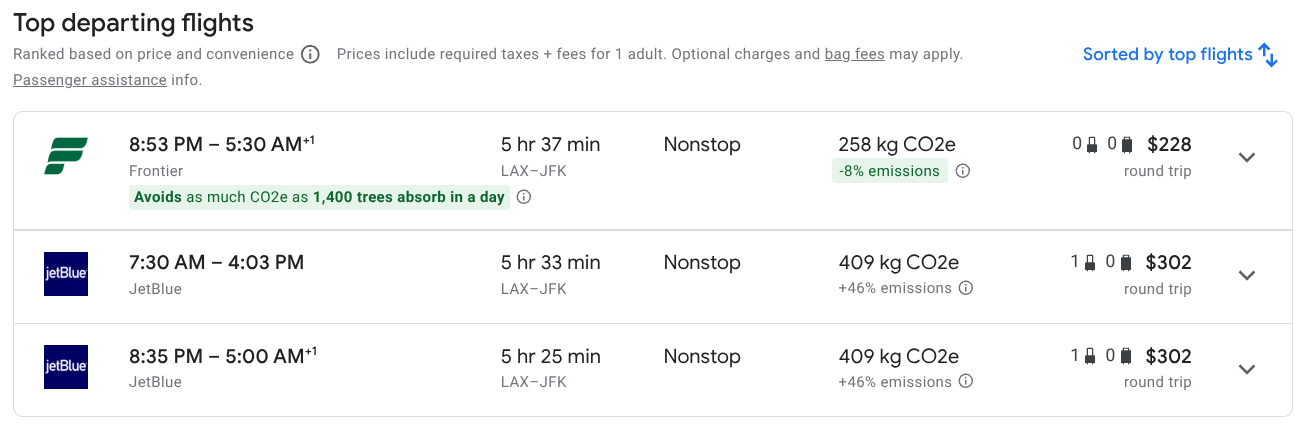
Google Travel, as well as other travel and hotel search sites, have formulated a way to compare carbon emission variations among similar routes. The impetus is on both the airline and the consumer to choose among the available options with ecological criteria being included.