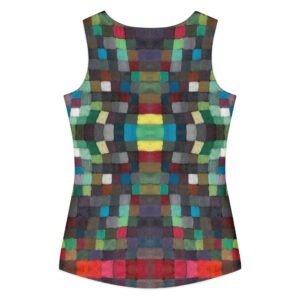
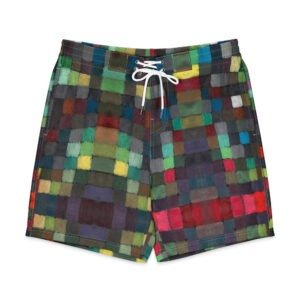
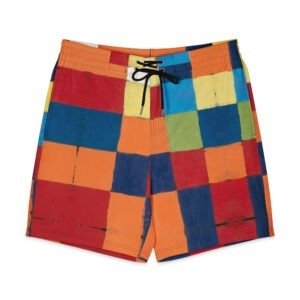
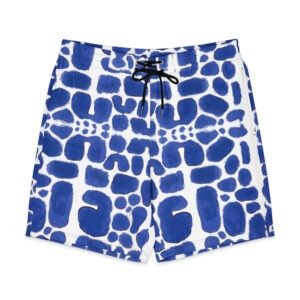
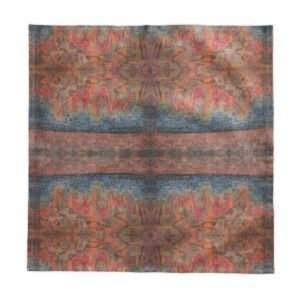
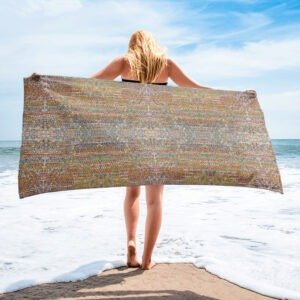
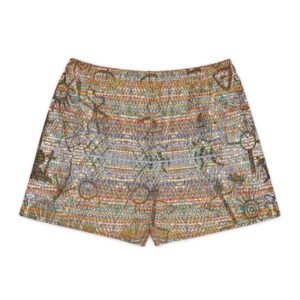
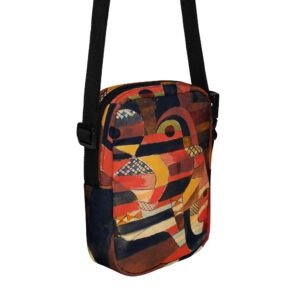
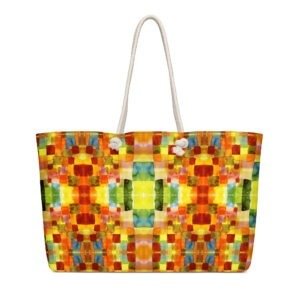
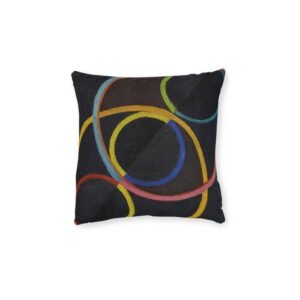
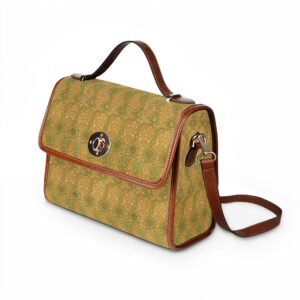
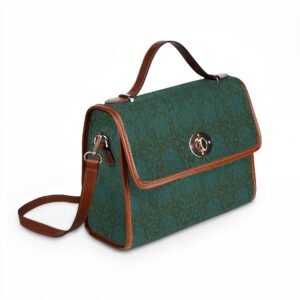
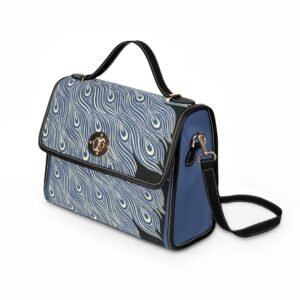
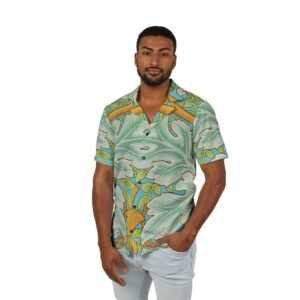
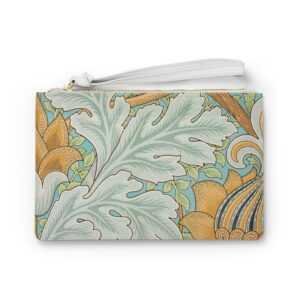
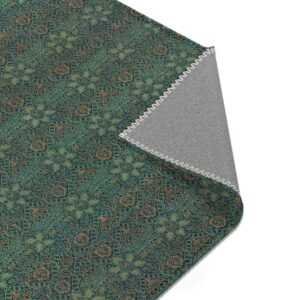
Items that are inspired by that artist’s work are featured at the bottom of the page which displays related work, more details and available discounts.
These collections are changing quickly, so check often for new items.
We welcome your feedback and are eager to hear about artists that inspire you!
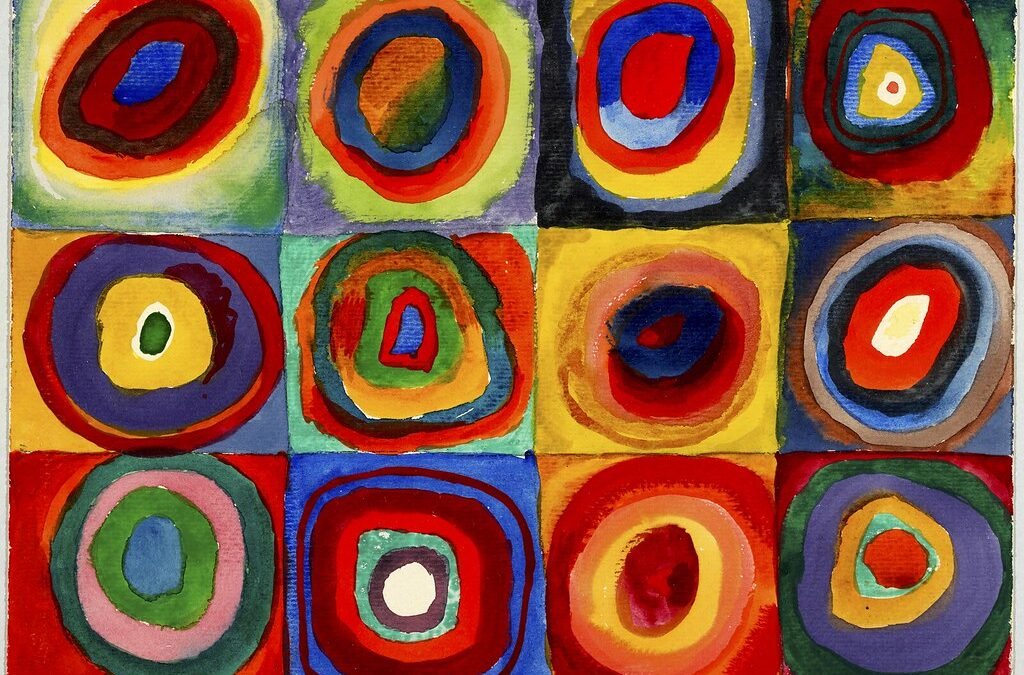
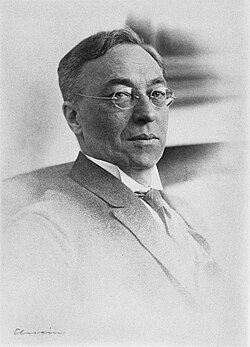
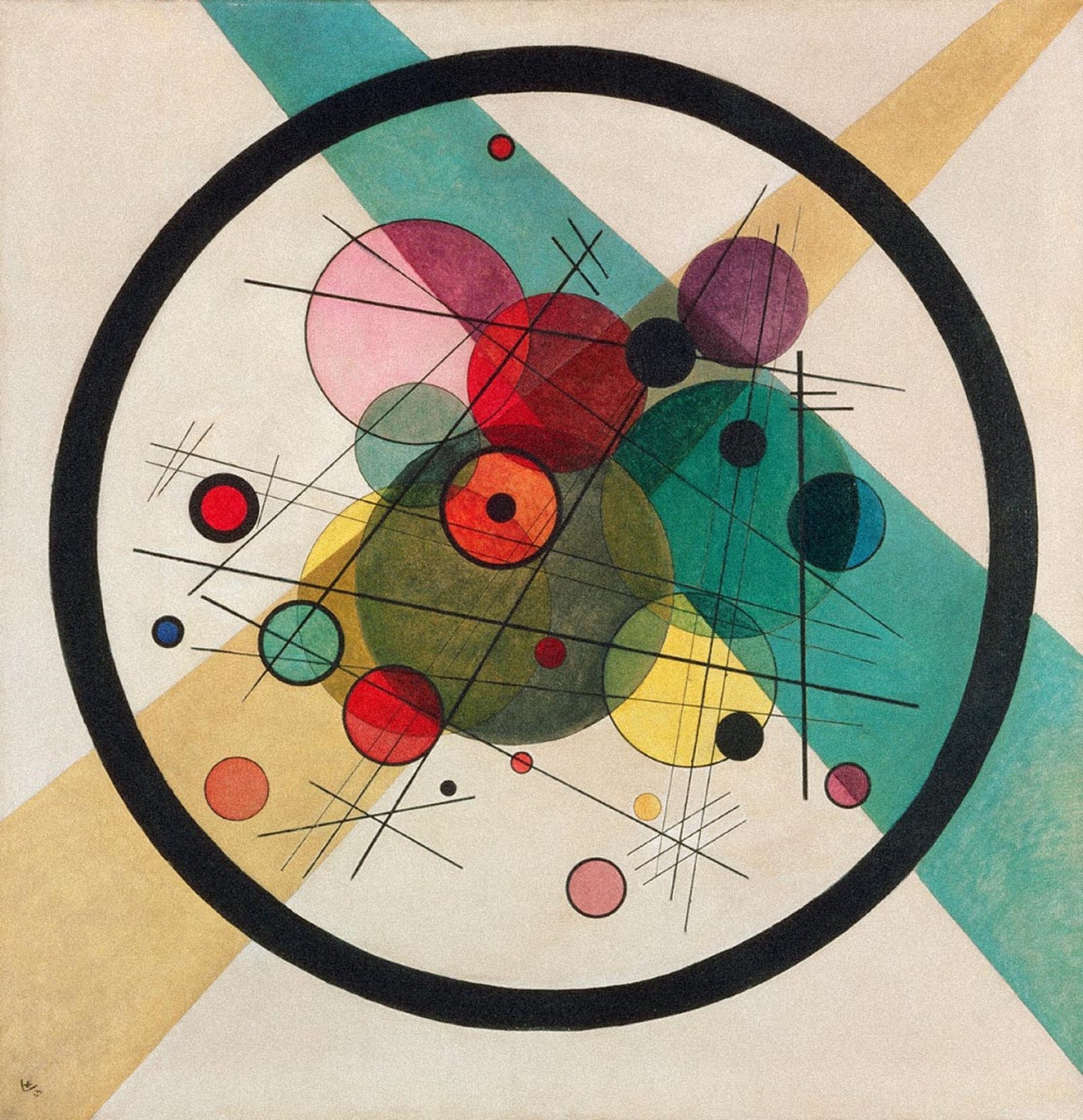
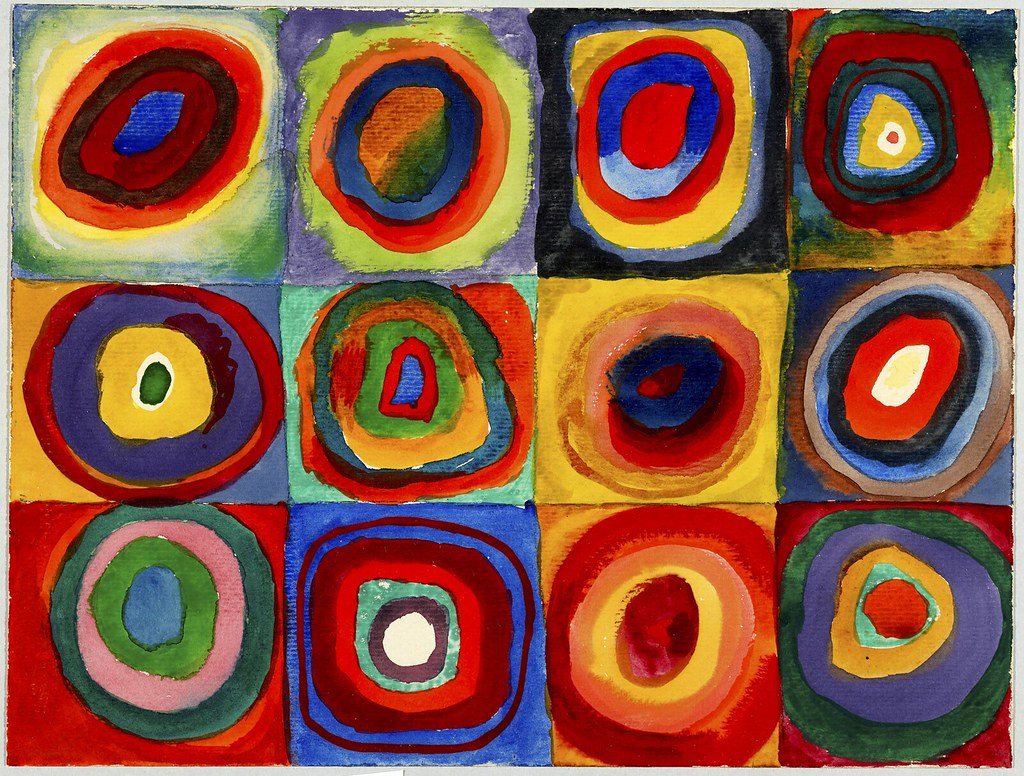
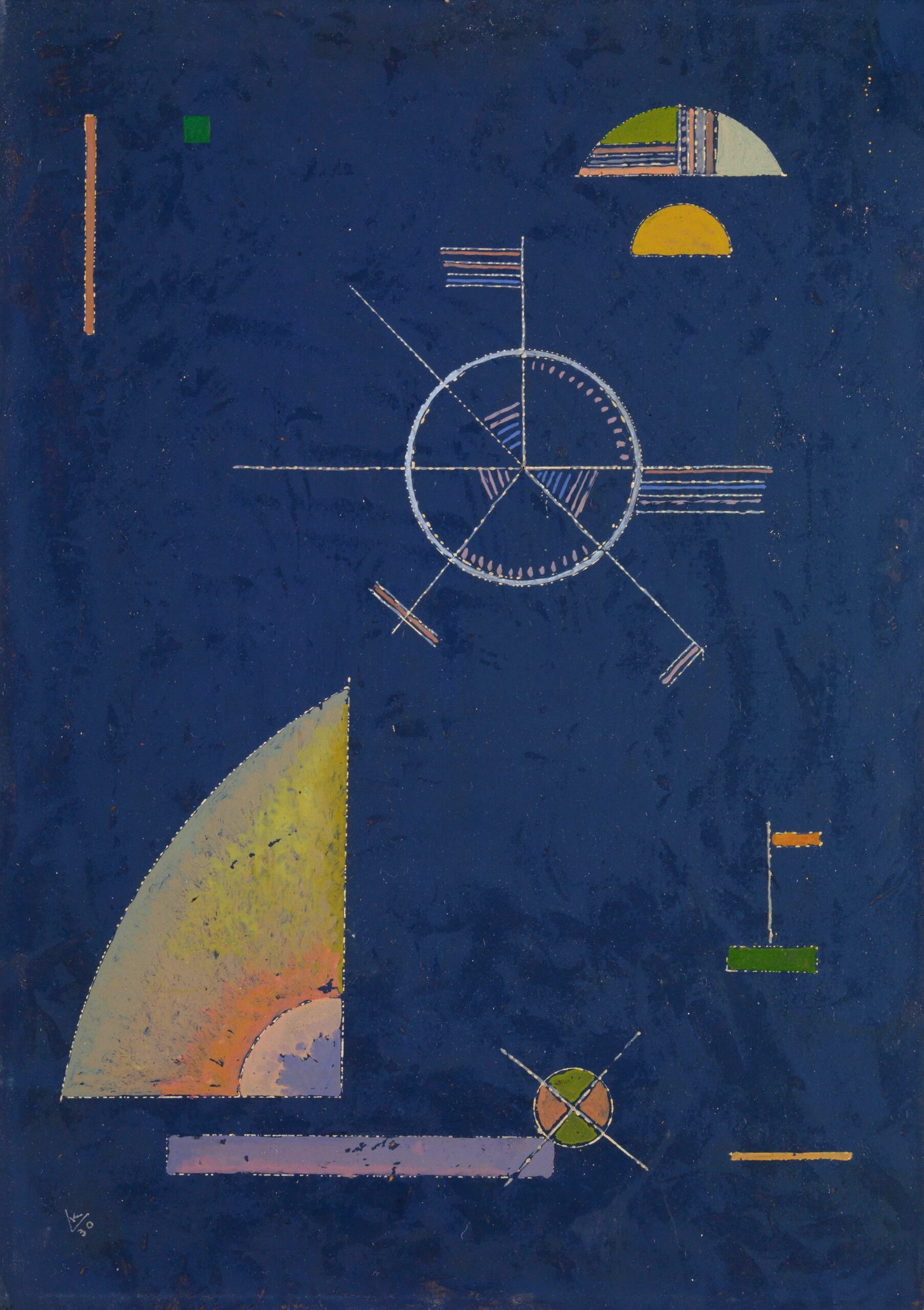
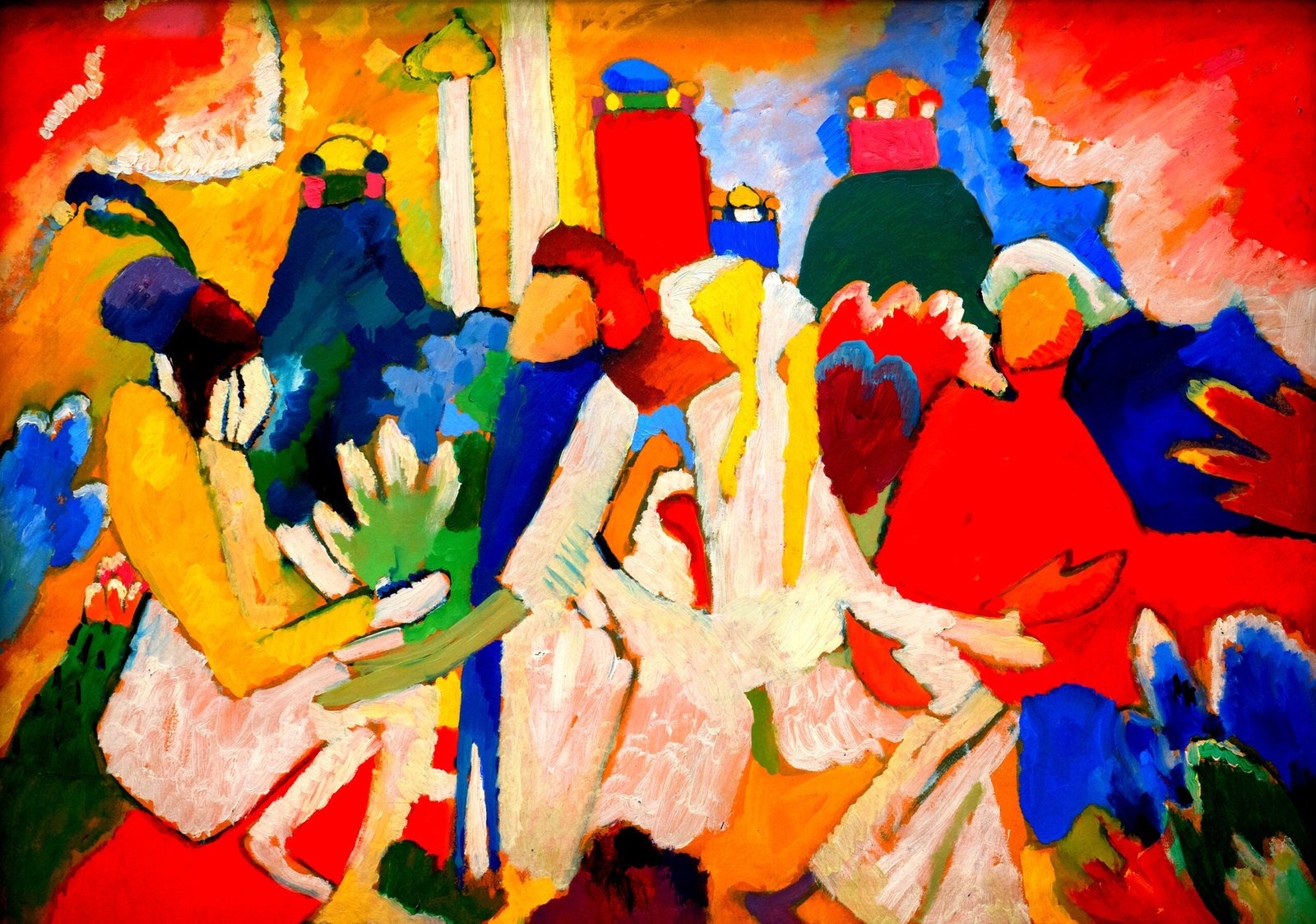
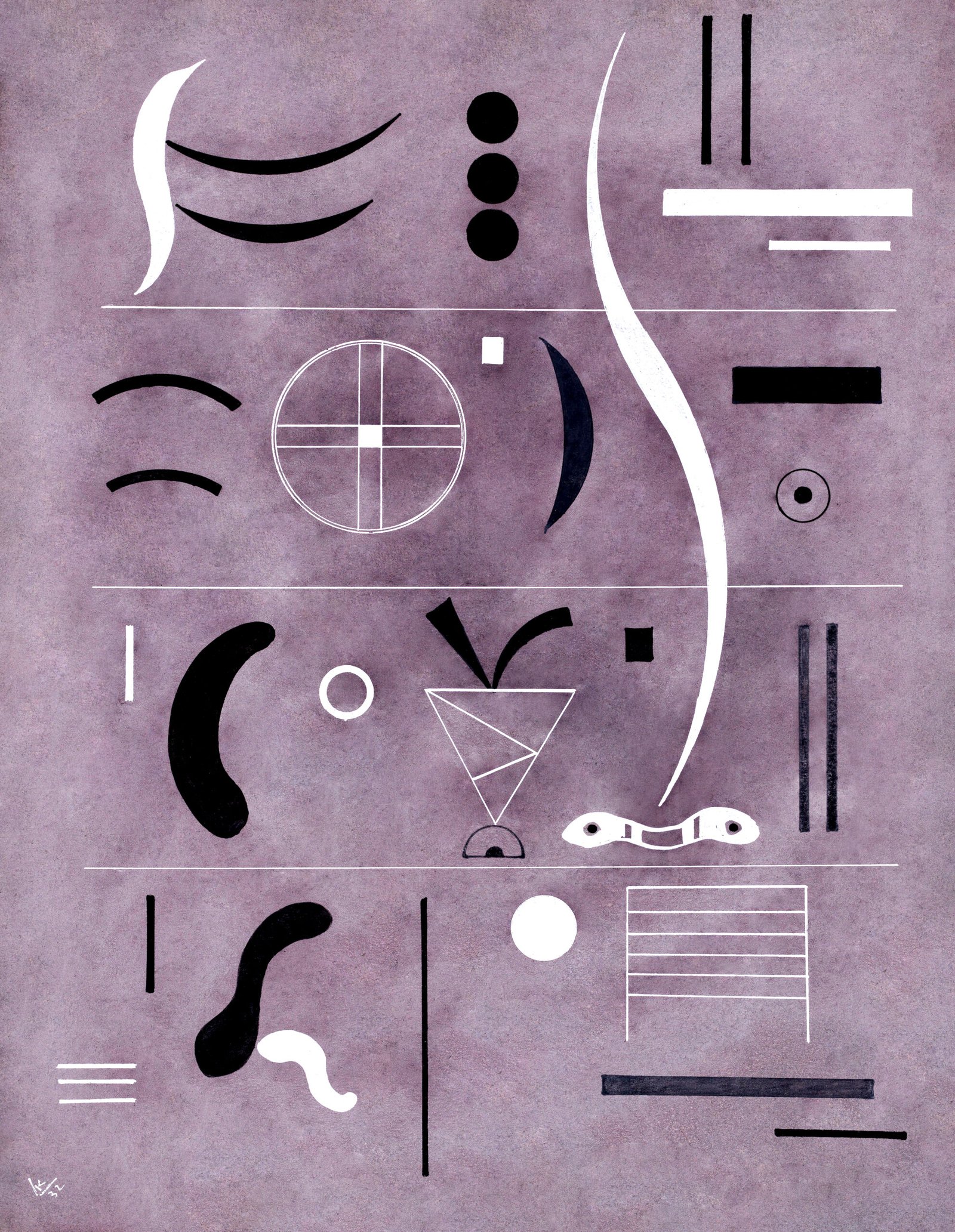
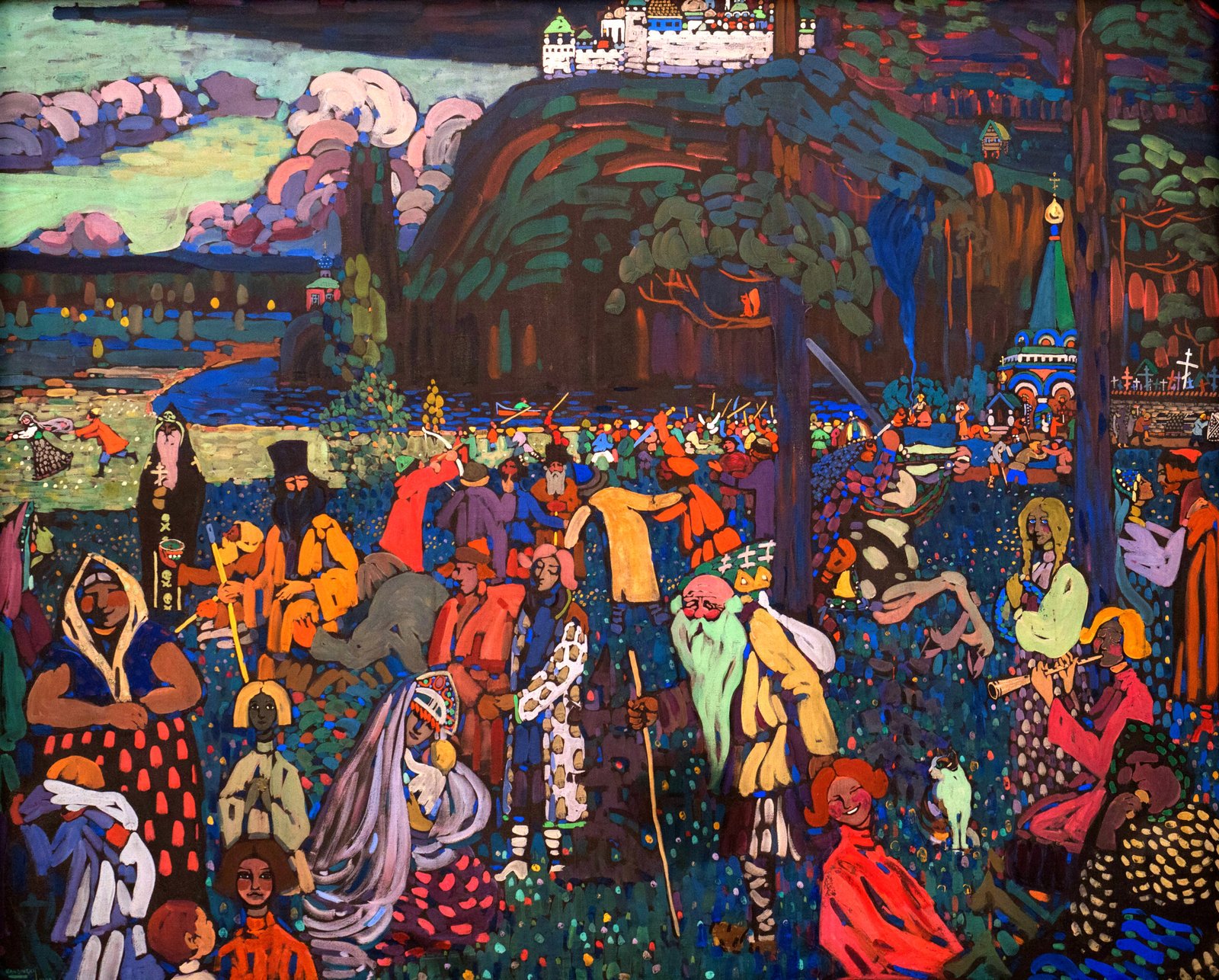
Wassily Wassilyevich Kandinsky (b. 1866) was a Russian painter and art theorist. Kandinsky is generally credited as one of the pioneers of abstraction in western art. Born in Moscow, he began painting studies (life-drawing, sketching and anatomy) at the age of 30.
In 1896, Kandinsky settled in Munich, studying first at Anton Ažbe’s private school and then at the Academy of Fine Arts. During this time, he was first the teacher and then the partner of German artist Gabriele Münter. He returned to Moscow in 1914 after the outbreak of World War I. Following the Russian Revolution, Kandinsky “became an insider in the cultural administration of Anatoly Lunacharsky” and helped establish the Museum of the Culture of Painting. However, by then, “his spiritual outlook… was foreign to the argumentative materialism of Soviet society” and opportunities beckoned in Germany, to which he returned in 1920. There, he taught at the Bauhaus school of art and architecture from 1922 until the Nazis closed it in 1933. He then moved to France, where he lived for the rest of his life, becoming a French citizen in 1939 and producing some of his most prominent art. He died in Neuilly-sur-Seine in 1944.
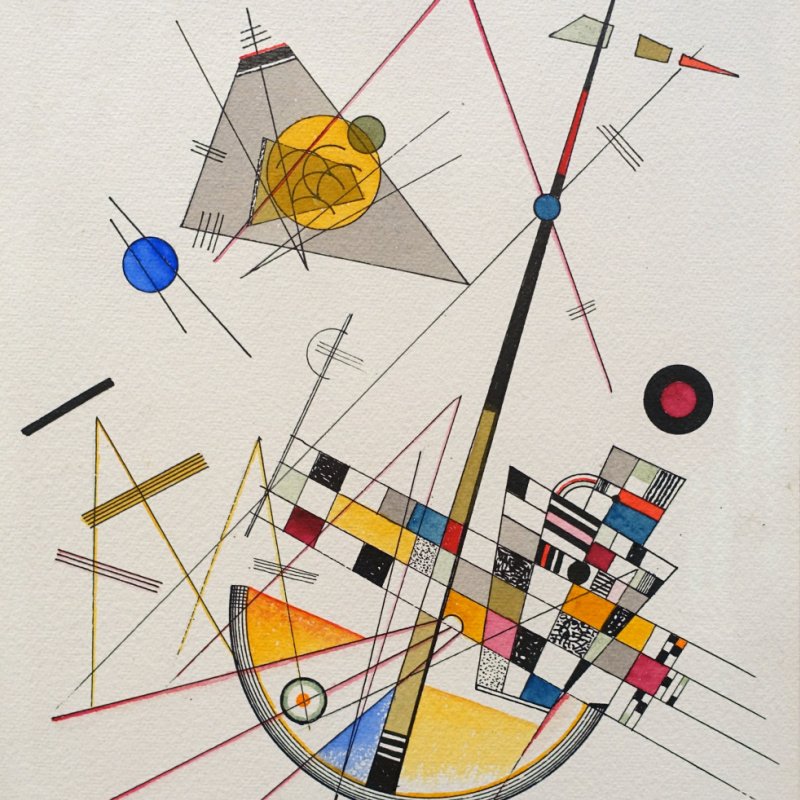
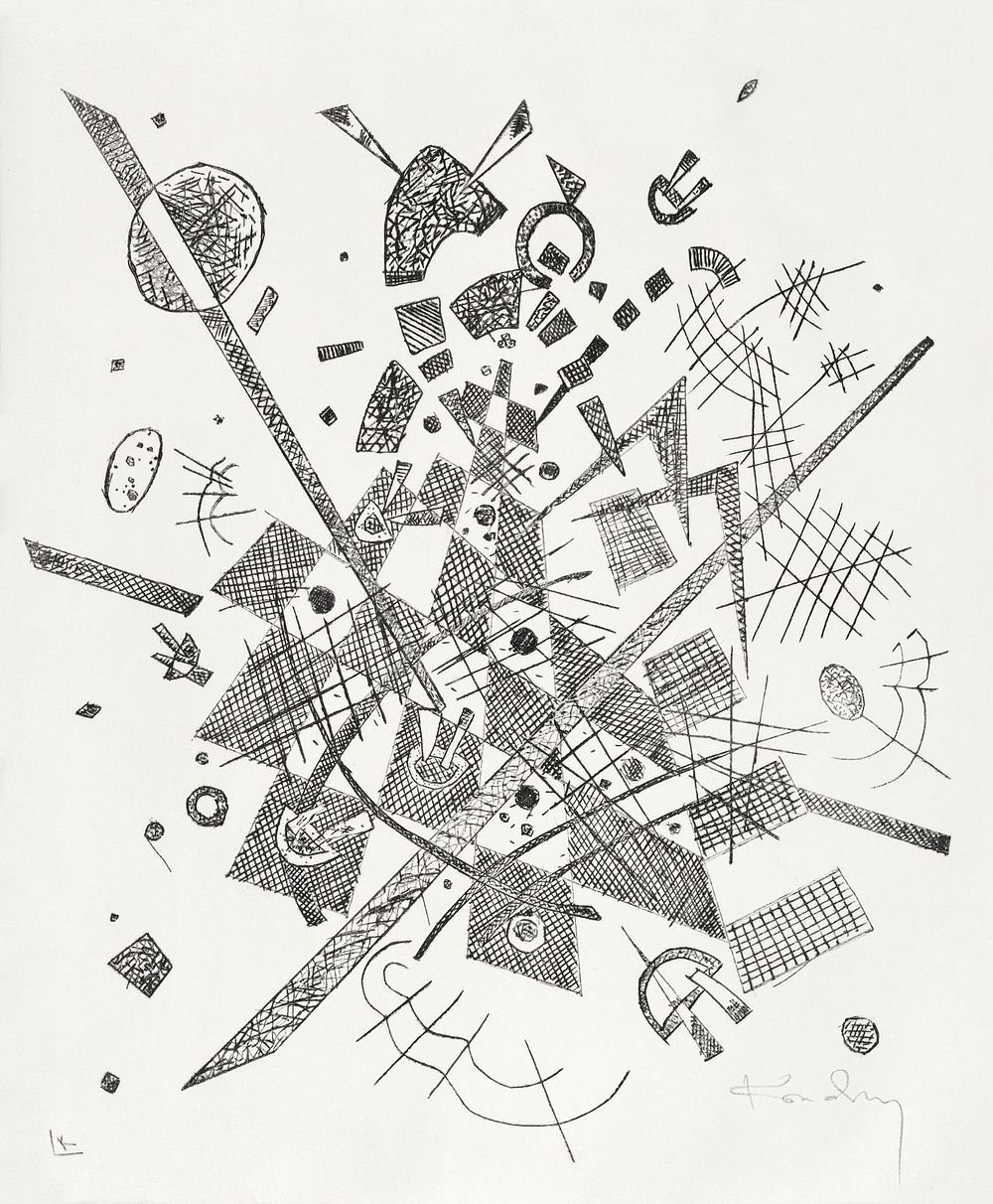
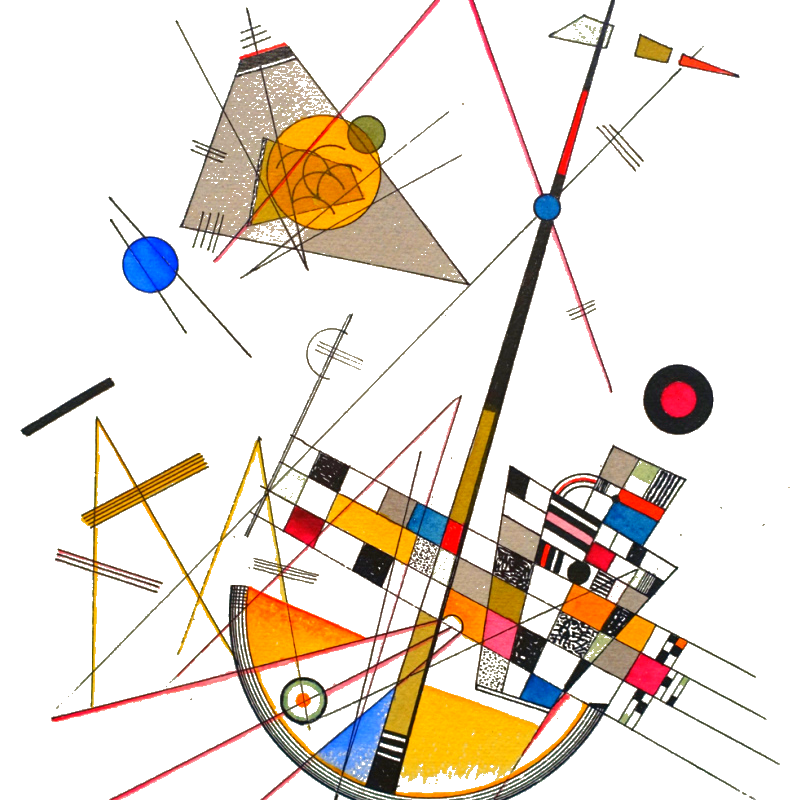
Delicate Tension no. 85, Kandinsky (1923)
Delicate Tension no. 85 was executed by Kandinsky at the Bauhaus during the prestigious school’s most rationalist period under the directorship of Theo van Doesburg, from 1923 to 1925. During these years the initial Expressionistic style of this avant-garde centre evolved towards greater commitment to the Constructivist aesthetic which was spreading internationally. Kandinsky delved more deeply in his investigation of the correspondences between forms and colours, and the geometric shapes found in his works from this period, which is sometimes described as “cold, ” are basically the circle and the triangle, which he considered to be “the two primary, most strongly contrasting plane figures.”
This item is part of ourFine Arts Collectionwhere we design new items influenced by the masters of fine art, design, decorative arts and textiles. Explore our growing list of featured artists.
The diversity of the world’s largest national population is astounding.
122 languages, including the planet’s oldest language: Hindi. 12 religions. 1.408 billion people (est. 2021). 29 states.
This pluralism nurtures an insane wealth of art and cultural expression. Arguably, this is the creative soul of Earth.
cgk.ink is exploring this rich history. And we’re here to share our very fundamental, simple understanding of its expressions, its forms and what it says to us now in the 21st century.
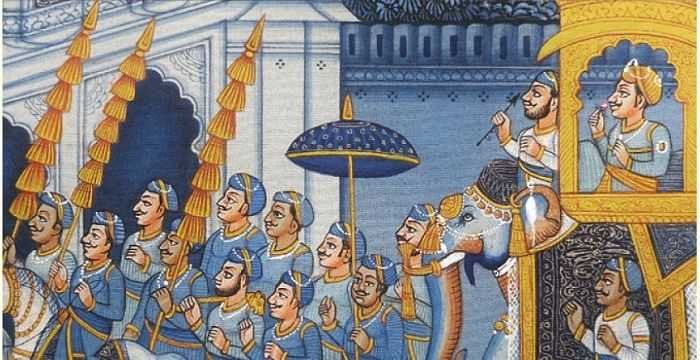
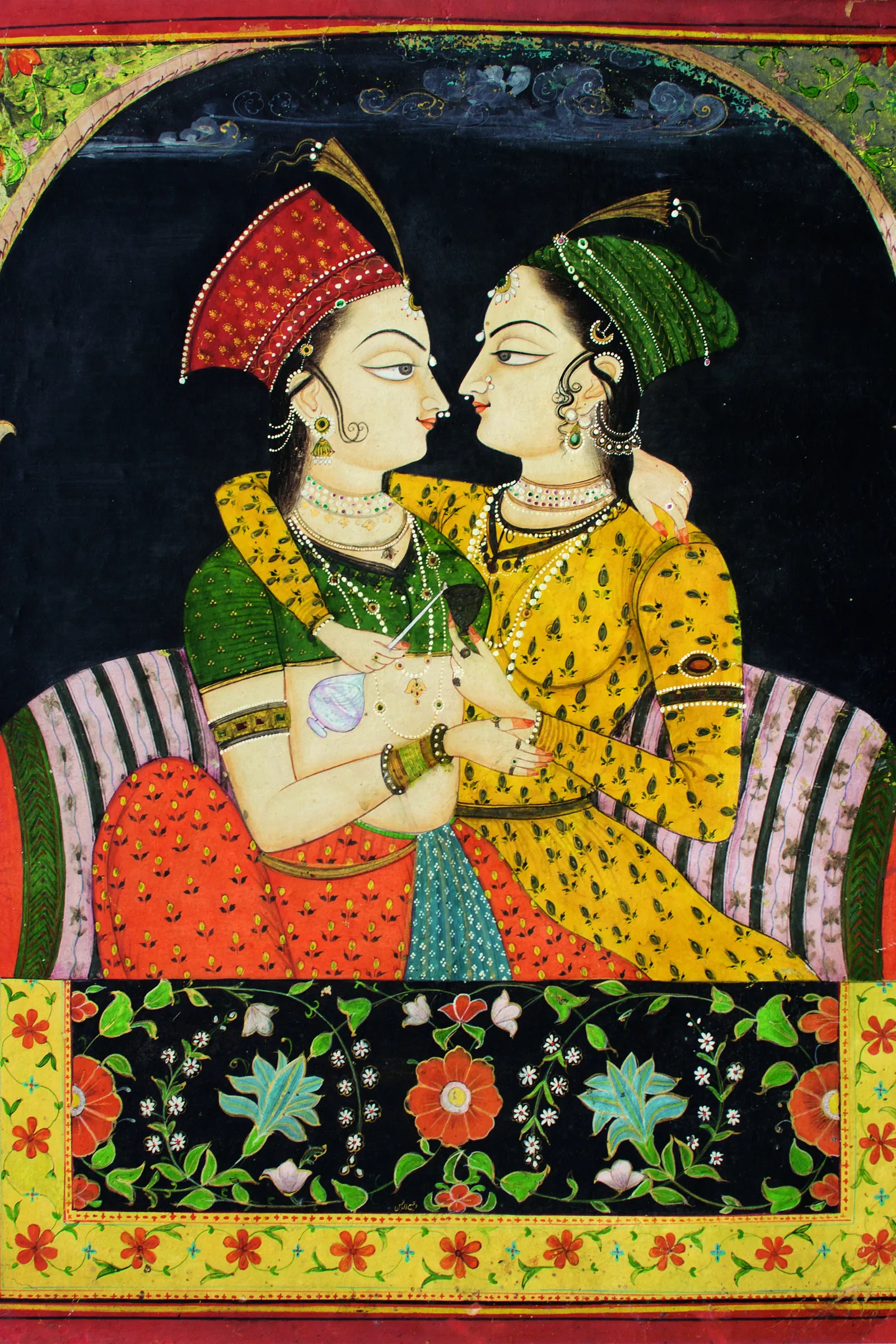
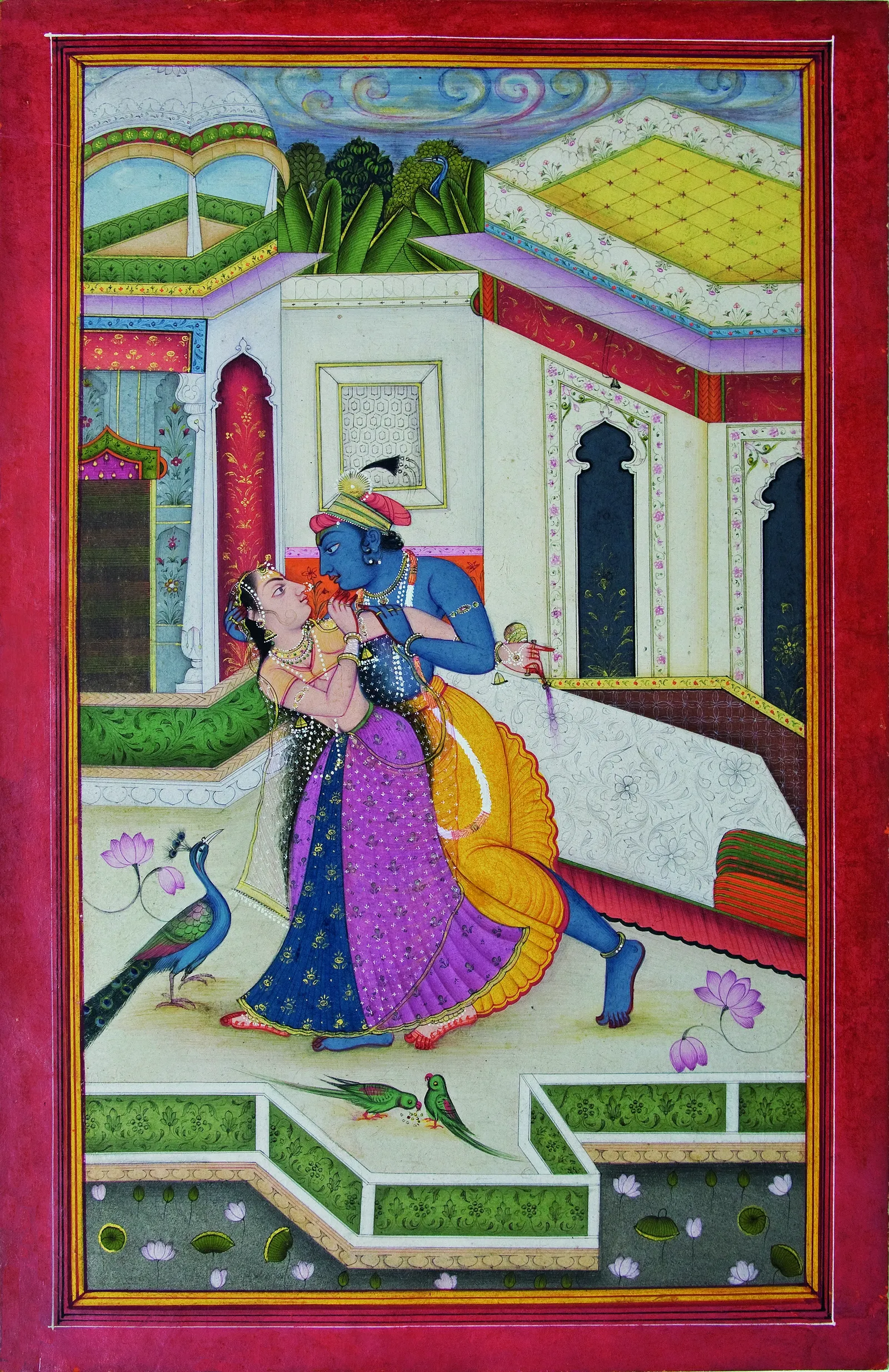
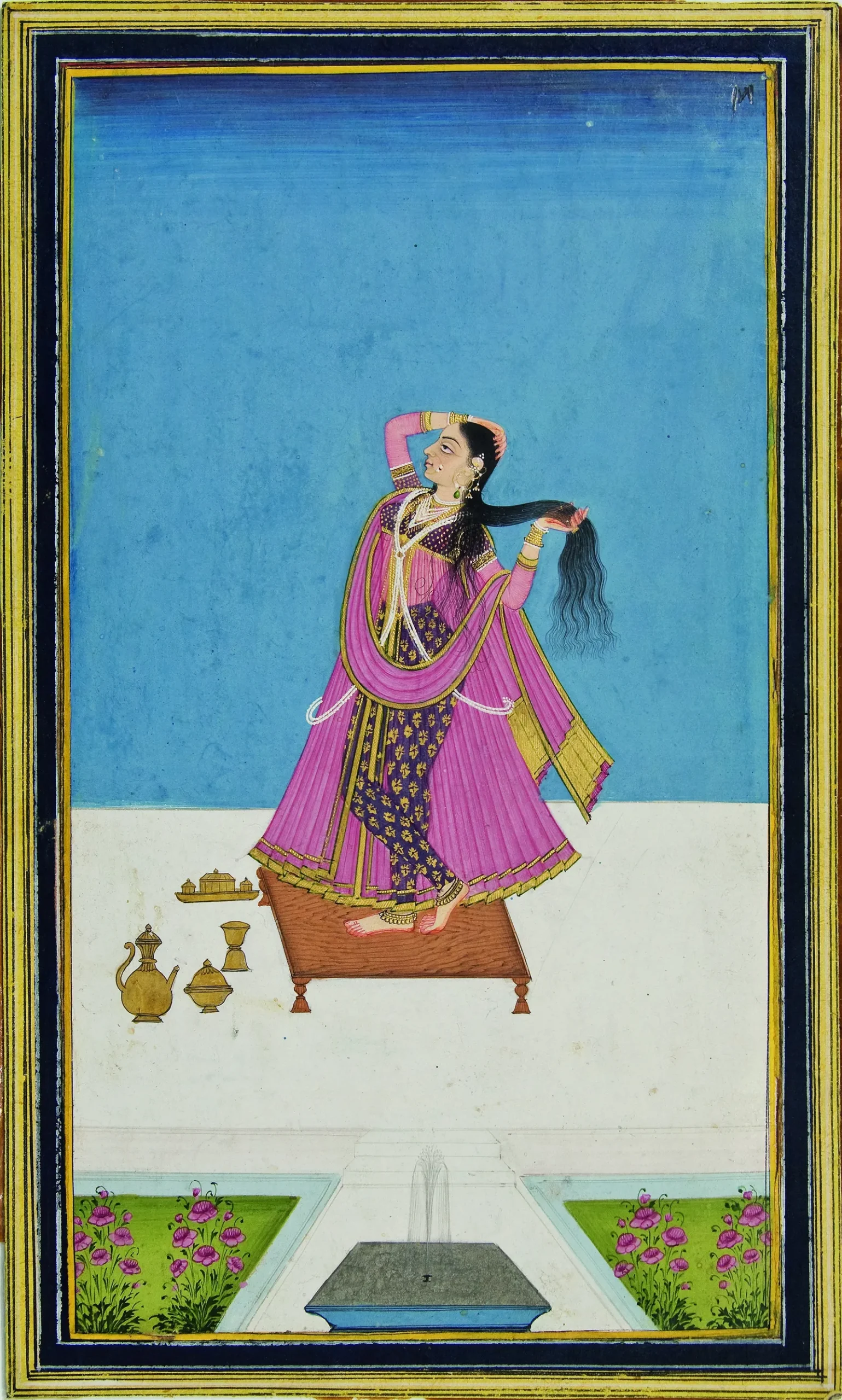
Below are some of the genres of Indian art that we gleaned from ArtZolo.com:
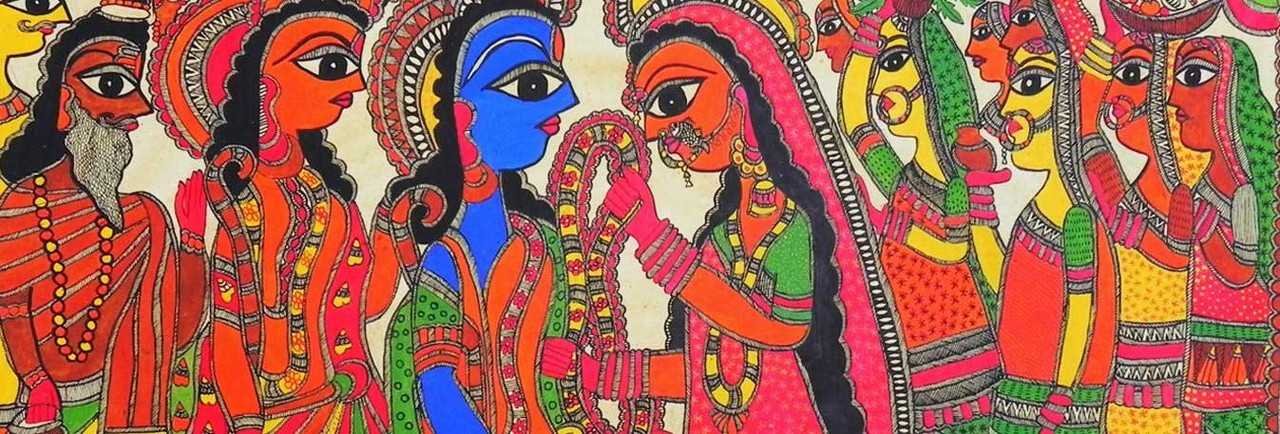
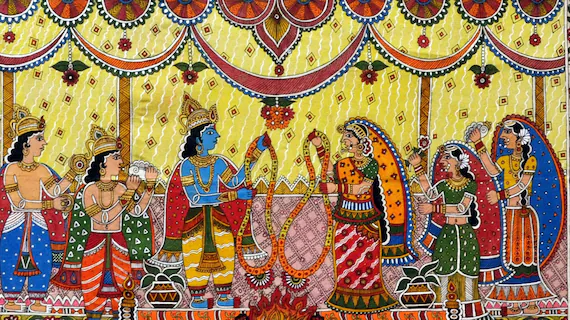
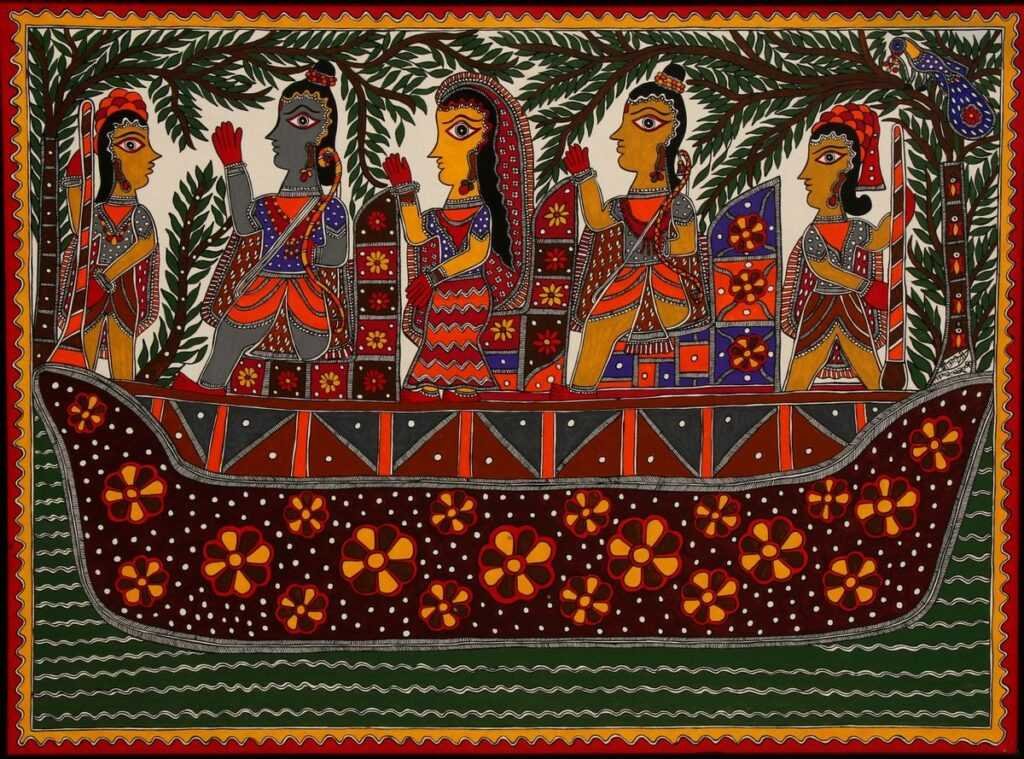
Madhubani
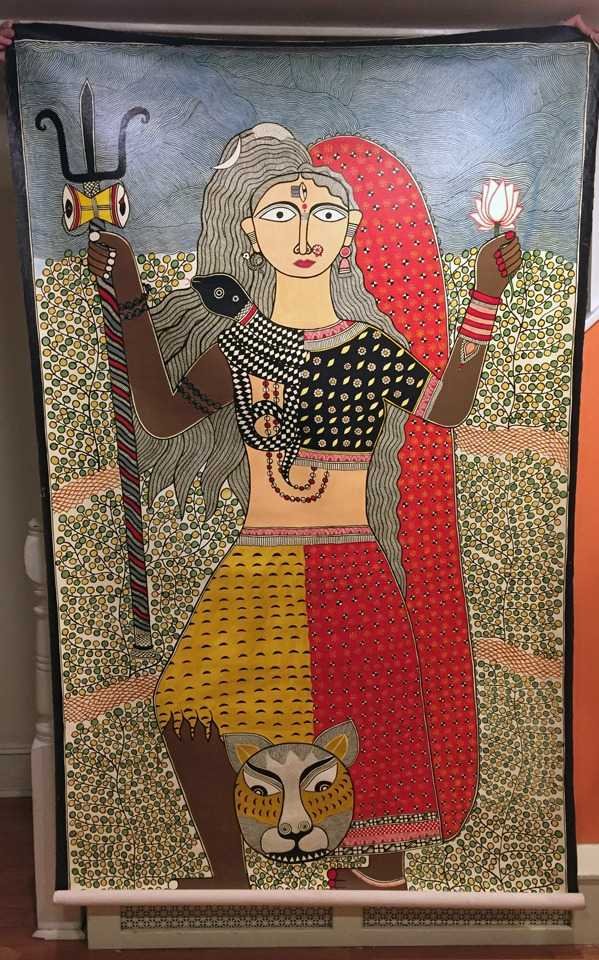
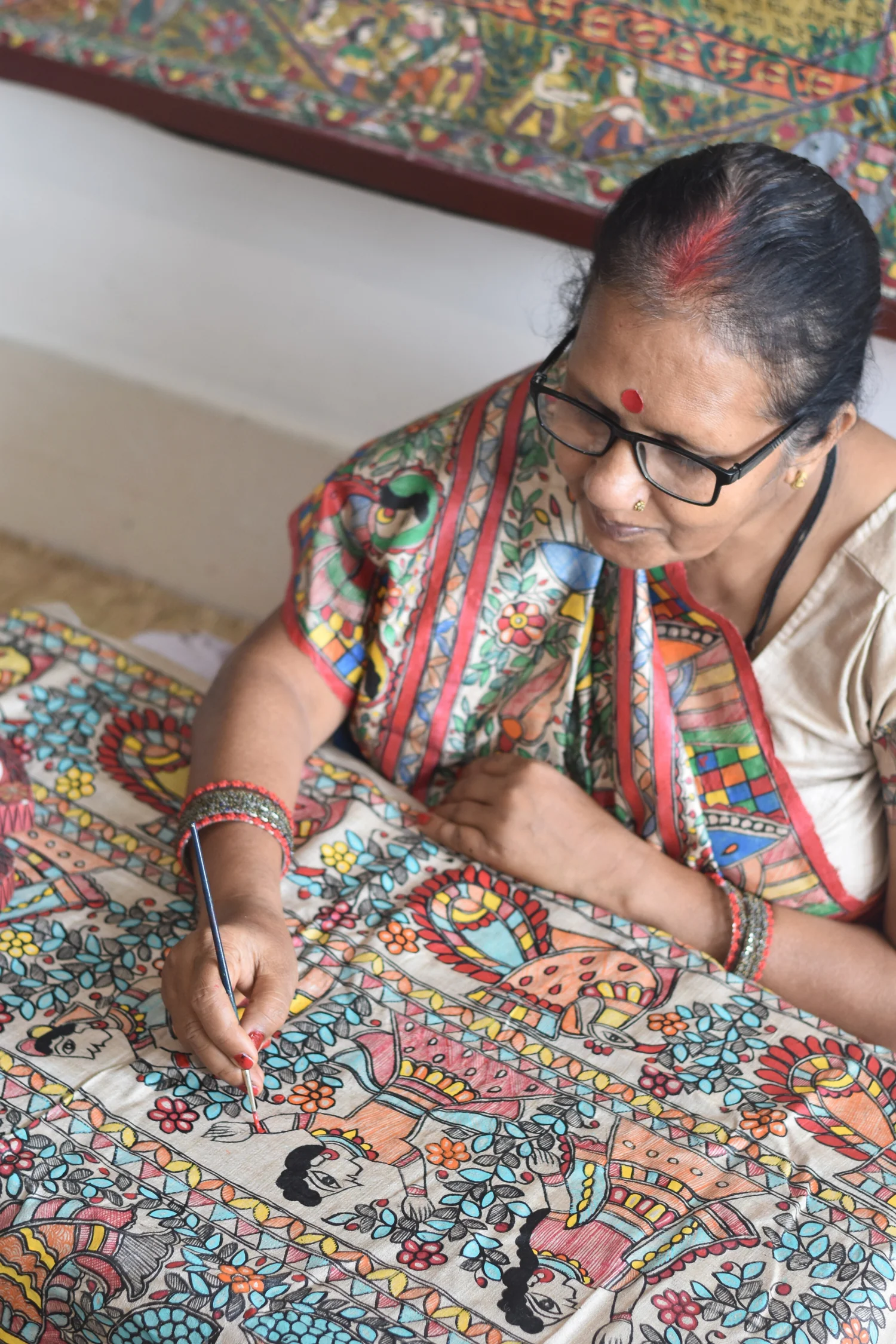
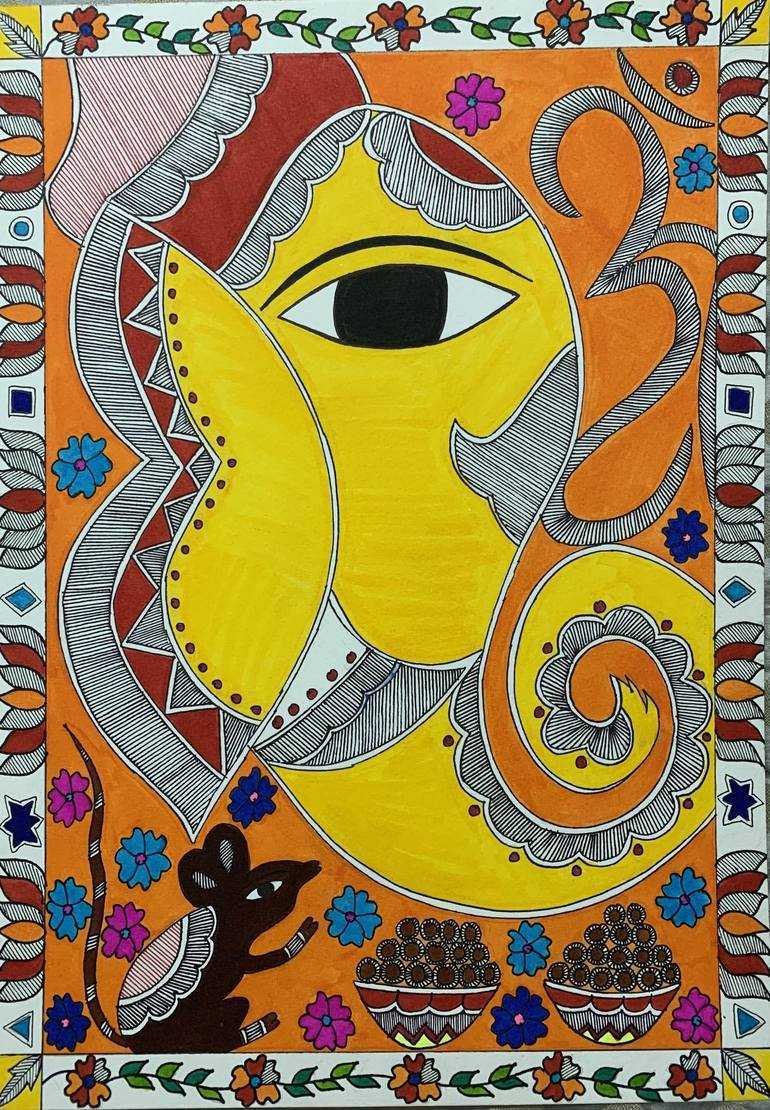
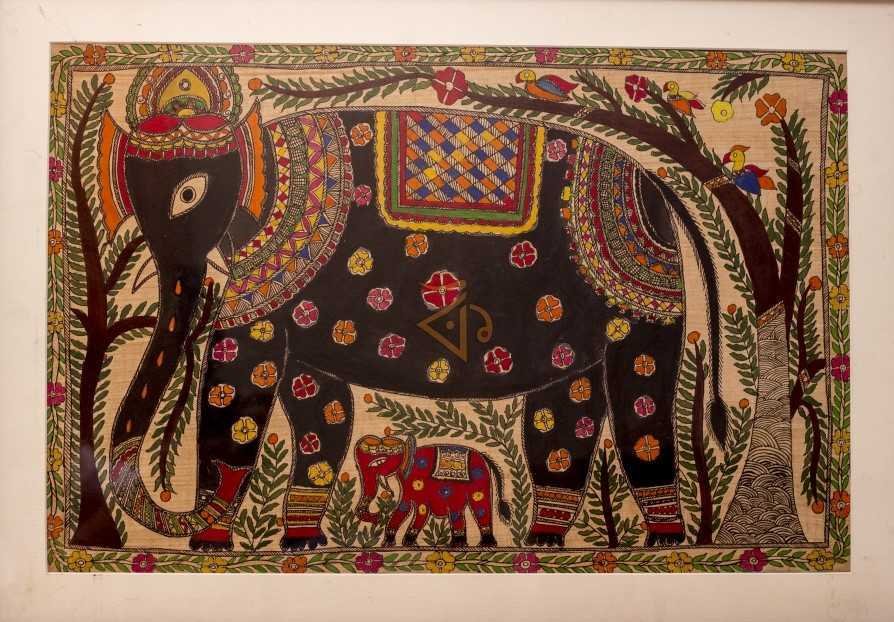
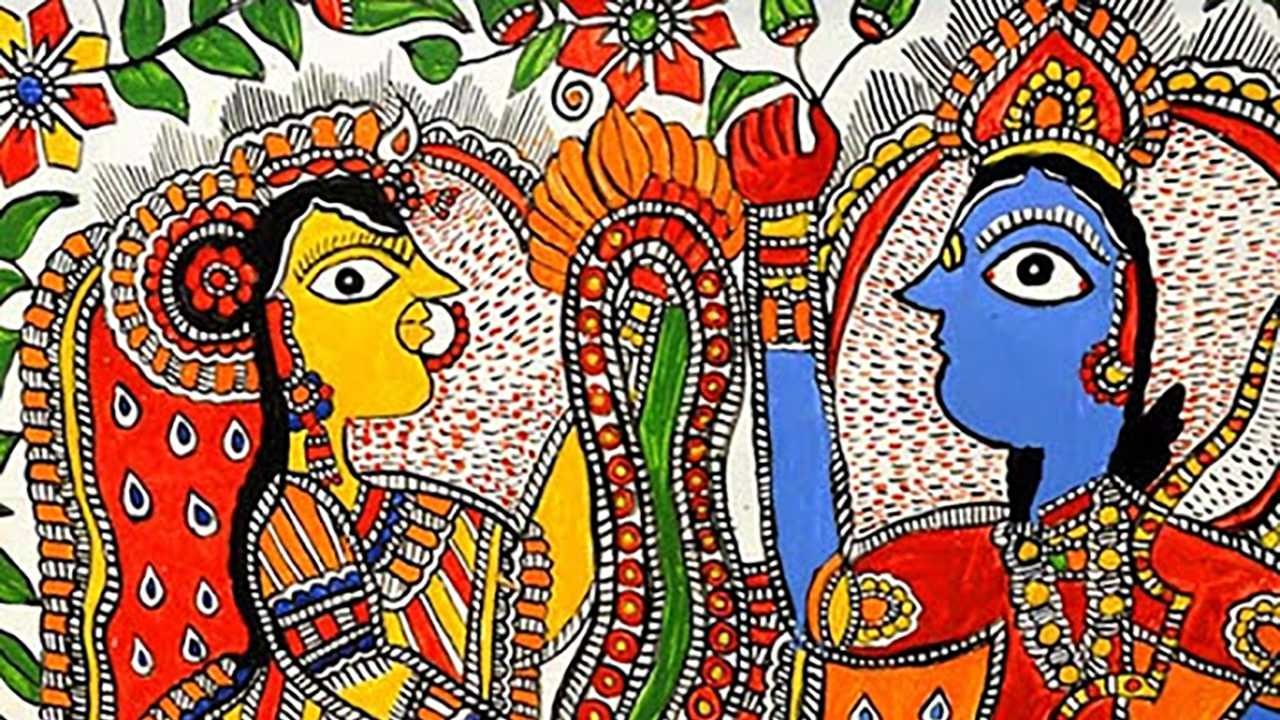
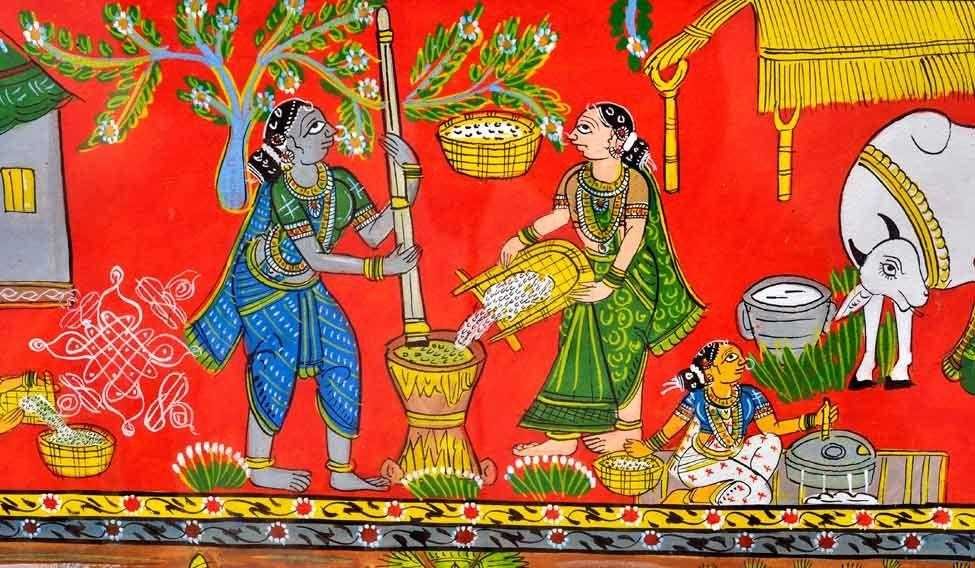
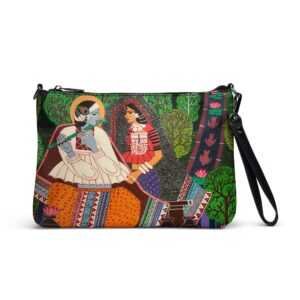
Madhubani paintings are the most celebrated style of folk painting from India; it is a form of wall art that arises in the Mithila region of Bihar. This eye-catching art style never fails to amaze one by its beautiful illustrations on the exposed interior walls of the houses in Bihar. Madhubani paintings are a perfect example of artistic expression and evocative portrayal of culture and traditions. The designs make perfectly distinctive geometrical patterns, scenes from mythology, and symbolic images. The perfect blend of bright vibrant colours and unique patterns make Madhubani stand out from other painting styles. Katchni, Tantrik, Bharni, Khobar, and Godna are five different styles of Madhubani paintings.
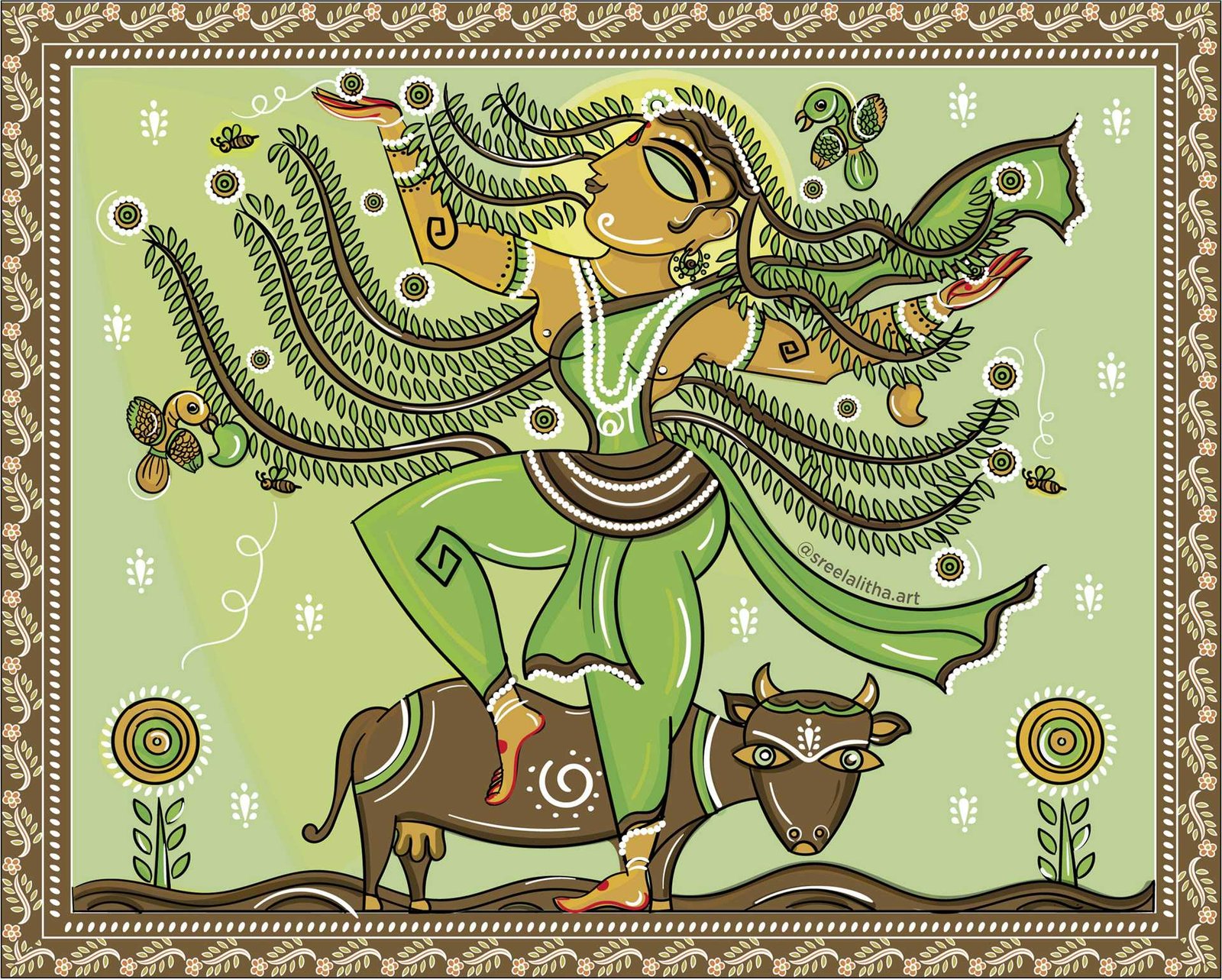
Warli
Warli is a 2,500-year-old traditional painting style from Maharashtra majorly practiced in Thane and Nashik region. Warli paintings illustrate the nature and social rituals of the tribe. Warli paintings also showcase day-to-day life scenarios of the local people of that particular community just like dancing, farming, hunting, praying, etc. The local women used twigs to draw such beautiful lively designs with rice paste on mud walls to convey the celebration vibes of harvests or weddings.
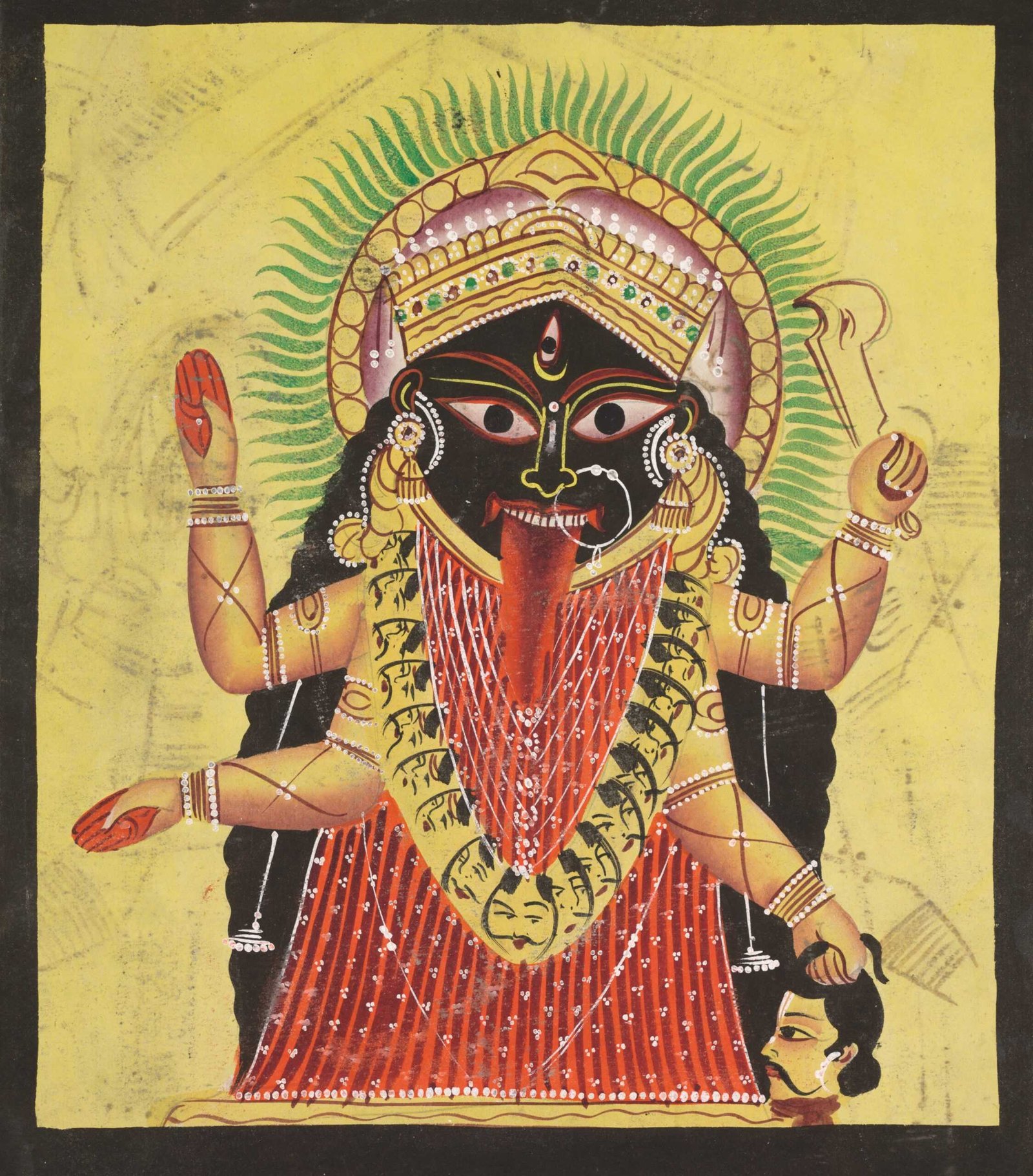
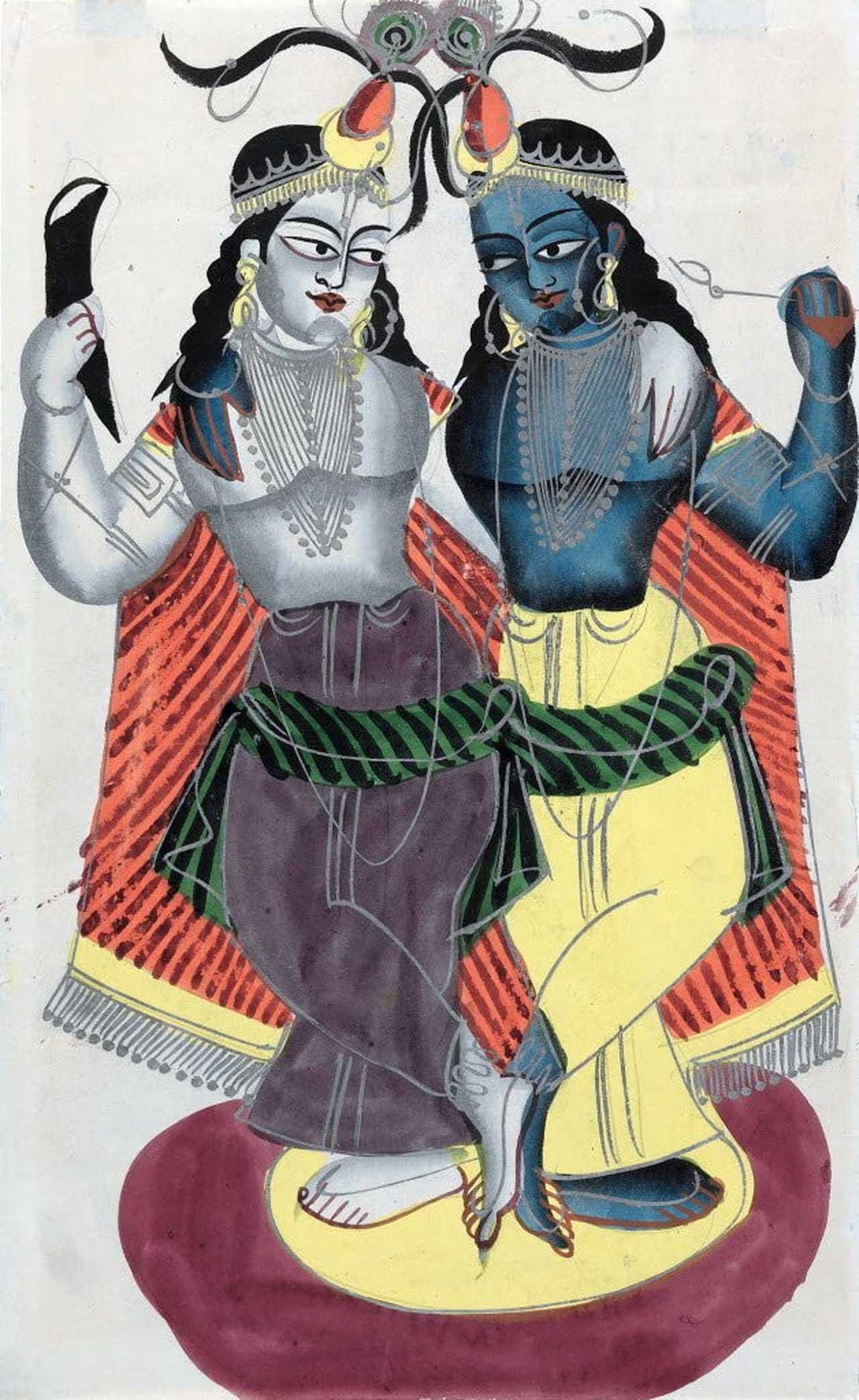
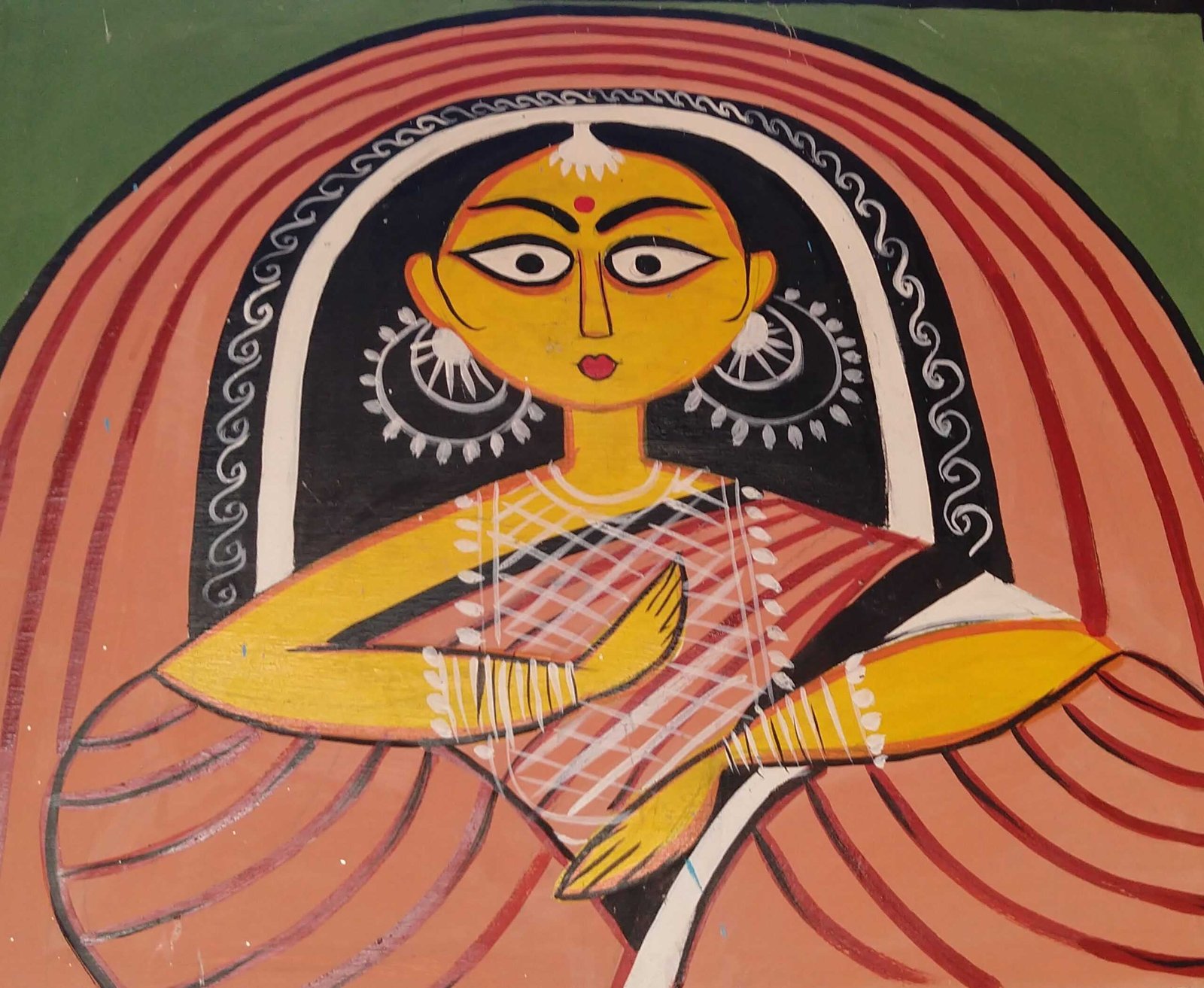
Kalighat
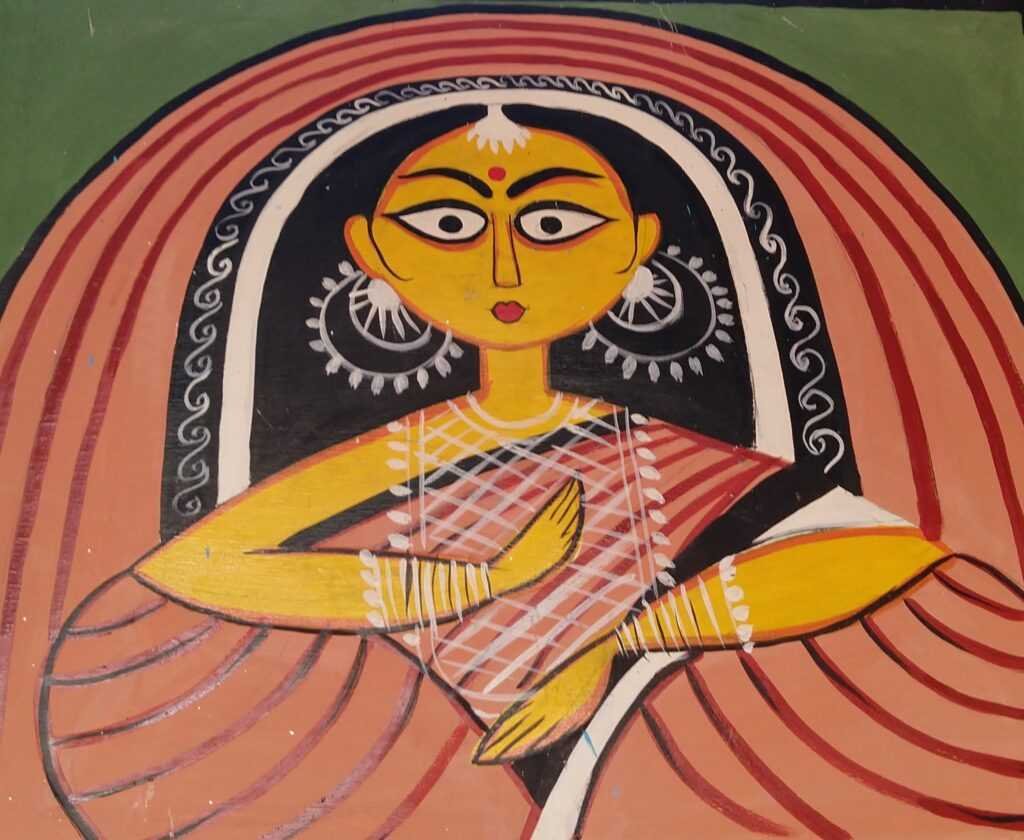
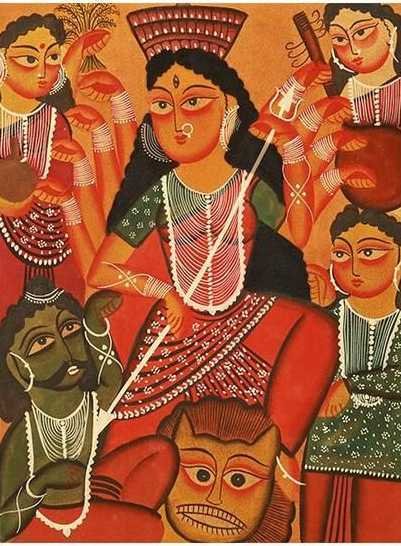
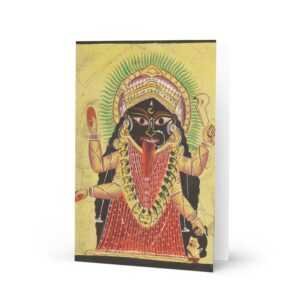
The Kalighat painting was discovered around the mid-19th century at Kali Temple in Calcutta. These paintings and drawings were done on paper by a community known as “patuas”. A Kalighat painting depicts scenes of everyday life and mythological deities in a captivating manner. Kalighat artists use subtle earthy Indian colours like indigo, ochre, Indian red, grey, blue and white.
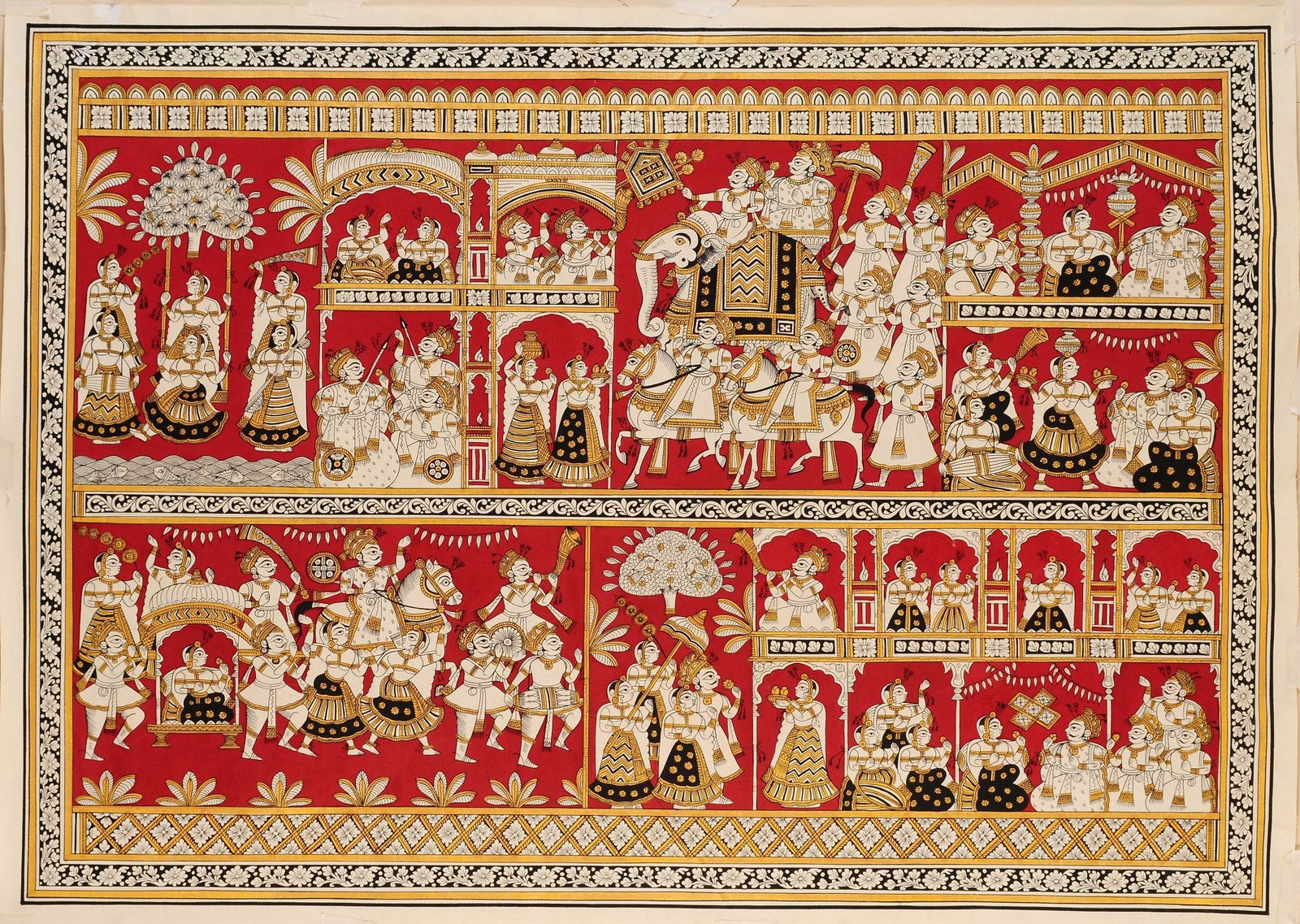
Phad
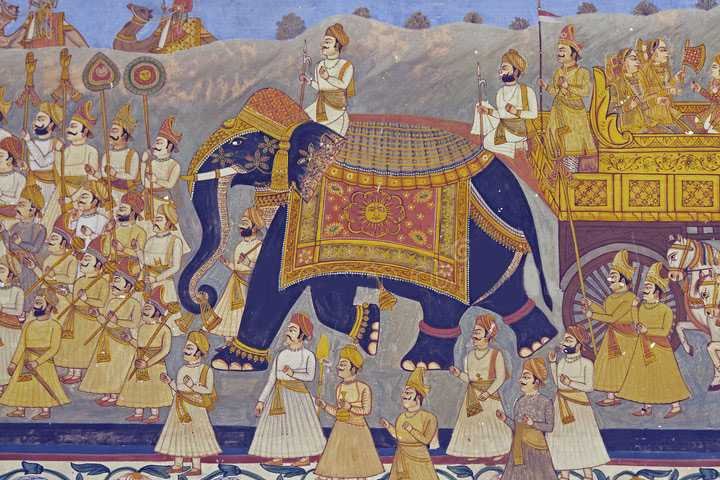
Phadis a traditional Rajasthani scroll painting from India, depicting the stories of local deities, heroic figures from battlefields, adventure stories, and legendary romantic stories on horizontal cloth scrolls with the hues of red, yellow, and bright orange. Phad Painting marvellously portrays multiple stories in a single composition and beautifully maintains the aesthetics of artistic expression.
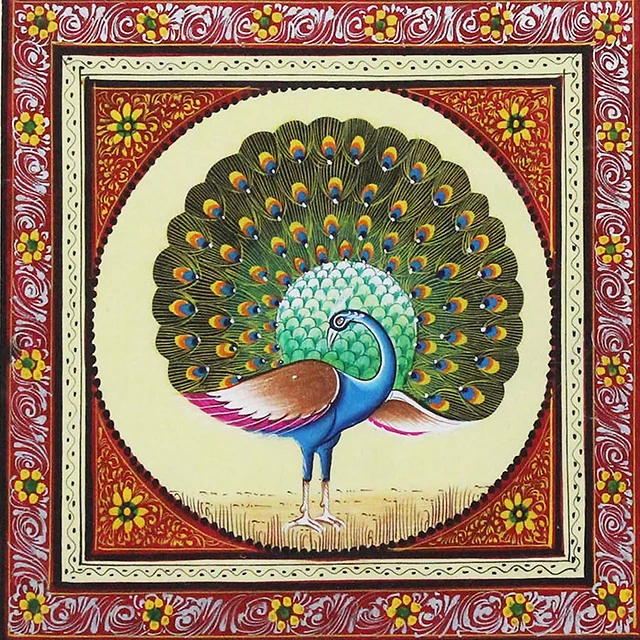
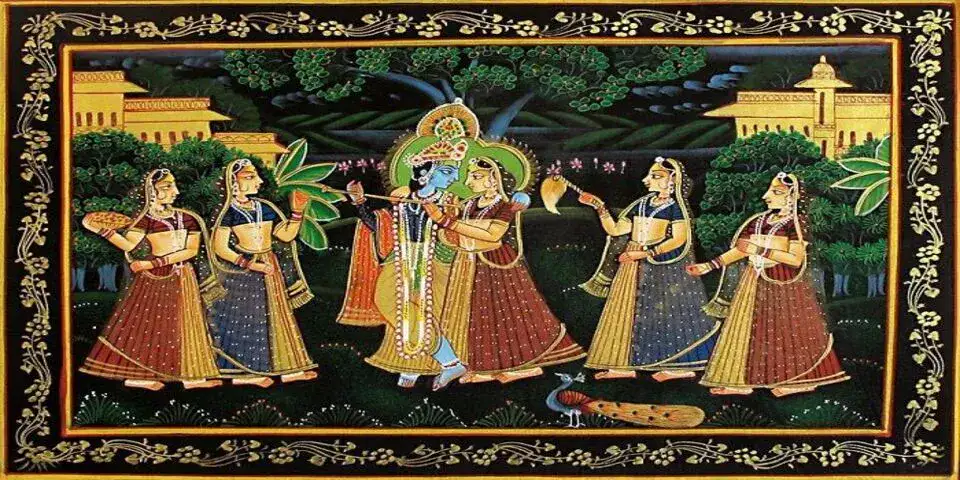
Miniature/Mughal
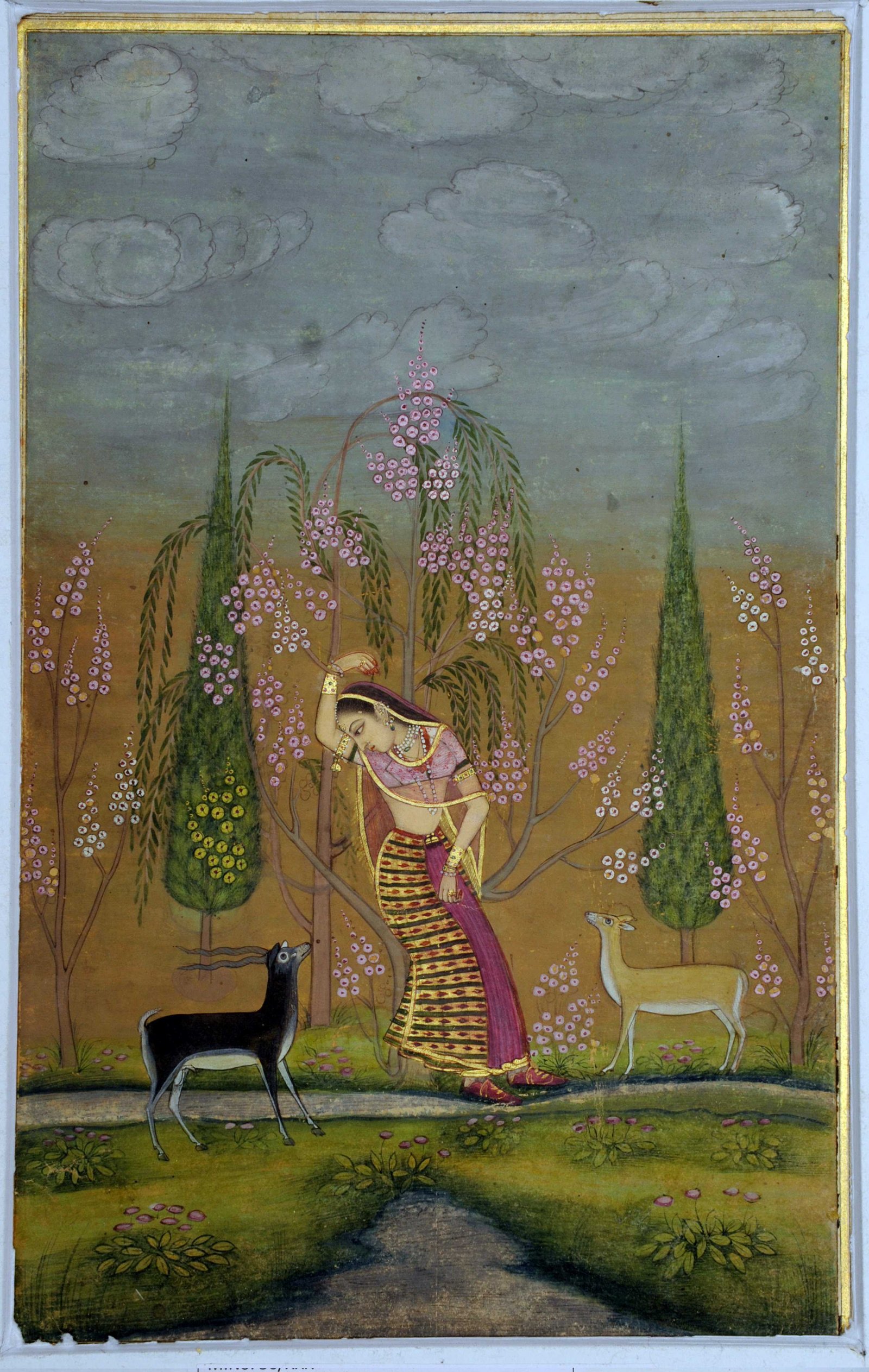
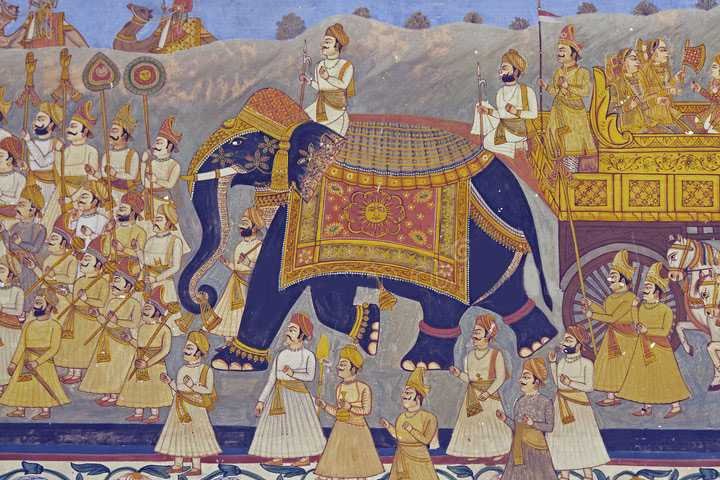
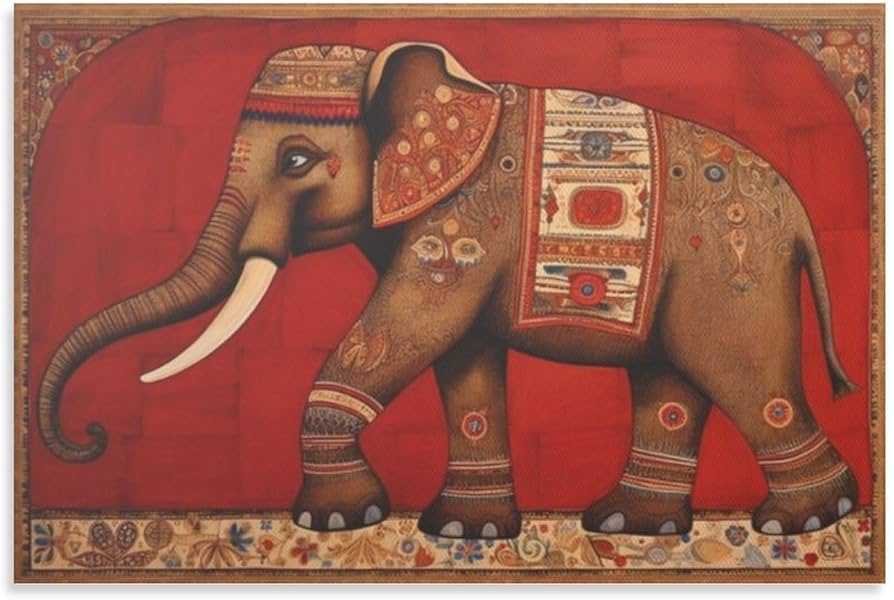
Miniature painting isMughalinfluenced art form; this style was introduced in India during the 16th century and transformed its identity in the history of Indian art. Miniature paintings are a blend of Islamic, Persian, and Indian elements. These paintings are created using all-natural mineral colours, precious stones, conch shells, gold, and silver. Across India, the miniature style painting has developed its own identity into distinct schools of miniature paintings likeKangra, Rajasthan, Malwa, Pahadi, Mughal, Deccan, etc.
Gond
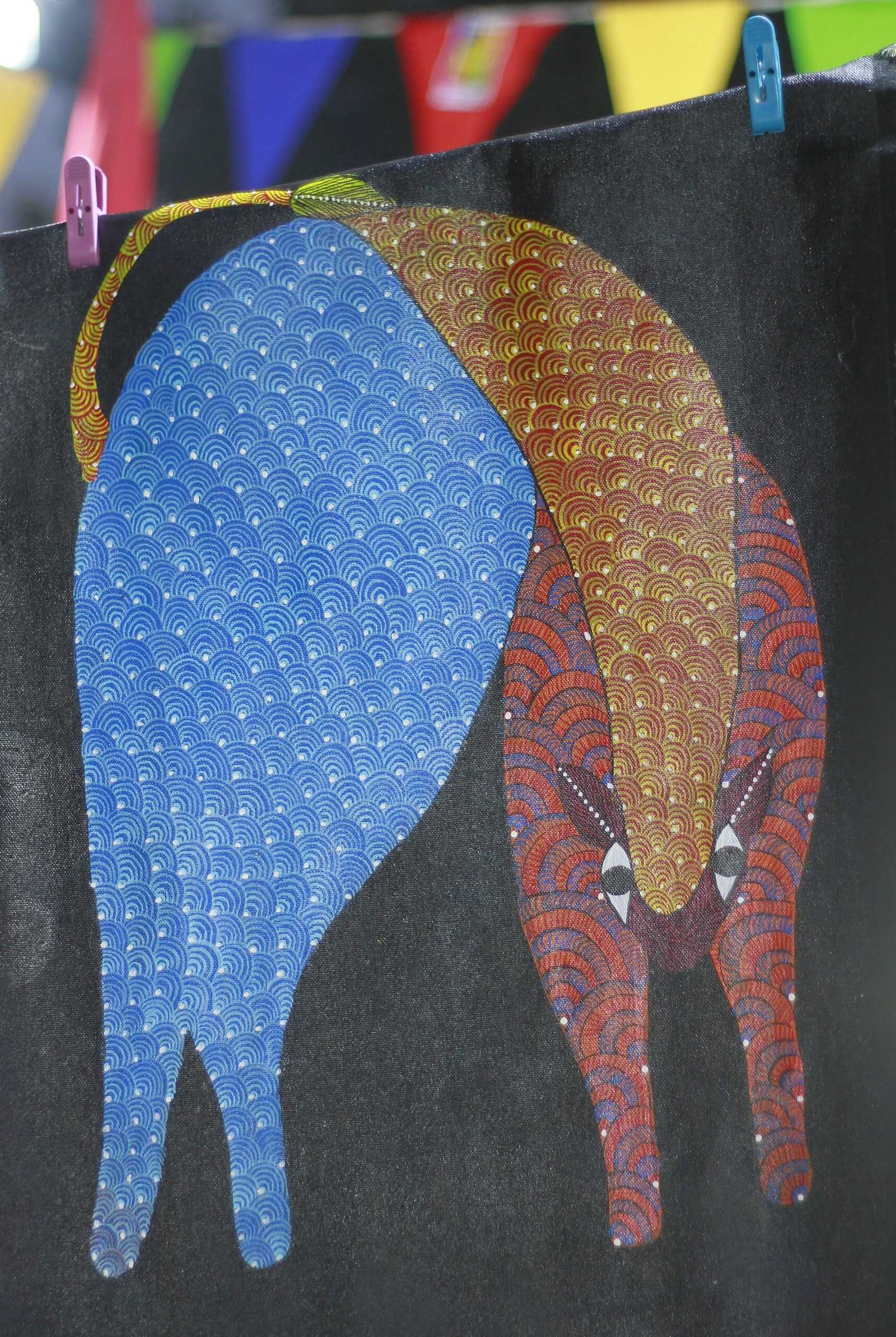
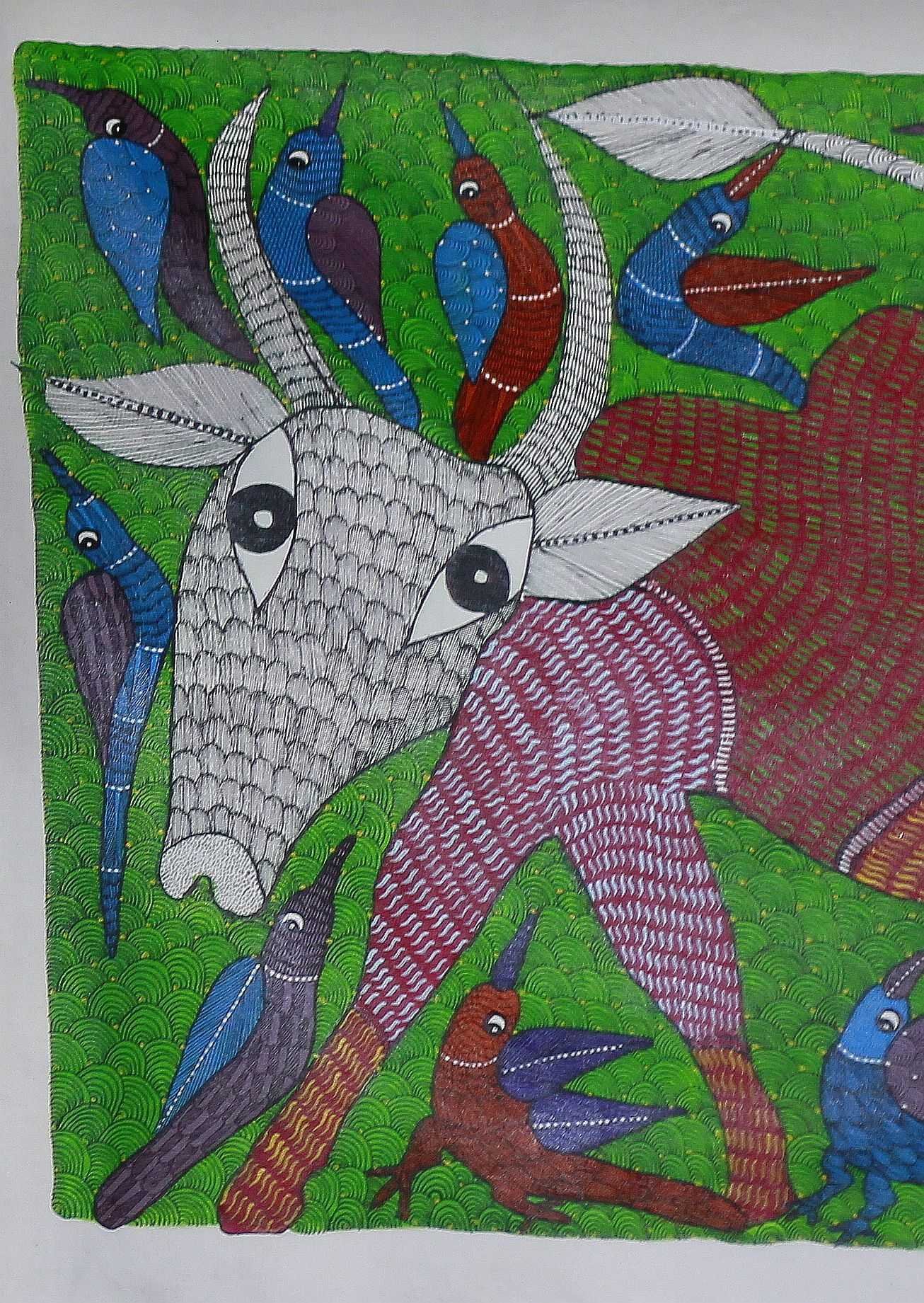
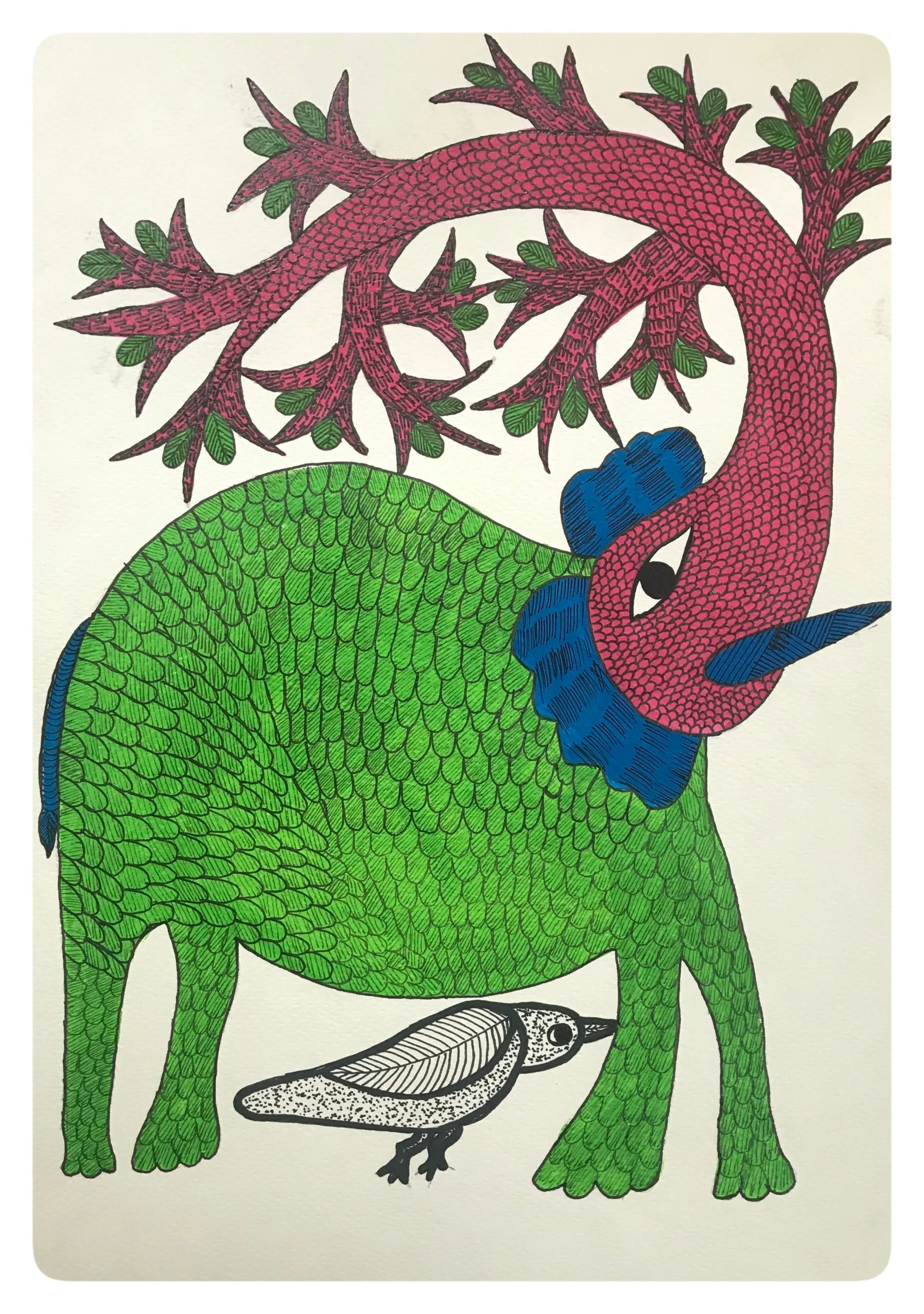
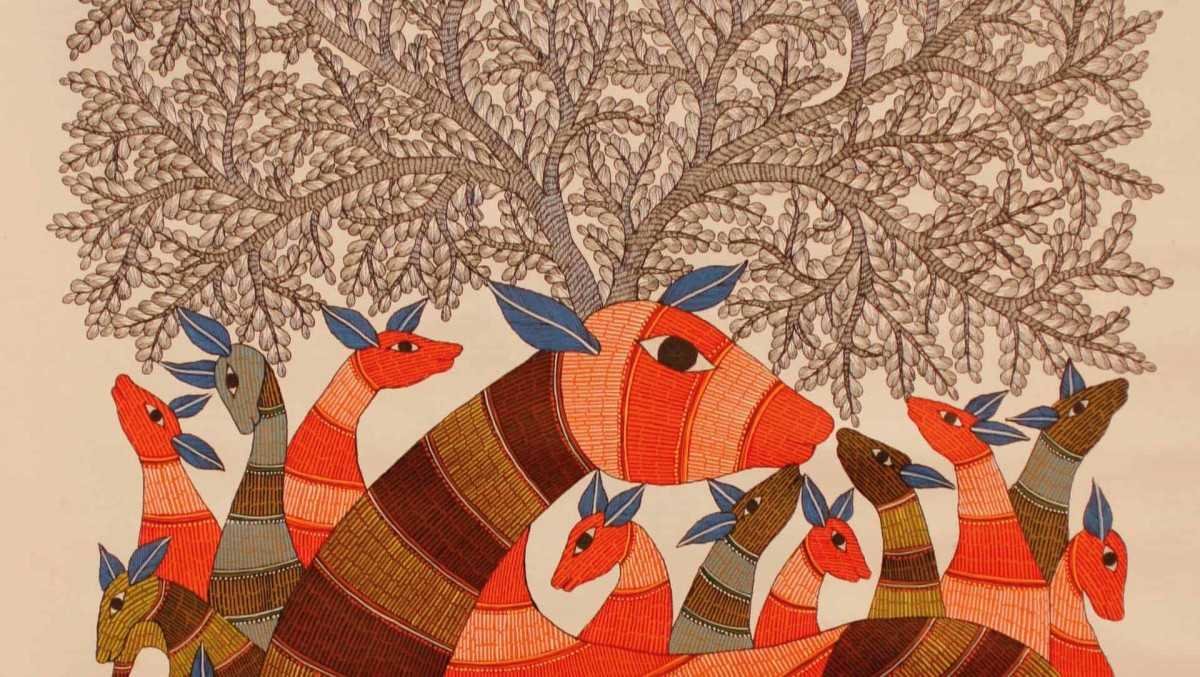
Gond paintings are a series of arranged dots and dashes developed by the Gondi tribe of central India. The tribes used to recreate some famous epic mythological tales of histories to traditional songs and rituals with rich detailing and bright colours. Traditionally, the colours used for gond paintings were derived from natural resources like cow dung, plant sap, charcoal, coloured soil, mud, flowers, leaves, etc. With growing times, the Gond art has moved beyond being a tribal art style.
Gond Painting is a tribal art form practiced by Gond Tribes of Central India. Gond are Dravidian and the largest Adivasi Community in India. They are predominantly found in Madhya Pradesh but can also be traced in Andhra Pradesh, Maharashtra, Chattisgarh and Odisha. Gond believes that everything is inhabited by a spirit and therefore sacred. Their paintings reflect the close connection between man and the nature. Paintings are created out of carefully drawn lines in such a way that they convey a feeling of movement to the still images. Dots and Dashes are added to make the details and create the feeling of movement. Gond Paintings use vivid and bright colours like White, Yellow, Blue and Red which are derived from natural objects.
Coloured soil, charcoal, plant sap, mud, flowers, leaves, cow dung etc. are used in making the required colours. Recently the Gond Paintings can be seen using poster colours and canvas.
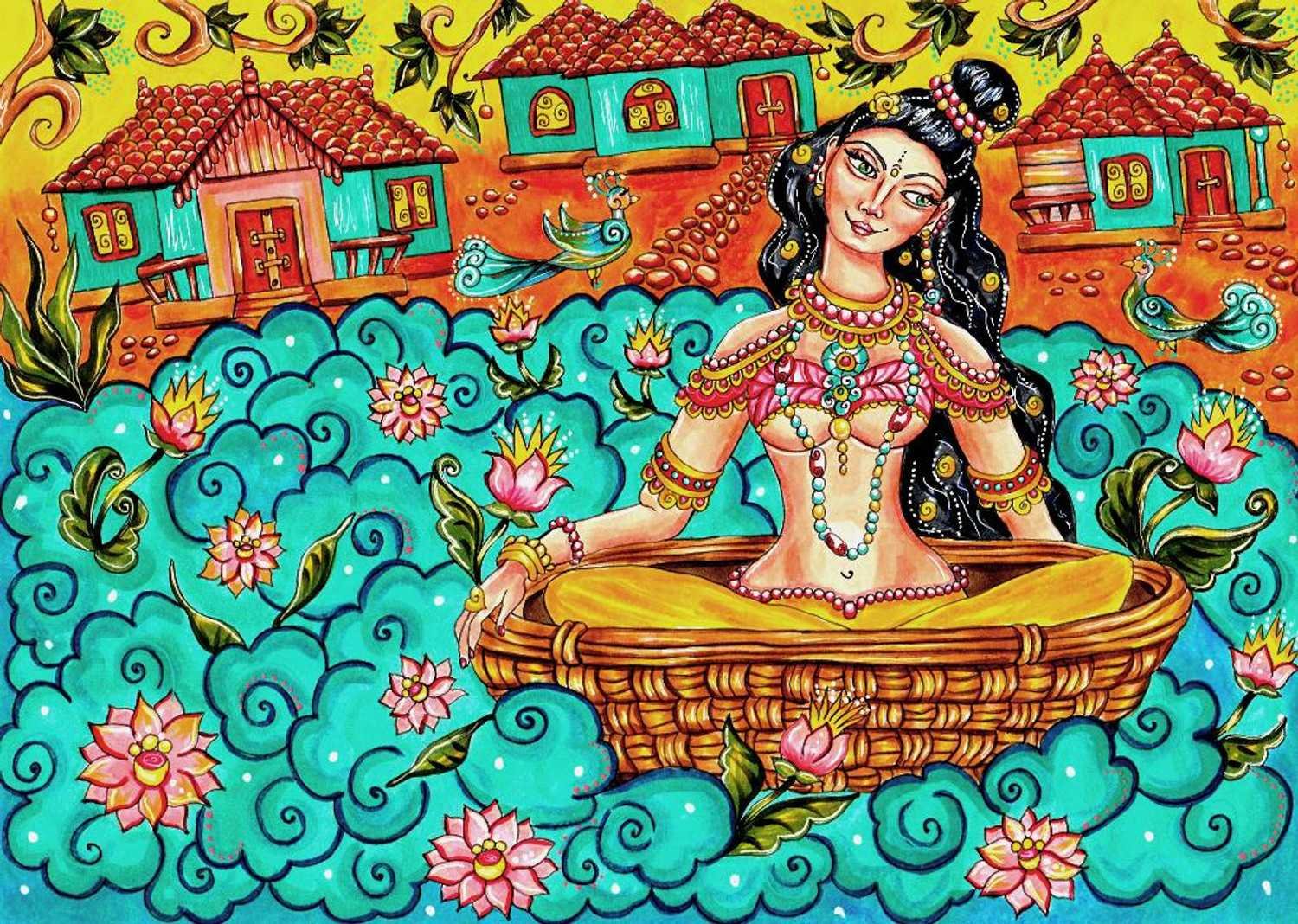
Kerala Murals
Kerala mural paintings are the most unique art form and have deep spiritual roots depicting themes of Hindu mythologies, epics of the bye-gone era, classic tales of Krishna, and mystic forms of Shiva and Shakti. These traditional art styles are made up of bold strokes, and vivid colours. White, ochre-red, bluish-green, yellow-ochre, and pure colours are predominantly used in Kerala mural painting.
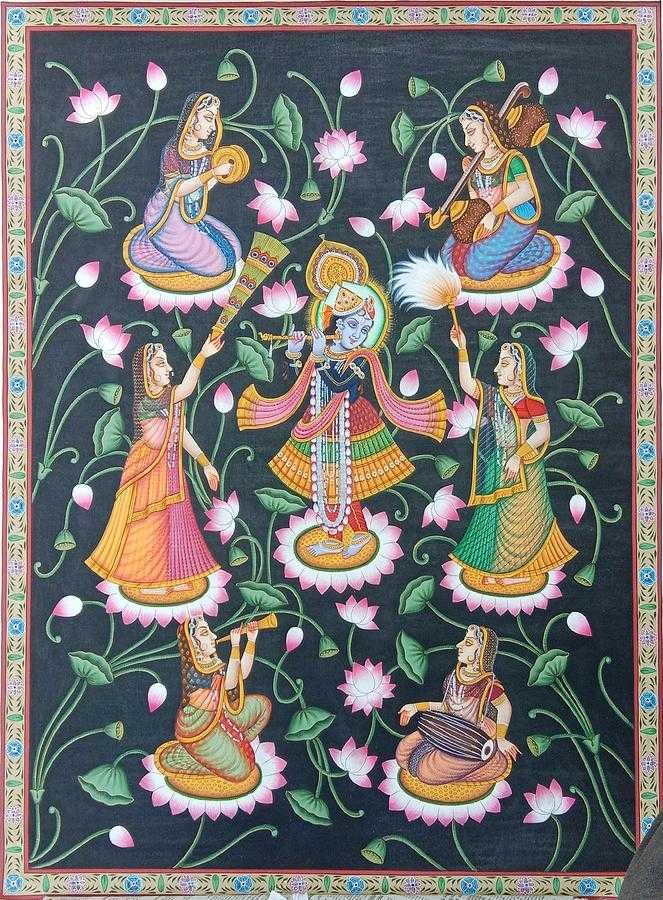
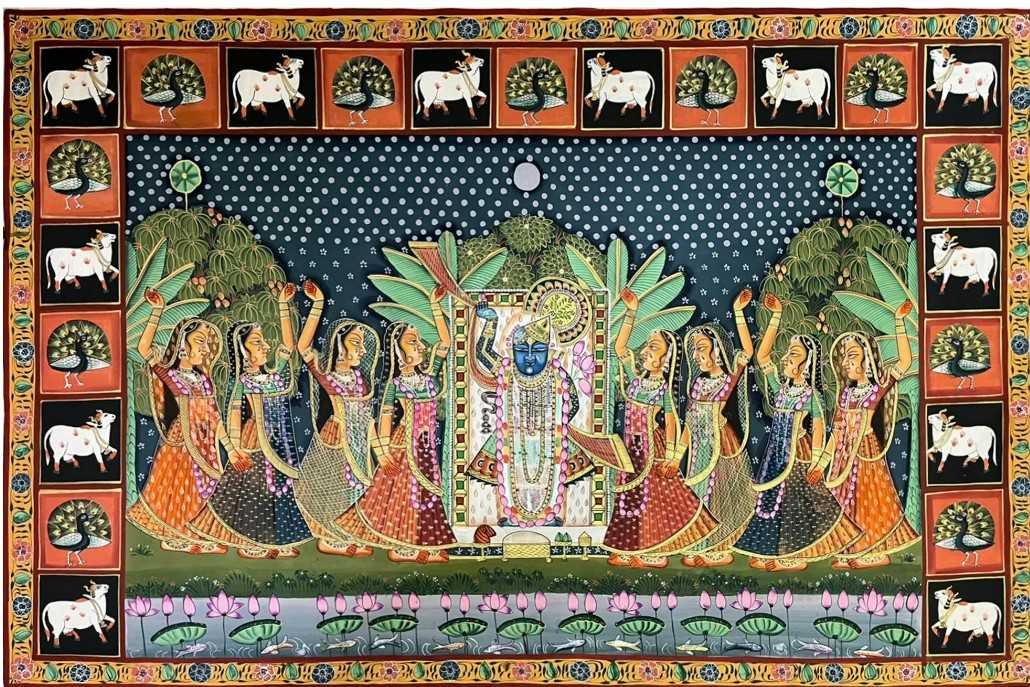
Picchwai
Picchwai artwork was made as wall hangings behind the main deity in Krishna temples in Nathdwara which narrates the stories related to Lord Krishna.Picchwaisare the most colorful and intricate work concealed with symbolism in the artistic motifs. This classified devotional art practice has passed from one generation to another and a fine example of spirituality in art.
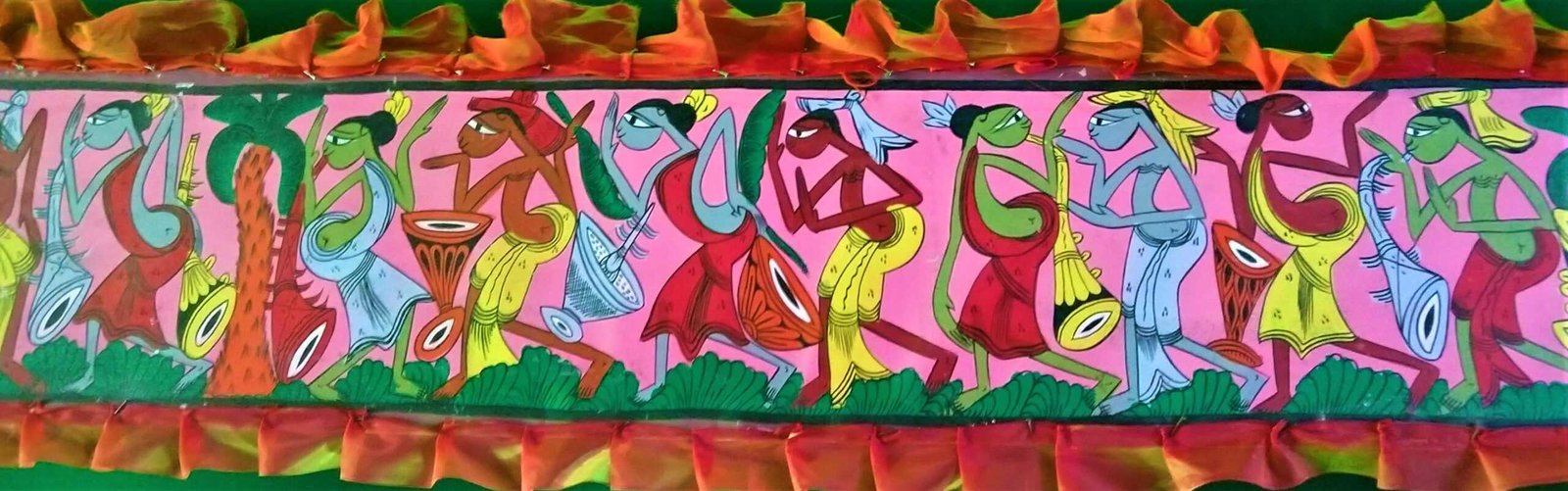
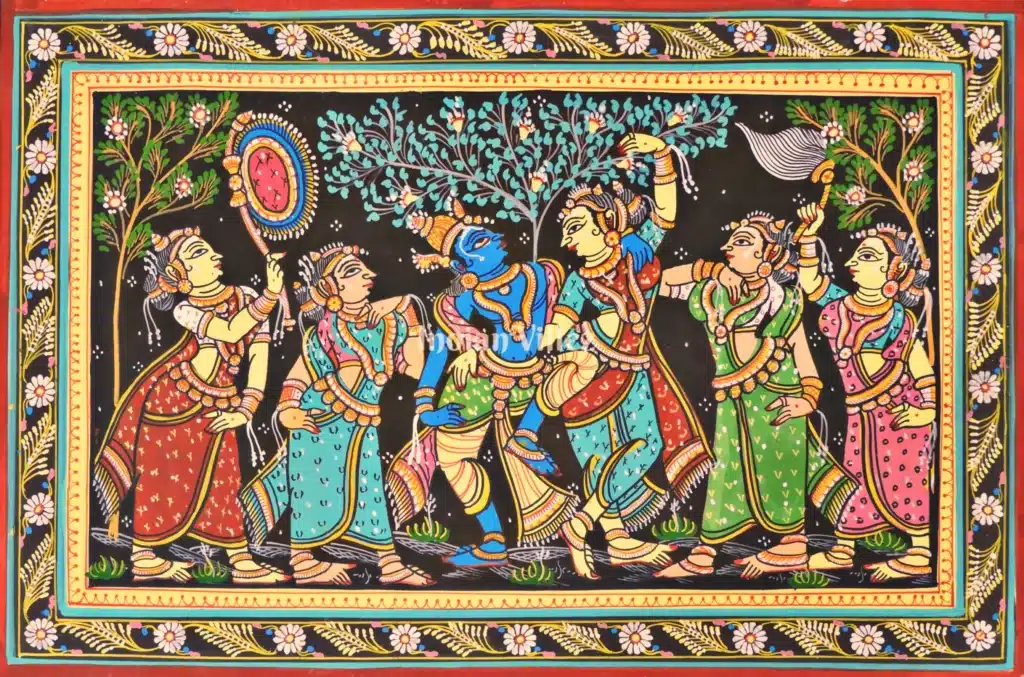
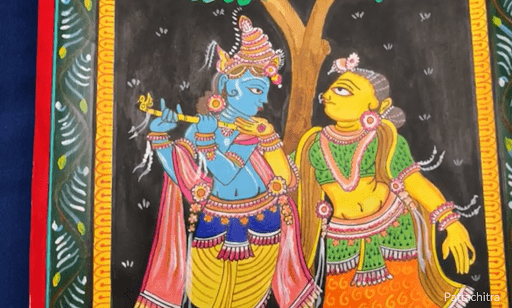
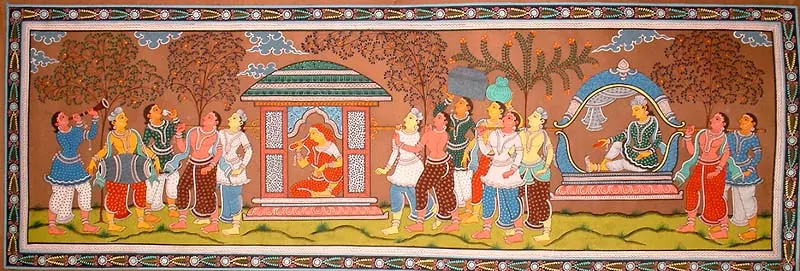
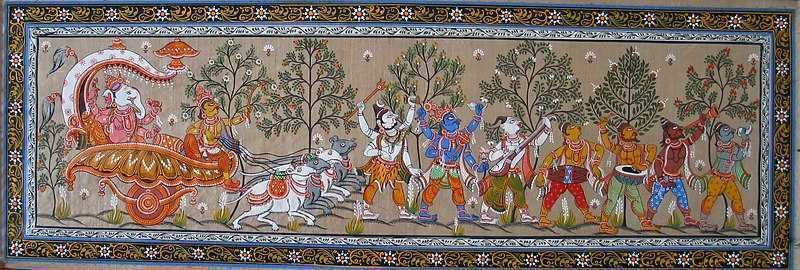
Pattachitra
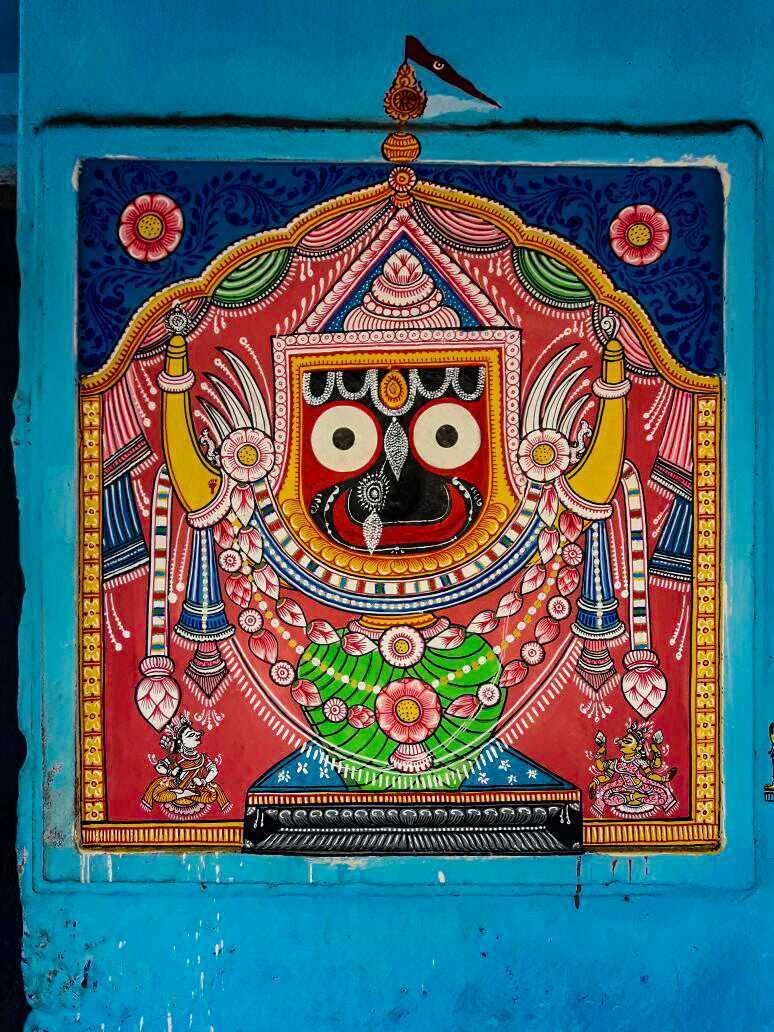
Patachitra or Pattachitra is a general term for traditional, cloth-based scroll painting, based in the eastern Indian states of Odisha, West Bengal and parts of Bangladesh. Patachitra artform is known for its intricate details as well as mythological narratives and folktales inscribed in it.
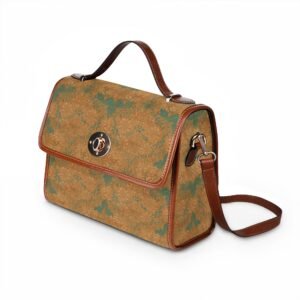
“Klee-Inspired Oversized Weekender Bag” has been added to your cart. View cart
“Clothes aren’t going to change the world. The women who wear them are.”
– Anne Klein
Clothing is often used to define the wearer’s social class, their politics and indeed, their very view of the world. Traditional dress helps form a nation’s identity as well as furthers its heritage.
In this instance, we explore how two indigenous cultures adapted (or didn’t) to Western influences, political change and the environment.
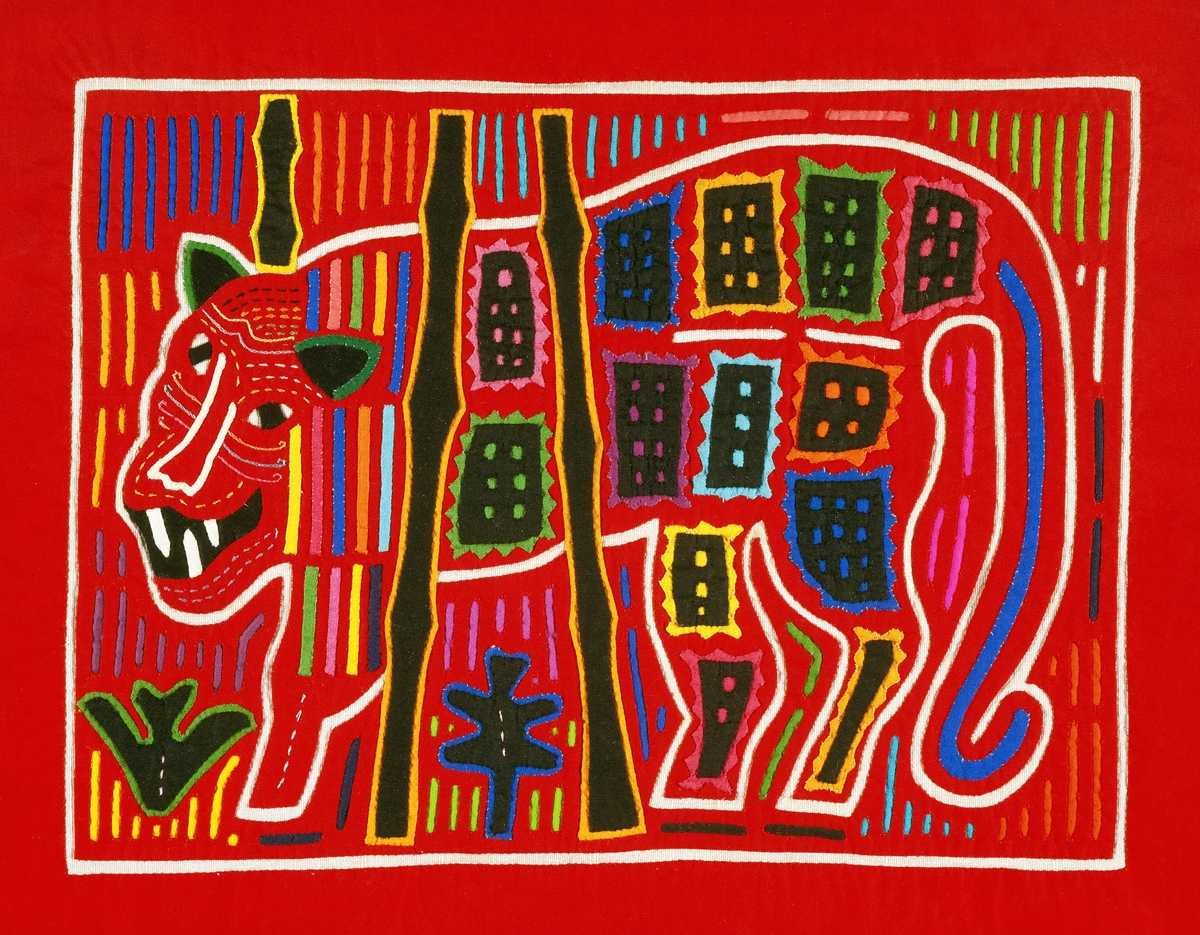
The Mola or Molas is a hand-made textile that forms part of the traditional women’s clothing of the indigenous Guna people from Panamá. Their clothing includes a patterned wrapped skirt (saburet), a red and yellow headscarf (musue), arm and leg beads (wini), a gold nose ring (olasu) and earrings in addition to the mola blouse (dulemor).[1] Two groups, Choco and Cuna lived side by side without intermarriage and without adopting a similar culture.[2] In Dulegaya, the Guna’s native language, “mola” means “shirt” or “clothing”. The mola originated with the tradition of Guna women painting their bodies with geometric designs, using available natural colors; at a certain point, after the arrival of the Spanish, these same designs were woven in cotton, and later still, sewn using cloth “acquired by trade from the ships that came to barter for coconuts during the 19th century”.[3][4]
history
A Guna woman displays a selection of molas for sale at her home in the San Blas Islands.
Molas may have their origin in body painting. In 1514, Pasqual de Andagoya, arrived in Darian and wrote.. the women are very well dressed, in embroidered cotton mantles which extend down so as to cover their feet, but the arms and bosom are uncovered.”[5] They did not wear blouses even in 1688 until they had been introduced by the missionaries.
Only after colonization by the Spanish and contact with missionaries did the Guna start to transfer their traditional geometric designs on fabric, first by painting directly on the fabric and later by using the technique of reverse appliqué. It is not agreed when this technique was first used. It seems to have been popular in the second half of the nineteenth century.[6] In 1924, Lady Brown refers to the dress of the medicine man/ Kantules as “dressed up the knees in long covered with cabalistic characters…all worked into, or let into, the cloth in a form of patchwork.”[7]
As an inspiration for their designs, the Guna first used the geometrical patterns which have been used for body painting before. In the past, they have also depicted realistic and abstract designs of flowers, sea animals and birds, and popular culture.
Depending on the tradition of each island, Guna women or men who identify as women begin the crafting of molas either after they reach puberty, or at a much younger age. Women who prefer to dress in western style are in the minority as well as in the communities in Panama City.
technique
Molas are hand-made using a reverse appliqué technique. Several layers (usually two to seven) of different-colored cloth (usually cotton) are sewn together; the design is then formed by cutting away parts of each layer. The edges of the layers are then turned under and sewn down. Often, the stitches are nearly invisible. This is achieved by using a thread the same color as the layer being sewn, sewing blind stitches, and sewing tiny stitches. The finest molas have extremely fine stitching, made using tiny needles.
This closeup of a mola by Venancio Restrepo shows the layering of the different colors of cloth, and the fine stitching involved.
The largest pattern is typically cut from the top layer, and progressively smaller patterns from each subsequent layer, thus revealing the colors beneath in successive layers. This basic scheme can be varied by cutting through multiple layers at once, hence varying the sequence of colours; some molas also incorporate patches of contrasting colours, included in the design at certain points to introduce additional variations of color.[8]
Molas vary greatly in quality, and the pricing to buyers varies accordingly. A greater number of layers is generally a sign of higher quality; two-layer molas are common, but examples with four or more layers will demand a better price. The quality of stitching is also a factor, with the stitching on the best molas being close to invisible. Although some molas rely on embroidery to enhance the design, a good looking mola is always constructed using the reverse-appliqué method as the leading technique.[1] A mola can take from two weeks to six months to make, depending on the complexity
cultural, social and political influences
In 1919, the panamanian government began a policy of forced assimilation banning mola’s dress and nose piercing in women. The government introduced these laws to Westernize Guna society and assert control.[13]
There was a strong link between traditional dress and Guna culture and identity. Molas have such an importance for the Guna people and their traditional identity that they can be considered responsible for the independent status of the Comarca Kuna Yala.[14]
After the attempt of the Panamanian government to “westernize” the Guna, the Guna greatly objected to the control on their cultural dress, and ethnic identity, and showed great strength in their reaction to the bans implemented by the government, leading to the Guna Revolution.[13]
In 1925 for three years following the revolution, women were required to once again adopt traditional dress as a form of rebellion against the government. Women on Nargana and other more progressive islands were forced to wear mola, even if they had never worn this traditional dress, and their noses had to be pierced by force.[13]
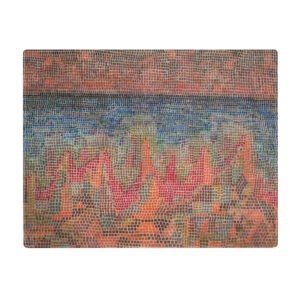
Paul Klee (German: [paʊ̯l ˈkleː]; 18 December 1879 – 29 June 1940) was a Swiss-born German artist. His highly individual style was influenced by movements in art that included expressionism, cubism, and surrealism. Klee was a natural draftsman who experimented with and eventually deeply explored color theory, writing about it extensively; his lectures Writings on Form and Design Theory (Schriften zur Form und Gestaltungslehre), published in English as the Paul Klee Notebooks, are held to be as important for modern art as Leonardo da Vinci‘s A Treatise on Painting was for the Renaissance.[1][2][3] He and his colleague, Russian painter Wassily Kandinsky, both taught at the Bauhaus school of art, design and architecture in Germany. His works reflect his dry humor and his sometimes childlike perspective, his personal moods and beliefs, and his musicality.
Klee was at the peak of his creative output. His Ad Parnassum (1932) is considered his masterpiece and the best example of his pointillist style; it is also one of his largest, most finely worked paintings.[53][54] He produced nearly 500 works in 1933 during his last year in Germany.[55] However, in 1933, Klee began experiencing the symptoms of what was diagnosed as scleroderma after his death. The progression of his fatal disease, which made swallowing very difficult, can be followed through the art he created in his last years. His output in 1936 was only 25 pictures. In the later 1930s, his health recovered somewhat and he was encouraged by a visit from Kandinsky and Picasso.[56] Klee’s simpler and larger designs enabled him to keep up his output in his final years, and in 1939 he created over 1,200 works, a career high for one year.[57] He used heavier lines and mainly geometric forms with fewer but larger blocks of color. His varied color palettes, some with bright colors and others somber, perhaps reflected his alternating moods of optimism and pessimism.[58] Back in Germany in 1937, seventeen of Klee’s pictures were included in an exhibition of “Degenerate art” and 102 of his works in public collections were seized by the Nazis.[59]
Klee has been variously associated with Expressionism, Cubism, Futurism, Surrealism, and Abstraction, but his pictures are difficult to classify. He generally worked in isolation from his peers, and interpreted new art trends in his own way. He was inventive in his methods and technique. Klee worked in many different media—oil paint, watercolor, ink, pastel, etching, and others. He often combined them into one work. He used canvas, burlap, muslin, linen, gauze, cardboard, metal foils, fabric, wallpaper, and newsprint.[65] Klee employed spray paint, knife application, stamping, glazing, and impasto, and mixed media such as oil with watercolor, watercolor with pen and India ink, and oil with tempera.[66]
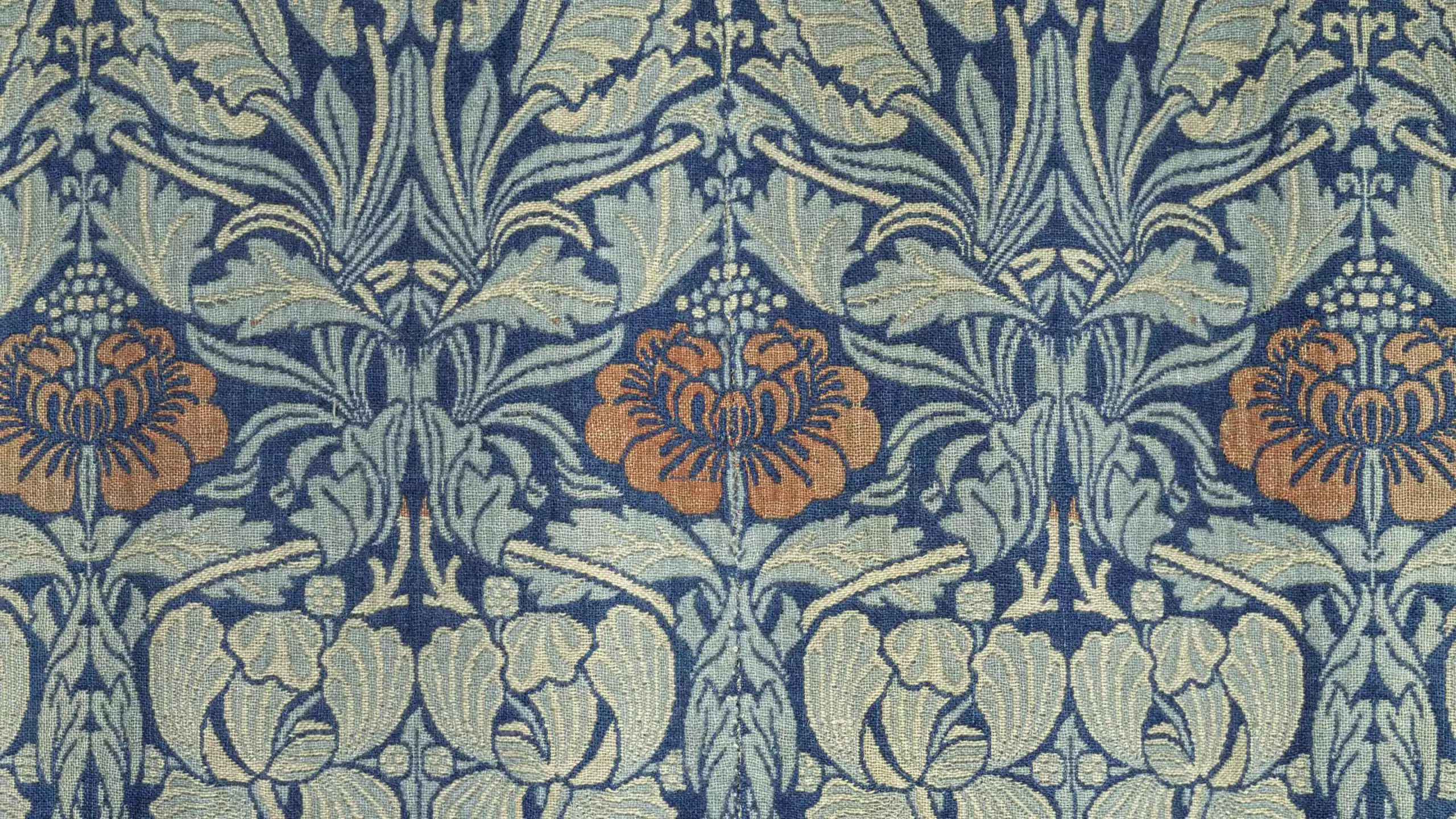
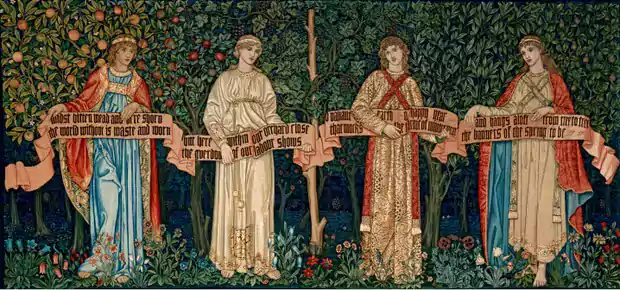
The Orchard, 1890 by William Morris. Photograph: Victoria and Albert Museum London
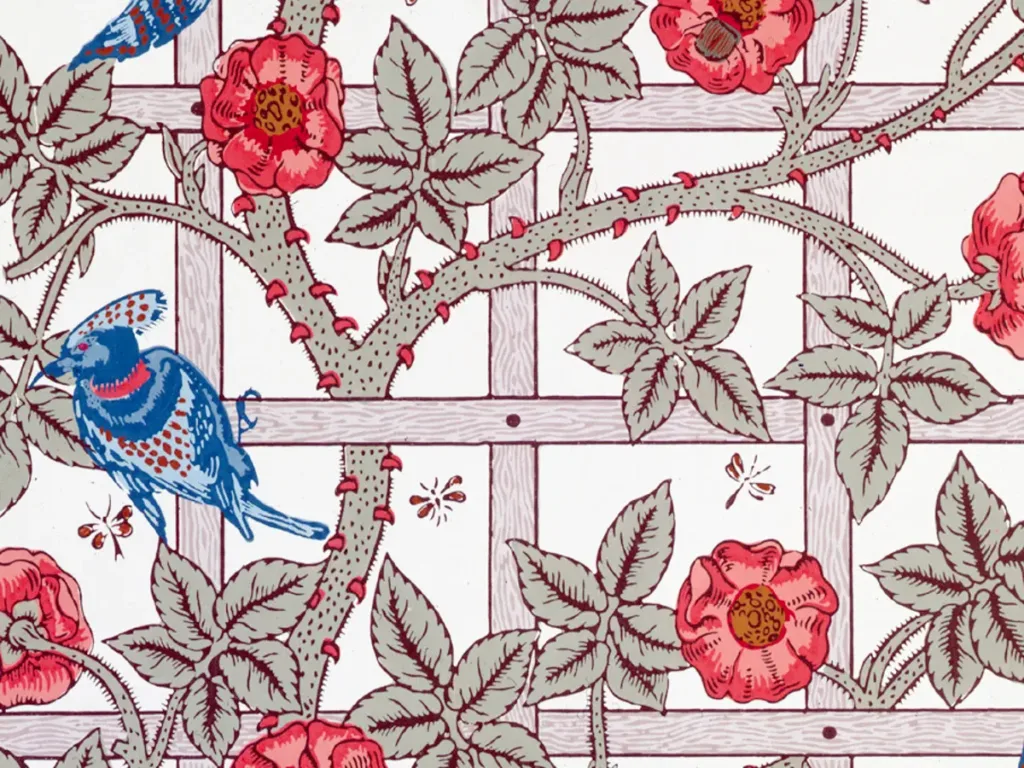
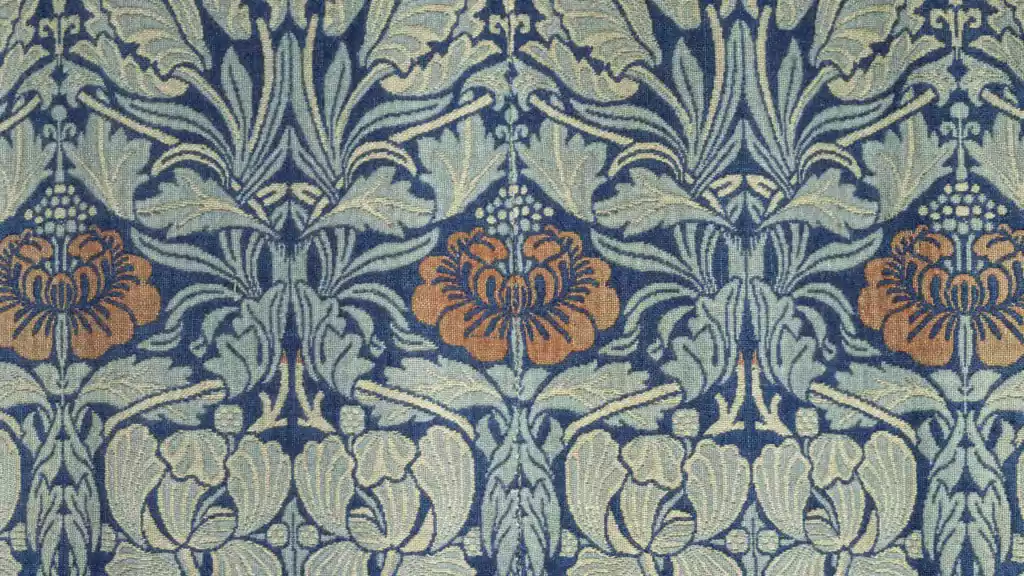
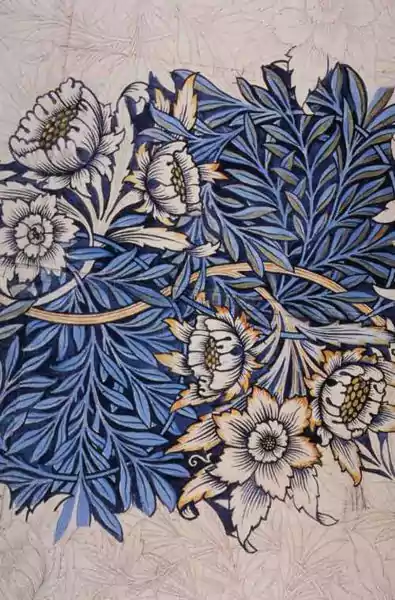
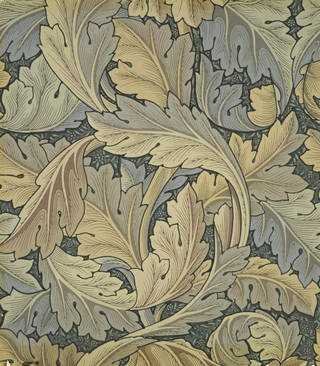
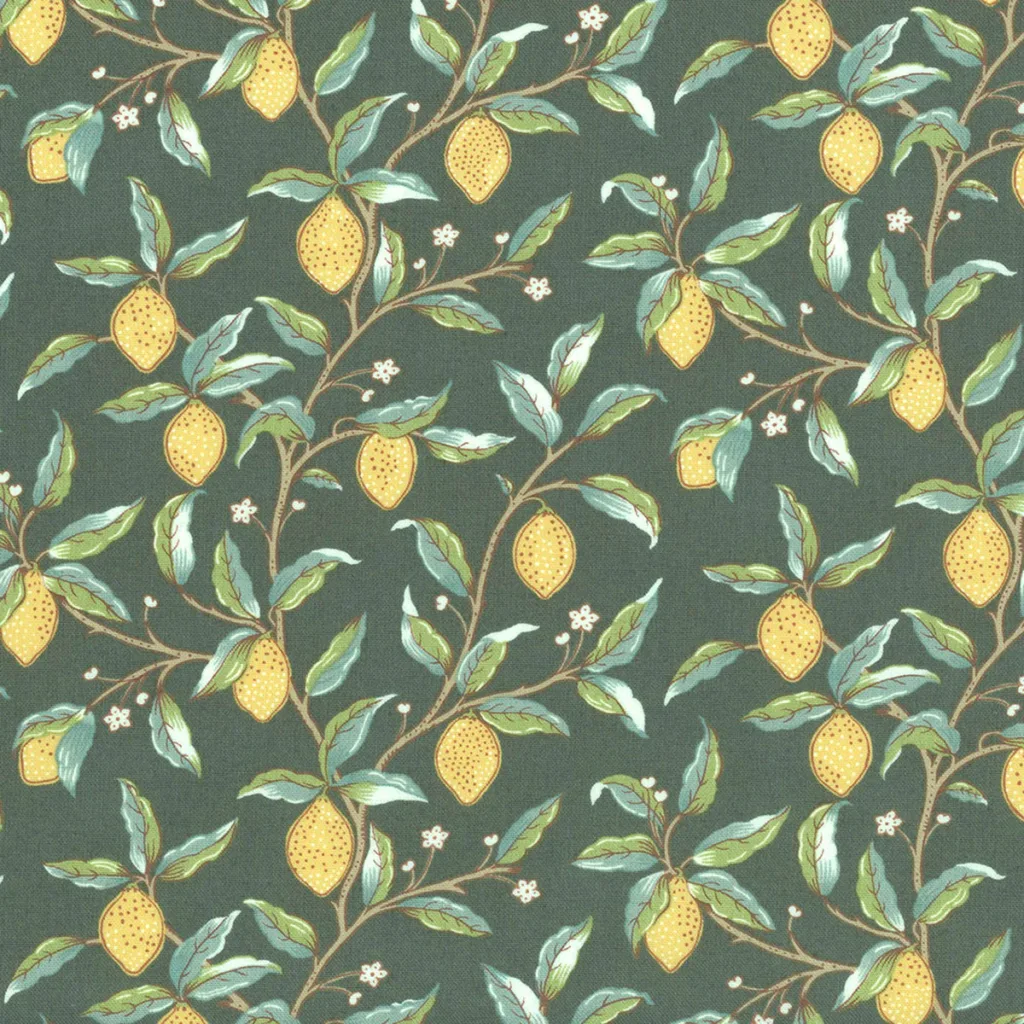
Morris founded the Morris, Marshall, Faulkner & Co. decorative arts firm with Burne-Jones, Rossetti, Webb, and others, which became highly fashionable and much in demand. The firm profoundly influenced interior decoration throughout the Victorian period, with Morris designing tapestries, wallpaper, fabrics, furniture, and stained glass windows. In 1875, he assumed total control of the company, which was renamed Morris & Co.
Morris is recognized as one of the most significant cultural figures of Victorian Britain. He was best known in his lifetime as a poet, although he posthumously became better known for his designs. The William Morris Society founded in 1955 is devoted to his legacy, while multiple biographies and studies of his work have been published. Many of the buildings associated with his life are open to visitors, much of his work can be found in art galleries and museums, and his designs are still in production.
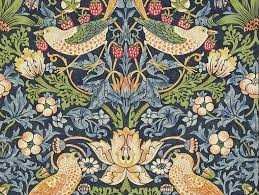
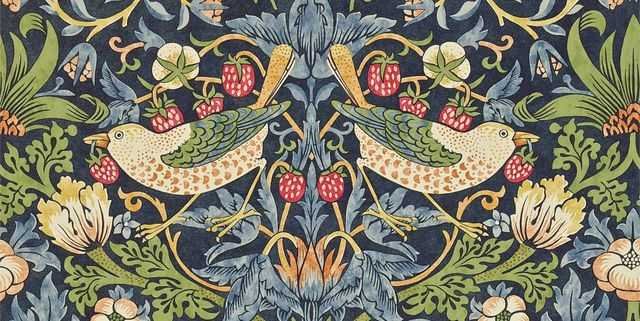
During his lifetime, Morris produced items in a range of crafts, mainly those to do with furnishing,[265] including over 600 designs for wall-paper, textiles, and embroideries, over 150 for stained glass windows, three typefaces, and around 650 borders and ornamentations for the Kelmscott Press.[249] He emphasised the idea that the design and production of an item should not be divorced from one another, and that where possible those creating items should be designer-craftsmen, thereby both designing and manufacturing their goods.[266] In the field of textile design, Morris revived a number of dead techniques,[267] and insisted on the use of good quality raw materials, almost all natural dyes, and hand processing.[268] He also observed the natural world first hand to gain a basis for his designs,[269] and insisted on learning the techniques of production prior to producing a design.[269]
Morris took up the practical art of dyeing as a necessary adjunct of his manufacturing business. He spent much of his time at Staffordshire dye works mastering the processes of that art and making experiments in the revival of old or discovery of new methods. One result of these experiments was to reinstate indigo dyeing as a practical industry and generally to renew the use of those vegetable dyes, such as the red derived from madder, which had been driven almost out of use by the anilines. Dyeing of wools, silks, and cottons was the necessary preliminary to what he had much at heart, the production of woven and printed fabrics of the highest excellence; and the period of incessant work at the dye-vat (1875–1876) was followed by a period during which he was absorbed in the production of textiles (1877–1878), and more especially in the revival of carpet-weaving as a fine art.[253][278]
Morris’s patterns for woven textiles, some of which were also machine-made under ordinary commercial conditions, included intricate double-woven furnishing fabrics in which two sets of warps and wefts are interlinked to create complex gradations of color and texture.[279] Morris long dreamed of weaving tapestries in the medieval manner, which he called “the noblest of the weaving arts.” In September 1879 he finished his first solo effort, a small piece called “Cabbage and Vine”.[280][281]
To provide the best experiences, we use technologies like cookies to store and/or access device information. Consenting to these technologies will allow us to process data such as browsing behaviour or unique IDs on this site. Not consenting or withdrawing consent, may adversely affect certain features and functions.
Functional
Always active
The technical storage or access is strictly necessary for the legitimate purpose of enabling the use of a specific service explicitly requested by the subscriber or user, or for the sole purpose of carrying out the transmission of a communication over an electronic communications network.
Preferences
The technical storage or access is necessary for the legitimate purpose of storing preferences that are not requested by the subscriber or user.
Statistics
The technical storage or access that is used exclusively for statistical purposes.The technical storage or access that is used exclusively for anonymous statistical purposes. Without a subpoena, voluntary compliance on the part of your Internet Service Provider, or additional records from a third party, information stored or retrieved for this purpose alone cannot usually be used to identify you.
Marketing
The technical storage or access is required to create user profiles to send advertising, or to track the user on a website or across several websites for similar marketing purposes.