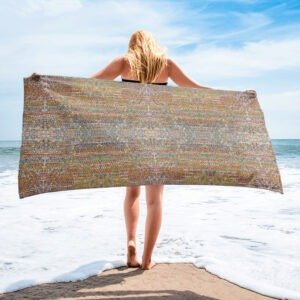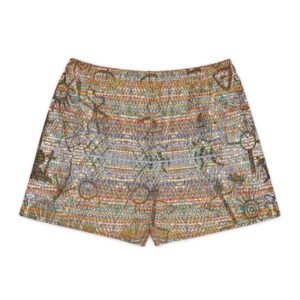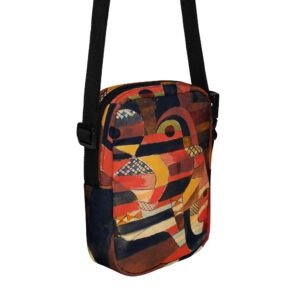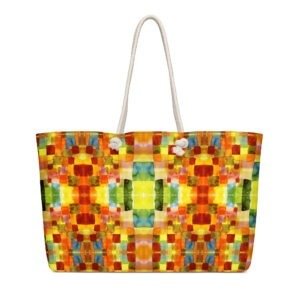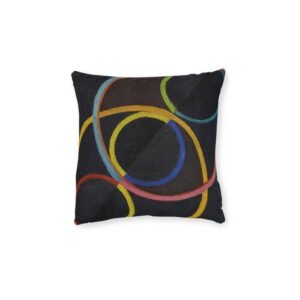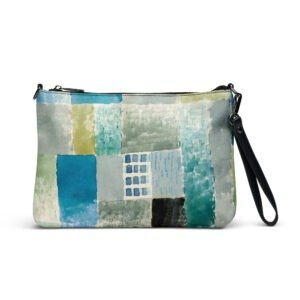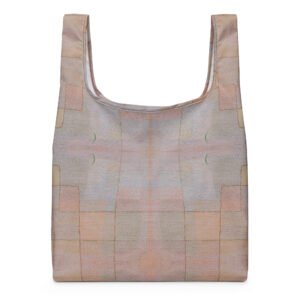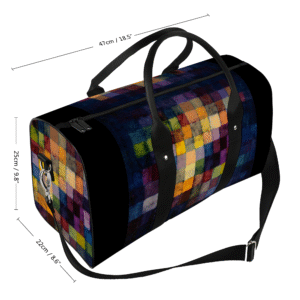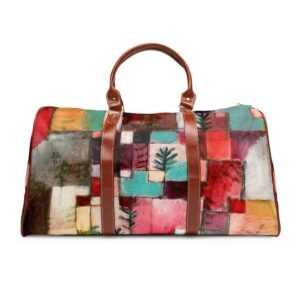
Fine Art FOCUS: Artist & Author: Paul Klee

Fine Art FOCUS: Artist & Author: Paul Klee

Paul Klee (German: [paʊ̯l ˈkleː]; 18 December 1879 – 29 June 1940) was a Swiss-born German artist. His highly individual style was influenced by movements in art that included expressionismcubism, and surrealism. Klee was a natural draftsman who experimented with and eventually deeply explored color theory, writing about it extensively; his lectures Writings on Form and Design Theory (Schriften zur Form und Gestaltungslehre), published in English as the Paul Klee Notebooks, are held to be as important for modern art as Leonardo da Vinci‘s A Treatise on Painting was for the Renaissance.[1][2][3] He and his colleague, Russian painter Wassily Kandinsky, both taught at the Bauhaus school of art, design and architecture in Germany. His works reflect his dry humor and his sometimes childlike perspective, his personal moods and beliefs, and his musicality.

Klee was at the peak of his creative output. His Ad Parnassum (1932) is considered his masterpiece and the best example of his pointillist style; it is also one of his largest, most finely worked paintings.[53][54] He produced nearly 500 works in 1933 during his last year in Germany.[55] However, in 1933, Klee began experiencing the symptoms of what was diagnosed as scleroderma after his death. The progression of his fatal disease, which made swallowing very difficult, can be followed through the art he created in his last years. His output in 1936 was only 25 pictures. In the later 1930s, his health recovered somewhat and he was encouraged by a visit from Kandinsky and Picasso.[56] Klee’s simpler and larger designs enabled him to keep up his output in his final years, and in 1939 he created over 1,200 works, a career high for one year.[57] He used heavier lines and mainly geometric forms with fewer but larger blocks of color. His varied color palettes, some with bright colors and others somber, perhaps reflected his alternating moods of optimism and pessimism.[58] Back in Germany in 1937, seventeen of Klee’s pictures were included in an exhibition of “Degenerate art” and 102 of his works in public collections were seized by the Nazis.[59]

Klee has been variously associated with ExpressionismCubismFuturismSurrealism, and Abstraction, but his pictures are difficult to classify. He generally worked in isolation from his peers, and interpreted new art trends in his own way. He was inventive in his methods and technique. Klee worked in many different media—oil paintwatercolorinkpasteletching, and others. He often combined them into one work. He used canvas, burlap, muslin, linen, gauze, cardboard, metal foils, fabric, wallpaper, and newsprint.[65] Klee employed spray paint, knife application, stamping, glazing, and impasto, and mixed media such as oil with watercolor, watercolor with pen and India ink, and oil with tempera.[66]

Source: Wikipedia

Fine Art FOCUS: William Morris

Fine Art FOCUS: William Morris

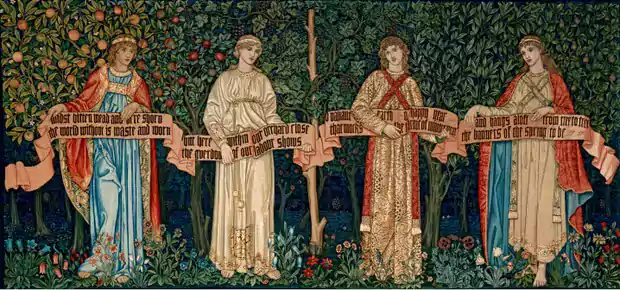
The Orchard, 1890 by William Morris. Photograph: Victoria and Albert Museum London

The Orchard, 1890 by William Morris. Photograph: Victoria and Albert Museum London

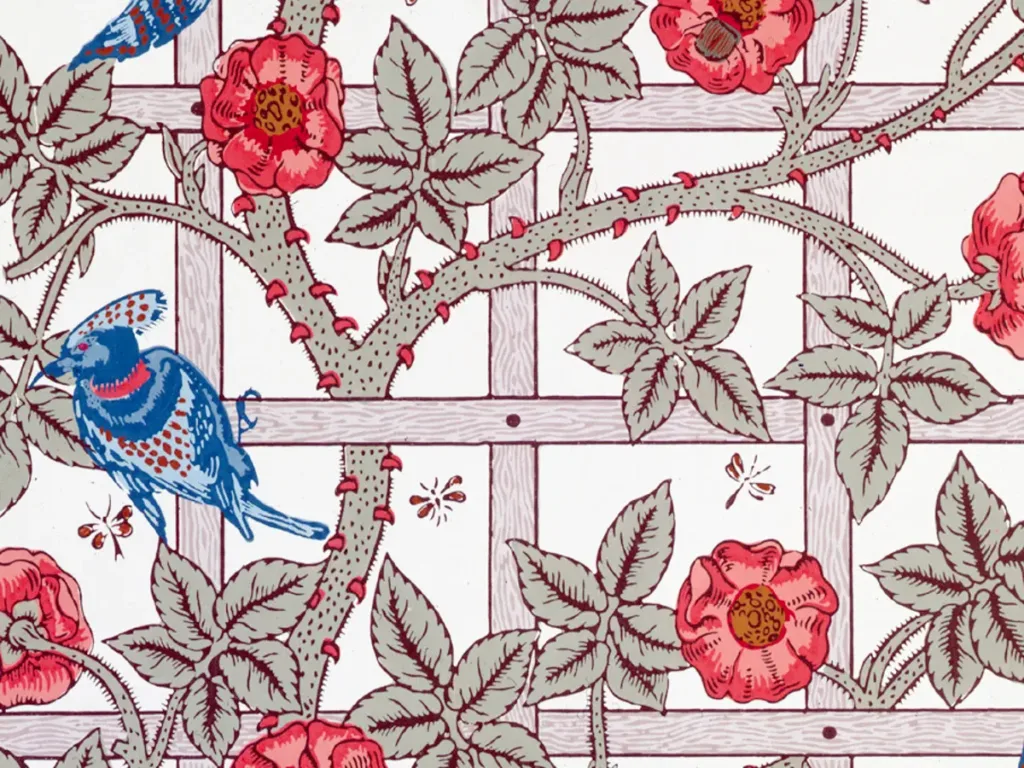
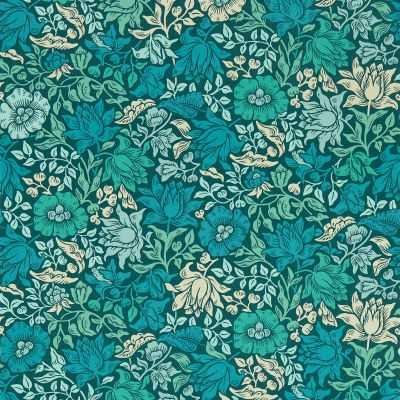
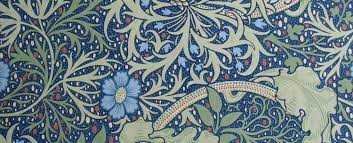
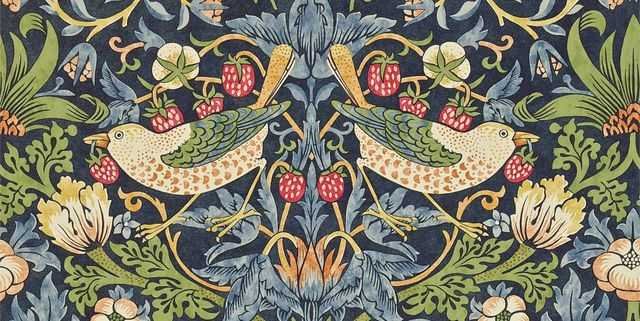
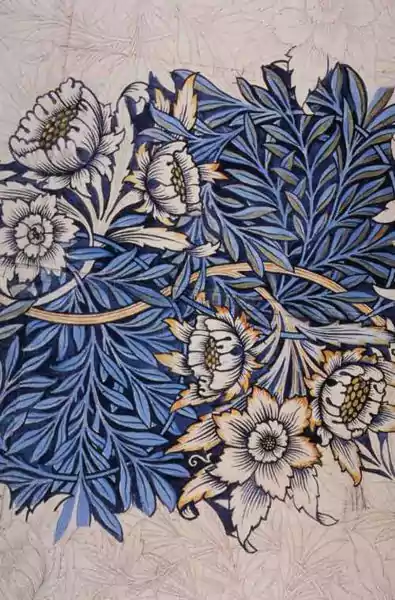
Morris founded the Morris, Marshall, Faulkner & Co. decorative arts firm with Burne-Jones, Rossetti, Webb, and others, which became highly fashionable and much in demand. The firm profoundly influenced interior decoration throughout the Victorian period, with Morris designing tapestries, wallpaper, fabrics, furniture, and stained glass windows. In 1875, he assumed total control of the company, which was renamed Morris & Co.

Morris is recognized as one of the most significant cultural figures of Victorian Britain. He was best known in his lifetime as a poet, although he posthumously became better known for his designs. The William Morris Society founded in 1955 is devoted to his legacy, while multiple biographies and studies of his work have been published. Many of the buildings associated with his life are open to visitors, much of his work can be found in art galleries and museums, and his designs are still in production.

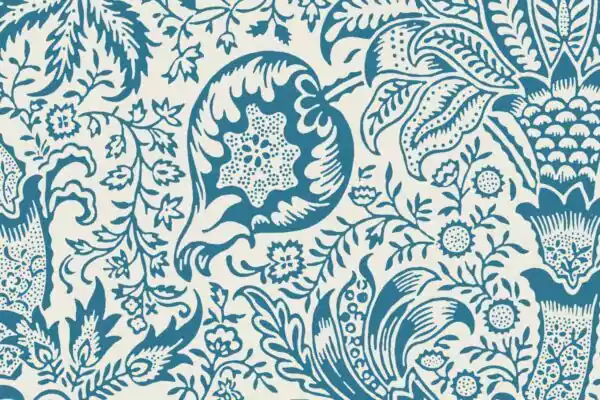
During his lifetime, Morris produced items in a range of crafts, mainly those to do with furnishing,[265] including over 600 designs for wall-paper, textiles, and embroideries, over 150 for stained glass windows, three typefaces, and around 650 borders and ornamentations for the Kelmscott Press.[249] He emphasised the idea that the design and production of an item should not be divorced from one another, and that where possible those creating items should be designer-craftsmen, thereby both designing and manufacturing their goods.[266] In the field of textile design, Morris revived a number of dead techniques,[267] and insisted on the use of good quality raw materials, almost all natural dyes, and hand processing.[268] He also observed the natural world first hand to gain a basis for his designs,[269] and insisted on learning the techniques of production prior to producing a design.[269]

Morris took up the practical art of dyeing as a necessary adjunct of his manufacturing business. He spent much of his time at Staffordshire dye works mastering the processes of that art and making experiments in the revival of old or discovery of new methods. One result of these experiments was to reinstate indigo dyeing as a practical industry and generally to renew the use of those vegetable dyes, such as the red derived from madder, which had been driven almost out of use by the anilines. Dyeing of wools, silks, and cottons was the necessary preliminary to what he had much at heart, the production of woven and printed fabrics of the highest excellence; and the period of incessant work at the dye-vat (1875–1876) was followed by a period during which he was absorbed in the production of textiles (1877–1878), and more especially in the revival of carpet-weaving as a fine art.[253][278]

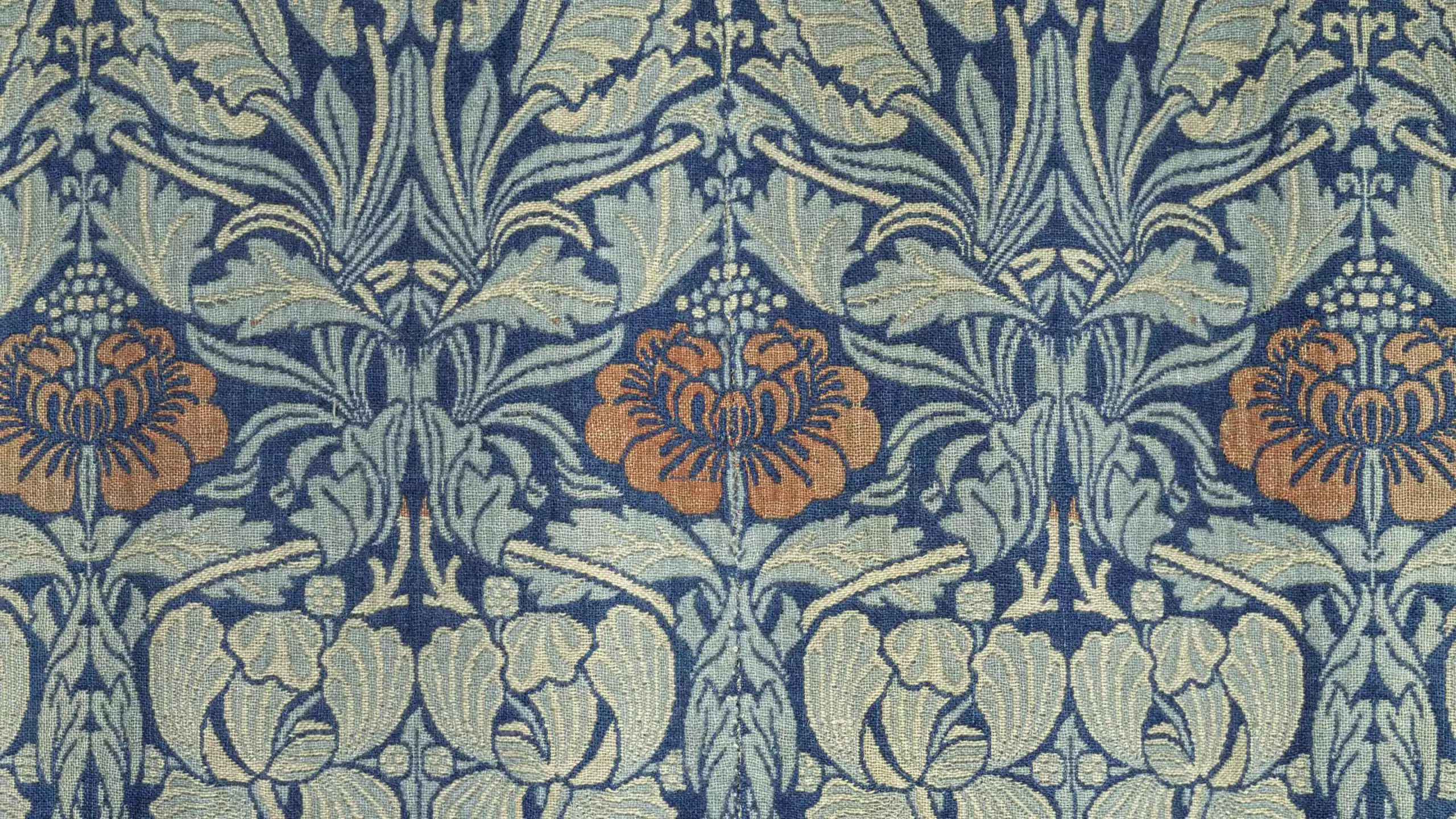
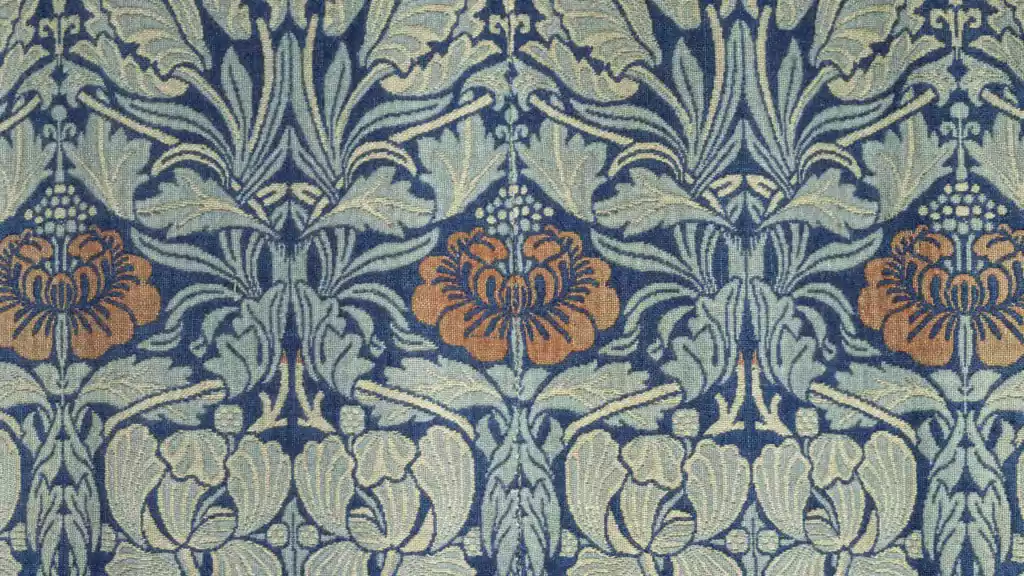
Morris’s patterns for woven textiles, some of which were also machine-made under ordinary commercial conditions, included intricate double-woven furnishing fabrics in which two sets of warps and wefts are interlinked to create complex gradations of color and texture.[279] Morris long dreamed of weaving tapestries in the medieval manner, which he called “the noblest of the weaving arts.” In September 1879 he finished his first solo effort, a small piece called “Cabbage and Vine”.[280][281]

the GENRES of INDIAN ART

the GENRES of INDIAN ART

The diversity of the world’s largest national population is astounding.

122 languages, including the planet’s oldest language: Hindi. 12 religions. 1.408 billion people (est. 2021). 29 states.

This pluralism nurtures an insane wealth of art and cultural expression. Arguably, this is the creative soul of Earth.

cgk.ink is exploring this rich history. And we’re here to share our very fundamental, simple understanding of its expressions, its forms and what it says to us now in the 21st century.

Below are some of the genres of Indian art that we gleaned from ArtZolo.com:

Madhubani

Madhubani paintings are the most celebrated style of folk painting from India; it is a form of wall art that arises in the Mithila region of Bihar. This eye-catching art style never fails to amaze one by its beautiful illustrations on the exposed interior walls of the houses in Bihar. Madhubani paintings are a perfect example of artistic expression and evocative portrayal of culture and traditions. The designs make perfectly distinctive geometrical patterns, scenes from mythology, and symbolic images. The perfect blend of bright vibrant colours and unique patterns make Madhubani stand out from other painting styles. Katchni, Tantrik, Bharni, Khobar, and Godna are five different styles of Madhubani paintings.

Warli

Warli is a 2500-year-old traditional painting style from Maharashtra majorly practiced in Thane and Nashik region. Warli paintings illustrate the nature and social rituals of the tribe. Warli paintings also showcase day-to-day life scenarios of the local people of that particular community just like dancing, farming, hunting, praying, etc. The local women used twigs to draw such beautiful lively designs with rice paste on mud walls to convey the celebration vibes of harvests or weddings.

Kalighat

The Kalighat painting was discovered around the mid-19th century at Kali Temple in Calcutta. These paintings and drawings were done on paper by a community known as “patuas”. A Kalighat painting depicts scenes of everyday life and mythological deities in a captivating manner. Kalighat artists use subtle earthy Indian colours like indigo, ochre, Indian red, grey, blue and white.

Phad

Phad is a traditional Rajasthani scroll painting from India, depicting the stories of local deities, heroic figures from battlefields, adventure stories, and legendary romantic stories on horizontal cloth scrolls with the hues of red, yellow, and bright orange. Phad Painting marvellously portrays multiple stories in a single composition and beautifully maintains the aesthetics of artistic expression.

Miniature / Mughal

Miniature painting is Mughal influenced art form; this style was introduced in India during the 16th century and transformed its identity in the history of Indian art. Miniature paintings are a blend of Islamic, Persian, and Indian elements. These paintings are created using all-natural mineral colours, precious stones, conch shells, gold, and silver. Across India, the miniature style painting has developed its own identity into distinct schools of miniature paintings like Kangra, Rajasthan, Malwa, Pahadi, Mughal, Deccan, etc.

Gond

Gond paintings are a series of arranged dots and dashes developed by the Gondi tribe of central India. The tribes used to recreate some famous epic mythological tales of histories to traditional songs and rituals with rich detailing and bright colours. Traditionally, the colours used for gond paintings were derived from natural resources like cow dung, plant sap, charcoal, coloured soil, mud, flowers, leaves, etc. With growing times, the Gond art has moved beyond being a tribal art style.

Kerala Murals

Kerala mural paintings are the most unique art form and have deep spiritual roots depicting themes of Hindu mythologies, epics of the bye-gone era, classic tales of Krishna, and mystic forms of Shiva and Shakti. These traditional art styles are made up of bold strokes, and vivid colours. White, ochre-red, bluish-green, yellow-ochre, and pure colours are predominantly used in Kerala mural painting.

Patachitra

Patachitra is a traditional art form from Odisha. Patachitra paintings are mostly derived from mythological and religious themes done beautifully with bold, strong outlines, vibrant colors like white, red yellow, and black with decorative borders. 

Picchwai

Picchwai artwork was made as wall hangings behind the main deity in Krishna temples in Nathdwara which narrates the stories related to Lord Krishna. Picchwais are the most colorful and intricate work concealed with symbolism in the artistic motifs. This classified devotional art practice has passed from one generation to another and a fine example of spirituality in art.