
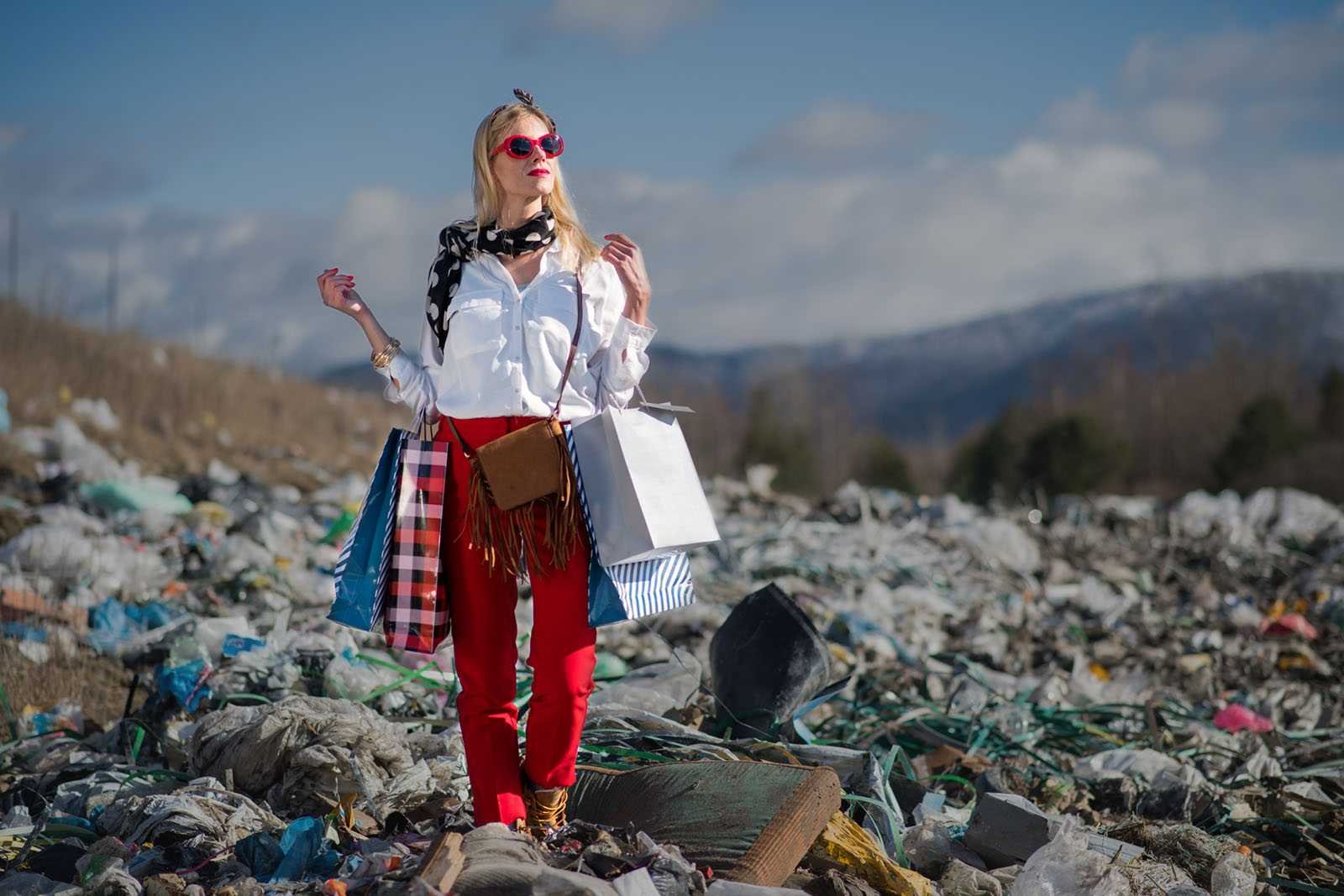
Cheap Fashion: Expensive Consequences

Cheap Fashion: Expensive Consequences

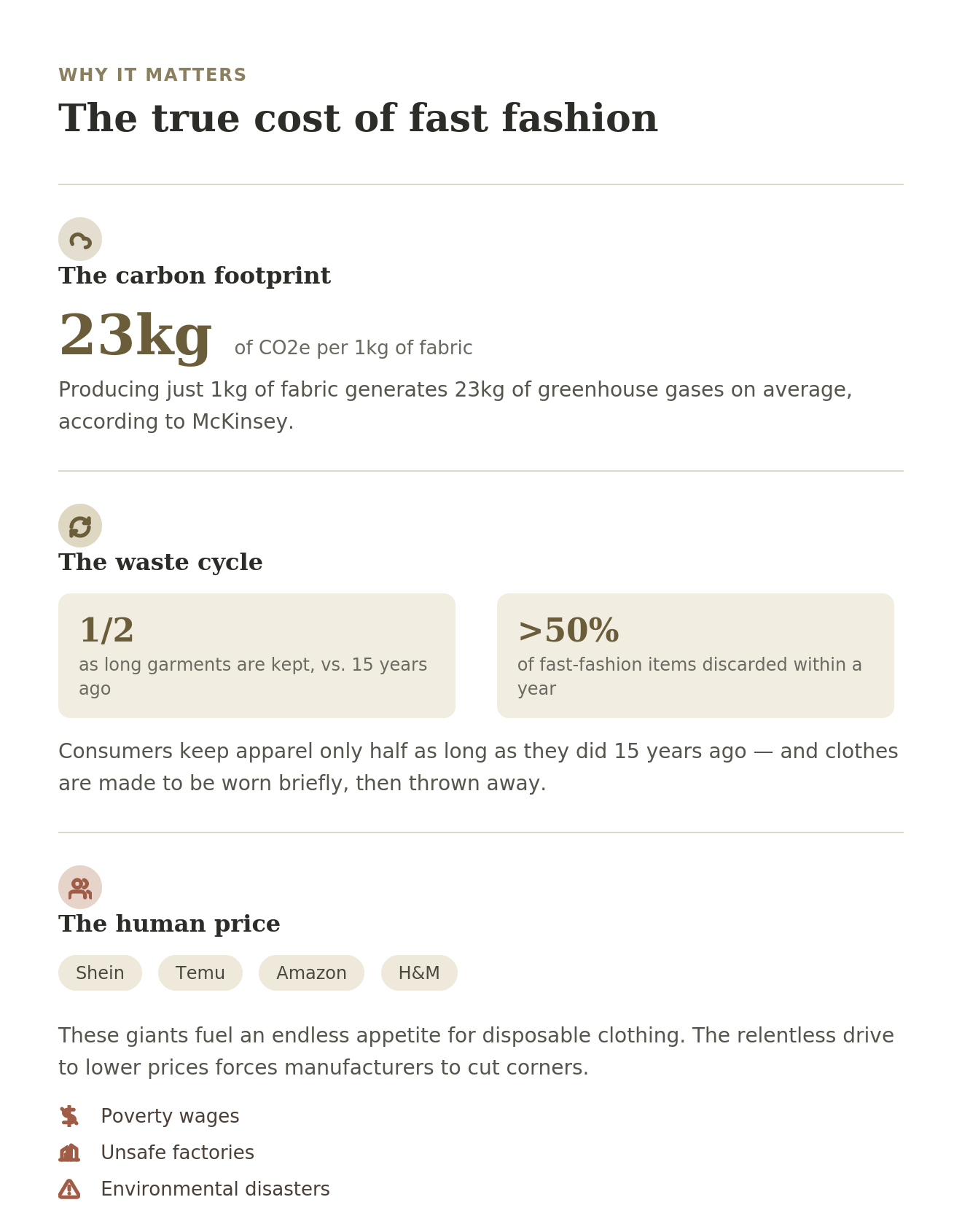
Your daily choices create immediate, measurable ripples across the globe. Nowhere is this impact more visible—or more destructive—than in the multi-trillion-dollar fashion industry. Behind the glamour of affordable style lies an environmental, human, and cultural crisis second only to oil production.

Our Blueprint for Change: What cgk.ink is Doing

We refuse to participate in careless production and mindless consumption.
Here is how we are actively lowering our footprint and supporting global equity:


Sourcing Responsibly:
We selectively source environmentally beneficial materials. You can view our sustainable designs by choosing the
Eco-Logical Collection from our Special Collections menu.

Carbon-Neutral Shipping: We provide a transparent carbon-offset option at checkout to neutralize the emissions generated by moving your order from our doors to yours.

Stripe Climate Partnership: As an early member of the Stripe Climate initiative alongside 200,000 global businesses, we contribute 1% of every payment fee directly to advanced carbon removal technologies.

Human-Centric Mindfulness: Sustainability includes people. We partner exclusively with suppliers who guarantee fair, equitable compensation and strictly adhere to international labor laws.
Care to Join Us?
True style outlasts temporary trends. Choose durability over disposability. Explore the Eco-Logical Collection today and vote for a cleaner, fairer world with your wallet.

The Toxic Cultural Shift: Transforming How We Live

Fast fashion doesn't just pollute our air and rivers; it fundamentally re-engineers our psychology, habits, and global communities.

The 52-Season Cycle: Traditional spring/summer and autumn/winter models are dead. Brands now push weekly micro-seasons to hook you on constant novelty.

The Disposable Mentality: Clothing is no longer viewed as a durable investment. ​Instead, aggressive corporate marketing trains us to treat garments like chewing gum or cigarettes—to be used up once and immediately thrown away.

The Illusion of Wealth: Rock-bottom price tags deceive shoppers into feeling wealthy because they can buy in massive quantities. In reality, it masks financial regression while making corporate owners billionaires.

The Psychological Toll: Psychological studies prove that as materialistic values rise, personal happiness plummets.  The continuous cycle of "retail therapy" creates chronic anxiety and persistent dissatisfaction.

Erasing Global Heritage: The flood of cheap, secondhand clothing dumped onto developing countries completely wipes out proud, historical local tailoring and textile sectors.

 

Ecommerce, Fashion and What Comes Next

Ecommerce, Fashion and What Comes Next

Ecommerce & Fashion

and What Happens Next

Online fashion just crossed a trillion-dollar threshold. The industry that barely existed twenty-five years ago is now the largest B2C e-commerce category on earth — and it's moving faster than at any point in its history. Here's where it stands, what's driving it, and what the next phase looks like for brands paying attention.

Where Things Stand

Fashion e-commerce in 2026 is simultaneously booming and stressed. Nearly half of all fashion sales worldwide now happen online — a figure that was under 20% a decade ago. The U.S. market alone sits at $163 billion, growing at 13% annually. Asia-Pacific leads globally at $401 billion, with North America and Europe following.

But growth obscures tension. Returns rates in fashion hover around 30–40%. Cart abandonment sits at 77.6% — meaning the vast majority of shoppers who add something to their cart leave without buying. Customer acquisition costs have risen sharply as paid social becomes more competitive. And the old playbook — launch a site, run ads, ship product — is no longer enough to build a sustainable brand.

"Fashion in 2026 is moving toward a more integrated model: AI for relevance, resale for liquidity, and social commerce for discovery and conversion. The old e-commerce structure still matters, but it is no longer enough on its own."

The brands winning right now share a few things in common: they have a genuine point of view, they are discoverable without relying entirely on paid acquisition, and they've built some form of owned relationship with their customer — through content, community, or both.

$997B

Global market 2026

$1.6T

Projected by 2030

47.9%

Of all fashion sales now online

81%

Of traffic from mobile

FUN FACT:

A nominal GDP of $1.6 trillion is roughly equal to the economic output of Turkey, which reached this milestone recently. [1]
On a regional scale within the United States, this figure closely mirrors the enormous economic output of Southern California as a whole. [1, 2]
For global context, you can compare this to other nations using the International Monetary Fund data, where countries like South Korea and Mexico hover around the $1.8 trillion mark, and Australia sits near $1.8 trillion. [1]

The 3 Forces Reshaping the Market

01

Social Commerce Is Eating the Funnel

Social commerce will generate an estimated $919 billion globally in 2026, with TikTok, Facebook, and Instagram leading as shopping platforms. Around 69.4 million Americans shopped on Facebook in 2025 alone, with Instagram and TikTok Shop close behind. The significance here isn't just the numbers — it's the structural shift. Discovery, consideration, and purchase are now collapsing into a single moment inside a single app. Brands that can create content that converts in that moment have a structural advantage over brands that rely on the traditional browse-to-checkout flow.

02

AI Is Changing How People Find Things

In 2026, AI-driven personalization is responsible for nearly 45% of all online conversions. The global AI-in-fashion market is expected to hit $4.3 billion by 2027, and two-thirds of luxury fashion consumers are already using AI when shopping online. We are moving toward "Generative Commerce" — AI shopping assistants that understand context, not just keywords. Being findable by an AI assistant requires rich, accurate, contextually detailed product information and a strong brand signal across the web.

03

Resale and Circular Fashion Are Structural, Not Cyclical

The secondhand market is worth $260 billion and climbing toward $522 billion by 2030. 52% of consumers bought secondhand in 2024. Sustainability in 2026 isn't a marketing slogan — it's an operational advantage. Brands with genuine sustainability credentials are not just meeting consumer demand. They are reducing costs, improving margins, and building the kind of brand trust that paid advertising can't manufacture.

What Comes Next

The next wave of fashion platforms probably will not win by being just another ecommerce layer. They will need to combine at least three things: discovery that feels relevant, resale infrastructure that ordinary users can actually use, and a broader ecosystem that creates ongoing relationship rather than one-off transactions.

For independent brands, the path forward is actually cleaner than it is for the big platforms. You don't need to be everywhere. You need to be unmistakably yourself in the places that matter. That means a distinct visual and editorial identity, real relationships with customers who return because of what you stand for, and product that's genuinely worth owning — made with care, shipped with intention, designed to last.

The trillion-dollar market is real. So is the noise. The brands that cut through it in the next few years will be the ones that understood early that quality of relationship matters more than volume of impressions.

the cgk.ink perspective

We build for the part of this market that's growing fastest: design-forward, sustainability-rooted, independent. Our collections — from the globally art-inspired apparel — are made for customers who want to own something considered, not just something convenient. If the data above points anywhere, it points here.


Sources: Shopify Enterprise Blog · Capital One Shopping Research · Statista · Medium / Cheeky Fit · Gelato Apparel Trends 2026 · Vocal Media · Inventory Source · HMLC · OpenTools.ai