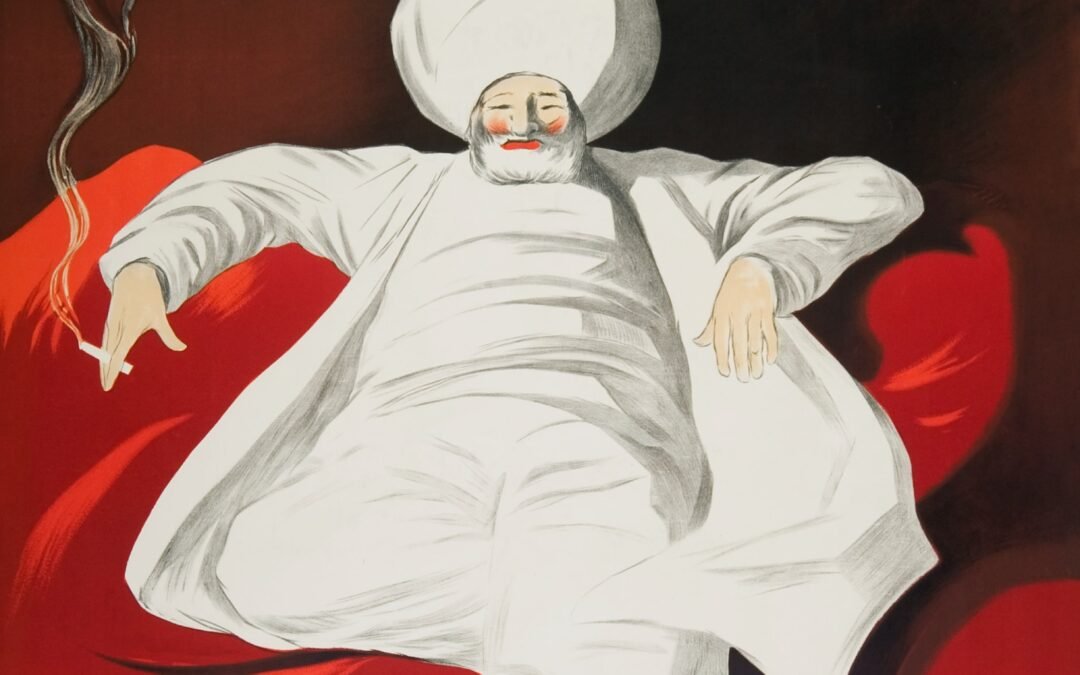
He is credited to revolutionize the old thinking of poster illustration during his time. Cappiello’s concept of poster art was simple, to simply engage audience faster by creating unconventional visual impact. He was the first poster artist to boldly experiment and innovate new graphical styles at the time. His presentation was straight forward with use of enlarged bold subjects with unconventional colors,contrasted by the very dark background, which make his art “pop out”. By doing so he moved away from illustrating intricate details in his artworks, which was famous at the time as art nouveau movement was popular.
His new functionalist style of graphic art, in which a single bold image would be used to grab the viewer’s attention. This graphic design proved highly effective, not only in drawing attention to the product but also in building a brand. It made Capiello the acknowledged master of the advertising poster in his time for almost 20 years.
Howdy! I’ve been living here for a decade or so and I’ve picked up a lot of new info. I’m a slow learner. I’m feeling kinda friendly, so I’m gonna share:
Metro
Not “THE Metro,” it’s just “METRO.” It rhymes with “assault” and “dead-fentanyl-addict.” And “urine.” It is also fairly efficient considering the area it has to cover. But not for everyone.
So, some sick fucks thought that “having fun” on top of an active fault was OK. I was terrified at age 11 (thanks, Dad).
les Natural Disasters
Wherein, Kylie Minogue Dies a Horrible Death, The (ex)Standard Hotel Falls Apart Quicker than it Actually Did and Our Heroine Almost Perishes and is asked “Are you OK?”
We all know the drill: drink-and-lounge, duck-and-fuck, buckle-up, ride-er-out, save-the-booze-bottle. Hi, CVS? Emergency refill of my standing benzo Rx.
Doesn’t really matter. We’re fucked. I personally ran to a liquor store during the latest one and they were open (love BUZZ)! I had to walk up eight motherfucking stories of stairs because the elevator was a fucking pansy and automatically cut off. Fucking gay elevator. MAN UP! Bitch.
OH. MY. GAWD. Kylie? NOT KYLIE! Also please notice how none of the liquor bottles at the bar move.
I am not the first to bring this up, but I AM the first to personally aver that we had a (weak-ish) 5.3 WHILE having a HURRICANE. Not many places can lay claim to that. Nope, sorry Texas, Florida and North Carolina, you suck. And that was without fracking (staring at you, Oklahoma). Talk to me about fear, I EAT earthquakes! I did back-to-back 6.7s. ON JULY 4TH! Fuck you, Florida and “OathKeeper” Assholes. God Bless America. Also, shit I’ve lived through here during my residency:
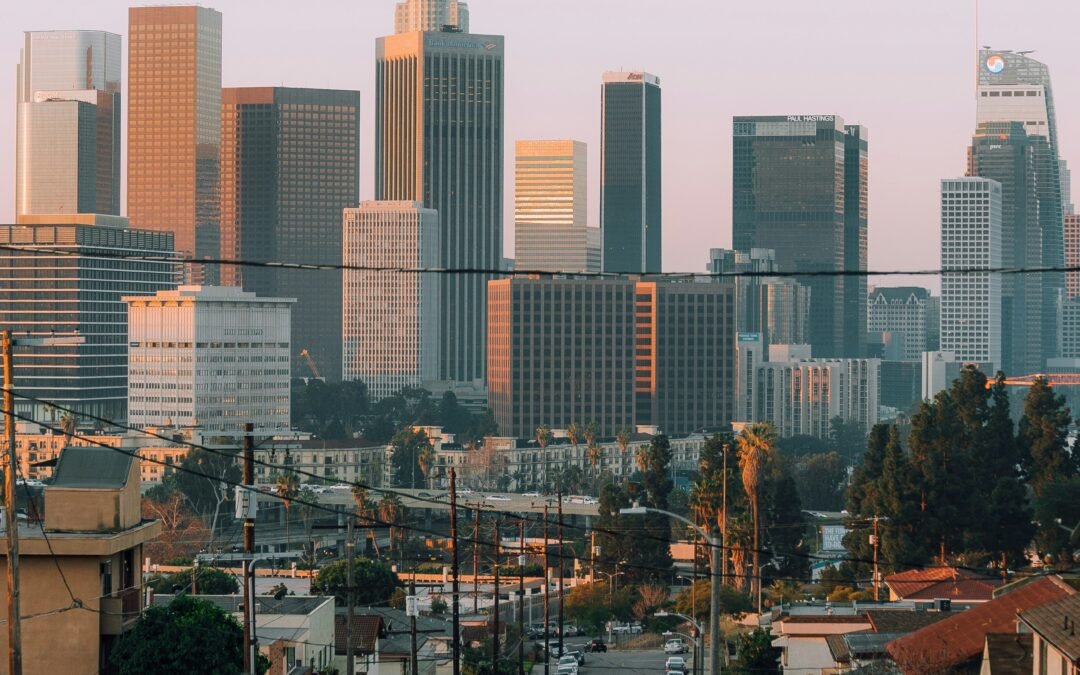
LA loves to say that it’s one of the most diverse cities in the world.It’s not. That award goes to Toronto, ONT (heyo to our buds the T.O. to the North n’ shit)
LA: it is insanely segregated. Koreatown? Holy shit. Compton (don’t mix the two). Burbank or Beverly Hills? “Beverly Adjacent?” What about Thaitown? No one lives there except by being vetted by genealogy. Compton, South Central? No one lives there based on skin color. Downtown? Nope… it’s a collection of cordoned off camps. Disagree? Try boarding a bus and see how far you get based on your skin color and accent.
Education
…
NIghtlife / Fun Shit
Just $1K. An hour. We accept cash. That’s it. U$D only.
Wanna live here?
IKR! Sun and cute boys and awmigawd it SO perfect! It’s like Barbie and Oppenheimer had a baby and I’m the car! But I really want to produce/direct/fuck/escape/5150/get wasted, um, I’m sorry, do I know you?
Soulless and vacuous, just like the housing market and its mechanizations:
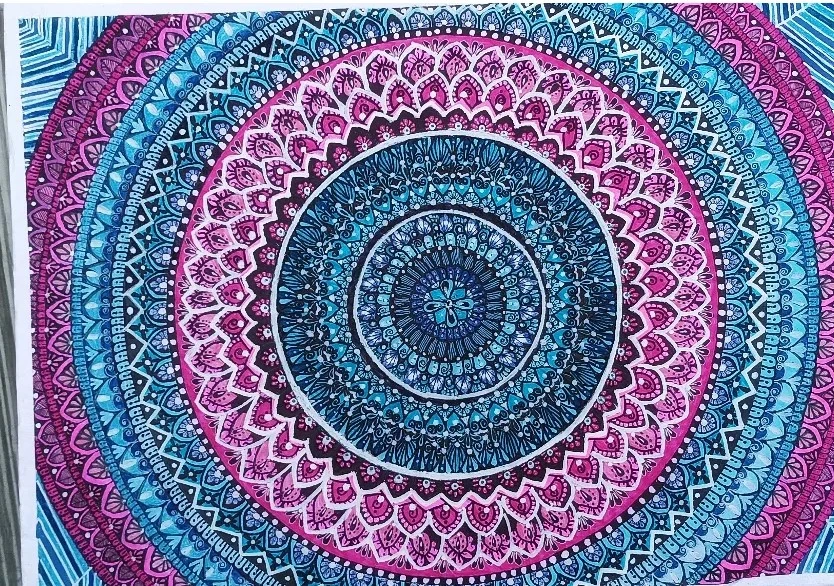
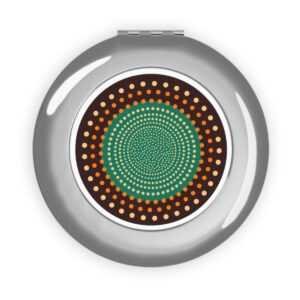
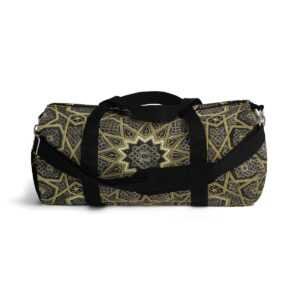
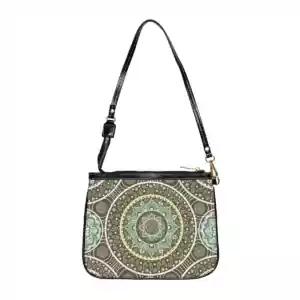
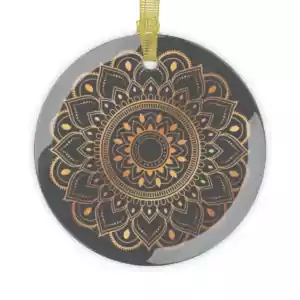
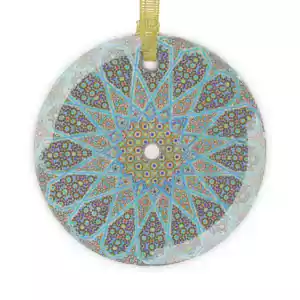
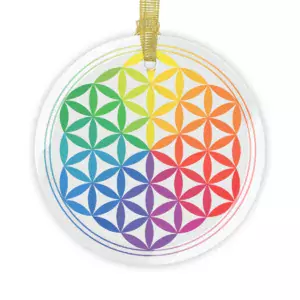
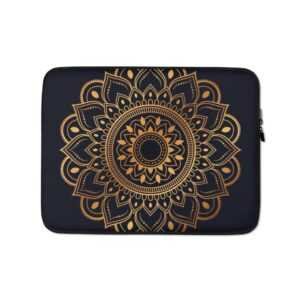
The word mandala means “circle” in Sanskrit and is the name given to geometric patterns that Buddhists have used in the practice of meditation for centuries.
Carl Jung, the renowned Swiss psychiatrist and psychoanalyst, had a deep fascination with mandalas. He considered them to be powerful symbols of wholeness and individuation, representing the integration of the conscious and unconscious aspects of the self.
According to Jung, mandalas can be seen as archetypal images that emerge from the collective unconscious, reflecting the universal patterns of human experience.
For Jung, mandalas served as a tool for self-exploration and self-transformation. He often encouraged his patients to create mandalas as a means of accessing and expressing the unconscious. By engaging in the process of creating a mandala, individuals could gain insight into their own psyche, discover hidden aspects of themselves, and achieve a sense of harmony and balance.
Jung believed that the circular and symmetrical design of mandalas had a calming and stabilizing effect on the psyche. They represented a microcosm of the universe and symbolized the unity of all things. Mandalas can be found across different cultures and religions, such as Buddhism, Hinduism, and Native American traditions, each with their own unique interpretations and spiritual significance.
Today, mandalas continue to be used as tools for meditation, self-reflection, and personal growth. Creating or coloring mandalas can be a therapeutic practice, allowing individuals to relax, focus their attention, and tap into their inner wisdom. Whether you appreciate them for their rich symbolism, artistic beauty, or meditative qualities, mandalas offer a profound way to connect with the deeper aspects of ourselves and the universe we inhabit.
Examples of mandala can be found in all the ancient cultures. We find it in Christianity under the form of frescos with animal images representing apostles (and the zodiac). The astrological zodiac and its versions are examples of mandala. Also, in the Indian spiritual practices we find fascinating examples of mandala, with symbols of the local pantheon.
In yoga practices, mandala can be a support for meditation or an image that must be internalized through mental absorption. This image organizes the inner energies and forces of the practitioner and puts them in relationship with his ego-consciousness.
“I sketched every morning in a notebook a small circular drawing … which seemed to correspond to my inner situation at the time. … Only gradually did I discover what the mandala really is: … the Self, the wholeness of the personality, which if all goes well, is harmonious.”
— Carl Jung, Memories, Dreams, Reflections, pp. 195–196.”
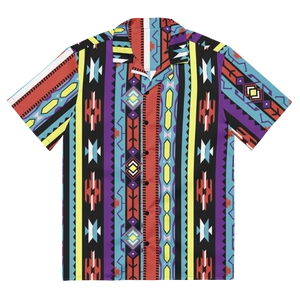
Though its precise origins are lost to history, the aloha shirt first appeared in Hawaii in the 1920s or ’30s, probably when local Japanese women adapted kimono fabric for use in men’s shirting. The shirts achieved some popularity among tourists to Hawaii and found greater commercial success when they hit the mainland in the mid-1930s. America at the time was riddled with hardship and anxiety, with many men out of work and many others struggling to hold on to their breadwinner status. Perhaps in response, hyper-manliness came into vogue—the popularity of bodybuilding skyrocketed, Superman burst onto the scene. It may seem paradoxical that men embraced a garment with such feminine appeal. “You’d better get two or three because it’s a cinch your daughter, sister, wife or even mother will want this bright-colored shirt as soon as she sees it,” the Los Angeles Times teased in 1936. That didn’t stop men from buying. By 1940, aloha shirts were bringing in more than $11 million annually (in today’s money).
By the 1960s, the shirt had become truly ubiquitous. Aloha Fridays were a fixture of a certain kind of workplace, and everyone—from Elvis to the decidedly unhip Richard Nixon—seemed to have an aloha shirt. Over time, perhaps inevitably, it lapsed into the realm of corny suburban-dad-wear.
Yet in just the past five years, fashion magazines have been heralding a comeback, and high-end labels like Gucci are taking the aloha shirt to new heights, with prints that draw on Japanese designs favored in the garment’s early days. Meanwhile, some shirtmakers from Hawaii’s old guard are still going strong.Kahala, founded in 1936 as one of the first brands producing aloha shirts, has been raiding its vaults to reproduce designs dating back to the 1930s—including some popularized by Duke Kahanamoku. “People are looking to bring some light, some color, some vibrancy into their lives,” says Jason Morgan, Kahala’s general manager. “I think that’s needed now more than ever. If an aloha shirt can help improve somebody’s day, I think that’s pretty powerful.”
It’s presumptuous to say that I know how to run a giga-trillion, global company who outpaced Kuwait’s GDP this year. I do not know how to do that. I also do not know how to launch things into outer space, deliver anything by a drone or how to even hotwire a van. I do know, however, not to bite the hand that feeds me and expect to keep eating.
Amazon is a collective of millions of sellers. We’d like to think of it as one, ginormous factory, but it’s not. Over 60% of its sales are sourced from individuals. They actually fabricate very little. They store and fulfill and market, but they don’t really make stuff.
OPEN and CLOSED
I’m a huge fan of open source anything. But not when it makes one company god-like in their economic power. Which is why I found this recent article in the Financial Timesso disturbing. I don’t know what to hate more: Amazon’s arrogance or opportunistic lawyers.
According to the Financial Times, sellers on Amazon’s marketplace account for more than 60% of sales. It received $96bn in commissions and fees paid by sellers in nine months.
During the first half of 2023 in its EU store, Amazon took 274mn “actions” in response to potential policy violations and other suspected problems, which included the removal of content and 4.2mn account suspensions. Amazon revealed the numbers as part of its first European transparency report newly required by EU law.
I don’t think that selling knock-off Chanel bags is a good business model even if profits are insanely high. It’s illegal and you will be caught (perhaps) and forced to pay back that profit (kinda). A lawsuit is defined as “compelling action otherwise incomplete.”
It’s a no-brainer from a corporation’s point of view: we give you the playing field, but we’ll keep changing the rules.
The acceptance of the words “gig economy” make me recoil. It really is just usery. The proposition works like this:
You’re temporary and will be replaced
You have no benefits
You are not an employee
You will depend on us/our platform/our payment descisions.
It is a weird argument to say that Amazon Sellers are “autonomous” or even “independent” since their entire business depends upon Amazon’s platform. Perhaps it’s the goal of independent wealth or the now-past “it’s-too-good-to-be-true” internet goldrush. There are heavy consequences. On average, sellers on Amazon realize less than 40% of potential profit, less when taking into account ancillary services such as advertising and “placements.” This means nothing when the platform simply disappears.
Amazon has a reputation for being an asshole arbiter. It simply suspends accounts that are in “violation.” The problem with this is that “violations” are never explained or defined. Ed. note: to be clear, I’ve never been an Amazon seller.
To provide the best experiences, we use technologies like cookies to store and/or access device information. Consenting to these technologies will allow us to process data such as browsing behaviour or unique IDs on this site. Not consenting or withdrawing consent, may adversely affect certain features and functions.
Functional
Always active
The technical storage or access is strictly necessary for the legitimate purpose of enabling the use of a specific service explicitly requested by the subscriber or user, or for the sole purpose of carrying out the transmission of a communication over an electronic communications network.
Preferences
The technical storage or access is necessary for the legitimate purpose of storing preferences that are not requested by the subscriber or user.
Statistics
The technical storage or access that is used exclusively for statistical purposes.The technical storage or access that is used exclusively for anonymous statistical purposes. Without a subpoena, voluntary compliance on the part of your Internet Service Provider, or additional records from a third party, information stored or retrieved for this purpose alone cannot usually be used to identify you.
Marketing
The technical storage or access is required to create user profiles to send advertising, or to track the user on a website or across several websites for similar marketing purposes.