Sashiko, Kimonos & History

Sashiko, Kimonos & History

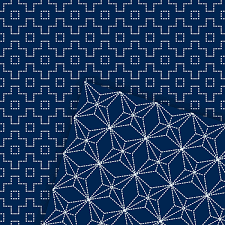
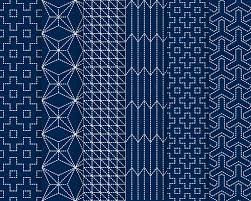
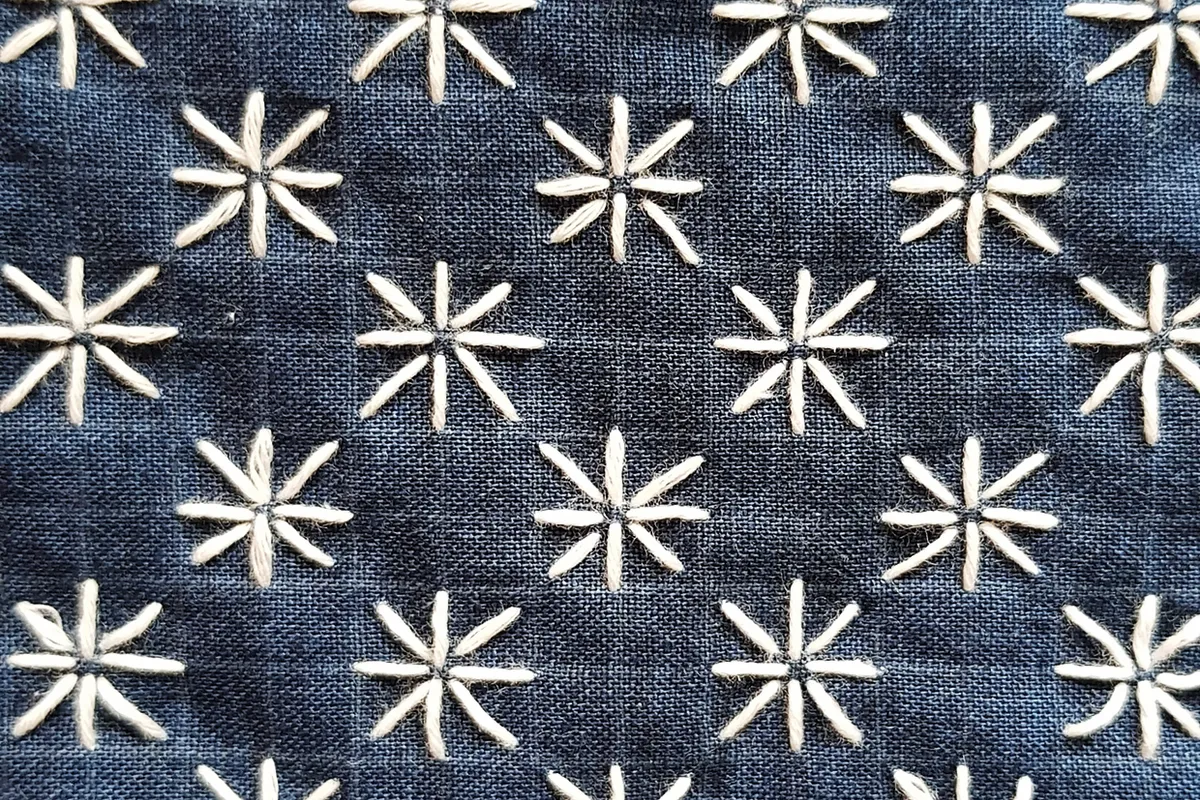
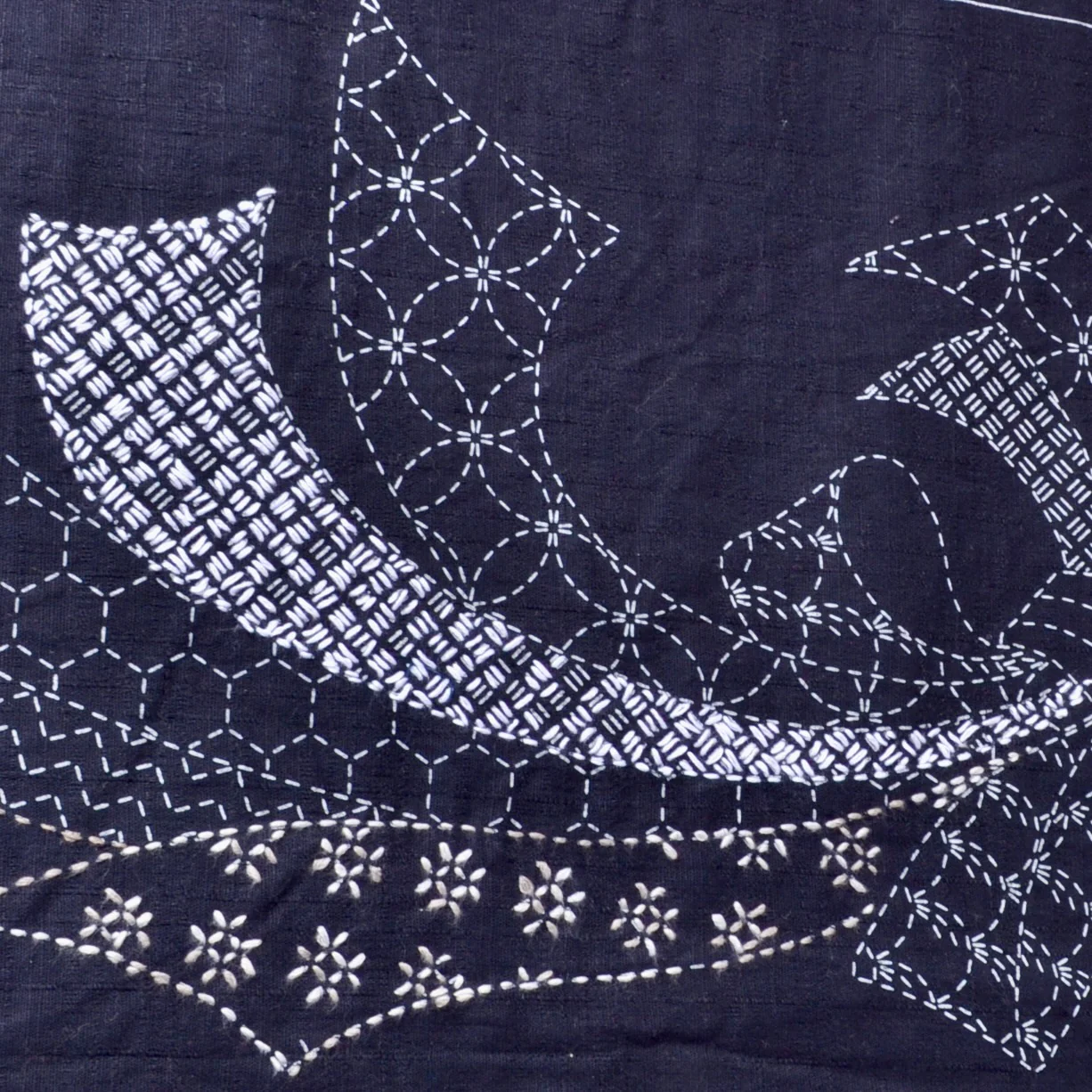
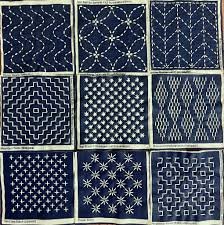
A recent BBC Culture story by Bel Jacobs: The 300-year-old Japanese method of upcycling explores the method of sashiko.

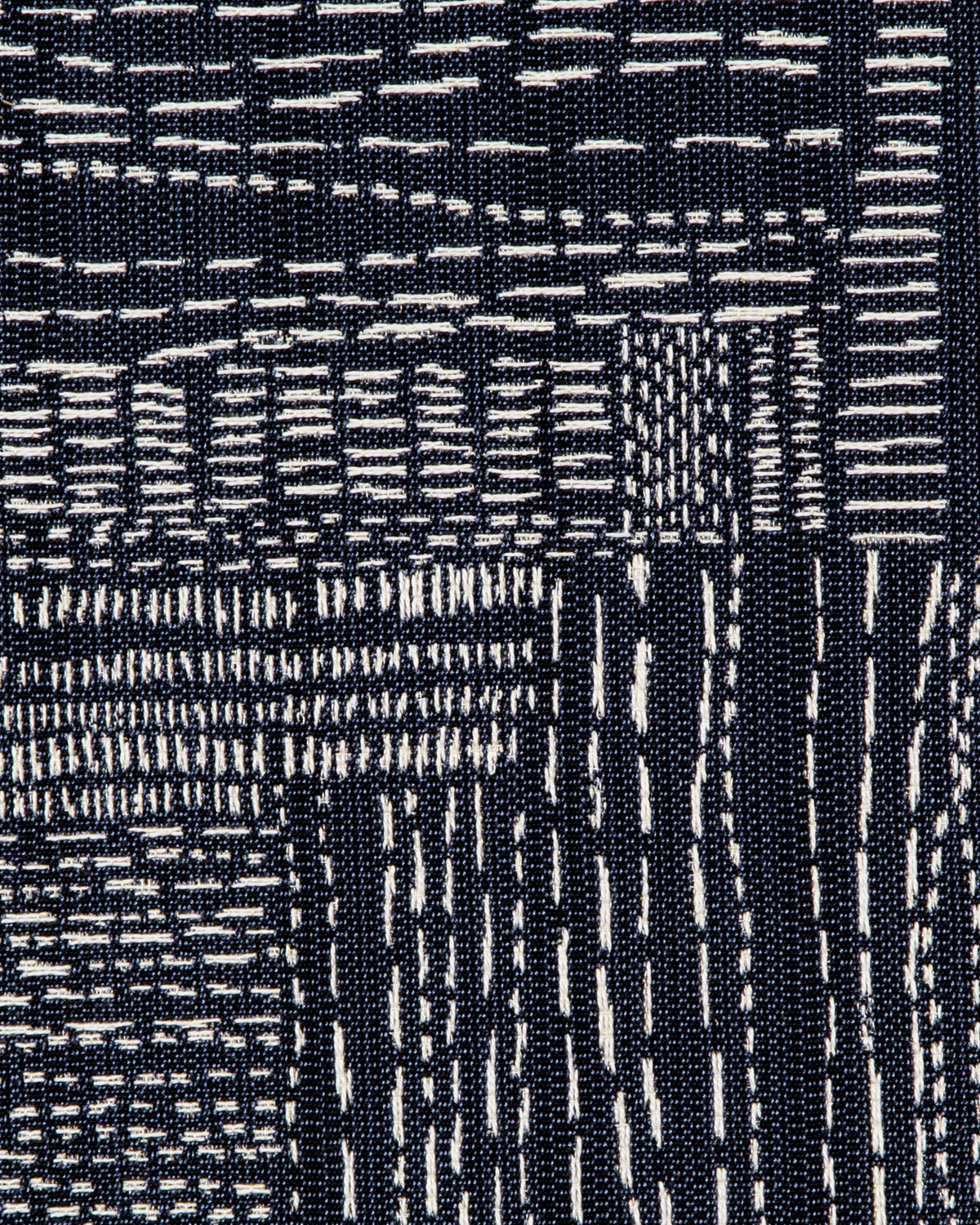
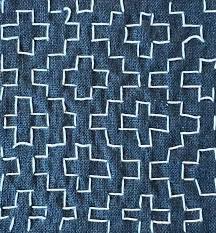
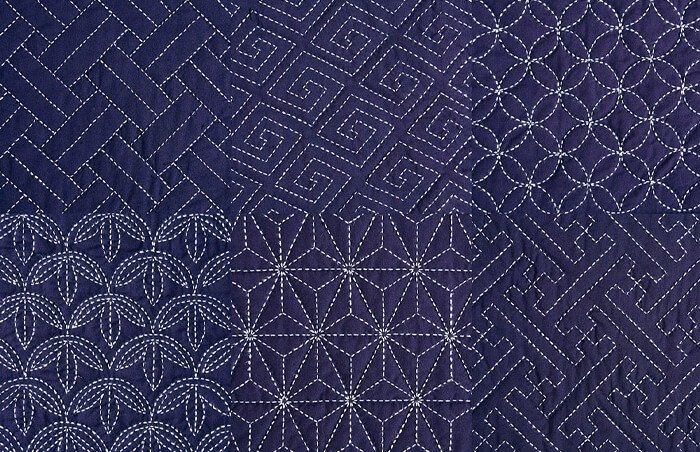
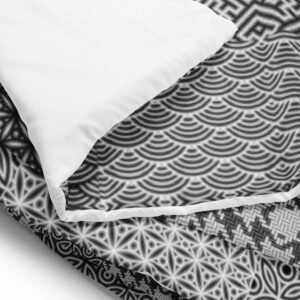
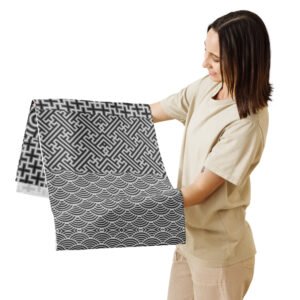
Sashiko emerged through necessity, particularly in poor rural areas, during the Edo period. “Cotton came late to the north of Japan,” explains craft and design writer Katie Treggiden. “So the only way people could get hold of it was as tiny rags of fabrics, that were either passed around or bought from tradesmen from the south. Sashiko – literally, ‘little stabs’ – was a way of connecting all those little pieces into a quilted fabric, known as boro, that would keep them warm.”
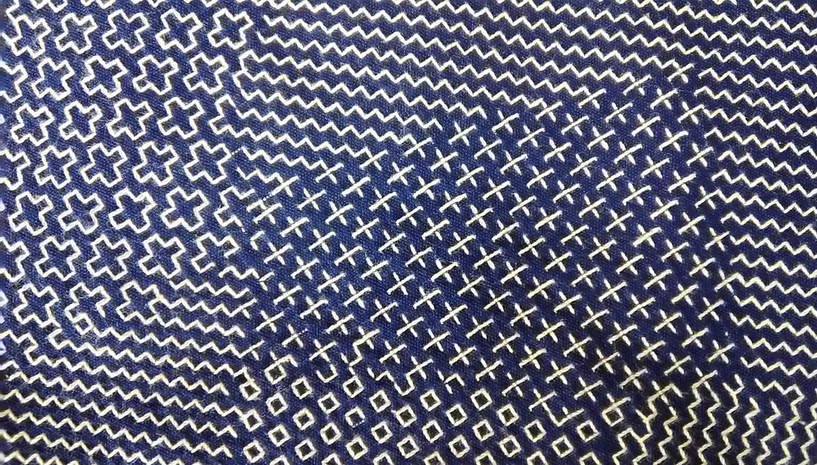
Textiles say so much about the culture in which they are worn and used.

Clothing can immediately identify who we are and what our history is. One can tell eastern v. western, wealthy v. impoverished, northern v southern. Clothing also tells us about the society that created it.

The Surprising History of the Kimono

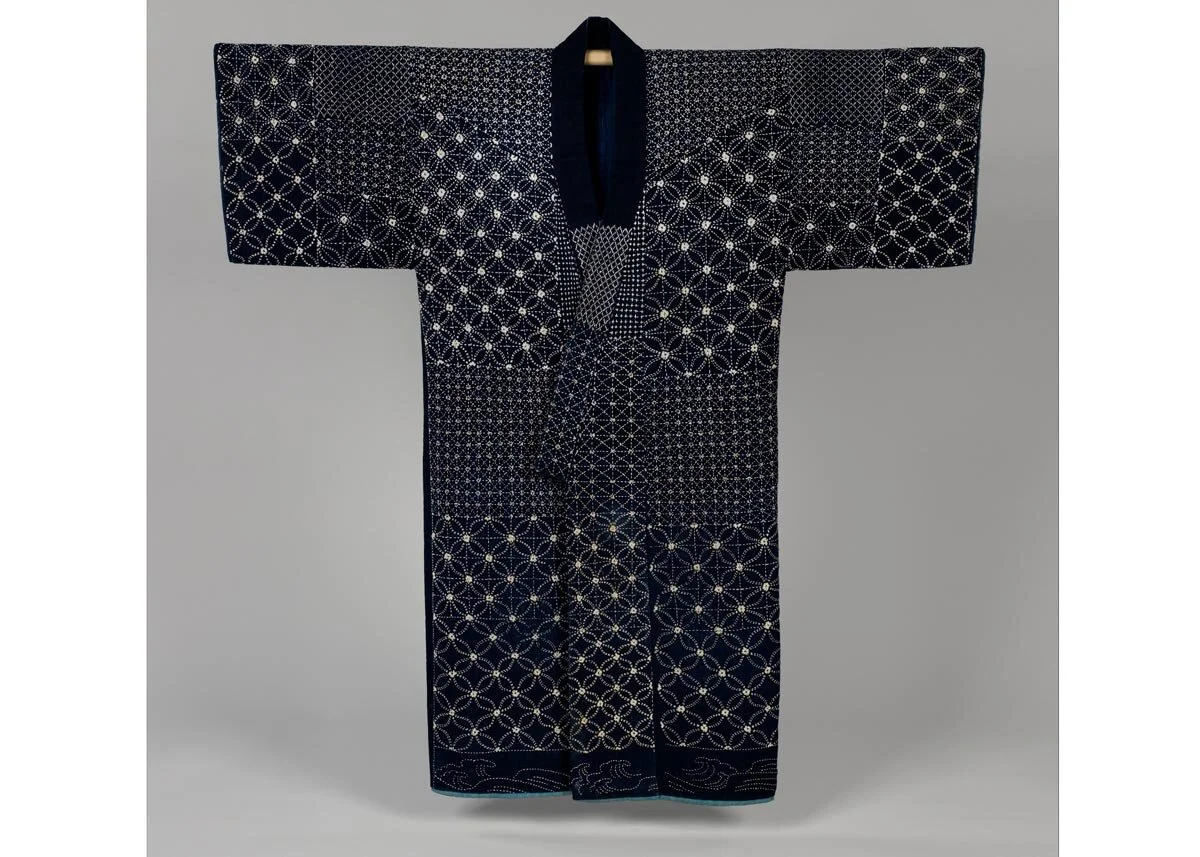
The first ancestor of the kimono was born in the Heian period (794-1192). Straight cuts of fabric were sewn together to create a garment that fit every sort of body shape. It was easy to wear and infinitely adaptable. By the Edo period (1603-1868) it had evolved into a unisex outer garment called kosode. Literally meaning “small sleeves,” the kosode was characterized by smaller armholes. It was only from the Meiji period (1868-1912) onwards that the garment was called kimono. This last transformation, from the Edo era to modern Japan, is fascinating.

In the early 1600s, First Shogun Tokugawa unified Japan into a feudal shogunate. Edo, renamed Tokyo in 1868, now became Japan’s chief city. The resulting Edo Period (also called the Tokugawa Era) spanned 264 years. The years 1603 to 1868 are known as the last era of traditional Japan. Japanese culture developed with almost no foreign influence during this time. And the kosode was one of the key elements of what it meant to be Japanese.
print-on-demand: techniques

print-on-demand: techniques

the different technologies used in creating print-on-demand products

Direct-to-Garment (DTG)

Direct-to-Garment printing (DTG) was developed as an inexpensive mass-production alternative to screen-printing. This method involves printing ink directly onto a treated garment – almost like a giant laser jet printer.

While DTG has appeal in regard to cost, color capabilities, & complexity of the designs it can print, it falls short in some of our other assessment categories. The versatility of the print method is lacking as prints are only successful on cotton garments – this leaves popular garments like hoodies, sweatshirts, & activewear either out of the catalog or looking a little lackluster. DTG prints also vary widely in consistency from one machine to the next, one garment to another, & among different color materials, which means your design may look perfectly accurate on a royal blue t-shirt but awful on a burgundy sweatshirt. This inconsistency leads to higher error rates & increased waste. While we love the look & feel of a DTG print, the longevity of that look & feel isn’t as impressive as some of the other print methods on this list.

Direct-to-Film (DTF)

Direct to film, commonly known as DTF, is a process in which a graphic printed onto a piece of film with various colored inks is applied to an apparel item. This pre-printed film is binded to the garment through heat and pressure from a heat-press machine. This creates a long-lasting and detailed graphic that can be placed on an array of garments. 

DTF printing starts with the film being made on a DTF printer. This printer uses a thick PET film that ensures for better transferring characteristics. The ink used for these printers are in the typical CMYK (cyan, Magenta, Yellow & Black) pigment but also has the addition of white ink. The white ink plays a significant role in the creation of the DTF film as it is the foundation that the colored pigments get placed on.

Sublimation

You might remember the word “sublimation” from high school science class, but in POD, it’s a print method that uses heat & pressure to turn ink into gas & transfer it from paper onto another surface.

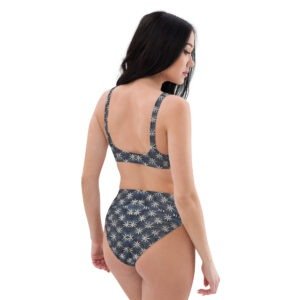
Overall, sublimation is an incredibly versatile print method, allowing for printing of both hard surfaces & porous materials. For printing garments, however, it’s limited to white polyester fabrics. In sublimation, the entire garment is printed, which means it’s better suited to edge-to-edge patterns than something like a graphic tee. While sublimation opens the door to incredible color and detail accuracy, it also has a higher error rate as the garment must be 100% flat for color to distribute evenly. When errors occur due to folds or elevated parts of the garment like seams, it often results in white unprinted areas on the final garment.

Vinyl

Decorating a garment with vinyl involves printing the design on heat transfer paper & using a combination of heat & pressure to transfer it onto a garment. Unlike sublimation, the print sits on top of the garment rather than being incorporated into the fibers. 

Vinyl is an inexpensive alternative to screen printing for printing a smaller volume of garments. However, it’s quite time intensive per print as it involves manually trimming back the transfer paper, making it less than ideal for print on demand. Vinyl prints are also sensitive to heat & cannot be ironed without melting the print. While they’re able to capture more complex colors, vinyl prints are not conducive to small text or shapes with detailed edges as this requires excess vinyl to be manually pulled away from the detailed edges. Prints are also less durable & more prone to cracking as vinyl is heavy & inflexible.

Embroidery

Embroidery differs from the other decoration methods mentioned here, since it doesn’t really involve “printing” anything. Embroidery involves sewing a design into a garment with needle & thread – almost as old-school as it gets. In print-on-demand, it’s a little more technical. Your designs are converted into digital embroidery files that outline exactly where every stitch should be placed & what color thread should be used to do so. This file is then loaded onto an embroidery machine that places that design on a garment using as many spools of thread as are needed to create your design.

While it’s a great decoration method to use when embroidery is what’s desired, it’s quite a bit more expensive, restrictive, & time intensive than its other POD counterparts. Because your artwork needs to be digitized to be optimized for embroidery, it can take a bit longer for your products to be decorated than other decoration methods. Additionally, embroidery limits both design colors & design complexity – only a certain number of thread spool colors are available on each machine & a stitch can only be so small. This means you’ve got to be more conscious of the decoration method’s limitations when designing your clothing.

– Source(s): CustomCat.com

Questions?

We’d love to help.

Go back

Your message has been sent

Warning
Warning
Warning
Warning.