MOLAS: textile design & political identity

MOLAS: textile design & political identity

"Clothes aren't going to change the world. The women who wear them are." Anne Klein

What you wear can say who you are, what you believe, and what you refuse to give up. Few garments prove that better than the mola, the layered, hand-stitched blouse panel of the Guna women of Panamá.

Molas are bright, intricate, and instantly recognizable. They are also the product of a long struggle over who gets to decide how a people dress, and, ultimately, how a people govern themselves.

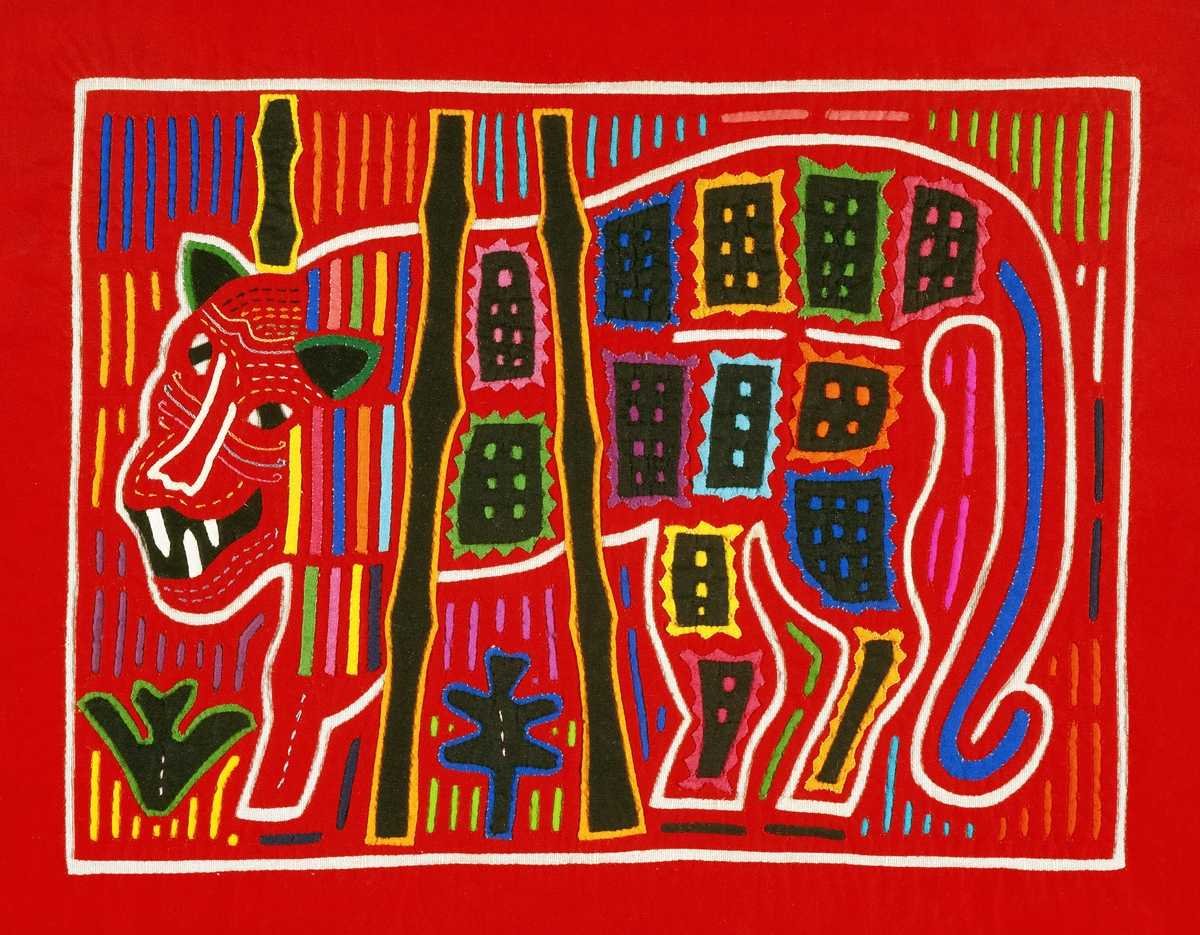
What is a mola?

In Dulegaya, the Guna language, mola simply means "clothing" or "blouse." Today the word usually names the decorated front and back panels sewn into a woman's blouse (the dulemor). Traditional Guna dress is a full ensemble: a wrapped patterned skirt, a red and yellow headscarf, strands of beads wound around the arms and legs, a gold nose ring, and earrings. The mola is its showpiece.

The Guna live along Panamá's Caribbean coast and on the San Blas islands, in the autonomous territory of Guna Yala. Their textile tradition is widely believed to descend from the geometric designs women once painted on their bodies with natural pigments. After contact with Europeans, those patterns moved onto cloth.

How a mola is made

Molas are built with reverse appliqué. Instead of stitching shapes onto a background, the maker stacks several layers of colored cotton, typically two to seven, and cuts down through them. Each cut opens a window onto the color beneath. The raw edges are folded under and sewn down with tiny, nearly invisible stitches.

How to judge quality: more layers, finer cutting, and smaller, more even stitching generally signal a better mola. A complex piece can take anywhere from a couple of weeks to several months.

Designs have always evolved. Early panels favored abstract geometry; later makers added birds, sea creatures, flowers, and scenes from everyday life, and sometimes even cartoons and other pop-culture imagery. The craft absorbs the world around it without losing its method.

Dress as resistance

Because mola dress was so central to Guna identity, it became a target. In 1919, the Panamanian government began pressing the Guna to assimilate, and traditional dress and nose piercing for women were discouraged and banned as part of a drive to "modernize" Guna society and extend state control.

  • 1919: Panama pushes assimilation, restricting mola dress and nose rings.
  • 1925: The Guna rise up in what is known as the Guna (or Dule) Revolution, defending their culture and territory.
  • After 1925: Traditional dress becomes a visible statement of defiance. On some more Westernized islands, women were pressed to adopt it, even those who had never worn it.
  • Later decades: The Guna secure recognized autonomy in Guna Yala, among the strongest examples of Indigenous self-rule in the Americas.

That arc is why many describe the mola as more than decoration. It was one of the visible markers a community held onto, and defended, on its way to self-government.

Why it still matters for design

The mola's lessons carry well beyond Panamá: bold color contrast, depth built from flat layers, and a pattern language that tells stories. Those qualities are why mola aesthetics keep resurfacing in contemporary fashion and home design, and why it matters to credit where the form comes from.

Mola-inspired pieces from CGK.ink

Our mola-style designs are an homage to the layered color and playful motifs of the tradition. They are inspired by the art form, not made by Guna artisans. To buy authentic molas, look for cooperatives and sellers who work directly with Guna makers.

Explore the full shop

Further reading: Guna people and Mola (art form) on Wikipedia.

Showing 37–48 of 1358 resultsSorted by latest

The anti-Trump: The NEW DEAL & HOW A MINDFUL GOVERNMENT RESTORED A BATTERED NATION

The anti-Trump: The NEW DEAL & HOW A MINDFUL GOVERNMENT RESTORED A BATTERED NATION

Works Progress Administration  ·  1935–1943

The New DealPut America to Work

When a battered nation was given a plan, a paycheck, and a paintbrush.

It's difficult to imagine today that, at one point, the US led the world in building societal safety nets, made significant investments in the arts, and encouraged diversity (and equity and inclusion).

The Great Depression, beginning in 1929, left roughly a quarter of American workers jobless and millions without homes or savings. FDR answered with the New Deal, and a major piece of it was the WPA. Its programs reached the entire population and delivered lasting, measurable improvements. Here we explore some of the artwork the period produced.

Book cover about the New Deal and the WPA
3.3 MillionWorkers at peak, Nov. 1938
$4.9 BillionFirst appropriation, 1935
620,000 mi.Of streets built
10,000+Bridges built

It's important to remind ourselves that we are all immigrants to this nation.

The Agency

Jobs, Not Handouts

The Works Progress Administration was established by presidential order on May 6, 1935, as a cornerstone of the Second New Deal. Led by Harry Hopkins, it put millions of jobseekers on public payrolls, mostly in construction: parks, schools, airports, housing, and a vast network of roads and bridges.

Its first appropriation of $4.9 billion was equal to about 6.7 percent of 1935 GDP. From 1939 to 1943 it operated as the Work Projects Administration.

“These ordinary men and women proved to be extraordinary beyond all expectation. They were golden threads woven in the national fabric.” — Nick Taylor, American-Made: The Enduring Legacy of the WPA

Who Qualified

American citizens 18 or older, able-bodied, unemployed, and certified as in need by an approved local relief agency.

What It Paid

$19 to $94 a month depending on region, urbanization, and skill. The average was about $52.50, roughly $1,200 in 2024 dollars.

How Long

Hours were capped at 8 a day or 40 a week, with a stated minimum of 30 hours a week.

Culture as Infrastructure

Federal Project Number One

The logo of the Federal Art Project (FAP), a component of the WPA.

Rather than simply granting money to private institutions, the government chose to employ cultural workers directly. Federal Project Number One had five parts, and within a single year it had put more than 40,000 artists and other talented workers to work.

Federal Art Project
Director: Holger Cahill5,300+ artists in 1936

Artists produced murals, posters, and illustrations for the other WPA arts programs and mounted public exhibitions. Teaching artists worked in settlement houses and community centers, reaching an estimated 50,000 children and adults, and more than 100 community art centers served roughly eight million people.

Federal Music Project
Director: Nikolai Sokoloff16,000+ musicians

Created to employ out-of-work musicians, it formed orchestras, choral groups, opera units, concert bands, and dance bands. It also taught music to well over a hundred thousand students a week, recorded folk music, and expanded access to scores through copyists, arrangers, and librarians.

Federal Theatre Project
Director: Hallie Flanagan12,700 at peak

Broadway employment had collapsed from about 25,000 workers in 1929 to about 4,000 in 1933. The project staged some 1,200 plays in four years and introduced 100 new playwrights. Alumni include Orson Welles, John Houseman, Burt Lancaster, Joseph Cotten, Canada Lee, Will Geer, and Sidney Lumet. It was the first project to end, when Congress zeroed out its funding in June 1939.

Federal Writers' Project
Director: Henry Alsberg6,686 writers in 1936

The FWP produced the American Guide Series, 378 books and pamphlets documenting the history, culture, and landmarks of every state, city, and village. It also recorded oral histories, including the Slave Narratives, and collected American folklore.

Historical Records Survey
Director: Luther H. Evans4,400+ workers

The smallest of the five, it set out to identify, collect, and conserve the nation's historical records, one of the largest bibliographic efforts ever undertaken.

What America Stands For

Give Me Your Wretched Refuse

Send these, the homeless, tempest-tost to me

From 1933 into the war years, a sitting president actually did something good. Crippled by economic collapse, the nation found a leader with the clarity to see what it stands for: equality, freedom, and agency.

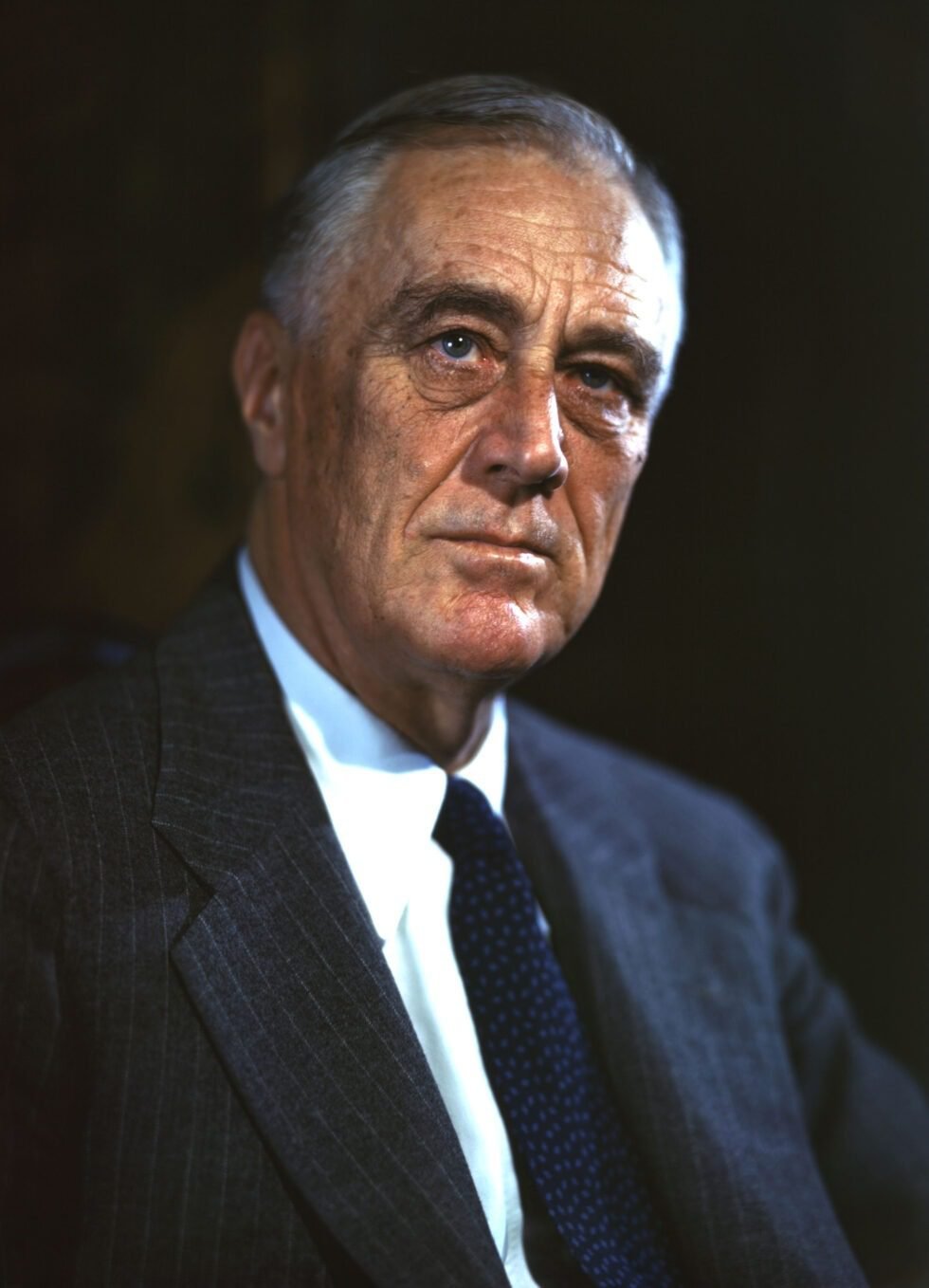
Franklin D. Roosevelt, 1944 campaign portrait
The New Colossus by Emma Lazarus and the Statue of Liberty

Not like the brazen giant of Greek fame,
With conquering limbs astride from land to land;
Here at our sea-washed, sunset gates shall stand
A mighty woman with a torch, whose flame
Is the imprisoned lightning, and her name
Mother of Exiles. From her beacon-hand
Glows world-wide welcome; her mild eyes command
The air-bridged harbor that twin cities frame.
“Keep, ancient lands, your storied pomp!” cries she
With silent lips. “Give me your tired, your poor,
Your huddled masses yearning to breathe free,
The wretched refuse of your teeming shore.
Send these, the homeless, tempest-tost to me,
I lift my lamp beside the golden door!”

Emma Lazarus  ·  November 2, 1883
From Our Studio

The WPA Collection

Designs inspired by the posters, parks, and spirit of the era, made in DTLA.

No products were found matching your selection.