Erté

Erté

Erté

(1892 - 1990)
Explore all artists in this collection

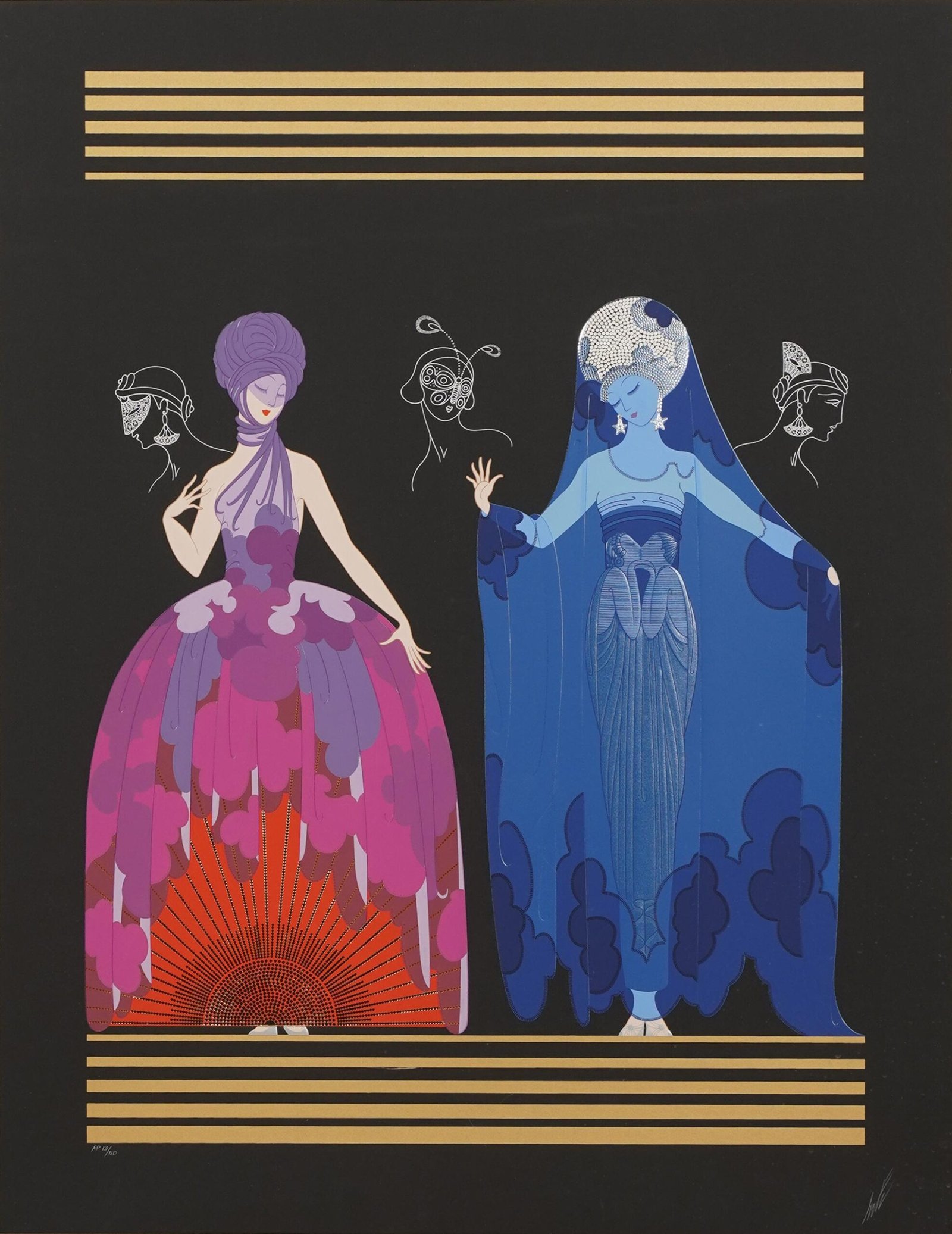
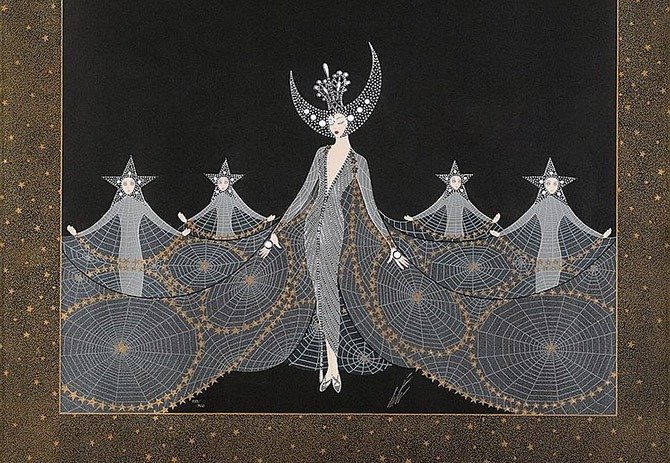
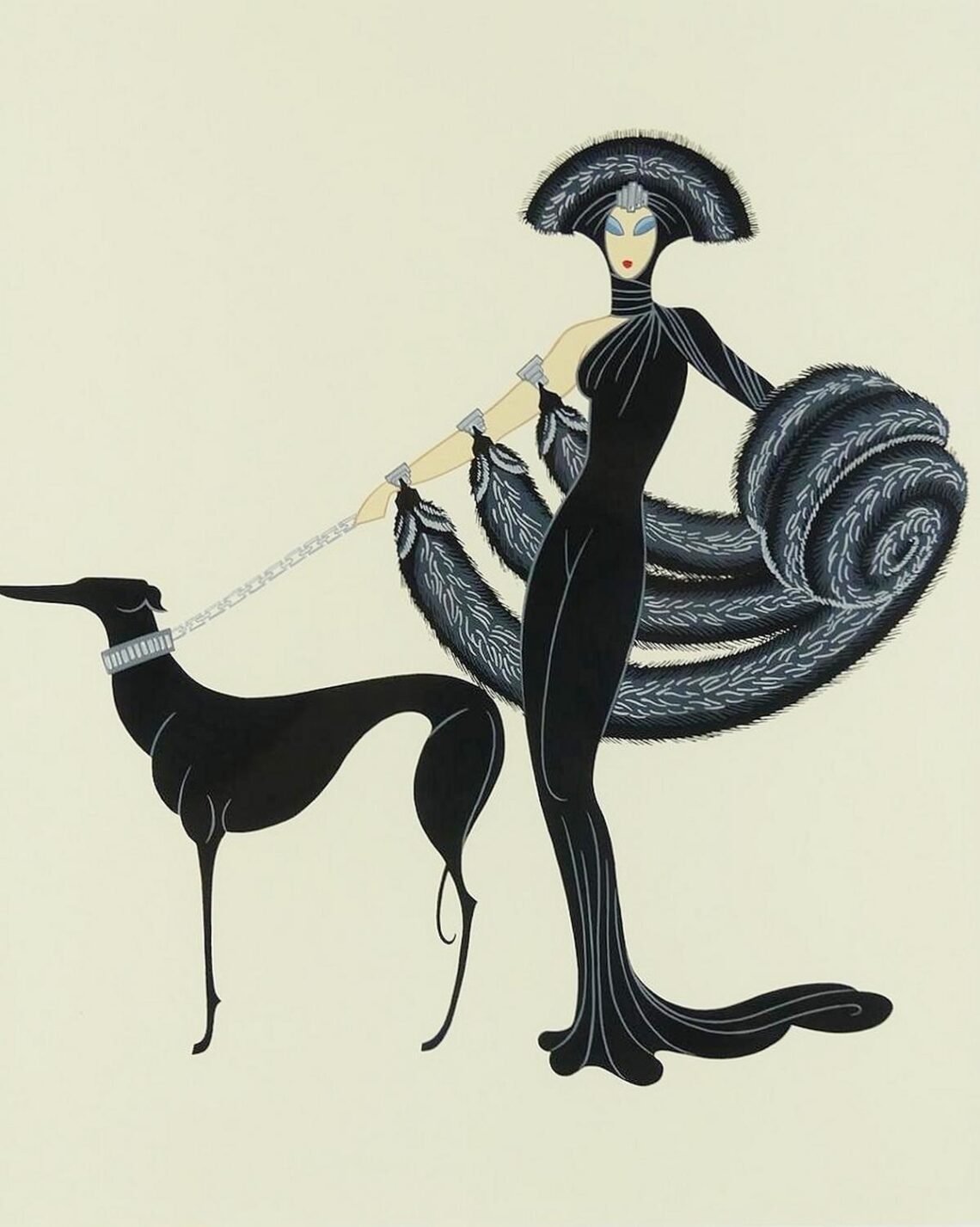
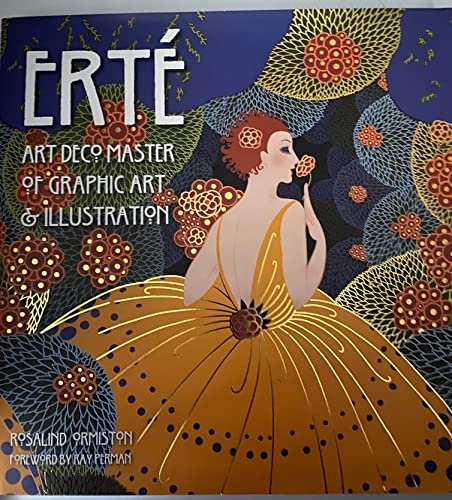
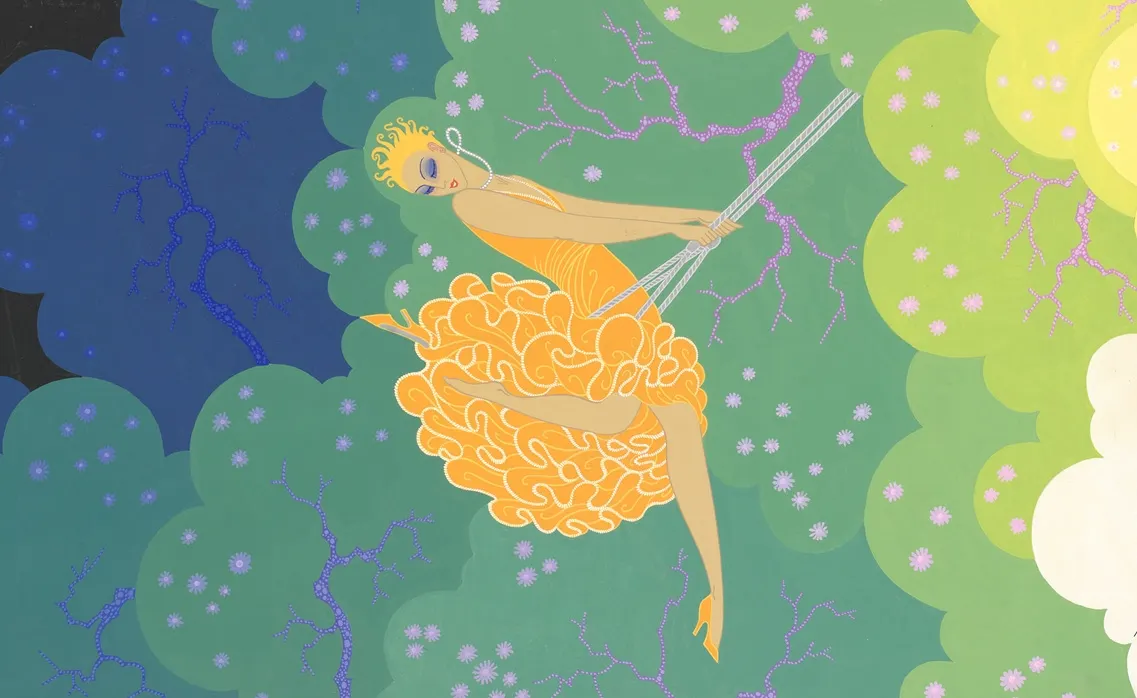
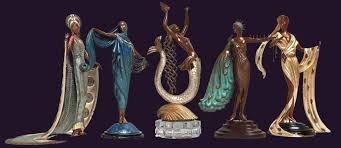
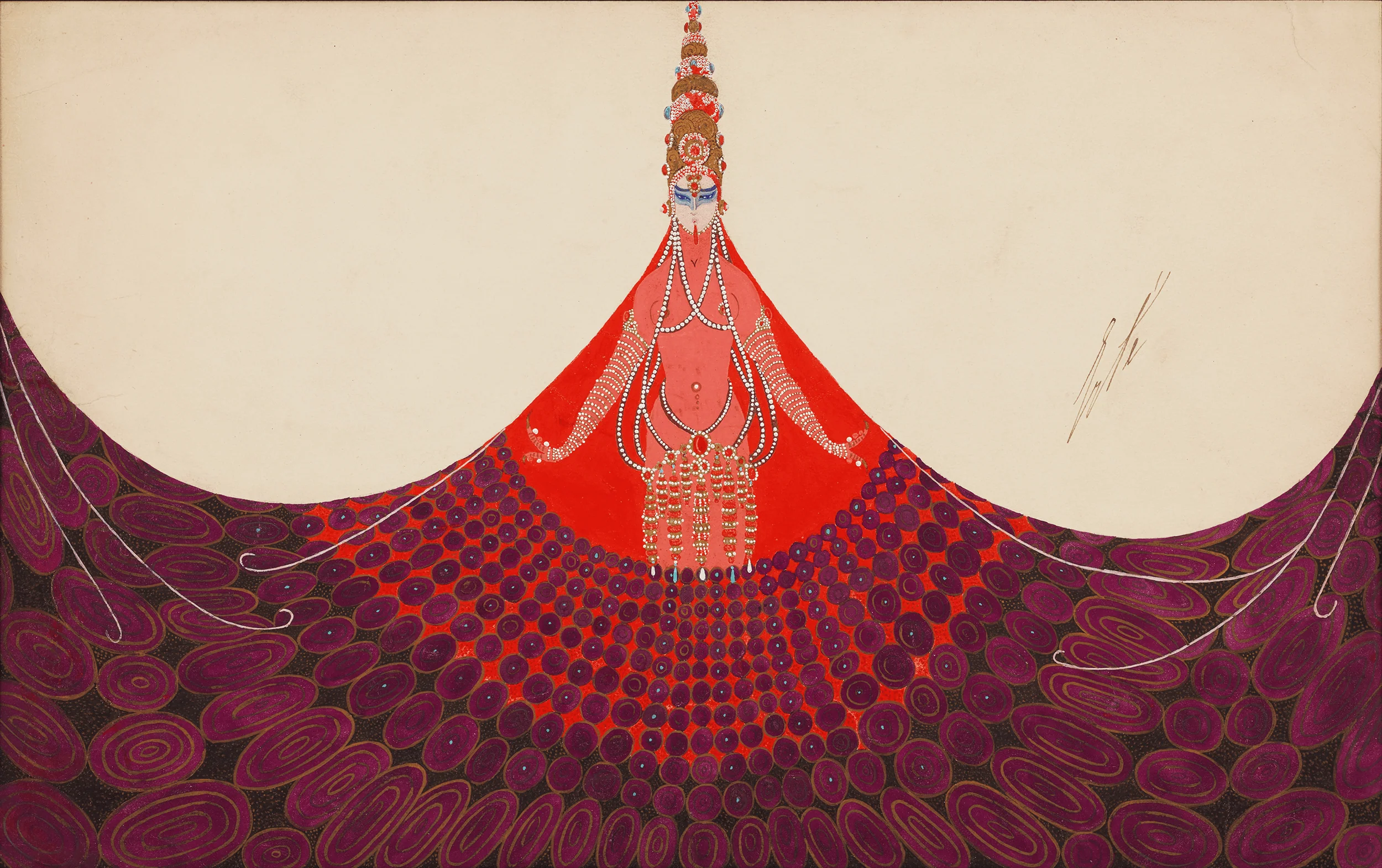
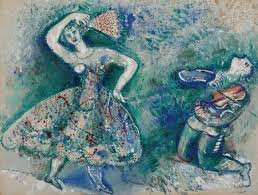
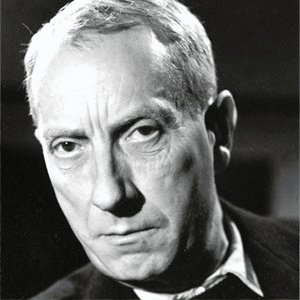
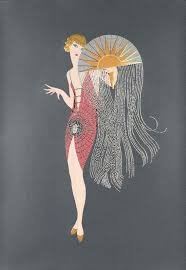
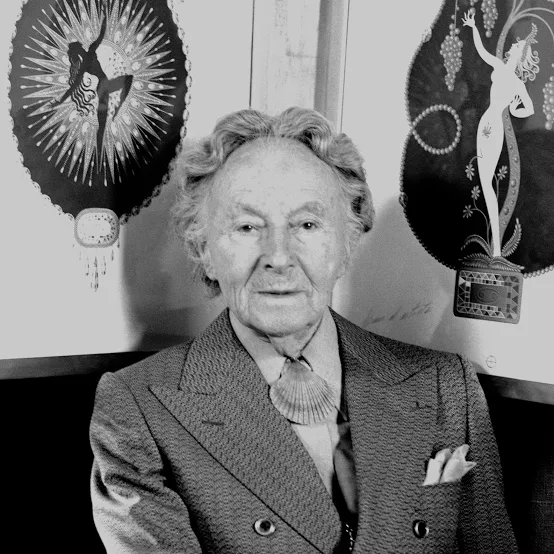
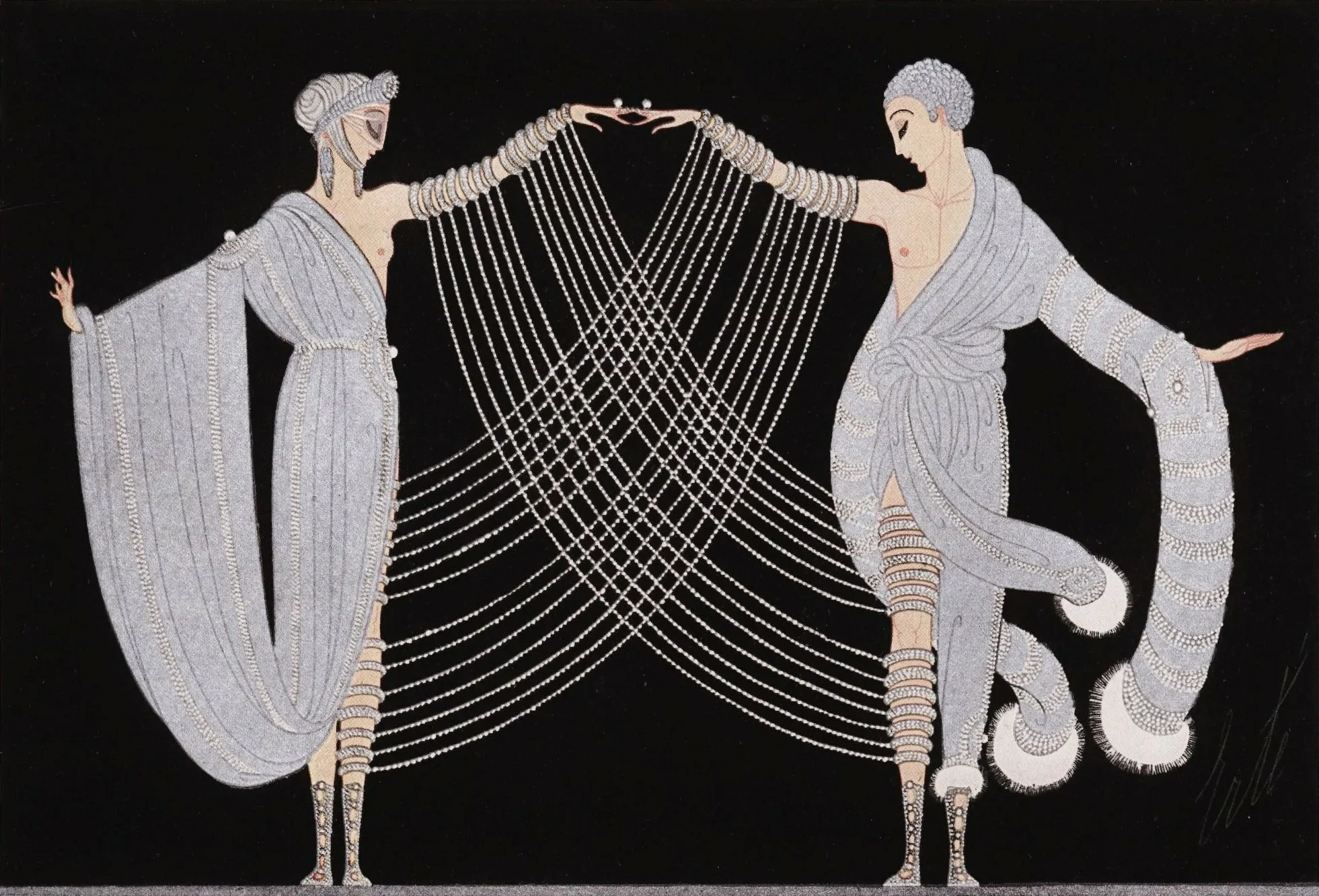
Romain de Tirtoff, known by the pseudonym Erté, was a Russian-born French artist and designer. He worked in several fields, including fashion, jewellery, graphic arts, costume, set design for film, theatre, and opera, and interior decor.

His work is quintessentially emblematic of the Art Deco style in its use of tapering lines and simplified ornamentation inspired by the natural world, and his figurines are internationally known and desired as collectible objects.
Erté moved to Paris in 1910, disobeying his father’s wishes for him to become a naval officer. In 1915, he secured a contract with Harper’s Bazaar magazine, producing numerous illustrations and other media. Today, Erté’s work can be found in the collections of the Metropolitan Museum of Art in New York, the Los Angeles County Museum of Art, and the Victoria and Albert Museum in London. He died on April 21, 1990 in Paris, France.
Marc Chagall

Marc Chagall

Marc Chagall

(1887 - 1985)

Explore all artists in this collection

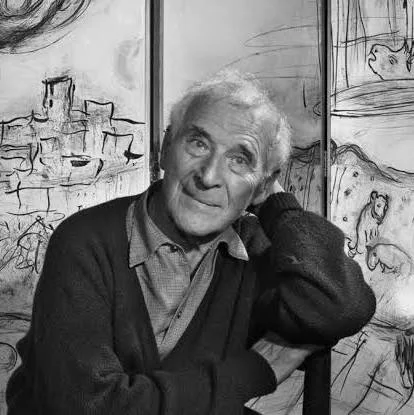
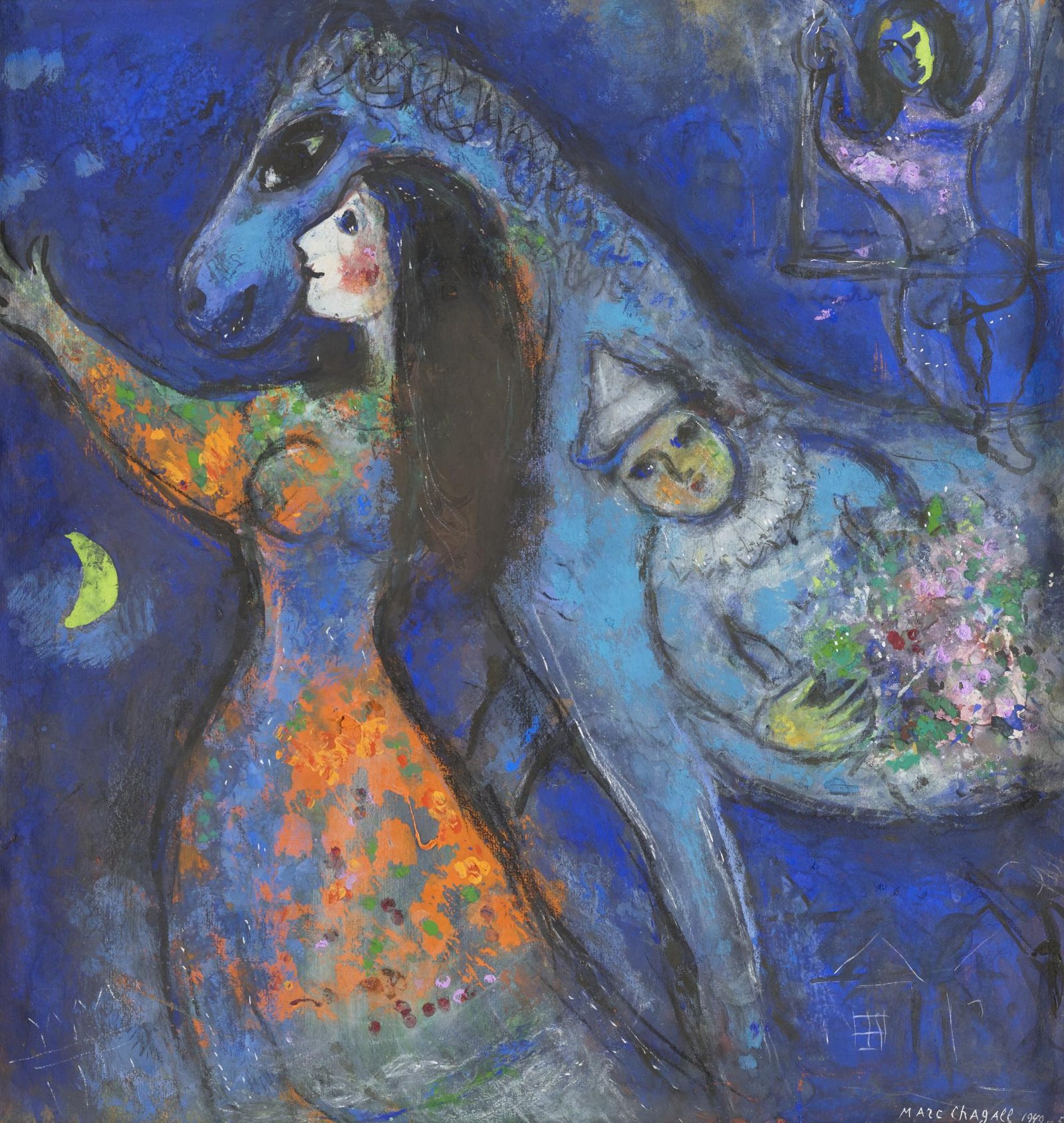
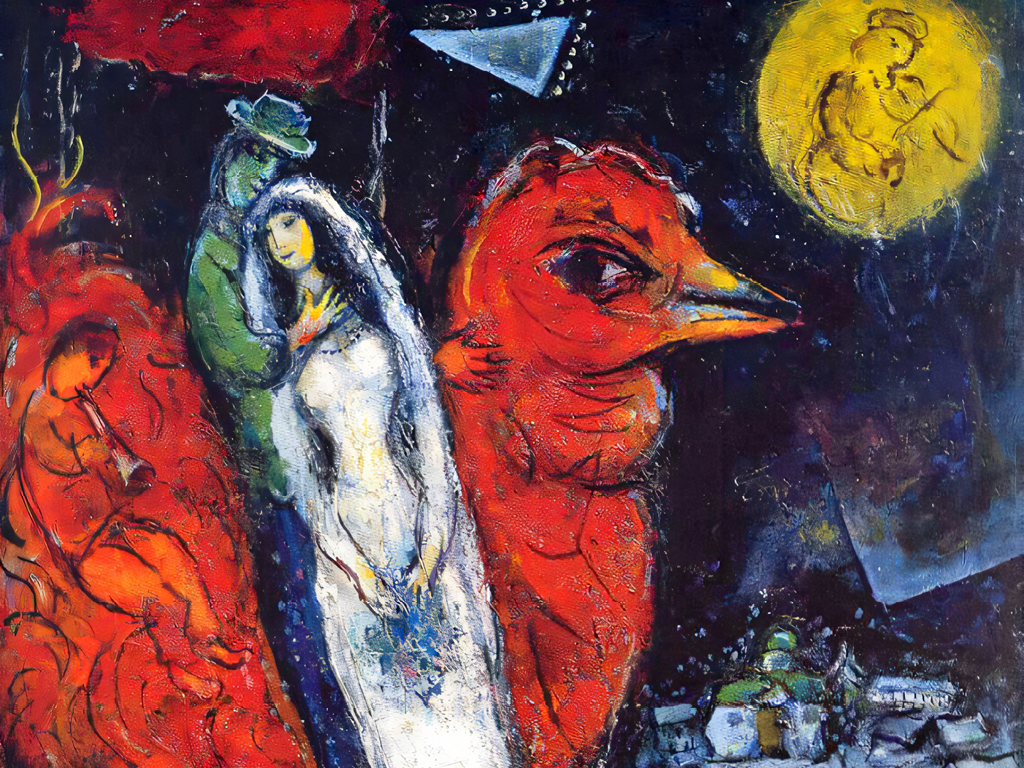
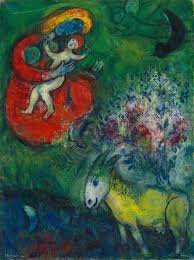
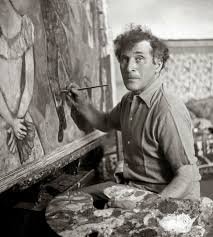
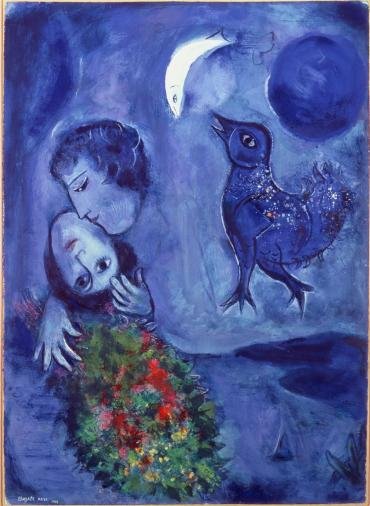
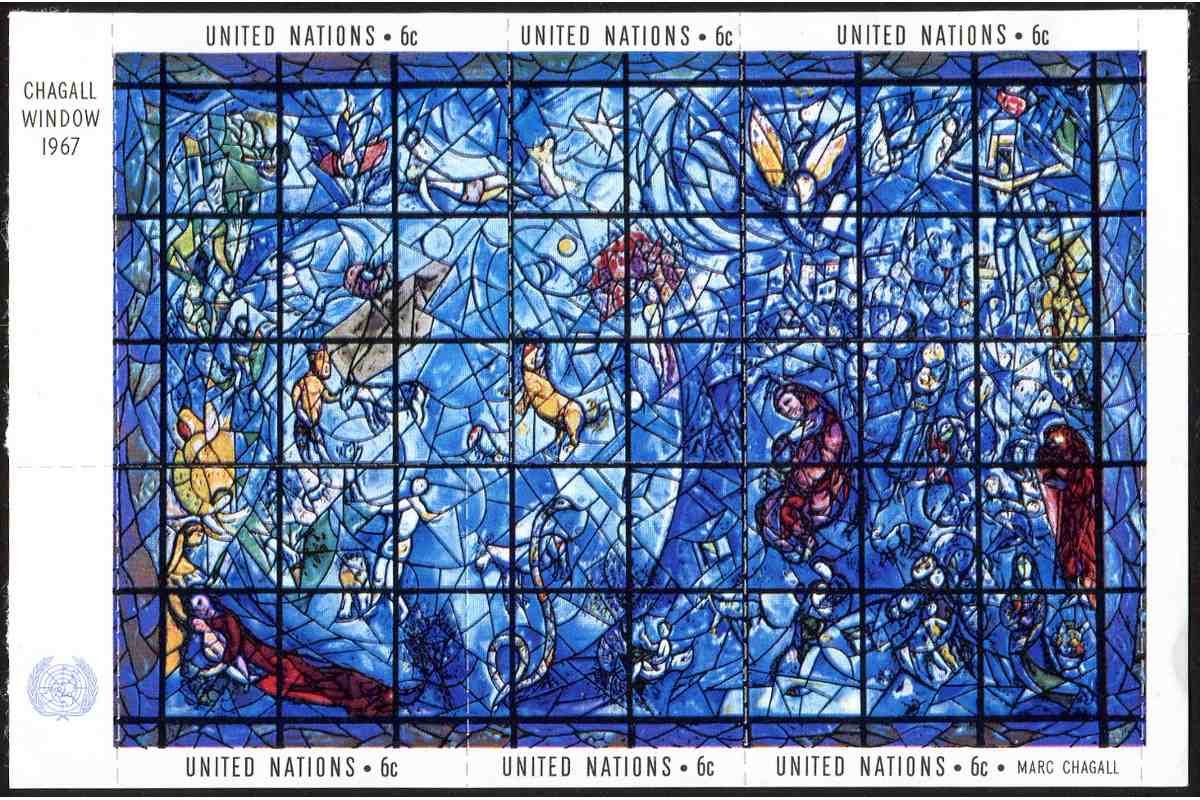
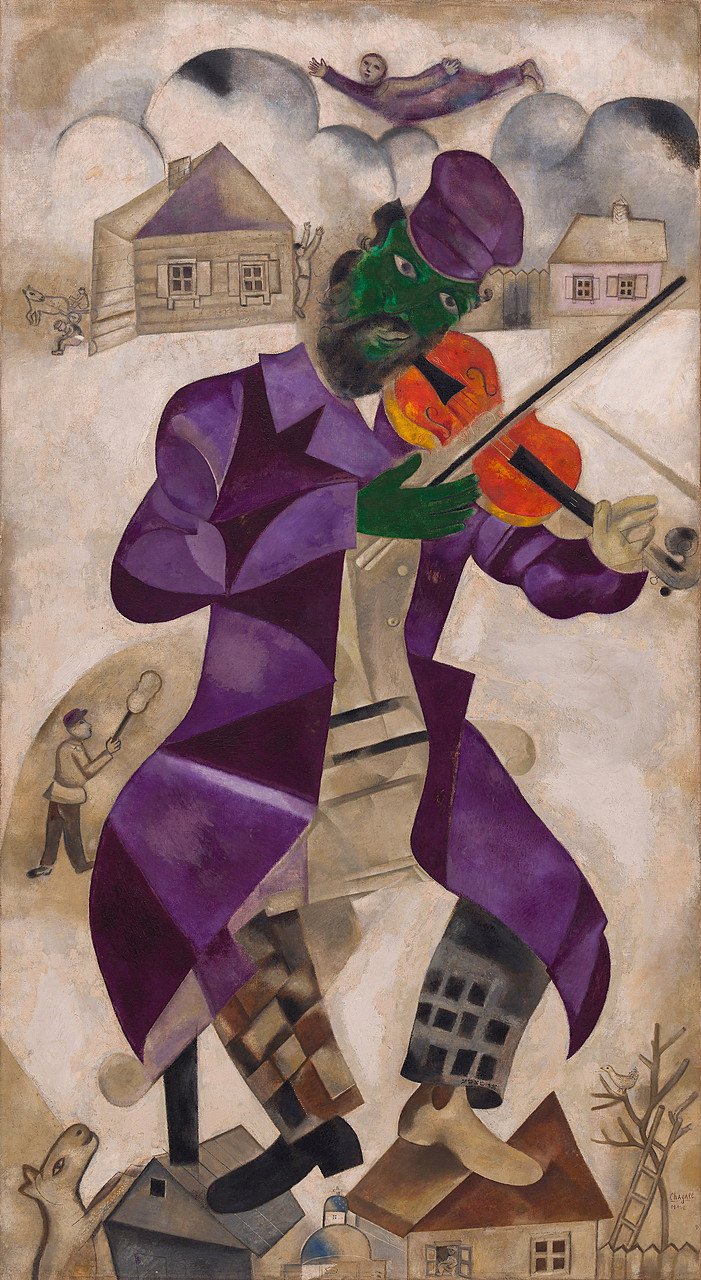
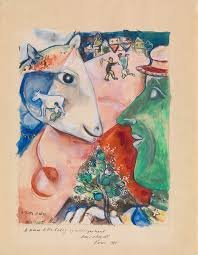
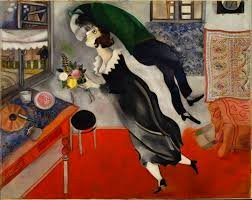
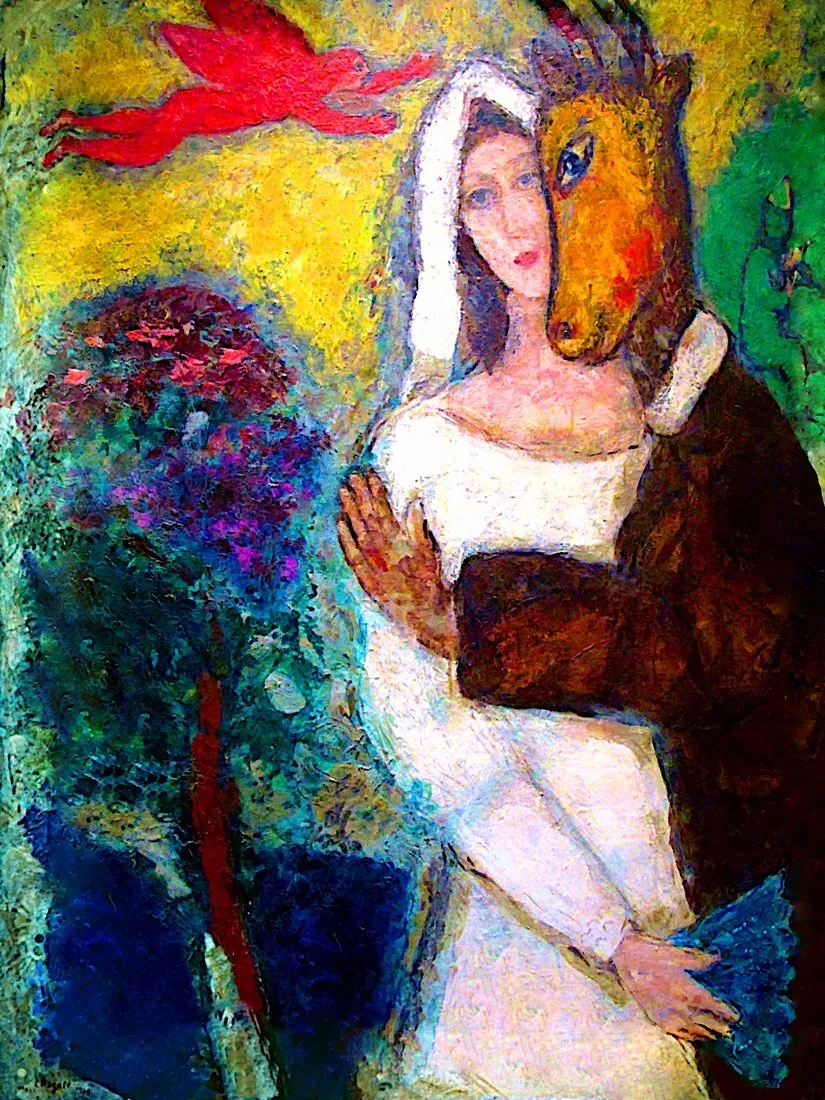
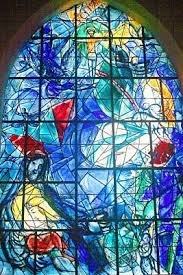
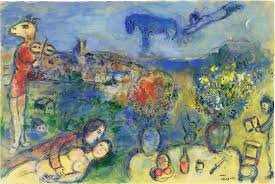
Marc Chagall was a Belarusian-born French artist whose work anticipated the dream-like imagery of Surrealism. Over the course of his career, Chagall developed the poetic, amorphous, and deeply personal visual language evident in paintings like I and the Village (1911). “When I am finishing a picture, I hold some God-made object up to it—a rock, a flower, the branch of a tree or my hand as a final test,” he said. “If the painting stands up beside a thing man cannot make, the painting is authentic. If there's a clash between the two, it's bad art.”

|

“If the painting stands up beside a thing man cannot make, the painting is authentic. If there's a clash between the two, it's bad art.”

Born Moishe Shagal on July 7, 1887 in Vitebsk, Russia (present-day Belarus) to a Hasidic Jewish family, the artist was raised immersed in Jewish culture and iconography. Studying under the artist Yehuda Pen as a youth, the Judaic traditions and folklore of his hometown permeated Chagall’s paintings. After studying in St. Petersburg, the artist moved to Paris in 1910, where he quickly befriended members of the French avant-garde, including Robert Delaunay and Fernand Léger.

Explore all artists in this collection

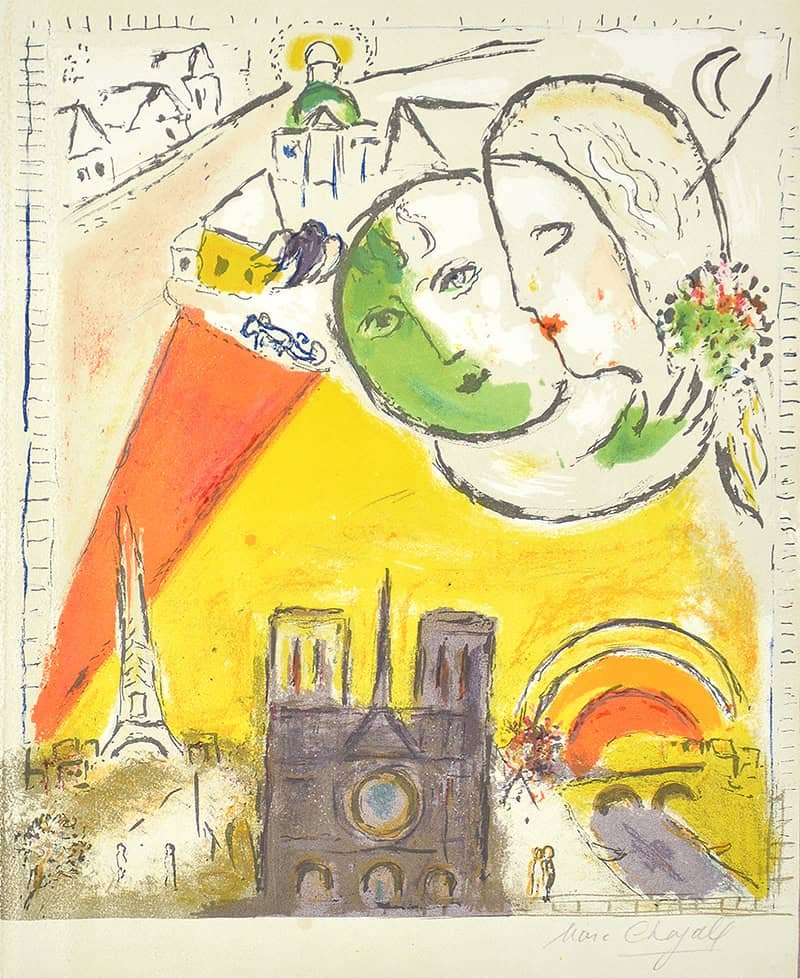
Visiting Russia in 1914, the artist was prevented from returning to Paris due to the outbreak of World War I until 1926. In addition to his paintings, Chagall was also noted for his vibrant works in stained glass and lithography. Forced to flee Paris during World War II, Chagall lived in the United States and traveled through to Israel before returning to France in 1948. The artist died in Saint-Paul-de-Vence, France on March 28, 1985. Today, his works are held in the collections of The Museum of Modern Art in New York, the Tate Gallery in London, the Tel Aviv Museum of Art, and the Albertina in Vienna, among others.

William Morris

William Morris

William Morris

(1834 - 1896)

William Morris

(1845 - 1896)

Explore all artists in this collection

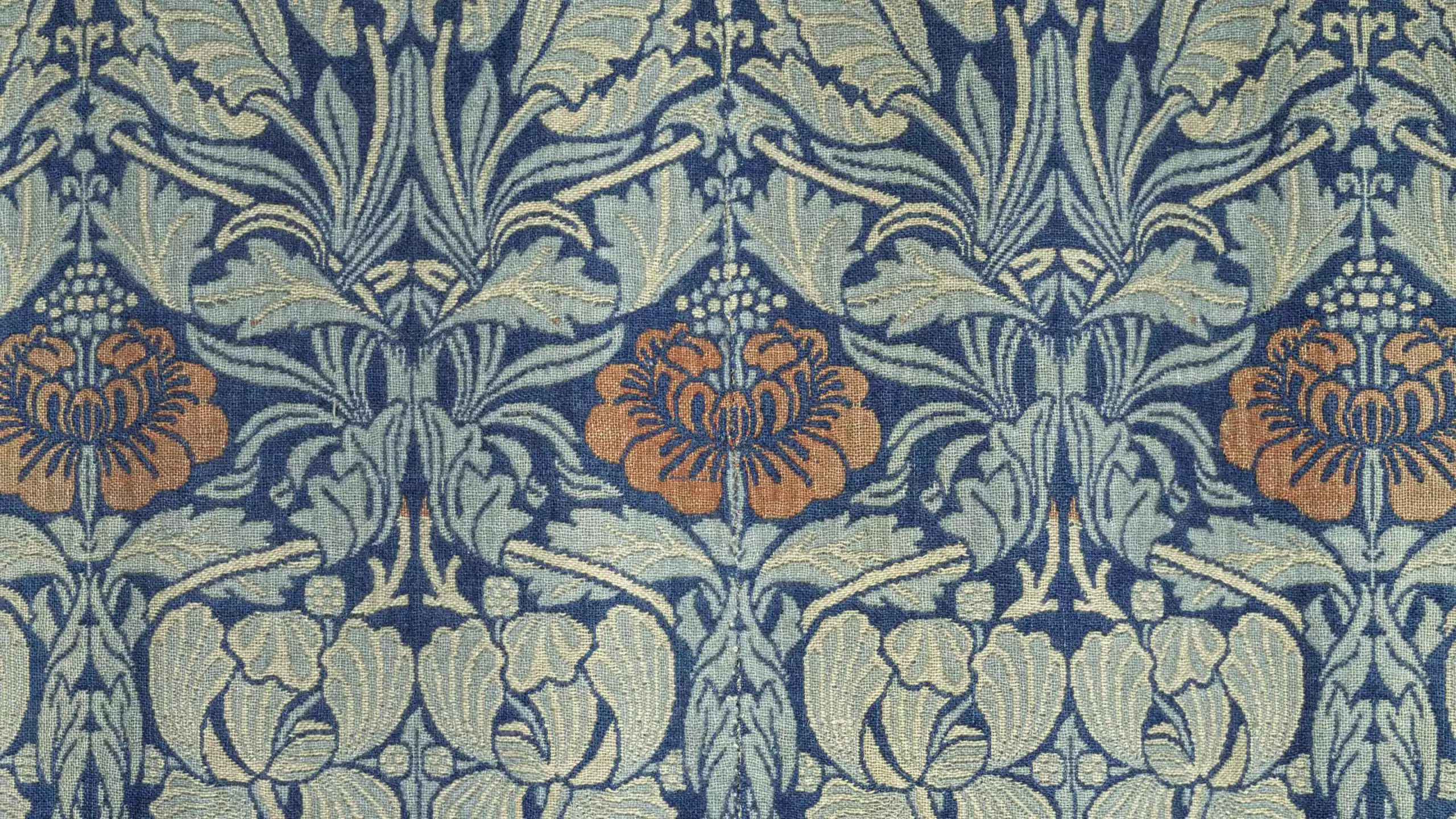
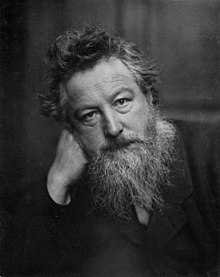
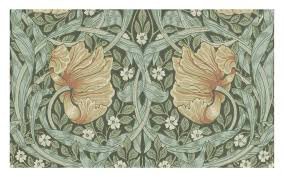
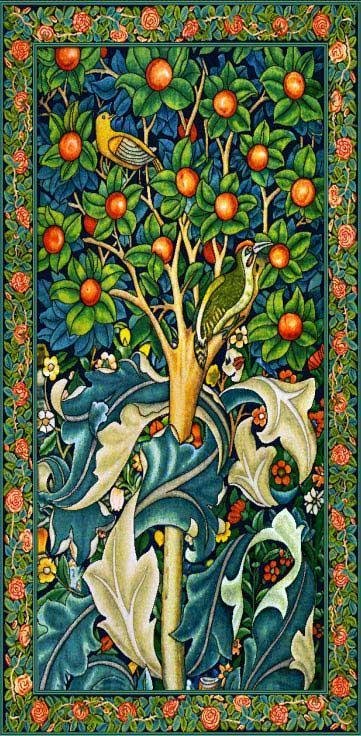
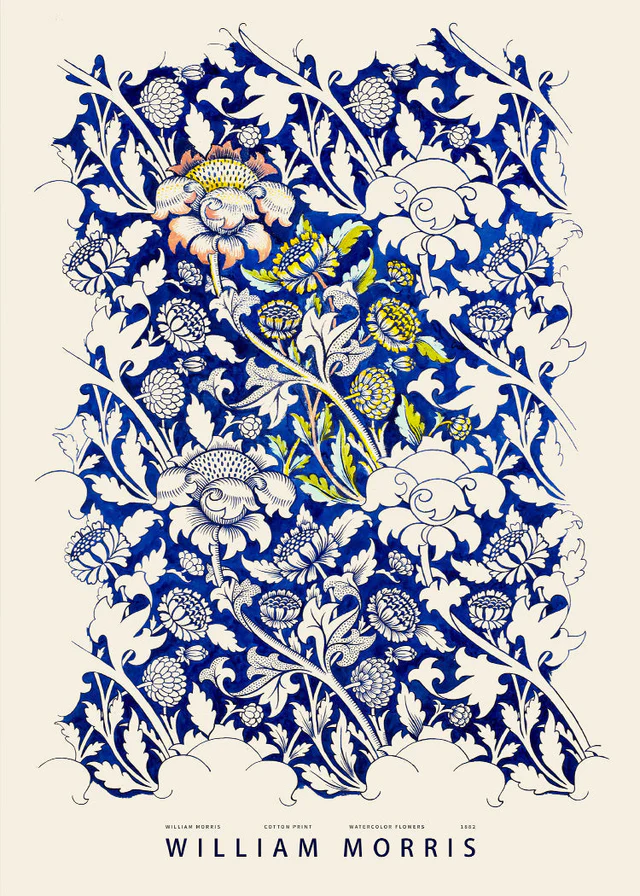
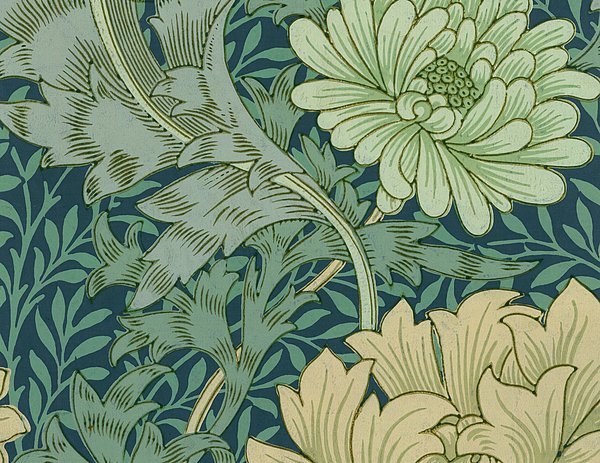
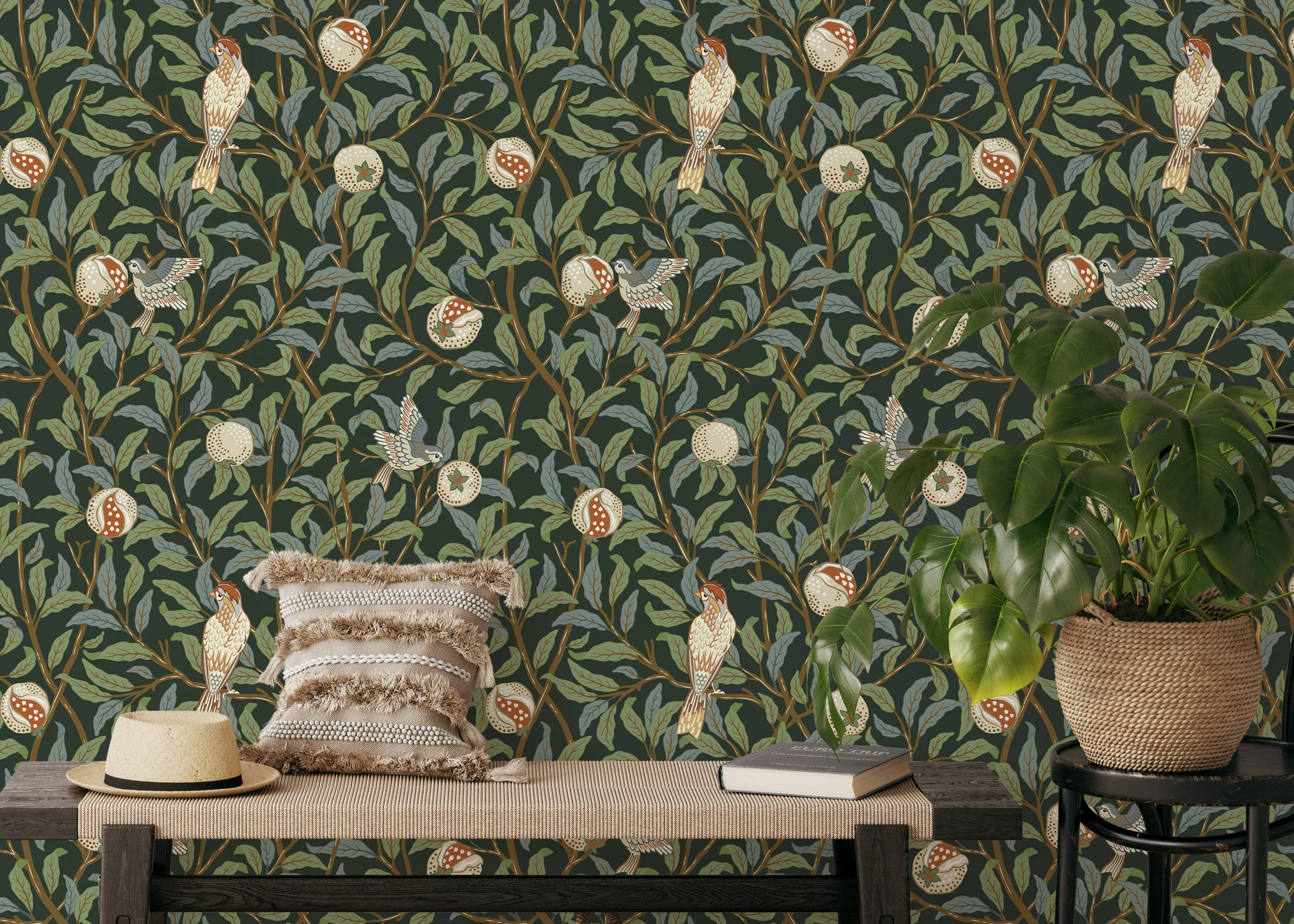
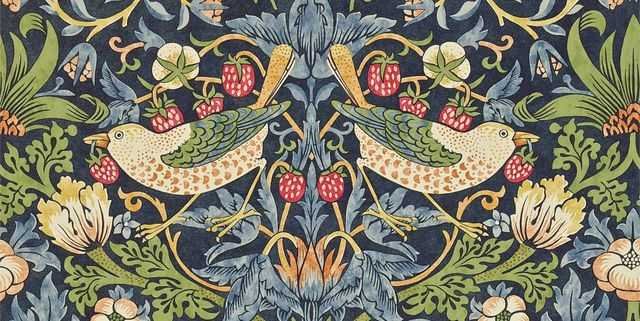
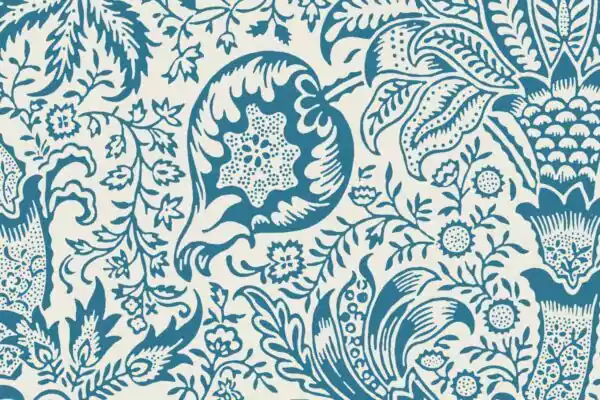
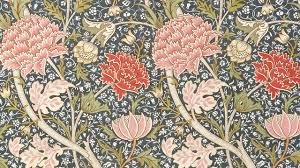
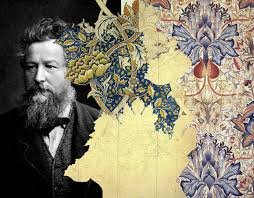
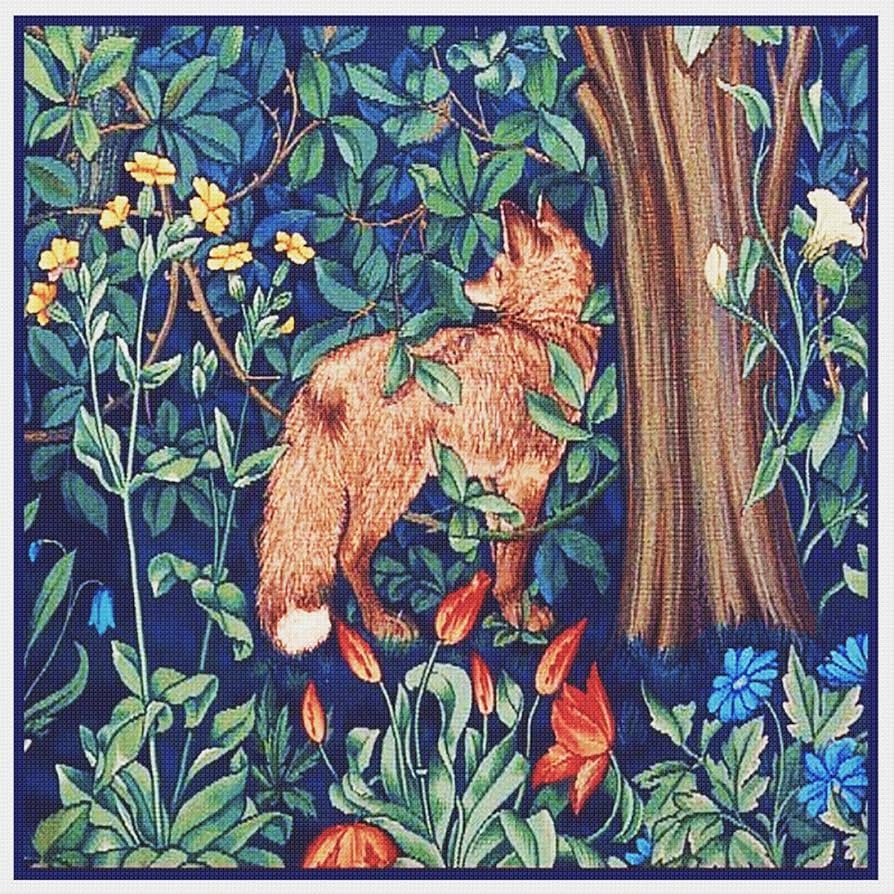
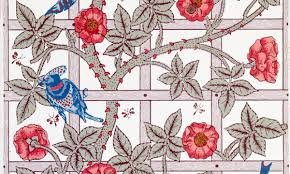
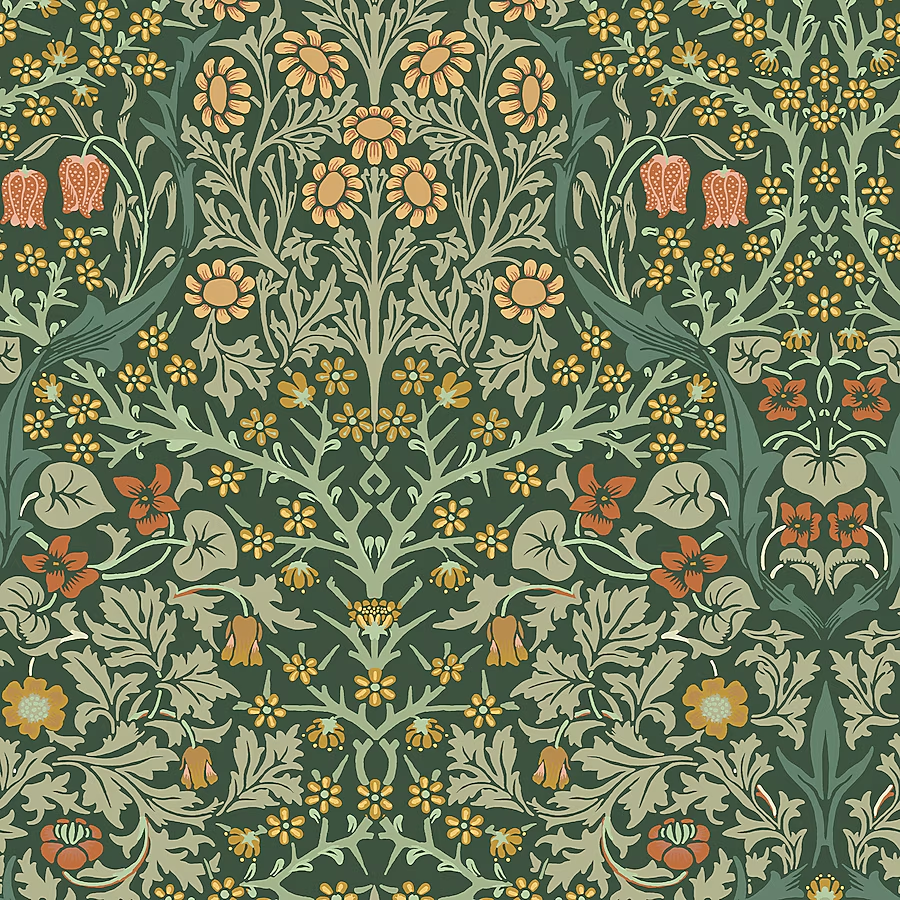
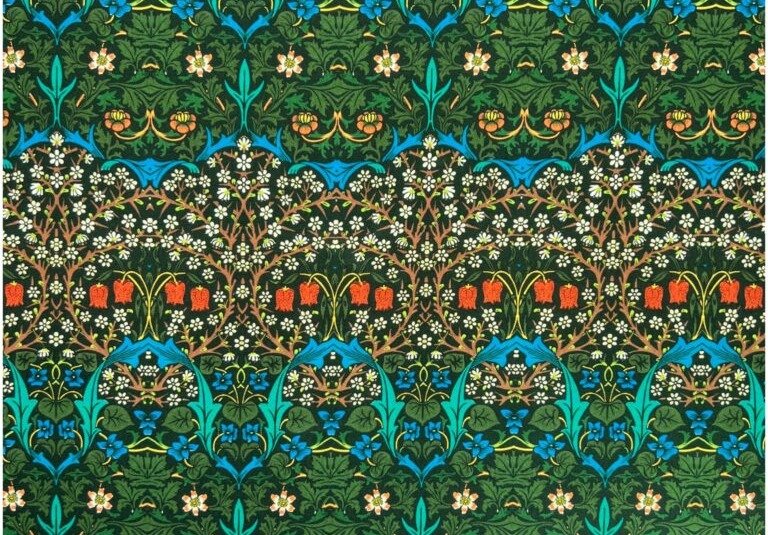
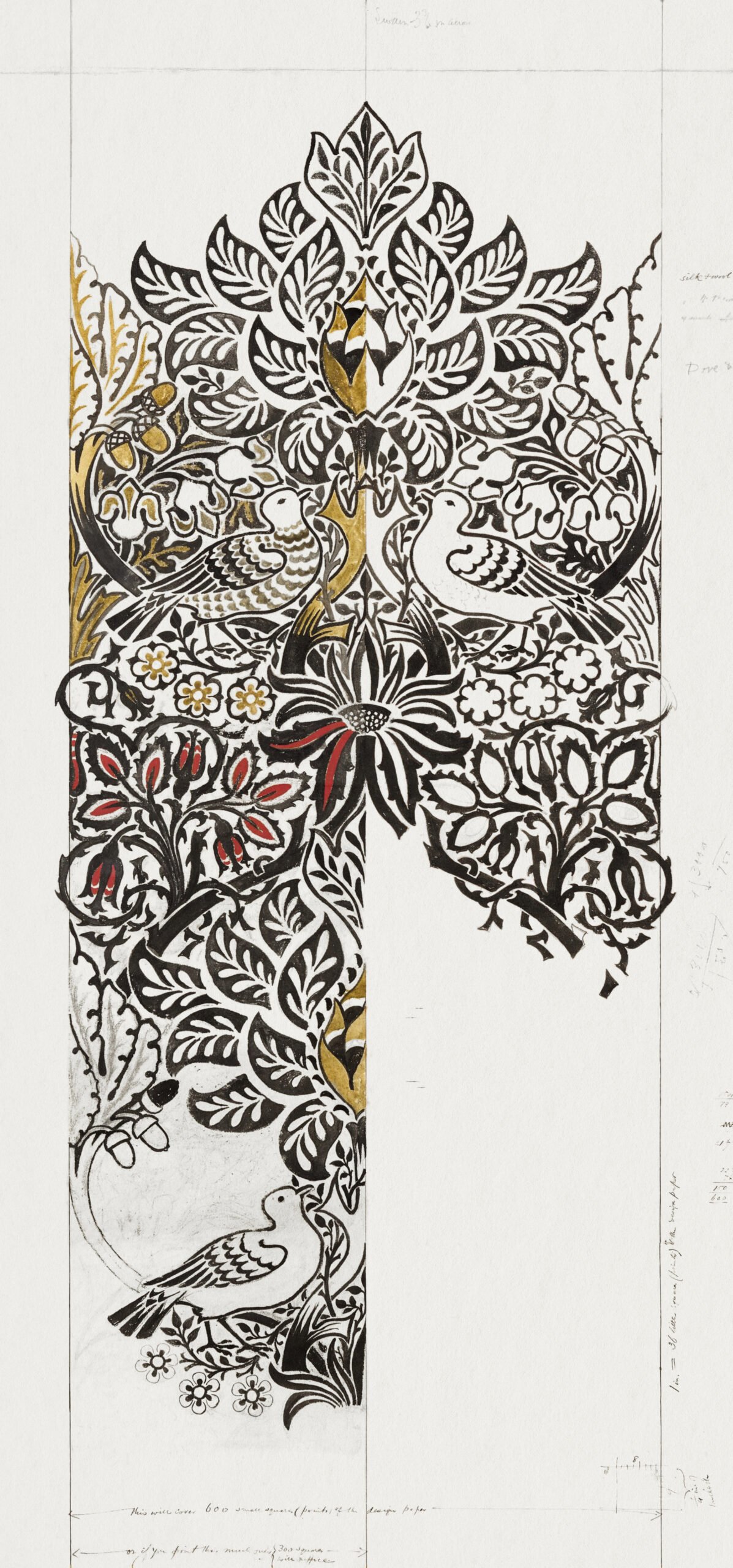
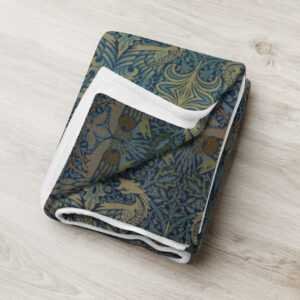
William Morris was an English textile designer, poet, artist, writer, and socialist activist associated with the British Arts and Crafts movement. He was a major contributor to the revival of traditional British textile arts and methods of production.

In his lifetime, Morris produced items in a range of crafts, mainly those to do with furnishing, including over 600 designs for wallpaper, textiles, and embroideries, over 150 for stained glass windows, three typefaces, and around 650 borders and ornamentations for the Kelmscott Press.
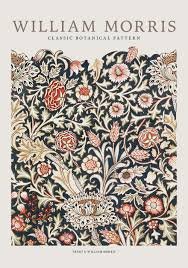
Read more about William Morris in our post: William Morris: The First Celebrity Designer?

Morris emphasised the idea that the design and production of an item should not be divorced from one another, and that, where possible, those creating items should be designer-craftsmen, thereby both designing and manufacturing their goods.

In the field of textile design, Morris revived a number of dead techniques, and insisted on the use of good quality raw materials, almost all natural dyes, and hand processing.

Joan Miró

Joan Miró

Joan Miró

1893 - 1983

Joan Miró

(1893 - 1983)

Explore all artists in this collection

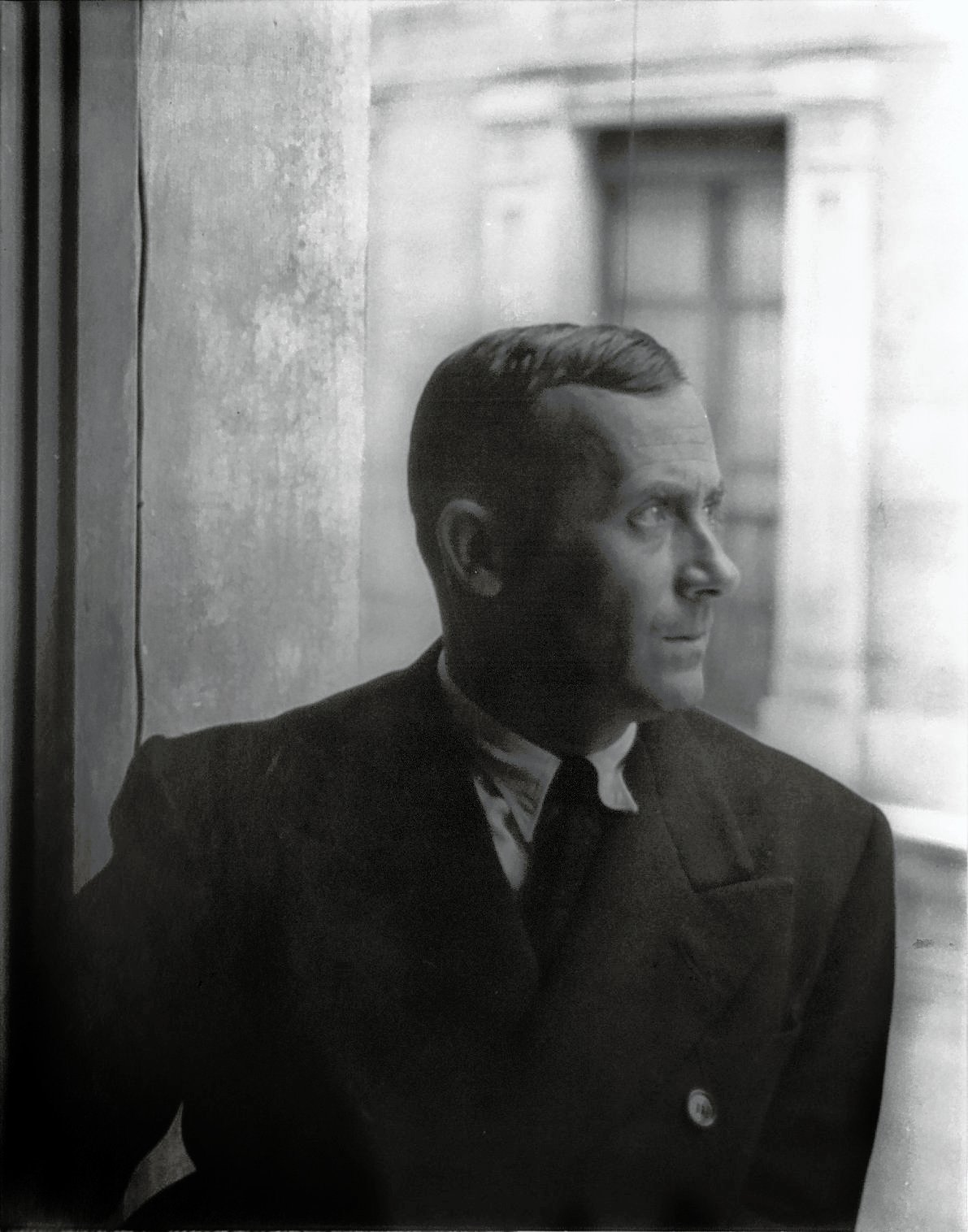
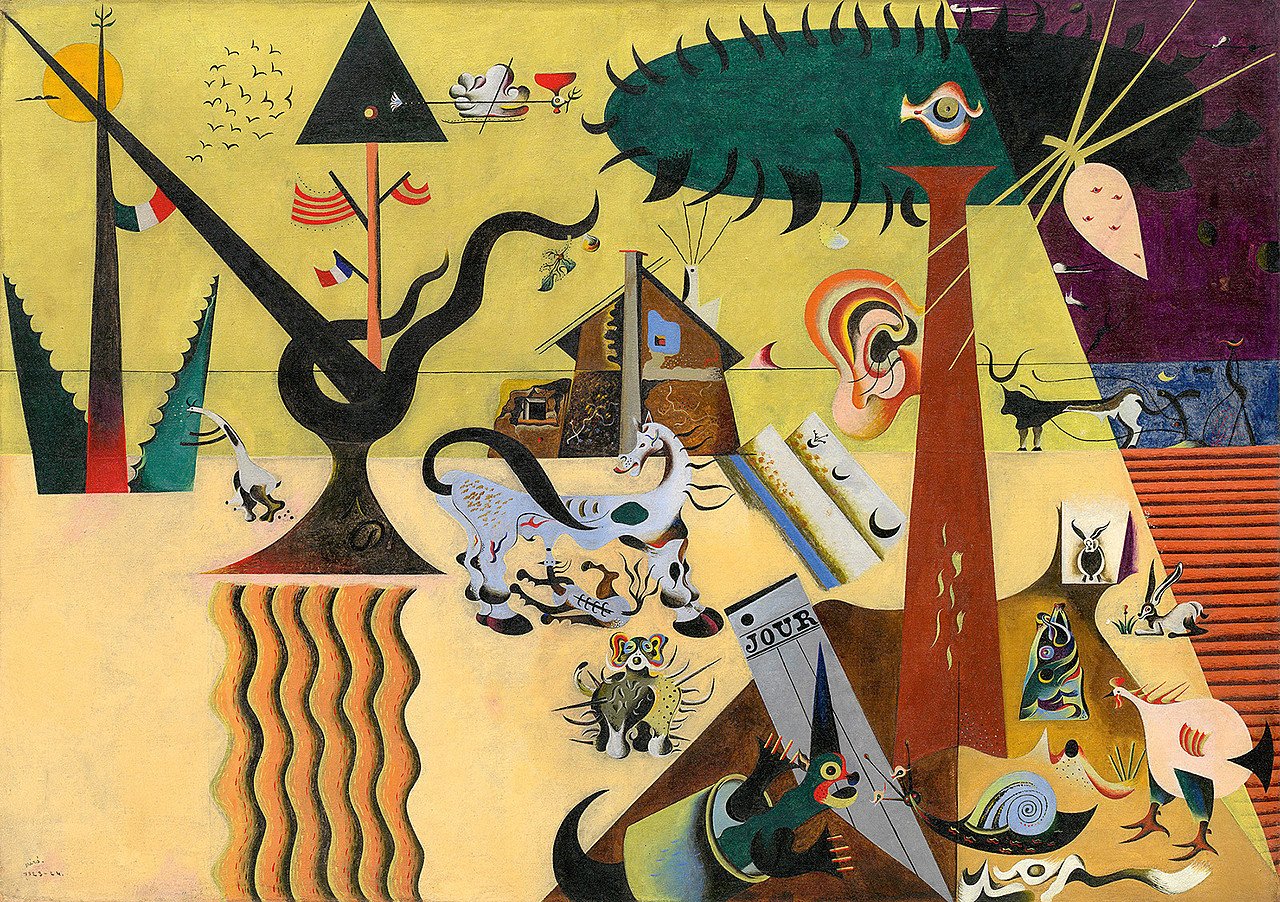
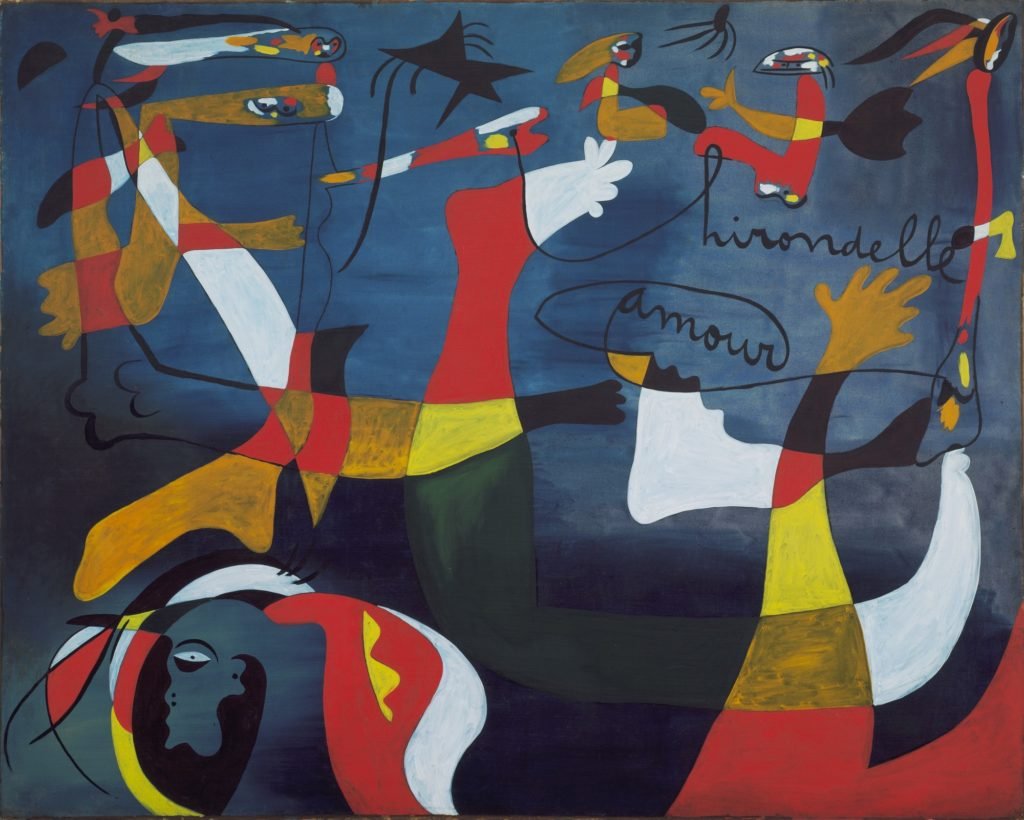
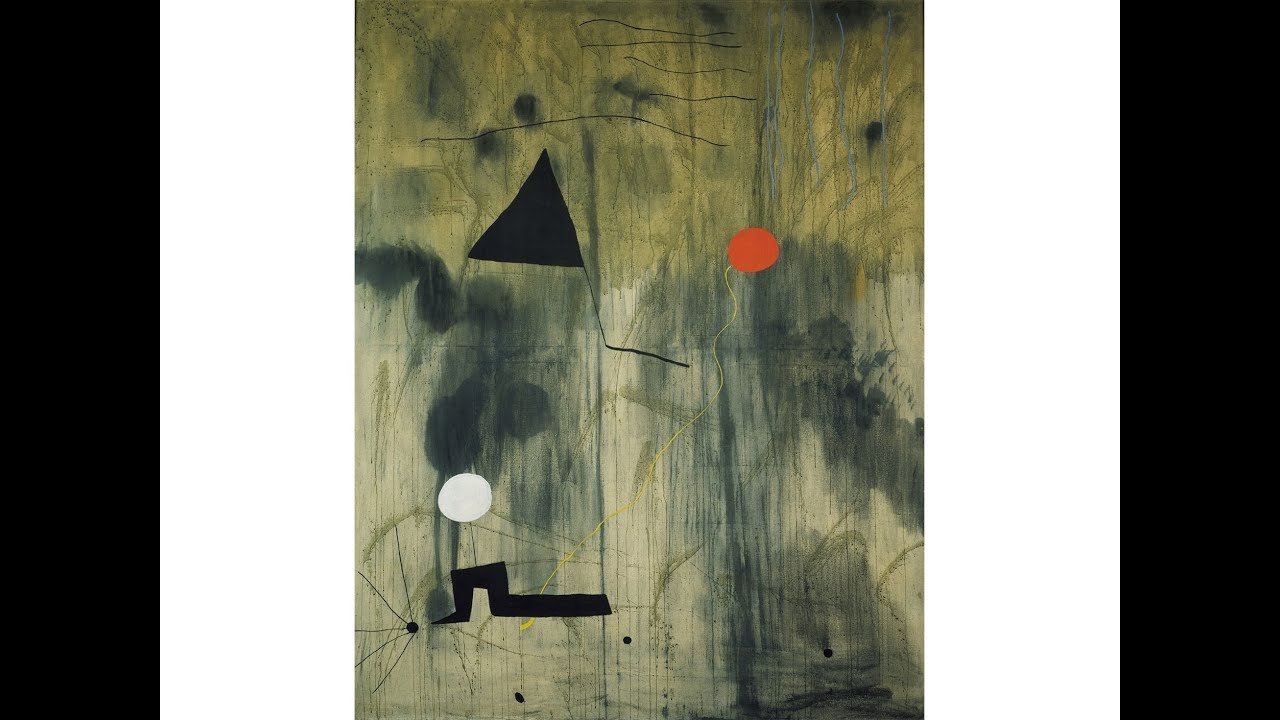
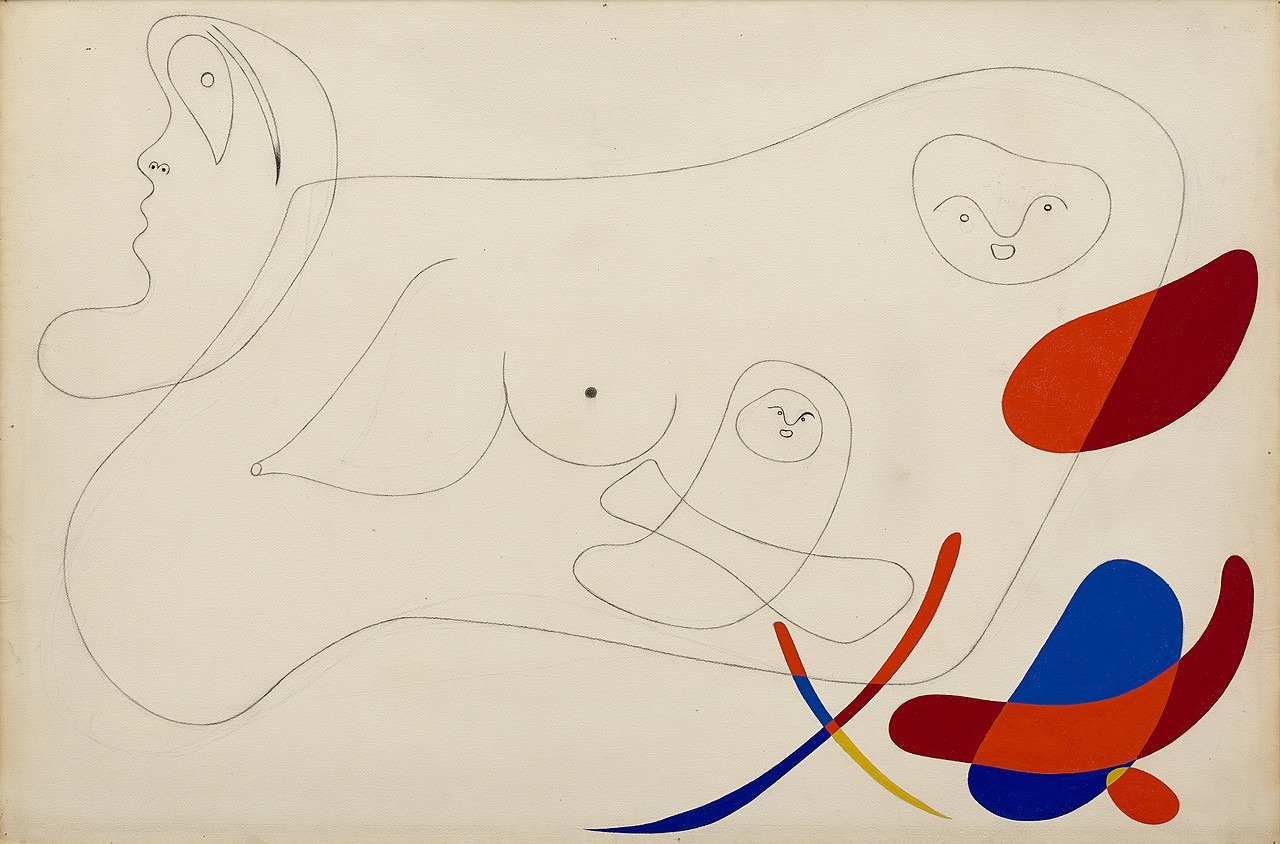
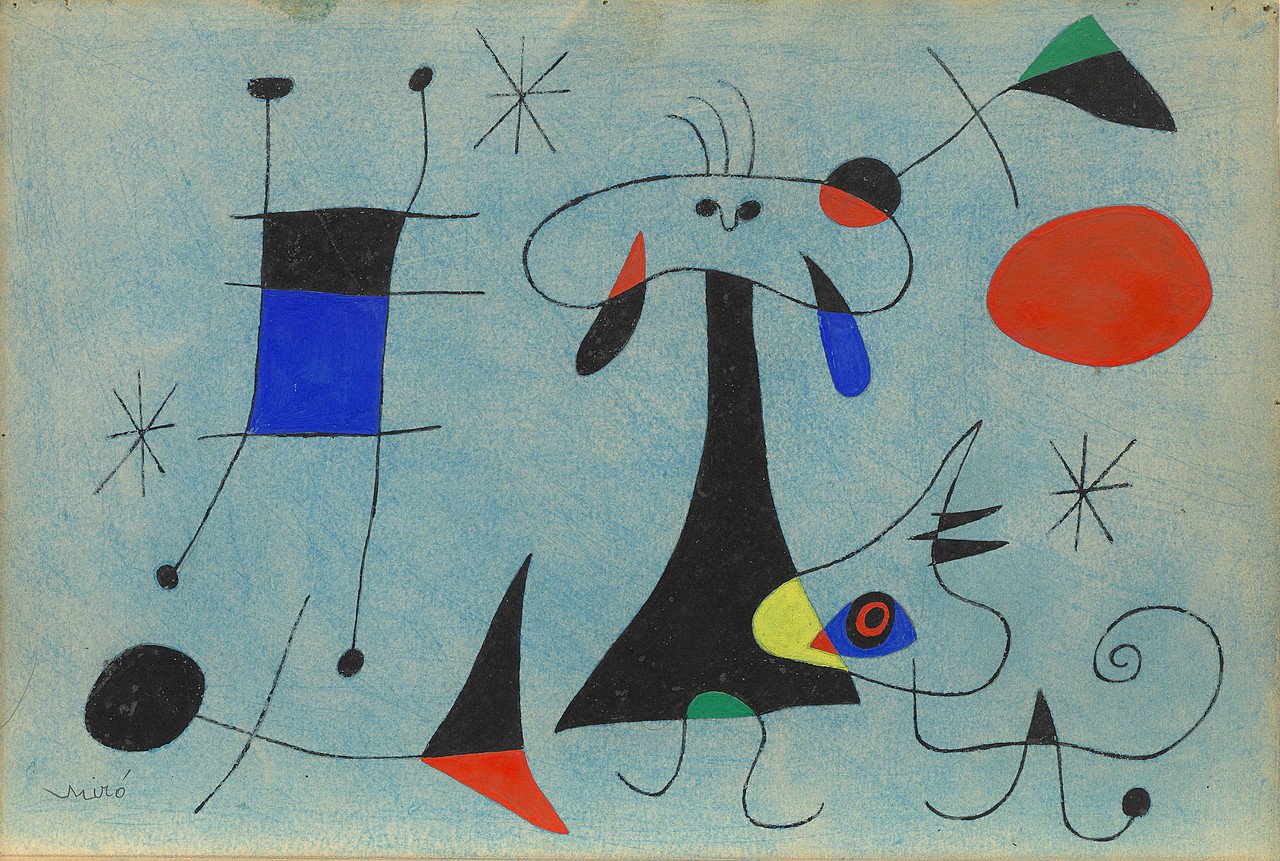
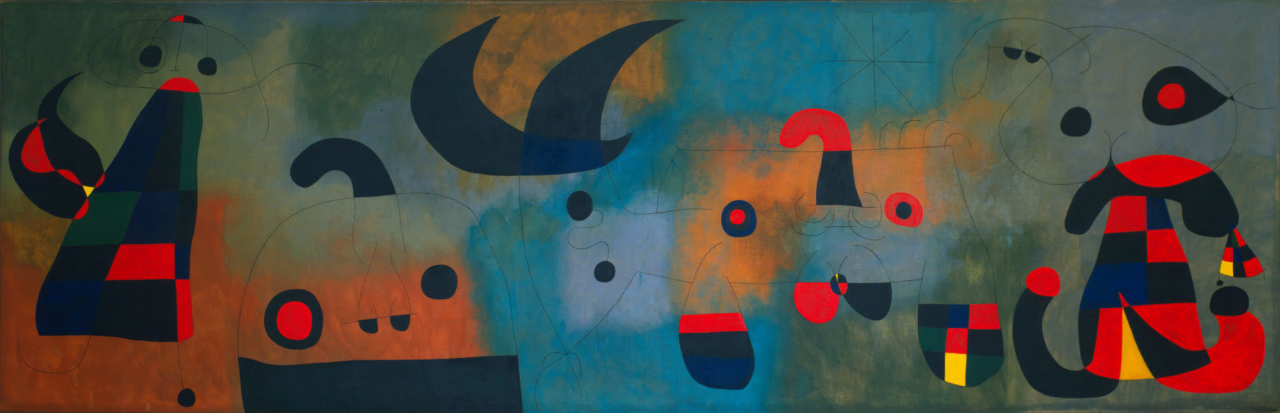
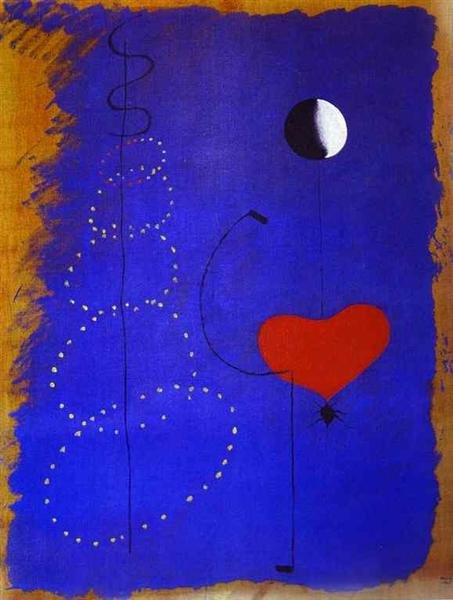
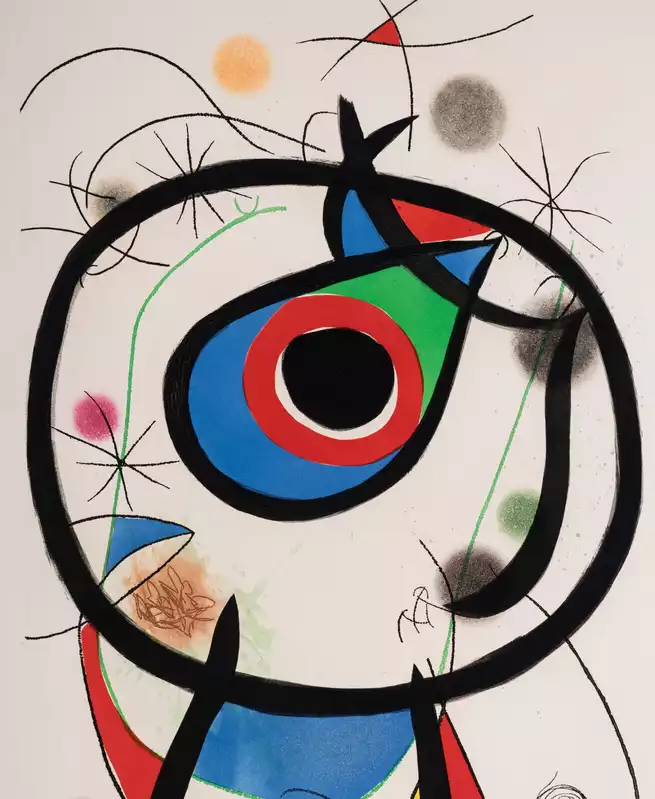
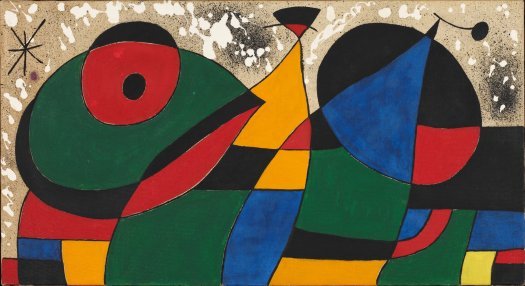
Until the outbreak of the Spanish Civil War, Miró habitually returned to Spain in the summers. Once the war began, he was unable to return home. Unlike many of his surrealist contemporaries, Miró had previously preferred to stay away from explicitly political commentary in his work. Though a sense of (Catalan) nationalism pervaded his earliest surreal landscapes and Head of a Catalan Peasant, it was not until Spain’s Republican government commissioned him to paint the mural The Reaper, for the Spanish Republican Pavilion at the 1937 Paris Exhibition, that Miró’s work took on a politically charged meaning.

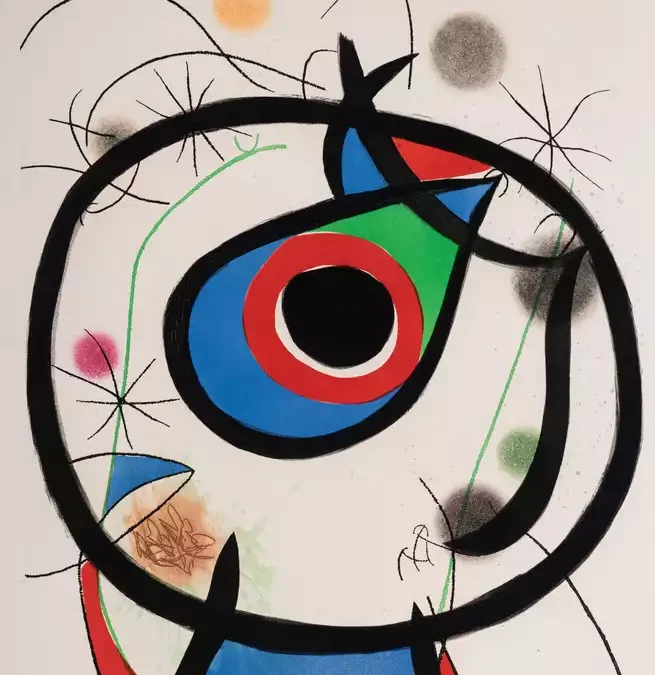
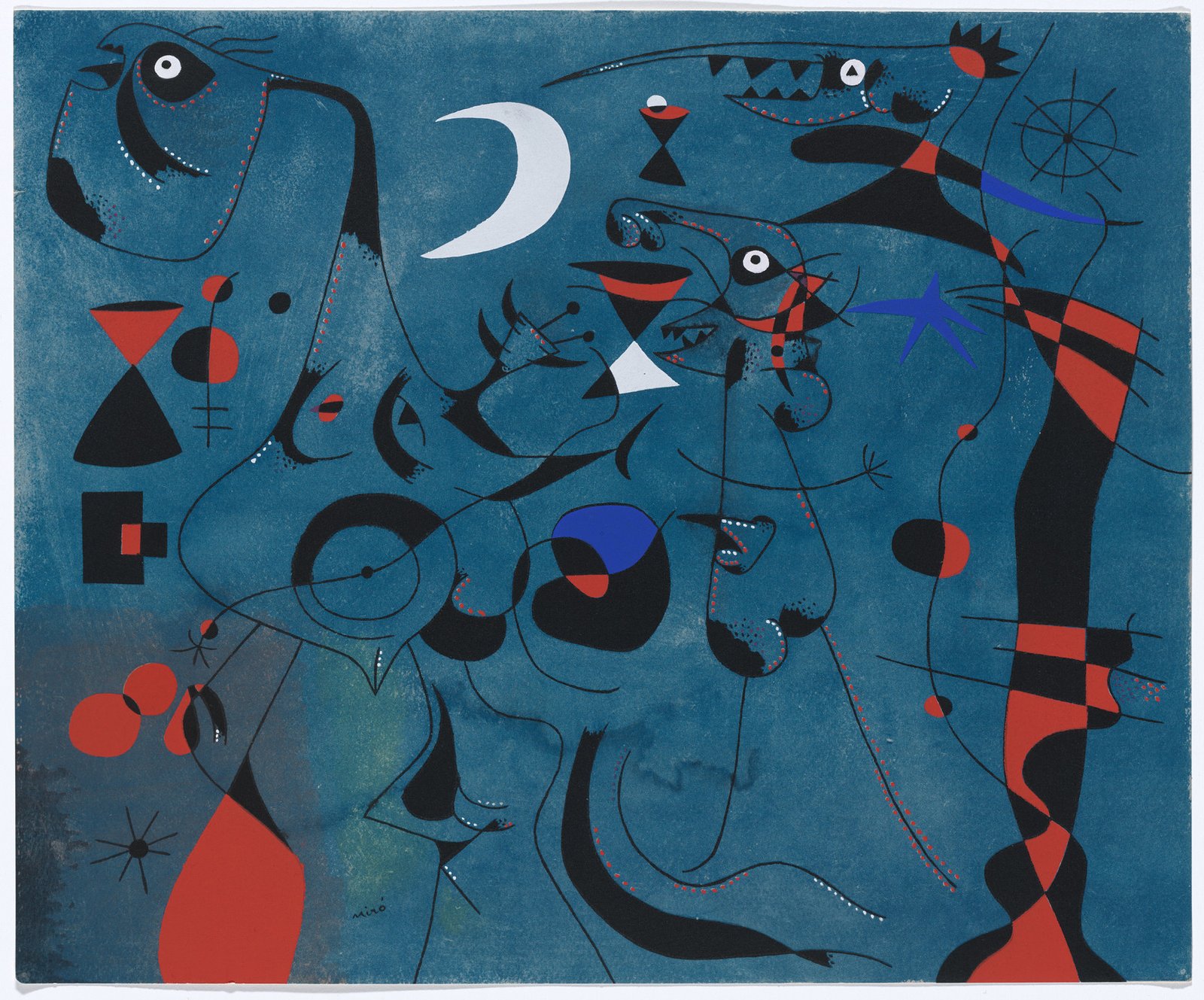
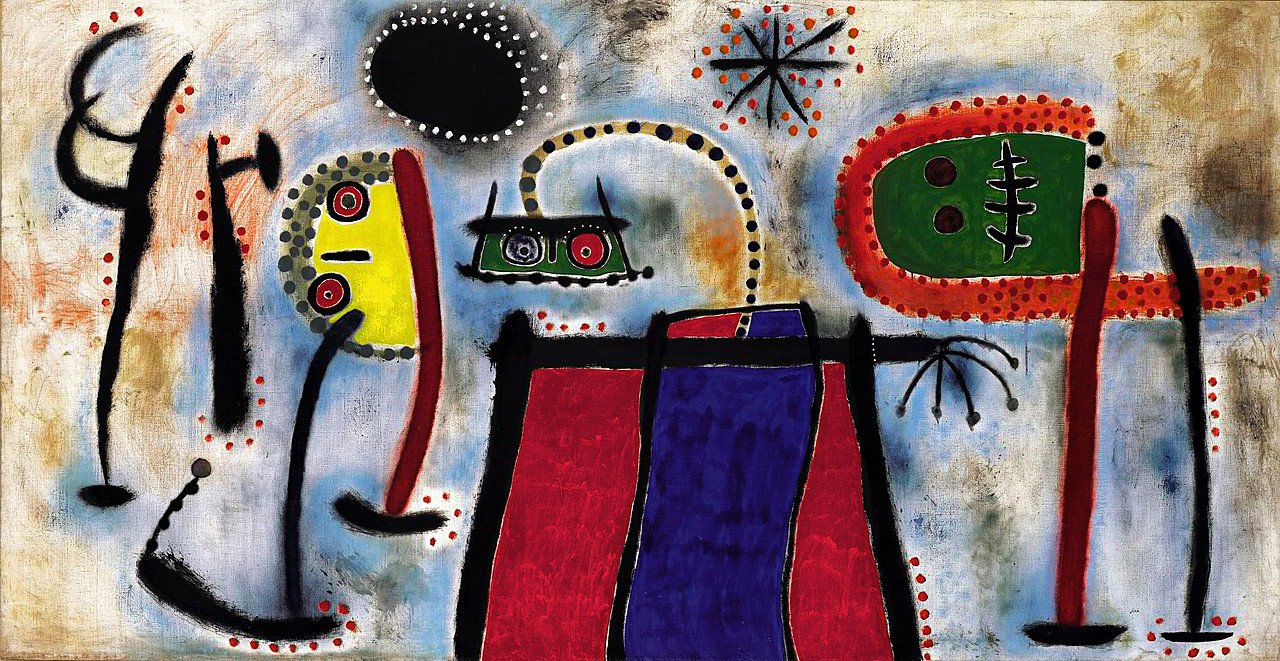
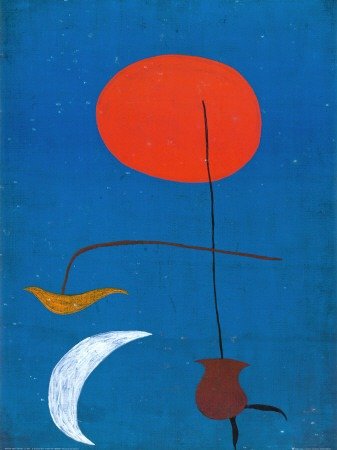
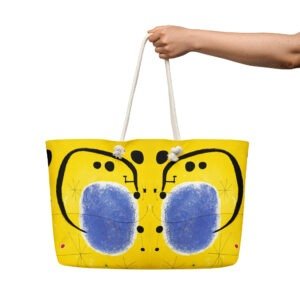
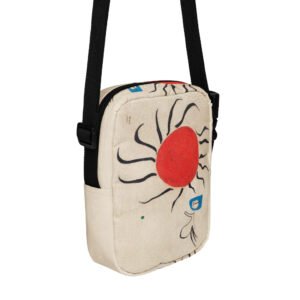
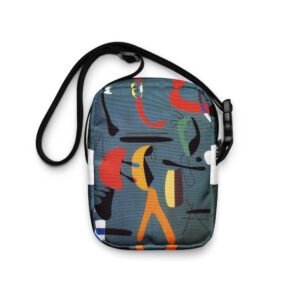
In 1939, with Germany’s invasion of France looming, Miró relocated to Varengeville in Normandy, and on 20 May of the following year, as Germans invaded Paris, he narrowly fled to Spain (now controlled by Francisco Franco) for the duration of the Vichy Regime’s rule. In Varengeville, Palma, and Mont-roig, between 1940 and 1941, Miró created the twenty-three gouache series Constellations. Revolving around celestial symbolism, Constellations earned the artist praise from André Breton, who seventeen years later wrote a series of poems, named after and inspired by Miró’s series. Features of this work revealed a shifting focus to the subjects of women, birds, and the moon, which would dominate his iconography for much of the rest of his career.

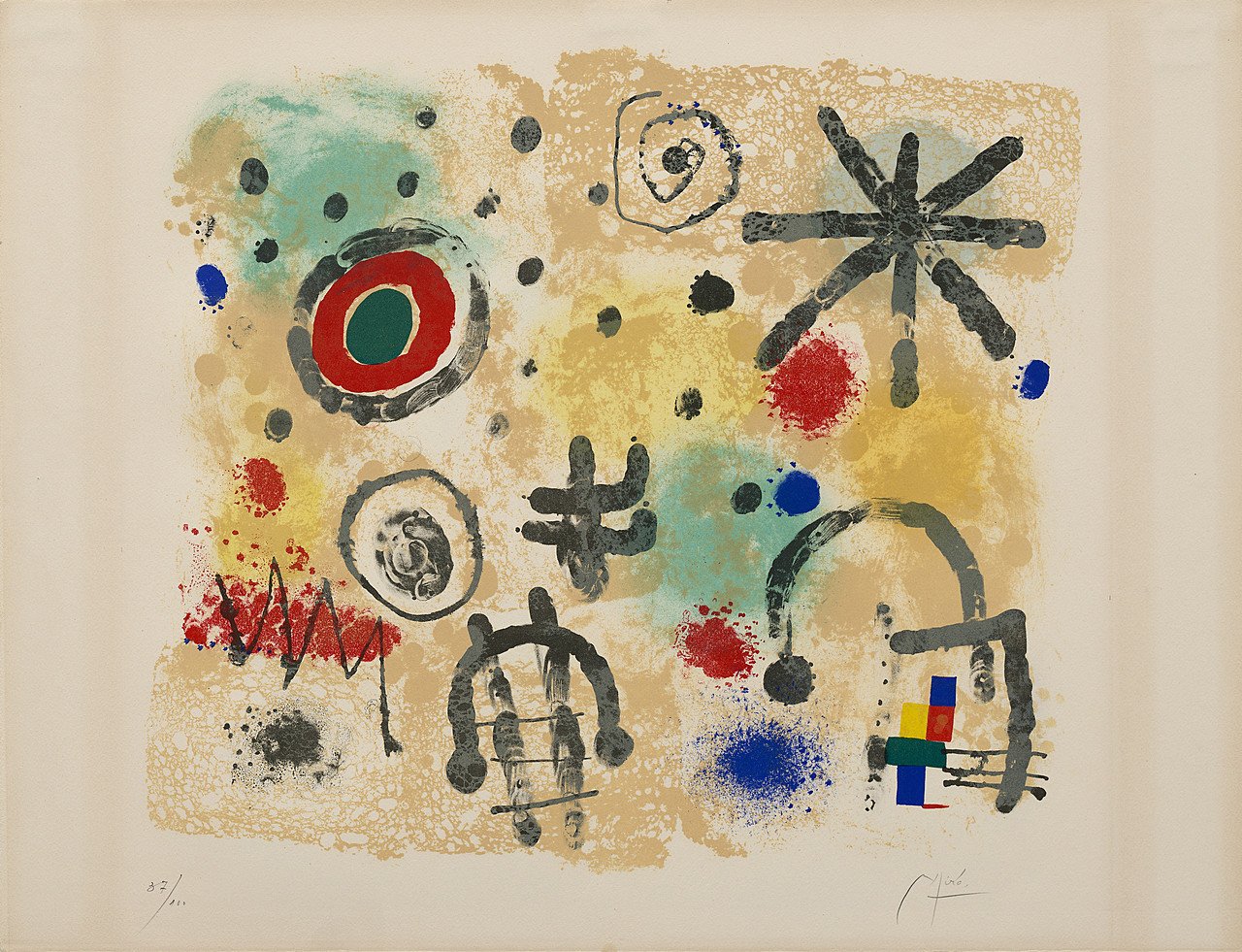
Shuzo Takiguchi published the first monograph on Miró in 1940. In 1948–49 Miró lived in Barcelona and made frequent visits to Paris to work on printing techniques at the Mourlot Studios and the Atelier Lacourière. He developed a close relationship with Fernand Mourlot and that resulted in the production of over one thousand different lithographic editions.


In 1959, André Breton asked Miró to represent Spain in The Homage to Surrealism exhibition alongside Enrique Tábara, Salvador Dalí, and Eugenio Granell. Miró created a series of sculptures and ceramics for the garden of the Maeght Foundation in Saint-Paul-de-Vence, France, which was completed in 1964.


In 1959, André Breton asked Miró to represent Spain in The Homage to Surrealism exhibition alongside Enrique Tábara, Salvador Dalí, and Eugenio Granell. Miró created a series of sculptures and ceramics for the garden of the Maeght Foundation in Saint-Paul-de-Vence, France, which was completed in 1964.

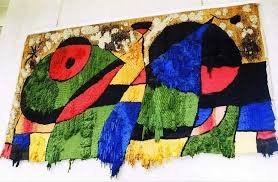
In 1974, Miró created a tapestry for the World Trade Center in New York City together with the Catalan artist Josep Royo. He had initially refused to do a tapestry, then he learned the craft from Royo and the two artists produced several works together. His World Trade Center Tapestry was displayed at the building and was one of the most expensive works of art lost during the September 11 attacks.

In 1977, Miró and Royo finished a tapestry to be exhibited in the National Gallery of Art in Washington, DC.

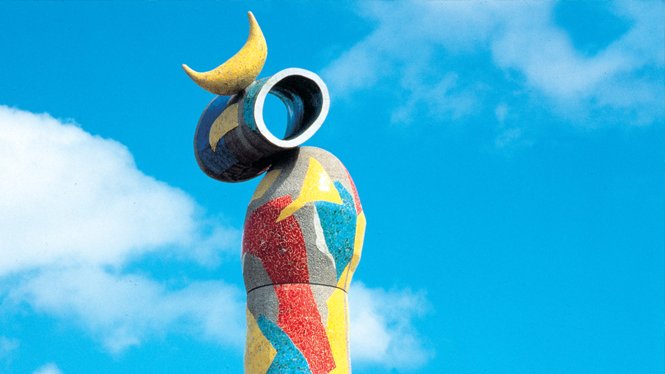
In 1981, Miró’s The Sun, the Moon and One Star—later renamed Miró’s Chicago—was unveiled. This large, mixed media sculpture is situated outdoors in the downtown Loop area of Chicago, across the street from another large public sculpture, the Chicago Picasso. Miró had created a bronze model of The Sun, the Moon and One Star in 1967. The maquette now resides in the Milwaukee Art Museum.

Explore all artists in this collection

Jean (Hans) Arp

Jean (Hans) Arp

Jean (Hans) Arp

1886 - 1966

Explore all artists in this collection

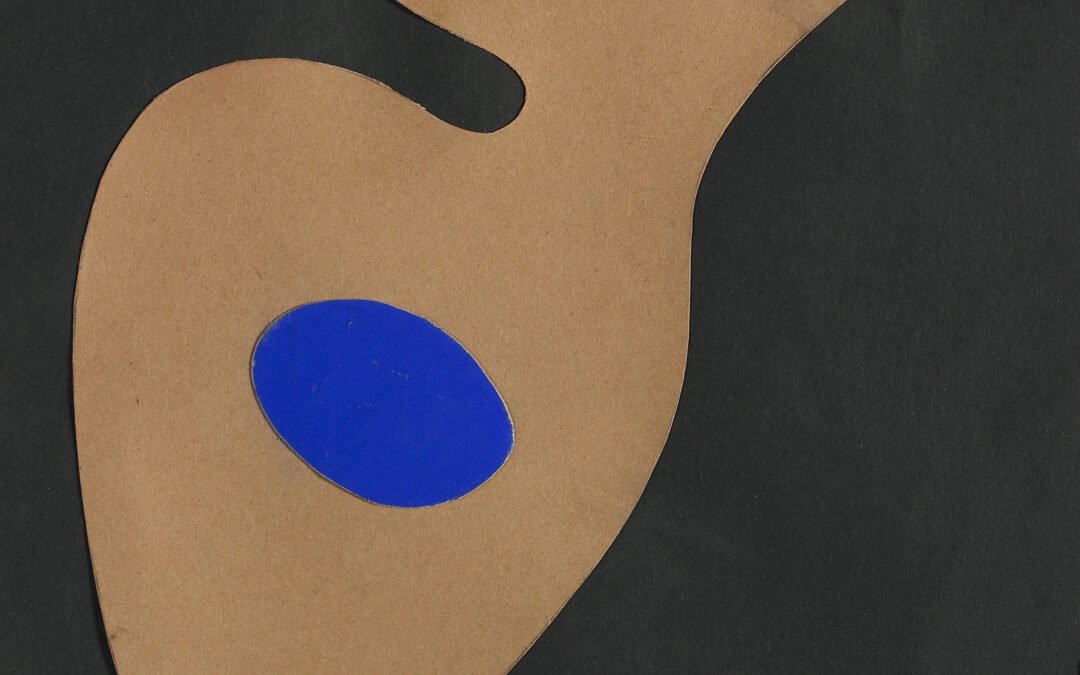
In 1904, after leaving the École des Arts et Métiers, Strasbourg, he visited Paris and published his poetry for the first time. From 1905 to 1907, Arp studied at the Kunstschule, Weimar, and in 1908 went to Paris, where he attended the Académie Julian. In 1909, he moved to Switzerland and in 1911 was a founder of the Moderner Bund group there. The following year, he met Robert and Sonia Delaunay in Paris and Vasily Kandinsky in Munich. Arp participated in the Erste deutsche Herbstsalon in 1913 at the gallery Der Sturm, Berlin. After returning to Paris in 1914, he became acquainted with Guillaume Apollinaire, Max Jacob, Amadeo Modigliani, and Pablo Picasso. In 1915, he moved to Zurich, where he executed collages and tapestries, often in collaboration with his future wife Sophie Taeuber (who became known as Sophie Taeuber-Arp after they married in 1922).

In 1916, Hugo Ball opened the Cabaret Voltaire, which was to become the center of Dada activities in Zurich for a group that included Arp, Marcel Janco, Tristan Tzara, and others. Arp continued his involvement with Dada after moving to Cologne in 1919. In 1922, he participated in the Kongress der Konstruktivisten in Weimar and the Exposition Internationale Dada at Galerie Montaigne in Paris. Soon thereafter, he began contributing to magazines such as Merz, Mécano, De Stijl, and later to La Révolution surréaliste. Arp’s work appeared in the first exhibition of the Surrealist group at the Galerie Pierre, Paris, in 1925. In 1926, he settled in Meudon, France.

In 1931, Arp was associated with the Paris-based group Abstraction-Création and the periodical Transition. Throughout the 1930s and until the end of his life, he continued to write and publish poetry and essays. In 1942, he fled Meudon for Zurich; he was to make Meudon his primary residence again in 1946. The artist visited New York in 1949 on the occasion of his solo show at Curt Valentin’s Buchholz Gallery. In 1950, he was invited to execute a relief for the Harvard Graduate Center in Cambridge, Massachusetts. In 1954, Arp received the Grand Prize for Sculpture at the Venice Biennale. A retrospective of his work was held at the Museum of Modern Art, New York, in 1958, followed by another at the Musée National d’Art Moderne, Paris, in 1962. Arp died June 7, 1966, in Basel.

Explore all artists in this collection