
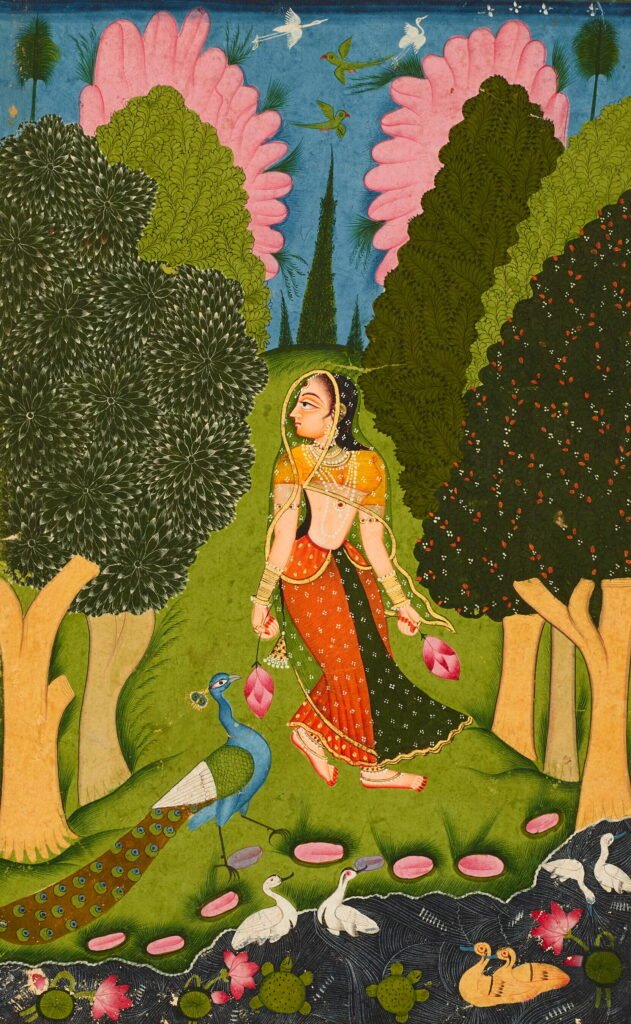
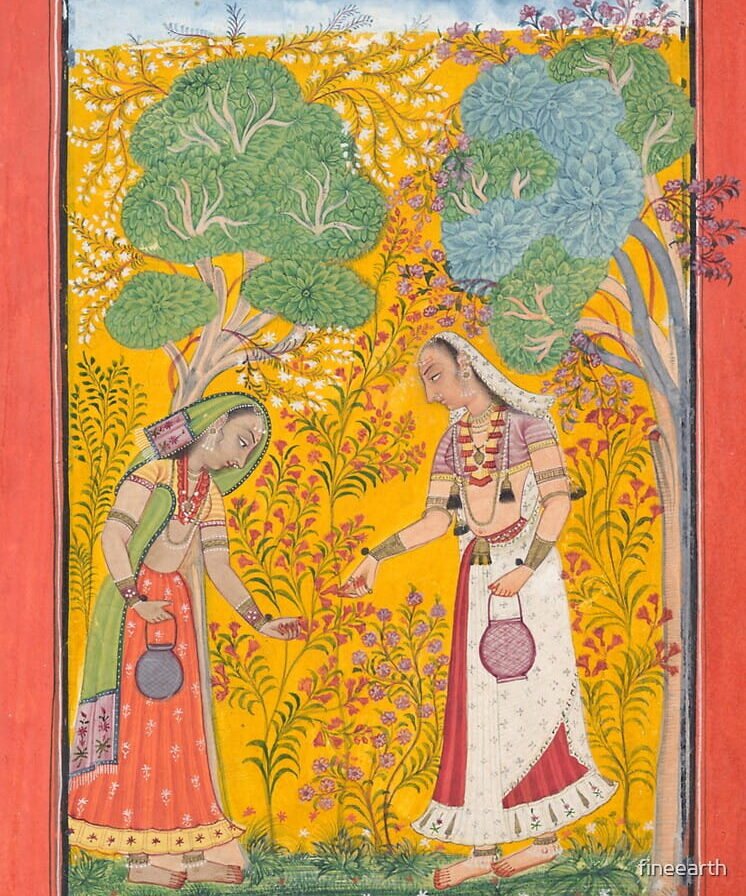
Ragamala (or Raagmala) refers to a traditional Indian art form of miniature paintings that visually depict musical modes (ragas) and their associated moods, seasons, and times of day, symbolizing a “garland of melodies”. It also refers to a specific poetic composition in the Sikh scripture, Guru Granth Sahib, that lists various ragas.
The core concept blends music, poetry, and painting to evoke emotion, often depicting the stories of lovers (heroes/heroines) linked to specific melodies.
Concept: Visual representations of Indian classical music’s melodic structures (ragas) and their feminine counterparts (raginis).
- Themes: Portray human emotions (rasa), often focusing on the trials and passions of lovers.
- Structure: Typically created as sets of 36 or more loose-leaf paintings for a portfolio, linked to Sanskrit verses.
- Historical Context: Popular in Indian courts from the 16th to 19th centuries, merging music, poetry, and painting.
Ragmala, a rich and intricate form of Indian art, intertwines the realms of music, poetry, and visual aesthetics, creating a unique tapestry that reflects the cultural heritage of the subcontinent. Originating from the Indian classical music tradition, Ragmala serves as a significant tool for expressing emotional depth and spiritual themes through its melodic structures and lyrical content. This article explores the important features of Ragmala, delving into its historical significance, musical elements, connections to visual arts, and its evolving influence in contemporary practices, revealing the profound impact this art form has had on Indian culture and beyond.
Definition and Origin
Ragmala, often translated as “garland of melodies,” is a traditional genre of Indian classical music that interweaves various ragas, creating a mosaic of melodic textures. Originating during the medieval period, particularly in the 16th century, this art form serves as both a musical exploration and a poetic expression, intricately linking music to the cultural fabric of India.
Purpose and Context
The primary purpose of Ragmala is to evoke specific emotions and moods through a blend of melodic forms. Typically performed in a spiritual or devotional context, it aims to transport the listener to a different realm, where music becomes a medium for meditation and connection with the divine. It’s like a musical GPS guiding you through the emotional landscape where each raga serves as a different waypoint.
Roots in Indian Classical Music
Ragmala is deeply rooted in the traditions of Indian classical music, evolving from ancient texts and musicological theories. Its foundation lies in the concept of ragas, which are defined melodic frameworks. These ragas were initially documented in ancient scriptures, and over time, they transformed into a rich linguistic tapestry that constitutes the very essence of Indian musical heritage.
Evolution Through the Ages
Through the ages, Ragmala has undergone a fascinating transformation—like a fine wine, it has aged beautifully, influenced by various regional styles and societal changes. From the courts of Mughal emperors to contemporary performances, the Ragmala has adapted, incorporating new elements while maintaining its core essence. This adaptation is a testament to its enduring appeal and versatility across different cultural landscapes.
Ragas and Their Characteristics
At the heart of Ragmala are ragas, each embodying unique emotional sentiments (or “rasas”). Think of each raga as a character in a grand musical play, complete with specific rules governing how they should be performed. These characteristics include specific notes, typical phrases, and emotional themes that define their identity. This diversity gives Ragmala its rich sonic palette, allowing performers to paint vivid auditory pictures.
Melodic and Rhythmic Components
The magic of Ragmala is not just in its melodies but also in its intricate rhythmic structures. Melodically, it consists of ascending and descending scales, while rhythmically, it employs various talas (rhythmic cycles) that add depth and complexity. The interplay between melody and rhythm creates a compelling dynamic, allowing artists to engage in improvisation, often leading to spontaneous and exhilarating performances.
Illustrations and Manuscripts
Ragmala isn’t just a feast for the ears; it has also found a vibrant presence in visual arts. Historical manuscripts often feature exquisite illustrations depicting the themes and moods of various ragas. These artworks serve as a visual accompaniment, illustrating the narrative quality of the music, and inviting viewers to experience the emotional journey through imagery.
Interplay Between Music and Visual Arts
The relationship between Ragmala and visual arts is symbiotic—each enhances the other. While Ragmala can evoke vivid images and emotions, visual arts often capture the essence of musical themes, creating a sensory experience that transcends auditory and visual boundaries. This interplay invites audiences to not only listen but to see and feel, turning each performance into a multi-dimensional spectacle.
