RGB v. CMYK: Color Theory 101

RGB v. CMYK: Color Theory 101

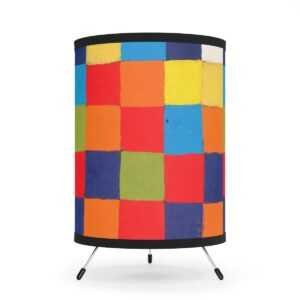
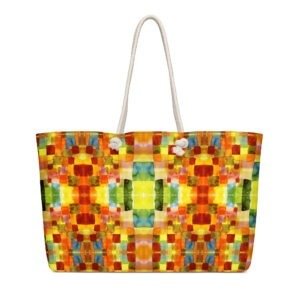
Color is one of the most essential design elements. This site uses many different techniques to deliver items that are as sharp and vivid as the images that are presented on the web site.

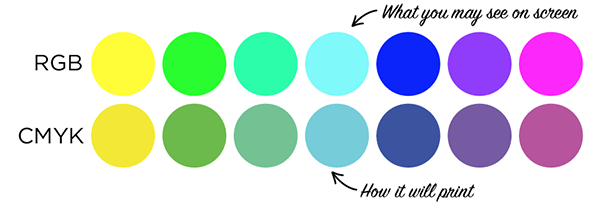
There are very specific differences between what is displayed versus what is printed. Let’s take a quick look at some basic physics of rendering colors:

RGB is an additive color model, while CMYK is subtractive.

RGB uses white as a combination of all primary colors and black as the absence of light. CMYK, on the other hand, uses white as the natural color of the print background and black as a combination of colored inks. Graphic designers and print providers use the RGB color model for any type of media that transmits light, such as computer screens. RGB is ideal for digital media designs because these mediums emit color as red, green, or blue light.

RGB is best for websites and digital communications, while CMYK is better for print materials. Most design fields recognize RGB as the primary colors, while CMYK is a subtractive model of color.

With the RGB color model, pixels on a digital monitor are – if viewed with a magnifying glass – all one of three colors: red, green, or blue. The white light emitted through the screen blends the three colors on the eye’s retina to create a wide range of other perceived colors. With RGB, the more color beams the device emits, the closer the color gets to white. Not emitting any beams, however, leads to the color black.

This is the opposite of how CMYK works.

CMYK is best for print materials because print mediums use colored inks for messaging. CMYK subtracts colors from natural white light and turns them into pigments or dyes. Printers then put these pigments onto paper in tiny cyan, magenta, yellow, and black dots – spread out or close together to create the desired colors. With CYMK, the more colored ink placed on a page, the closer the color gets to black. Subtracting cyan, magenta, yellow, and black inks create white – or the original color of the paper or background. RGB color values range from 0 to 255, while CMYK ranges from 0-100%.

Fine Art Focus: Bauhaus: 100 years later

Fine Art Focus: Bauhaus: 100 years later

bauhaus

A 100-year perspective

The importance of the Bauhaus lies in its revolutionary approach to design, architecture, and art education that emphasized functionality, simplicity, and the integration of art with mass production, creating a lasting influence on modern design across many fields, from furniture and buildings to graphic design and beyond. Despite being a short-lived German school (1919-1933), its principles were spread worldwide, especially after its closure by the Nazis, pioneering the concept of design as a holistic, problem-solving discipline.

The school existed in three German cities—Weimar, from 1919 to 1925; Dessau, from 1925 to 1932; and Berlin, from 1932 to 1933—under three different architect-directors: Walter Gropius from 1919 to 1928; Hannes Meyer from 1928 to 1930; and Ludwig Mies van der Rohe from 1930 until 1933, when the school was closed by its own leadership under pressure from the Nazi regime, having been painted as a centre of communist intellectualism.[4] Internationally, former key figures of Bauhaus were successful in the United States and became known as the avant-garde for the International Style.[5] The White city of Tel Aviv, to which numerous Jewish Bauhaus architects emigrated, has the highest concentration of the Bauhaus’ international architecture in the world.

The changes of venue and leadership resulted in a constant shifting of focus, technique, instructors, and politics. For example, the pottery shop was discontinued when the school moved from Weimar to Dessau, even though it had been an important revenue source; when Mies van der Rohe took over the school in 1930, he transformed it into a private school and would not allow any supporters of Hannes Meyer to attend it.

The Bauhaus was founded in 1919 in the city of Weimar by German architect Walter Gropius (1883–1969).

Its core objective was a radical concept: to reimagine the material world to reflect the unity of all the arts. Gropius explained this vision for a union of art and design in the Proclamation of the Bauhaus (1919), which described a utopian craft guild combining architecture, sculpture, and painting into a single creative expression. Gropius developed a craft-based curriculum that would turn out artisans and designers capable of creating useful and beautiful objects appropriate to this new system of living.

The Bauhaus combined elements of both fine arts and design education. The curriculum commenced with a preliminary course that immersed the students, who came from a diverse range of social and educational backgrounds, in the study of materials, color theory, and formal relationships in preparation for more specialized studies. This preliminary course was often taught by visual artists, including Paul Klee (1987.455.16), Vasily Kandinsky (1866–1944), and Josef Albers (59.160), among others.

Major Bauhaus Artists

Wassily Kandinsky (1866–1944):

A leading figure in abstract art, he was a member of the influential Der Blaue Reiter group and taught at the Bauhaus.

Paul Klee (1879–1940):

Also a member of Der Blaue Reiter, Klee was known for his colorful, geometric abstract paintings and taught at the Bauhaus from 1921 to 1932.

László Moholy-Nagy (1895–1946):

A Hungarian artist who taught painting and photography, known for his work in kinetic sculpture and his use of light and form.

Josef Albers (1888–1976):

A German artist who was both a student and later a master at the Bauhaus, known for his work with color and geometric forms.

Oskar Schlemmer (1888–1943):

A painter and sculptor who designed the Bauhaus emblem and taught painting, known for his work on the ballet “The Triadic Ballet”.

Anni Albers (1899–1994):

A significant textile artist and printmaker, she was a key figure in the women artists of the Bauhaus.

Specialization Workshops

Although Gropius’ initial aim was a unification of the arts through craft, aspects of this approach proved financially impractical. While maintaining the emphasis on craft, he repositioned the goals of the Bauhaus in 1923, stressing the importance of designing for mass production. It was at this time that the school adopted the slogan “Art into Industry.”

Architecture & Furniture Design

In 1925, the Bauhaus moved from Weimar to Dessau, where Gropius designed a new building to house the school. This building contained many features that later became hallmarks of modernist architecture, including steel-frame construction, a glass curtain wall, and an asymmetrical, pinwheel plan, throughout which Gropius distributed studio, classroom, and administrative space for maximum efficiency and spatial logic.

The cabinetmaking workshop was one of the most popular at the Bauhaus. Under the direction of Marcel Breuer (1983.366) from 1924 to 1928, this studio reconceived the very essence of furniture, often seeking to dematerialize conventional forms such as chairs to their minimal existence. Breuer theorized that eventually chairs would become obsolete, replaced by supportive columns or air. Inspired by the extruded steel tubes of his bicycle, he experimented with metal furniture, ultimately creating lightweight, mass-producible metal chairs. Some of these chairs were deployed in the theater of the Dessau building.

Textiles

Women and Weaving at the Bauhaus

The Bauhaus weaving workshop was one of the most inventive and commercially successful departments of the pioneering 20th-century school of art and design. Notably, most of the artists involved were women.

These women were “exploring textiles’ potential, both as works of art and as utilitarian fabrics,” said Laura Muir, research curator for academic and public programs and curator of The Bauhaus and Harvard at the Harvard Art Museums.

Collaboration and innovation were paramount in the workshop: artists pursued new designs suitable for industrial production and experimented with novel materials and techniques.

Source —Harvard Art Museums

The textile workshop, especially under the direction of designer and weaver Gunta Stölzl (1897–1983), created abstract textiles suitable for use in Bauhaus environments.

Students studied color theory and design as well as the technical aspects of weaving. Stölzl encouraged experimentation with unorthodox materials, including cellophane, fiberglass, and metal. Fabrics from the weaving workshop were commercially successful, providing vital and much needed funds to the Bauhaus. The studio’s textiles, along with architectural wall painting, adorned the interiors of Bauhaus buildings, providing polychromatic yet abstract visual interest to these somewhat severe spaces.

While the weaving studio was primarily comprised of women, this was in part due to the fact that they were discouraged from participating in other areas. The workshop trained a number of prominent textile artists, including Anni Albers (1899–1994), who continued to create and write about modernist textiles throughout her life.

Metal & Industrial Design

Metalworking was another popular workshop at the Bauhaus and, along with the cabinetmaking studio, was the most successful in developing design prototypes for mass production. In this studio, designers such as Marianne Brandt (2000.63a–c), Wilhelm Wagenfeld (1986.412.1–16), and Christian Dell (1893–1974) created beautiful, modern items such as lighting fixtures and tableware. Occasionally, these objects were used in the Bauhaus campus itself; light fixtures designed in the metalwork shop illuminated the Bauhaus building and some faculty housing.

Brandt was the first woman to attend the metalworking studio, and replaced László Moholy-Nagy (1987.1100.158) as studio director in 1928. Many of her designs became iconic expressions of the Bauhaus aesthetic. Her sculptural and geometric silver and ebony teapot (2000.63a–c), while never mass-produced, reflects both the influence of her mentor, Moholy-Nagy, and the Bauhaus emphasis on industrial forms. It was designed with careful attention to functionality and ease of use, from the nondrip spout to the heat-resistant ebony handle.

Typography

The typography workshop, while not initially a priority of the Bauhaus, became increasingly important under figures like Moholy-Nagy and the graphic designer Herbert Bayer (2001.392). At the Bauhaus, typography was conceived as both an empirical means of communication and an artistic expression, with visual clarity stressed above all. Concurrently, typography became increasingly connected to corporate identity and advertising. The promotional materials prepared for the Bauhaus at the workshop, with their use of sans serif typefaces and the incorporation of photography as a key graphic element, served as visual symbols of the avant-garde institution.

Cessation, Nationalism and the new beginning

Gropius stepped down as director of the Bauhaus in 1928, succeeded by the architect Hannes Meyer (1889–1954). Meyer maintained the emphasis on mass-producible design and eliminated parts of the curriculum he felt were overly formalist in nature. Additionally, he stressed the social function of architecture and design, favoring concern for the public good rather than private luxury. Advertising and photography continued to gain prominence under his leadership.

Under pressure from an increasingly right-wing municipal government, Meyer resigned as director of the Bauhaus in 1930. He was replaced by architect Ludwig Mies van der Rohe (1980.351). Mies once again reconfigured the curriculum, with an increased emphasis on architecture. Lilly Reich (1885–1947), who collaborated with Mies on a number of his private commissions, assumed control of the new interior design department.

Other departments included weaving, photography, the fine arts, and building. The increasingly unstable political situation in Germany, combined with the perilous financial condition of the Bauhaus, caused Mies to relocate the school to Berlin in 1930, where it operated on a reduced scale. He ultimately shuttered the Bauhaus in 1933.

During the turbulent and often dangerous years of World War II, many of the key figures of the Bauhaus emigrated to the United States, where their work and their teaching philosophies influenced generations of young architects and designers.

Breuer and Gropius taught at Harvard. Josef and Anni Albers taught at Black Mountain College, and later Josef taught at Yale.

Moholy-Nagy established the New Bauhaus in Chicago in 1937.

Mies van der Rohe designed the campus and taught at the Illinois Institute of Technology.

It remains to this day, standing as a distinguished monument to the power of art.

the HAWAIIAN SHIRT COLLECTION: MAHALO!

the HAWAIIAN SHIRT COLLECTION: MAHALO!

Hawaiian style is all about ease and comfort. It’s also about celebrating the colors and forms of this unique tropical, Pacific location.

As with most creative expression, we always seek out the most profane, bastardized version of whatever we are are admiring.

A few of the worst Hawaiian shirts a short Google Image Search uncovered:


Though its precise origins are lost to history, the aloha shirt first appeared in Hawaii in the 1920s or ’30s, probably when local Japanese women adapted kimono fabric for use in men’s shirting. The shirts achieved some popularity among tourists to Hawaii and found greater commercial success when they hit the mainland in the mid-1930s. America at the time was riddled with hardship and anxiety, with many men out of work and many others struggling to hold on to their breadwinner status. Perhaps in response, hyper-manliness came into vogue—the popularity of bodybuilding skyrocketed, Superman burst onto the scene. It may seem paradoxical that men embraced a garment with such feminine appeal. “You’d better get two or three because it’s a cinch your daughter, sister, wife or even mother will want this bright-colored shirt as soon as she sees it,” the Los Angeles Times teased in 1936. That didn’t stop men from buying. By 1940, aloha shirts were bringing in more than $11 million annually (in today’s money).

By the 1960s, the shirt had become truly ubiquitous. Aloha Fridays were a fixture of a certain kind of workplace, and everyone—from Elvis to the decidedly unhip Richard Nixon—seemed to have an aloha shirt. Over time, perhaps inevitably, it lapsed into the realm of corny suburban-dad-wear.

Yet in just the past five years, fashion magazines have been heralding a comeback, and high-end labels like Gucci are taking the aloha shirt to new heights, with prints that draw on Japanese designs favored in the garment’s early days. Meanwhile, some shirtmakers from Hawaii’s old guard are still going strong. Kahala, founded in 1936 as one of the first brands producing aloha shirts, has been raiding its vaults to reproduce designs dating back to the 1930s—including some popularized by Duke Kahanamoku. “People are looking to bring some light, some color, some vibrancy into their lives,” says Jason Morgan, Kahala’s general manager. “I think that’s needed now more than ever. If an aloha shirt can help improve somebody’s day, I think that’s pretty powerful.”

Source: Smithonian Magazine May, 2020

MOLAS: textile design & political identity

MOLAS: textile design & political identity

“Clothes aren’t going to change the world. The women who wear them are.”

– Anne Klein

Clothing is often used to define the wearer’s social class, their politics and indeed, their very view of the world. Traditional dress helps form a nation’s identity as well as furthers its heritage.

In this instance, we explore how two indigenous cultures adapted (or didn’t) to Western influences, political change and the environment.

The Mola or Molas is a hand-made textile that forms part of the traditional women’s clothing of the indigenous Guna people from Panamá. Their clothing includes a patterned wrapped skirt (saburet), a red and yellow headscarf (musue), arm and leg beads (wini), a gold nose ring (olasu) and earrings in addition to the mola blouse (dulemor).[1] Two groups, Choco and Cuna lived side by side without intermarriage and without adopting a similar culture.[2] In Dulegaya, the Guna’s native language, “mola” means “shirt” or “clothing”. The mola originated with the tradition of Guna women painting their bodies with geometric designs, using available natural colors; at a certain point, after the arrival of the Spanish, these same designs were woven in cotton, and later still, sewn using cloth “acquired by trade from the ships that came to barter for coconuts during the 19th century”.[3][4]

history

A Guna woman displays a selection of molas for sale at her home in the San Blas Islands.

Molas may have their origin in body painting. In 1514, Pasqual de Andagoya, arrived in Darian and wrote.. the women are very well dressed, in embroidered cotton mantles which extend down so as to cover their feet, but the arms and bosom are uncovered.”[5] They did not wear blouses even in 1688 until they had been introduced by the missionaries.

Only after colonization by the Spanish and contact with missionaries did the Guna start to transfer their traditional geometric designs on fabric, first by painting directly on the fabric and later by using the technique of reverse appliqué. It is not agreed when this technique was first used. It seems to have been popular in the second half of the nineteenth century.[6] In 1924, Lady Brown refers to the dress of the medicine man/ Kantules as “dressed up the knees in long covered with cabalistic characters…all worked into, or let into, the cloth in a form of patchwork.”[7]

As an inspiration for their designs, the Guna first used the geometrical patterns which have been used for body painting before. In the past, they have also depicted realistic and abstract designs of flowers, sea animals and birds, and popular culture.

Depending on the tradition of each island, Guna women or men who identify as women begin the crafting of molas either after they reach puberty, or at a much younger age. Women who prefer to dress in western style are in the minority as well as in the communities in Panama City.

technique

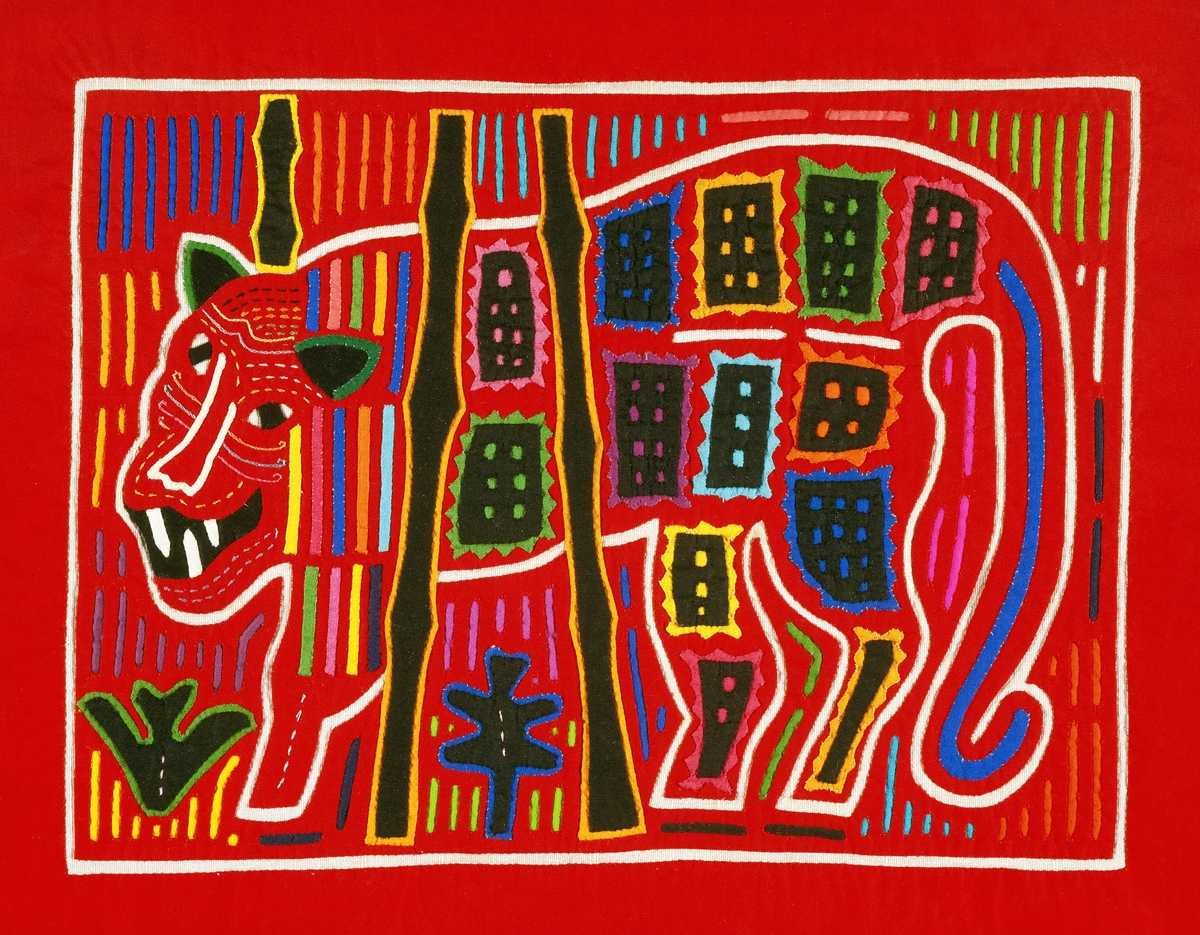
Molas are hand-made using a reverse appliqué technique. Several layers (usually two to seven) of different-colored cloth (usually cotton) are sewn together; the design is then formed by cutting away parts of each layer. The edges of the layers are then turned under and sewn down. Often, the stitches are nearly invisible. This is achieved by using a thread the same color as the layer being sewn, sewing blind stitches, and sewing tiny stitches. The finest molas have extremely fine stitching, made using tiny needles.

This closeup of a mola by Venancio Restrepo shows the layering of the different colors of cloth, and the fine stitching involved.

The largest pattern is typically cut from the top layer, and progressively smaller patterns from each subsequent layer, thus revealing the colors beneath in successive layers. This basic scheme can be varied by cutting through multiple layers at once, hence varying the sequence of colours; some molas also incorporate patches of contrasting colours, included in the design at certain points to introduce additional variations of color.[8]

Molas vary greatly in quality, and the pricing to buyers varies accordingly. A greater number of layers is generally a sign of higher quality; two-layer molas are common, but examples with four or more layers will demand a better price. The quality of stitching is also a factor, with the stitching on the best molas being close to invisible. Although some molas rely on embroidery to enhance the design, a good looking mola is always constructed using the reverse-appliqué method as the leading technique.[1] A mola can take from two weeks to six months to make, depending on the complexity

cultural, social and political influences

In 1919, the panamanian government began a policy of forced assimilation banning mola’s dress and nose piercing in women. The government introduced these laws to Westernize Guna society and assert control.[13]

There was a strong link between traditional dress and Guna culture and identity. Molas have such an importance for the Guna people and their traditional identity that they can be considered responsible for the independent status of the Comarca Kuna Yala.[14]

After the attempt of the Panamanian government to “westernize” the Guna, the Guna greatly objected to the control on their cultural dress, and ethnic identity, and showed great strength in their reaction to the bans implemented by the government, leading to the Guna Revolution.[13]

In 1925 for three years following the revolution, women were required to once again adopt traditional dress as a form of rebellion against the government. Women on Nargana and other more progressive islands were forced to wear mola, even if they had never worn this traditional dress, and their noses had to be pierced by force.[13]