
Henri Rousseau
(1844 - 1910)Rousseau was born in Laval, Mayenne, France, in 1844 into the family of a tinsmith; he was forced to work there as a young child.[7] He attended Laval High School as a day student, and then as a boarder after his father became a debtor and his parents had to leave the town upon the seizure of their house. Though mediocre in some of his high school subjects, Rousseau won prizes for drawing and music.[8]
After high school, he worked for a lawyer and studied law, but “attempted a small perjury and sought refuge in the army.”[9] He served four years, starting in 1863. With his father’s death, Rousseau moved to Paris in 1868 to support his widowed mother as a government employee.
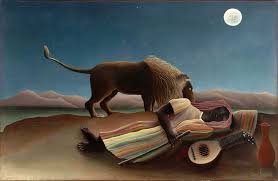

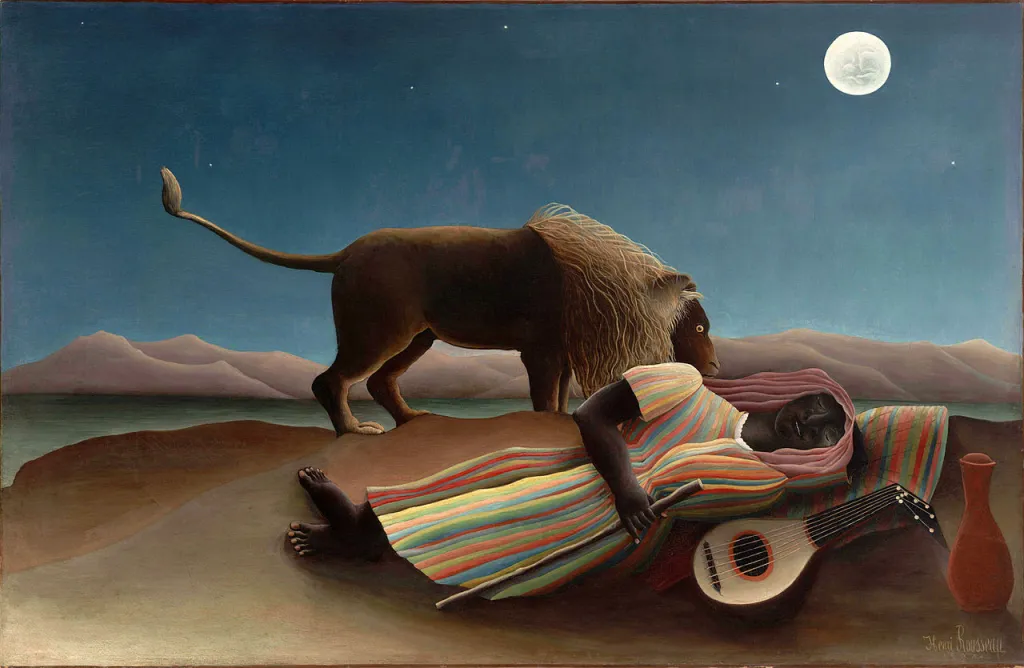
The Sleeping Gypsy (La Bohémienne endormie) is an 1897 oil on canvas painting by the French Naïve (fauve) artist Henri Rousseau. It is a fantastical depiction of a lion musing over a sleeping woman on a moonlit night. It is held by the Museum of Modern Art in New York City, to which it was donated by Mrs. Simon Guggenheim in 1939.

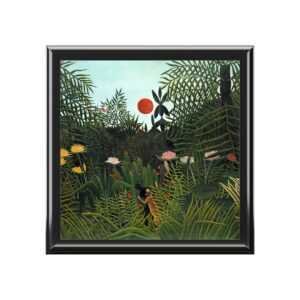
We salute you Gentle Rousseau you can hear us.
Delaunay, his wife, Monsieur Queval and myself.
Let our luggage pass duty free through the gates of heaven.
We will bring you brushes, paints and canvas.
That you may spend your sacred leisure in the
light and Truth of Painting.
As you once did my portrait facing the stars, lion and the gypsy.
In 1868, he married Clémence Boitard, his landlord’s 15-year-old daughter, with whom he had six children (only one survived). In 1871, he was appointed as a collector of the octroi of Paris, collecting taxes on goods entering Paris. His wife died in 1888 and he married Josephine Noury in 1898.
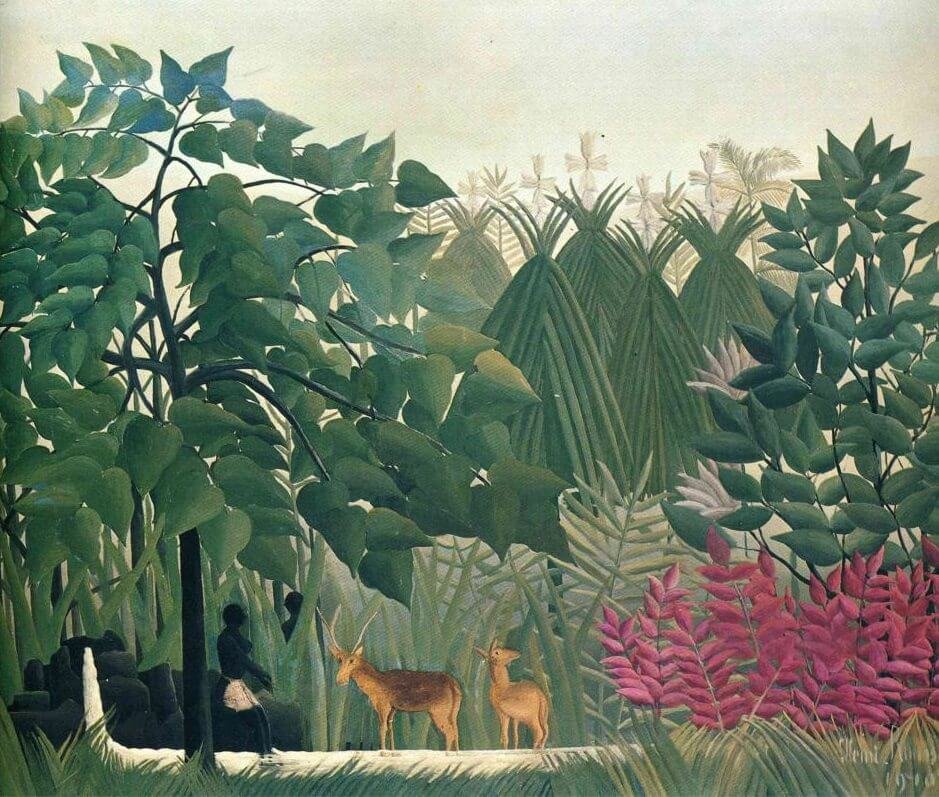
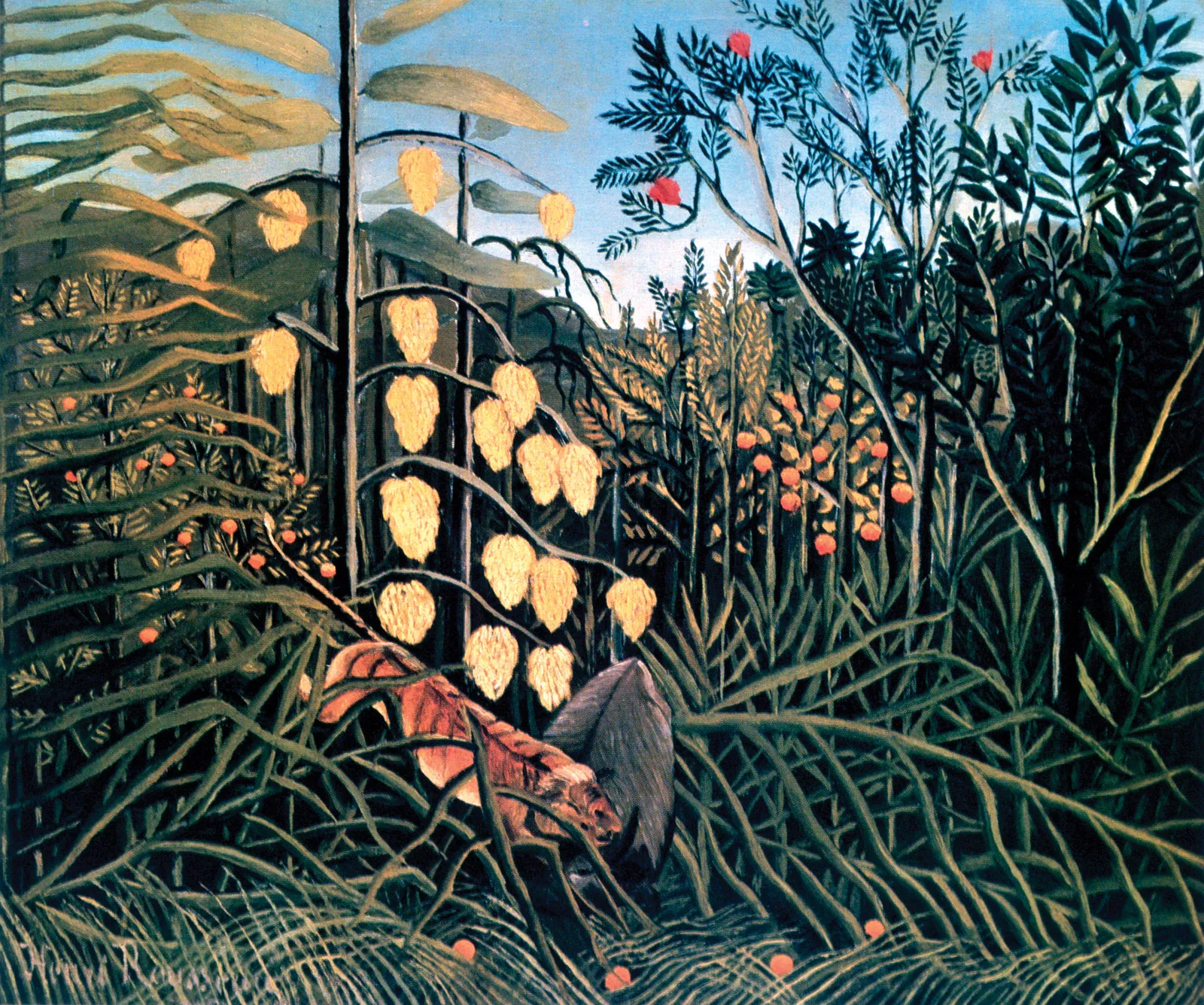
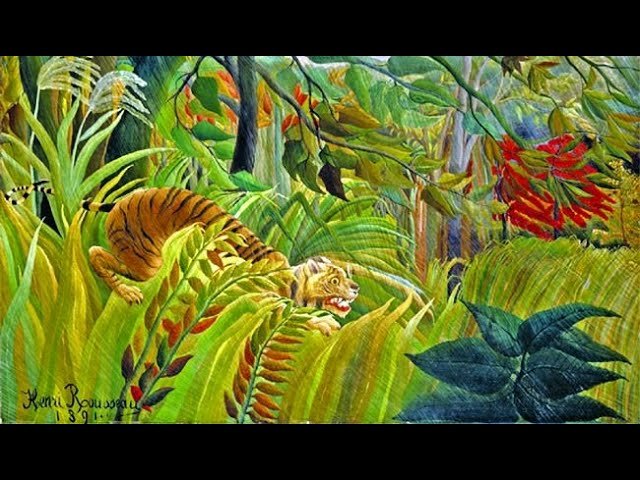
From 1886, he exhibited regularly in the Salon des Indépendants, and, although his work was not placed prominently, it drew an increasing following over the years. Tiger in a Tropical Storm (Surprised!) was exhibited in 1891, and Rousseau received his first serious review when the young artist Félix Vallotton wrote: “His tiger surprising its prey ought not to be missed; it’s the alpha and omega of painting.” Yet it was more than a decade before Rousseau returned to depicting his vision of jungles.[4]
In 1893, Rousseau moved to a studio in Montparnasse where he lived and worked until his death in 1910.[10] In 1897, he produced one of his most famous paintings, La Bohémienne endormie (The Sleeping Gypsy).
In 1905, Rousseau’s large jungle scene The Hungry Lion Throws Itself on the Antelope was exhibited at the Salon des Indépendants near works by younger leading avant-garde artists such as Henri Matisse, in what is now seen as the first showing of The Fauves. Rousseau’s painting may even have influenced the naming of the Fauves.[4]
In 1907, he was commissioned by artist Robert Delaunay‘s mother, Berthe, Comtesse de Delaunay, to paint The Snake Charmer.
Maurice Raynal, in Les Soirées de Paris, 15 January 1914, p. 69, wrote about “Le Banquet Rousseau”.[13]
After Rousseau’s retirement in 1893, he supplemented his small pension with part-time jobs and work such as playing a violin in the streets. He also worked briefly at Le petit Journal, where he produced a number of its covers.[4]
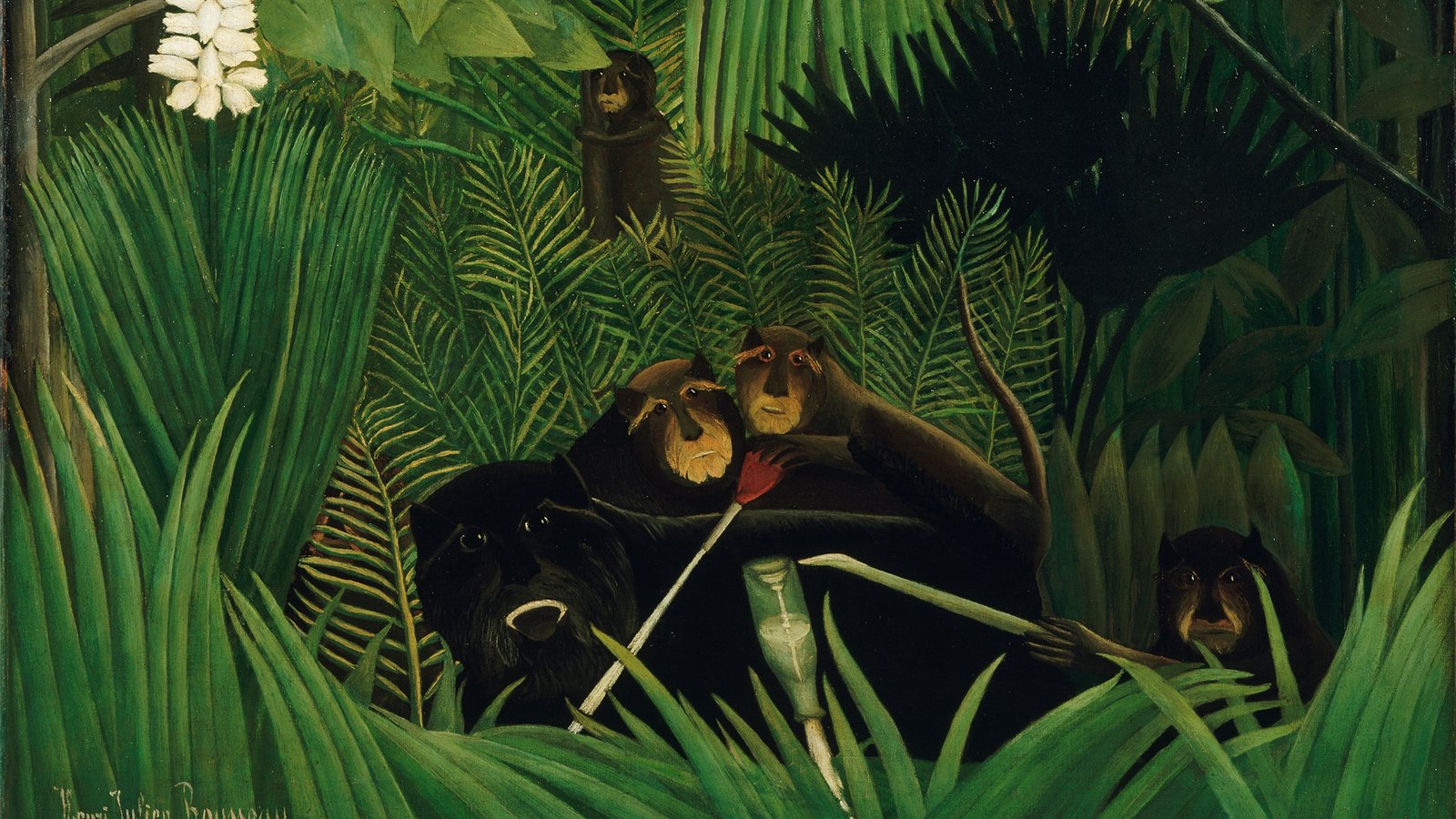
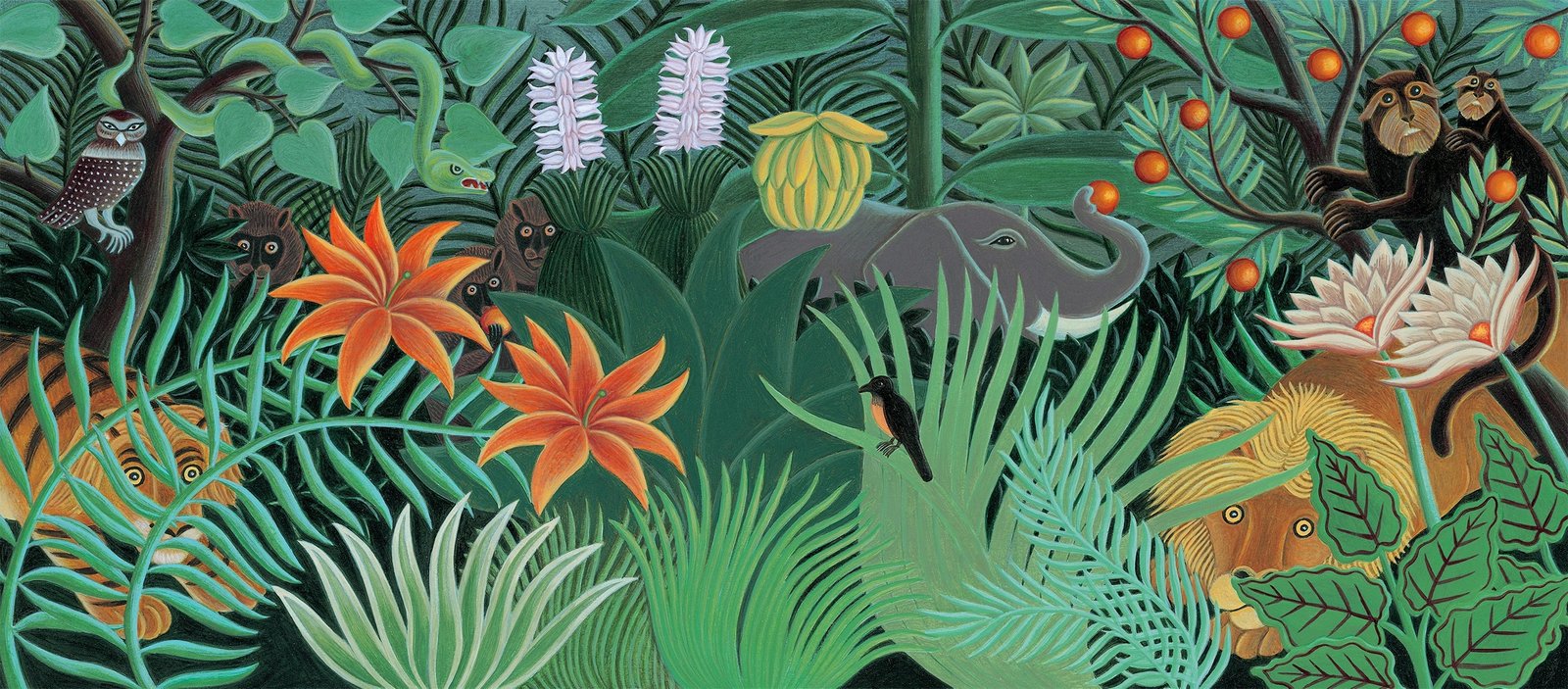
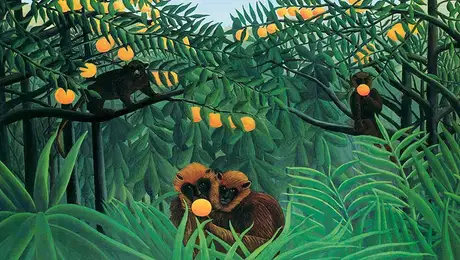
An equally famous work by Rousseau, included in the collection of John Hay Whitney, is Tropical Forest with Monkeys, which was painted during the last months of his life. It shows one of his signature exotic landscapes, lush, tropical, and virgin. Many of the animals in Rousseau’s images have human faces or attributes. The central monkeys in this painting hold green sticks from which strings appear to dangle, suggesting fishing poles and human leisure activities, thereby emphasizing the quasi-human experience of the animals. In this sense Rousseau’s anthropomorphized primates can be seen not as true wild beasts, but rather as representing an escape from the “jungle” of Paris and the everyday grind of civilized life.[15]


Le Banquet Rousseau
When Pablo Picasso happened upon a painting by Rousseau being sold on the street as a canvas to be painted over, the younger artist instantly recognised Rousseau’s genius and went to meet him. In 1908, Picasso held a half serious, half burlesque banquet in his studio at Le Bateau-Lavoir in Rousseau’s honour.[1] Le Banquet Rousseau, “one of the most notable social events of the twentieth century,” wrote American poet and literary critic John Malcolm Brinnin, “was neither an orgiastic occasion nor even an opulent one. Its subsequent fame grew from the fact that it was a colorful happening within a revolutionary art movement at a point of that movement’s earliest success, and from the fact that it was attended by individuals whose separate influences radiated like spokes of creative light across the art world for generations.”[11]
Guests at the banquet Rousseau included: Guillaume Apollinaire, Jean Metzinger, Juan Gris, Max Jacob, Marie Laurencin, André Salmon, Maurice Raynal, Daniel-Henri Kahnweiler, Leo Stein, and Gertrude Stein.[12]
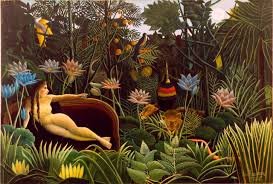
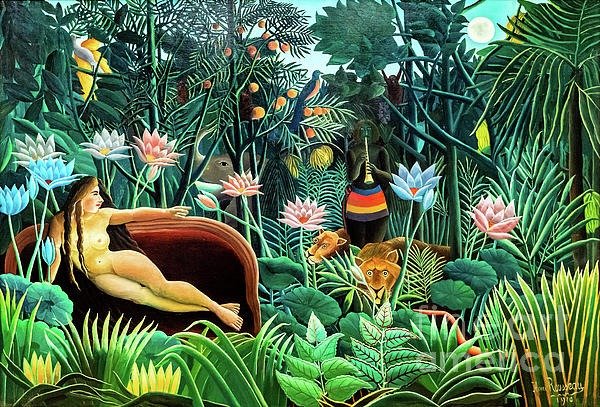
Rousseau exhibited his final painting, The Dream, in March 1910, at the Salon des Independants.
At his funeral, seven friends stood at his grave: the painters Paul Signac and Manuel Ortiz de Zárate; the artist couple Robert Delaunay and Sonia Terk; the sculptor Constantin Brâncuși; Rousseau’s landlord Armand Queval, and Guillaume Apollinaire, who wrote the epitaph Brâncuși put on the tombstone